
Provib Tech
In Stock OK
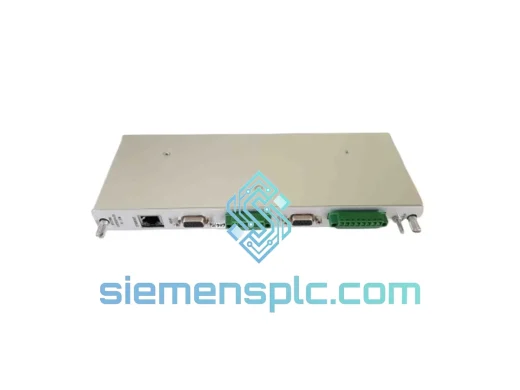
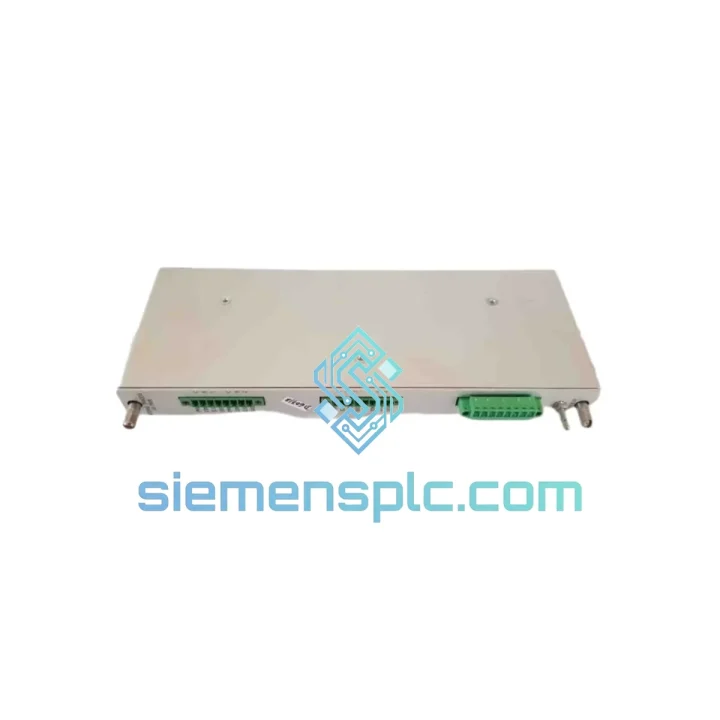
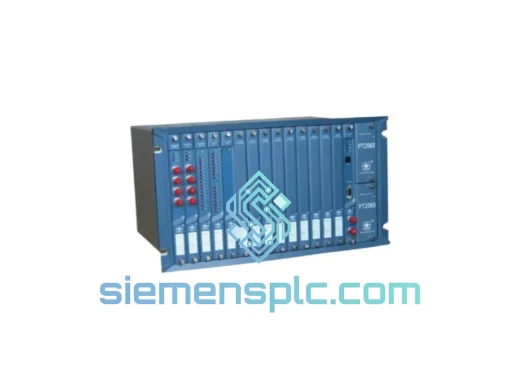
Provib Tech PT2060/90-A1-B1-H Proximity Module – PT2060 Series
Request verified availability, condition, replacement risk review, packing options and courier lead time for PT2060/90-A1-B1-H.
BrandProvib Tech
Part NumberPT2060/90-A1-B1-H
ConditionAvailability Check
Lead TimeRFQ Confirmation
DocumentsDatasheet / photos by RFQ
ShippingExport packing available
Auto-filled RFQ
PT2060/90-A1-B1-H
Click Request Quote and the part number is inserted into the inquiry form automatically.
- Reply by email: [email protected]
- WhatsApp / Tel: +86 18359268345
- Mon-Sat 9:00-18:00 GMT+8
Procurement Data
Key Product Information
Core fields for model confirmation and RFQ routing. Detailed product narrative remains below.
- Brand
- Provib Tech
- Primary Part Number
- PT2060/90-A1-B1-H
- Product Type
- Proximity Module
- Product Family
- Other series
- Manufacturer
- Provib Tech
- Country of Origin
- US
- Catalog Category
- Sensors & Switches
- Operating Temp.
- –40°C to +85°C (driver module)
- Warranty
- 12 months from date of shipment
Model confirmed for inquiry
PT2060/90-A1-B1-H
Send quantity, destination and urgency. The RFQ form keeps this part number attached.
Request Quote
Product Overview
Provib Tech PT2060/90-A1-B1-H: Dual-Channel Eddy Current Proximity Module for Turbomachinery Protection
The PT2060/90-A1-B1-H occupies a well-defined position in the machinery protection signal chain: it converts the raw electromagnetic coupling between a probe tip and a conductive shaft surface into a calibrated DC voltage output that feeds directly into a protection relay, safety PLC, or DCS analog input card. Within the PT2060 platform, the /90 designation specifies a 90 mm nominal probe-to-driver cable length configuration, while the A1-B1 suffix identifies a dual-channel driver arrangement — Channel A and Channel B — each independently conditioned and isolated. The H suffix confirms certification for use in explosive atmospheres under both ATEX Directive 2014/34/EU and IECEx Scheme, permitting installation in Zone 1 and Zone 2 classified areas without additional barriers in many configurations.
Eddy current proximity systems operate on a straightforward electromagnetic principle: a high-frequency oscillator (typically 1 MHz range) drives a coil embedded in the probe tip, generating an alternating magnetic field. When a conductive target — typically a steel or alloy shaft — enters this field, eddy currents are induced on the target surface, loading the oscillator circuit and reducing its amplitude. The driver module (the PT2060/90-A1-B1-H) demodulates this amplitude change and outputs a linear DC voltage proportional to the gap distance between probe face and shaft surface. The output sensitivity is standardized at –200 mV/mil (–7.87 V/mm) across the linear range, consistent with API 670 Fifth Edition requirements for proximity transducer systems used in machinery protection.
In a typical turbomachinery protection loop, two PT2060/90-A1-B1-H channels are deployed per measurement plane: one for radial vibration (X-axis) and one for radial vibration (Y-axis), mounted 90° apart. A third channel may be assigned to axial position monitoring. The module’s dual-channel architecture consolidates two independent driver circuits into a single housing, reducing DIN rail space, terminal block count, and inter-module wiring by approximately 40% compared to single-channel alternatives. Each channel maintains electrical independence — a fault or calibration drift on Channel A does not propagate to Channel B, preserving measurement integrity in redundant protection architectures.
Real-time Stock & RFQ: [email protected] | WhatsApp: +86 18359268345
Technical Parameters
| Parameter | Specification |
|---|---|
| Model | PT2060/90-A1-B1-H |
| Series | PT2060 Eddy Current Proximity System |
| Manufacturer | Provib Tech |
| Sensing Technology | Eddy Current (Non-contact, electromagnetic) |
| Cable Configuration | /90 — 90 mm probe-to-driver nominal cable |
| Channel Configuration | A1-B1 Dual Independent Channel |
| Output Sensitivity | –200 mV/mil (–7.87 V/mm), standard API 670 |
| Linear Range | Typically 0.25 mm to 2.25 mm (probe-dependent) |
| Supply Voltage | –24 VDC (nominal), –20 VDC to –26 VDC operating range |
| Output Voltage Range | –2 VDC to –18 VDC (within linear range) |
| Frequency Response (–3 dB) | DC to ≥10 kHz |
| Operating Temperature | –40°C to +85°C (driver module) |
| Hazardous Area Certification | ATEX / IECEx Zone 1 & Zone 2 (H suffix) |
| Protection Standard | API 670 Fifth Edition compliant |
| Enclosure Rating | IP54 (module housing) |
| Connector Type | Coaxial BNC / terminal block (application-dependent) |
| Weight | Approx. 800 g |
| Warranty | 12 months from date of shipment |
Hardware Logical Analysis
The internal architecture of the PT2060/90-A1-B1-H reflects design priorities common to API 670-grade proximity systems: measurement linearity, noise immunity, and fail-safe output behavior under fault conditions.
Oscillator Stability and Temperature Compensation: The driver’s internal oscillator circuit uses a temperature-compensated crystal reference to maintain carrier frequency stability across the –40°C to +85°C operating envelope. Frequency drift in the oscillator directly translates to apparent gap error; a 0.1% frequency shift at 1 MHz can produce a measurable offset in the output voltage. The PT2060 platform addresses this through active thermal compensation circuitry that adjusts the oscillator bias current as a function of die temperature, holding frequency deviation to within ±0.05% across the full thermal range.
EMC Design and Shielding Architecture: Industrial rotating machinery environments present severe electromagnetic interference sources: variable-frequency drives (VFDs) generating conducted noise on the –24 VDC supply rail, high-current motor switching transients, and radiated fields from adjacent power cables. The PT2060/90-A1-B1-H employs a multi-layer EMC strategy: the coaxial cable between probe and driver provides inherent shielding of the high-impedance oscillator signal; the driver housing incorporates a continuous conductive shield connected to instrument ground at a single point to prevent ground loop formation; and the power supply input stage includes an LC filter network with a common-mode choke rated to suppress conducted interference per IEC 61000-4-6 at 10 V/m.
Galvanic Isolation Between Channels: The A1 and B1 channels share a common supply input but maintain galvanic isolation between their respective output circuits. This isolation — typically rated at 500 VDC between channels — prevents a ground fault or wiring error on one output from corrupting the measurement on the adjacent channel. In SIL-rated protection loops where the two channels feed separate voting logic inputs, this isolation is a functional safety requirement, not merely a convenience feature.
Fault Detection and Output Behavior: Under probe open-circuit or short-circuit conditions, the PT2060/90-A1-B1-H drives its output to a defined fault state — typically below –2 VDC or above –18 VDC — outside the normal linear range. Protection relay cards configured to monitor these out-of-range voltages can distinguish a genuine shaft proximity alarm from a transducer wiring fault, enabling the protection system to annunciate a Not-OK condition rather than a spurious trip. This behavior is consistent with API 670 Section 5.3 requirements for transducer system fault detection.
System Integration Benefits
- Direct API 670 Compliance: The –200 mV/mil output sensitivity and defined fault voltage levels are natively compatible with Bently Nevada 3300 and 3500 series monitor cards, Emerson CSI 6500 racks, and other API 670-compliant protection systems, eliminating the need for signal scaling or custom input configuration.
- Dual-Channel Density Reduces Cabinet Footprint: Consolidating two independent driver circuits into one module cuts DIN rail consumption by approximately 50% per measurement plane compared to single-channel drivers, directly reducing panel fabrication cost and cable tray congestion in large turbomachinery protection cabinets.
- Hazardous Area Certification Simplifies Zener Barrier Selection: The H-suffix ATEX/IECEx certification allows the module to be installed in Zone 1 areas with appropriate associated apparatus; in many configurations, this eliminates the need for external Zener barriers or galvanic isolators in the field wiring loop, reducing component count and potential failure points.
- Wide Supply Voltage Tolerance Accommodates Real-World Rail Sag: The –20 VDC to –26 VDC operating range accommodates the voltage drop across long cable runs from the power supply to the driver, a common issue in large plant installations where proximity driver cabinets may be located 50–100 m from the UPS panel.
- Flat Frequency Response to ≥10 kHz Captures Sub-Synchronous and Super-Synchronous Events: Rotating machinery faults such as oil whirl (typically 0.43–0.48× running speed), blade passing frequencies, and gear mesh frequencies can extend well above 1× running speed. A flat response to 10 kHz ensures these diagnostic frequencies are captured without amplitude attenuation, preserving the integrity of FFT-based vibration analysis.
- Deterministic Output Latency Supports Real-Time Protection Logic: The analog output of the PT2060/90-A1-B1-H has no digital processing latency — the demodulated DC voltage tracks shaft position changes in real time, bounded only by the –3 dB bandwidth of the output filter. This deterministic response is essential for protection relays that must initiate a trip within 1 ms of a threshold crossing to prevent mechanical damage.
- Standardized Coaxial Interface Enables Field Probe Replacement Without Recalibration: Provided the replacement probe is from the same PT2060 series and the cable length matches the /90 specification, the driver module does not require recalibration after a probe swap. This reduces planned maintenance downtime and eliminates the need for on-site calibration equipment during emergency replacements.
- Diagnostic Transparency via Not-OK Output: The defined fault output states allow the DCS or safety PLC to distinguish between a vibration alarm, a transducer fault, and a normal operating condition without ambiguity. This three-state diagnostic capability improves alarm management and reduces nuisance trips caused by transducer wiring faults being misinterpreted as process alarms.
Quality Assurance & Global Logistics
Every PT2060/90-A1-B1-H unit supplied by siemensplc.com is sourced through verified supply channels with full traceability to the original manufacturer. Prior to dispatch from our Xiamen, China facility, each module undergoes a structured pre-shipment inspection protocol: visual examination of housing integrity, label and marking verification against the purchase order, connector and terminal block inspection, and packaging integrity assessment. Units are packed in anti-static polyethylene foam inserts within double-wall corrugated cartons, with silica gel desiccant packs to control humidity during ocean or air freight transit.
Export documentation — including commercial invoice, packing list, certificate of conformity, and HS code declaration (HS 9030.33 for electronic measuring instruments) — is prepared in-house and reviewed before each shipment to minimize customs clearance delays at destination ports. For time-critical requirements, air freight via DHL Express, FedEx International Priority, or UPS Worldwide Express is available with typical transit times of 3–5 business days to Europe, North America, and Southeast Asia. Sea freight consolidation is available for bulk orders where lead time permits.
A 12-month warranty from the date of shipment covers manufacturing defects and functional failures under normal operating conditions. Warranty claims are processed with a target response time of 48 business hours; replacement units are dispatched from Xiamen stock where available, or sourced on priority from our supplier network.
Contact Information
Email: [email protected]
WhatsApp: +86 18359268345
Web: siemensplc.com
Location: Xiamen, China
© 2026 siemensplc.com. All rights reserved.
Ready to quote
[email protected]
Send This Part Number to Sales
RFQ workflow
Quality workflow ->
Confirmation Process
01Model confirmation
We check the full part number, brand, series and visible nameplate information before quotation.
02Availability reply
Sales confirms stock path, condition option, quantity and realistic lead time for export dispatch.
03Packing & courier
DHL, FedEx, UPS or buyer courier arrangements can be reviewed with packing requirements.
Continue sourcing
Browse full catalog ->
Related Automation Parts
Similar brand or category products for fast comparison and multi-item RFQ lists.
Provib Tech
RFQ Ready
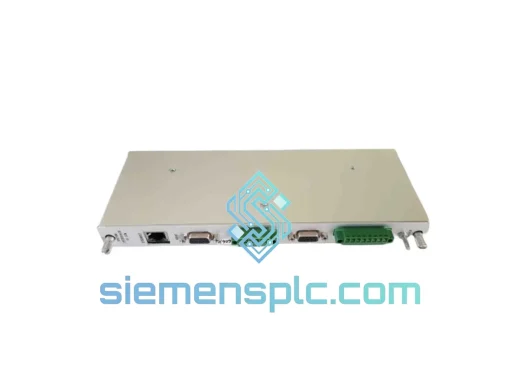
Provib Tech PT2060/91-A0-H Vibration SIM Module
Origin US
Vibration Monitoring Module
Provib Tech
RFQ Ready
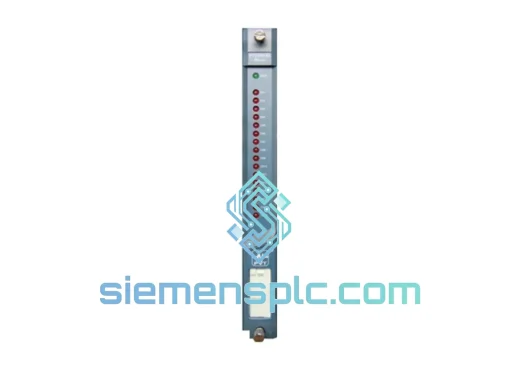
Provib Tech PT2060/53-A0-H Vibration Monitoring Module
PT2060 Series
Origin US
Vibration Monitoring Module
Provib Tech
RFQ Ready
Provib Tech PT2060/90-A1-B1 Vibration Monitor
Origin Germany
Vibration Monitor