ProvibTech
RFQ Ready
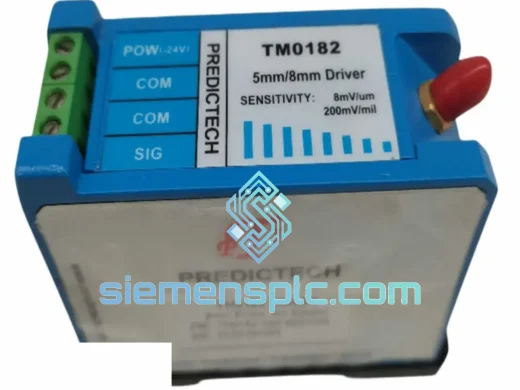
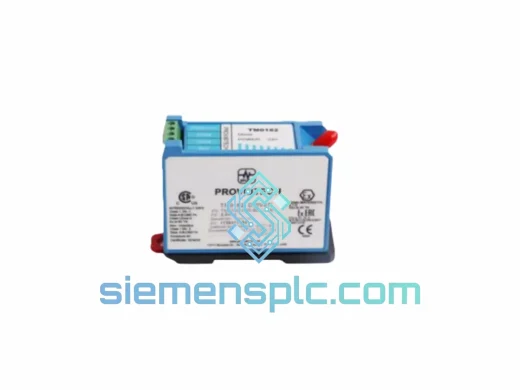
PROVIBTECH TM0182-A50-B00-C00 Proximity Sensor
TM0182 Series
Origin US
Vibration & Proximity Sensor
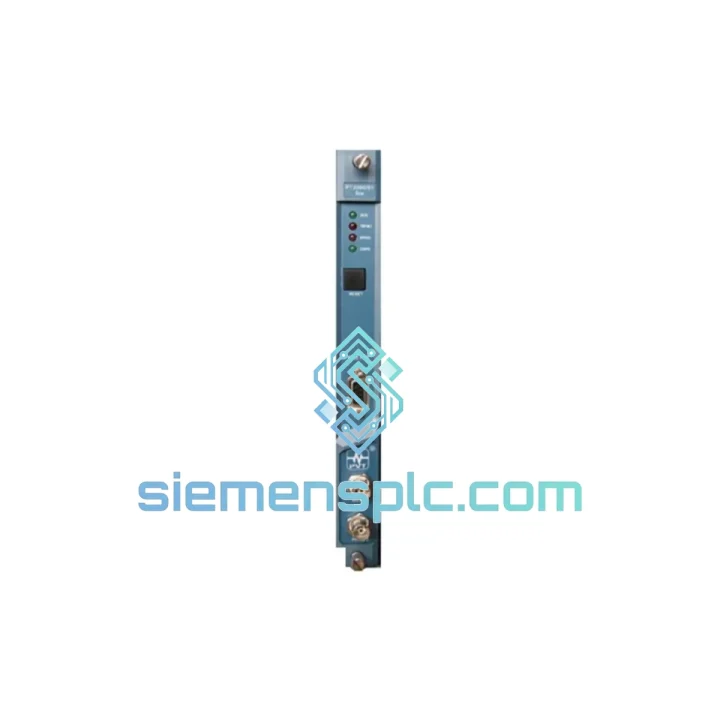
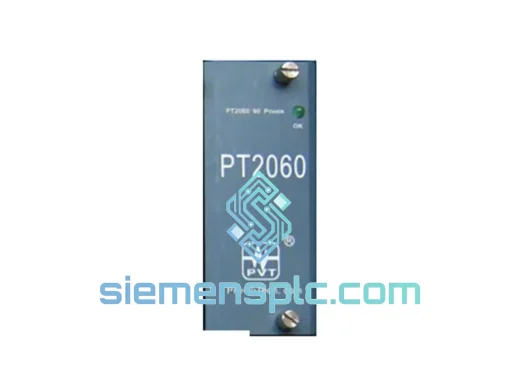
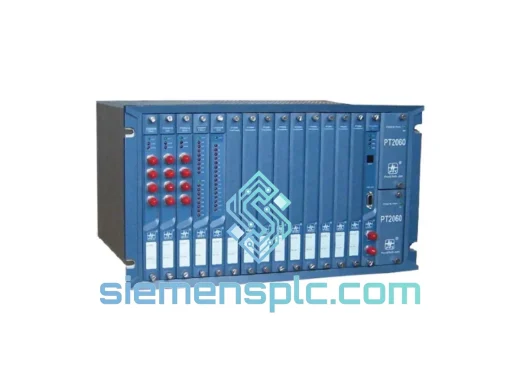
Request verified availability, condition, replacement risk review, packing options and courier lead time for PT2060/91.
Click Request Quote and the part number is inserted into the inquiry form automatically.
Core fields for model confirmation and RFQ routing. Detailed product narrative remains below.
The PT2060/91 occupies a structurally critical position in any vibration-based condition monitoring architecture. As the dedicated interface module within ProvibTech’s PT2060 platform, it serves as the signal conditioning and channel-routing bridge between field-mounted transducers — accelerometers, velocity probes, eddy-current proximity sensors — and the downstream monitoring electronics or DCS I/O marshalling layer. Without a correctly specified interface module, raw transducer signals are susceptible to impedance mismatch, ground-loop noise injection, and cable-capacitance-induced bandwidth compression. The PT2060/91 addresses each of these failure modes through a hardware-defined signal path engineered for continuous, unattended plant operation.
In rotating machinery protection applications — gas turbines, centrifugal compressors, boiler feed pumps, large induction motors — the interface module is not a passive terminal block. It performs active signal buffering, bias voltage supply to IEPE (Integrated Electronics Piezo-Electric) transducers, and in many configurations provides galvanic isolation between the field loop and the control-room potential reference. The PT2060/91 is designed to sustain these functions across the full industrial temperature range without recalibration drift, making it suitable for both indoor control-room enclosures and field junction boxes in moderate-environment installations.
Real-time Stock & RFQ: [email protected] | WhatsApp: +86 18359268345
| Parameter | Specification |
|---|---|
| Part Number / SKU | PT2060/91 |
| Manufacturer | ProvibTech |
| Series | PT2060 Vibration Monitoring |
| Module Function | Multi-channel vibration signal interface & conditioning |
| Transducer Compatibility | IEPE accelerometers, velocity probes, eddy-current proximity sensors |
| Signal Output | 4–20 mA / voltage analog; compatible with standard DCS I/O cards |
| Channel Isolation | Galvanic isolation, channel-to-channel and channel-to-ground |
| IEPE Bias Supply | Constant-current excitation for IEPE transducers (typically 2–10 mA) |
| Operating Temperature | -20 °C to +70 °C (storage: -40 °C to +85 °C) |
| Relative Humidity | 5–95 % RH, non-condensing |
| Mounting | DIN-rail EN 60715 / panel-mount compatible |
| Housing Material | Flame-retardant engineering plastic, IP20 (module body) |
| Power Supply | 24 V DC (±15 %), low ripple requirement <100 mV p-p |
| Power Consumption | ≤5 W per module (typical, fully loaded channels) |
| Weight | 1,040 g (approx.) |
| EMC Compliance | EN 61000-4 series (ESD, EFT/Burst, Surge, Conducted RF) |
| Safety Standard | CE marked; RoHS compliant |
| Warranty | 12 months from date of shipment |
Galvanic Isolation Architecture: The PT2060/91 implements transformer-coupled or optocoupler-based galvanic isolation on each signal channel. This is not a cosmetic feature — in heavy industrial plants, ground potential differences between the machinery foundation and the control-room earth bus routinely exceed 5 V AC, sufficient to corrupt a 4–20 mA signal or saturate a high-gain amplifier input stage. The isolation barrier in the PT2060/91 breaks this common-mode path, ensuring that the signal presented to the DCS input card reflects only the transducer’s mechanical measurement, not superimposed electrical noise from motor drives, welding equipment, or switchgear operations in the vicinity.
IEPE Constant-Current Excitation: Piezoelectric accelerometers with integrated electronics (IEPE/ICP standard) require a stable DC bias current — typically 2 mA to 10 mA — supplied through the same coaxial cable that carries the AC vibration signal. The PT2060/91 provides this bias from a regulated, low-noise current source. Bias current stability directly affects the DC operating point of the transducer’s internal FET amplifier; instability manifests as baseline drift in the vibration amplitude reading, which can mask genuine machinery deterioration trends. The module’s current source maintains regulation across the full cable impedance range encountered in plant installations (cable lengths up to several hundred metres with appropriate capacitance compensation).
EMC Hardening: The module’s PCB layout follows IEC 61000-4 immunity design rules: signal traces are routed away from power supply conductors, decoupling capacitors are placed at each active device’s supply pin, and the chassis ground plane is continuous beneath all analog circuitry. Transient suppression devices (TVS diodes) protect the field-side terminals against IEC 61000-4-5 surge events up to 1 kV line-to-ground, which is the minimum credible threat level in a plant environment where lightning protection systems discharge through the earth grid.
Signal Buffering and Impedance Matching: The output stage of the PT2060/91 drives the DCS analog input through a low-impedance buffer, decoupling the DCS input card’s load impedance from the transducer signal path. This prevents the DCS card’s input impedance (which varies between manufacturers and card generations) from loading the signal source and altering the frequency response of the measurement chain — a failure mode that is particularly damaging in high-frequency vibration analysis where spectral accuracy above 1 kHz is required for bearing defect frequency identification.
Every PT2060/91 unit dispatched from our Xiamen, China facility is a factory-original ProvibTech component procured through documented supply channels. Prior to shipment, each module undergoes a physical inspection covering label authenticity, connector pin integrity, housing condition, and firmware/version marking verification. Units showing any evidence of repackaging, pin damage, or label inconsistency are quarantined and not dispatched.
Packaging follows anti-static handling protocols: modules are placed in conductive foam within anti-static poly bags, sealed, and placed in double-wall corrugated cartons with void-fill cushioning rated for international air freight handling. This packaging standard protects sensitive analog circuitry from electrostatic discharge events that can cause latent damage — failures that appear weeks after installation rather than immediately, making root-cause analysis difficult.
Logistics from Xiamen to major industrial hubs worldwide is executed via DHL Express, FedEx International Priority, and UPS Worldwide Express, with typical transit times of 3–5 business days to Europe, North America, Southeast Asia, and the Middle East. Full export documentation is provided: commercial invoice, packing list, certificate of origin, and — upon request — manufacturer documentation for customs classification purposes. HS code 8537.10 applies to most interface module classifications; buyers are advised to confirm with their customs broker for jurisdiction-specific tariff treatment.
A 12-month warranty covers manufacturing defects from the date of shipment. Warranty claims are processed through direct communication with our technical team; replacement units are dispatched upon confirmation of the defect, with failed units returned for analysis where required by the warranty terms.
Email: [email protected]
WhatsApp: +86 18359268345
Web: siemensplc.com
Location: Xiamen, China
© 2026 siemensplc.com. All rights reserved.
We check the full part number, brand, series and visible nameplate information before quotation.
Sales confirms stock path, condition option, quantity and realistic lead time for export dispatch.
DHL, FedEx, UPS or buyer courier arrangements can be reviewed with packing requirements.
Similar brand or category products for fast comparison and multi-item RFQ lists.