ROBICON
In Stock OK
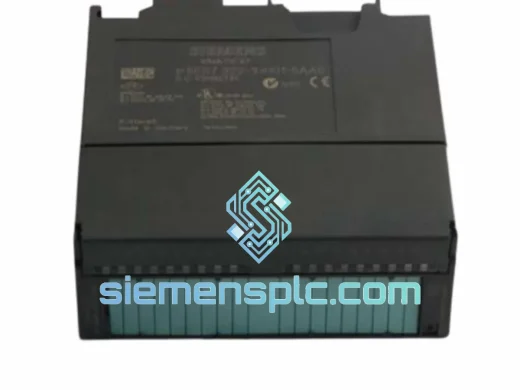
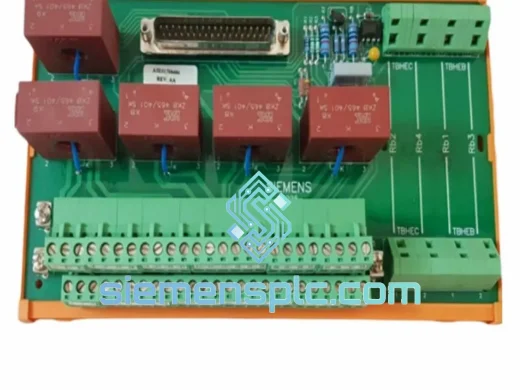
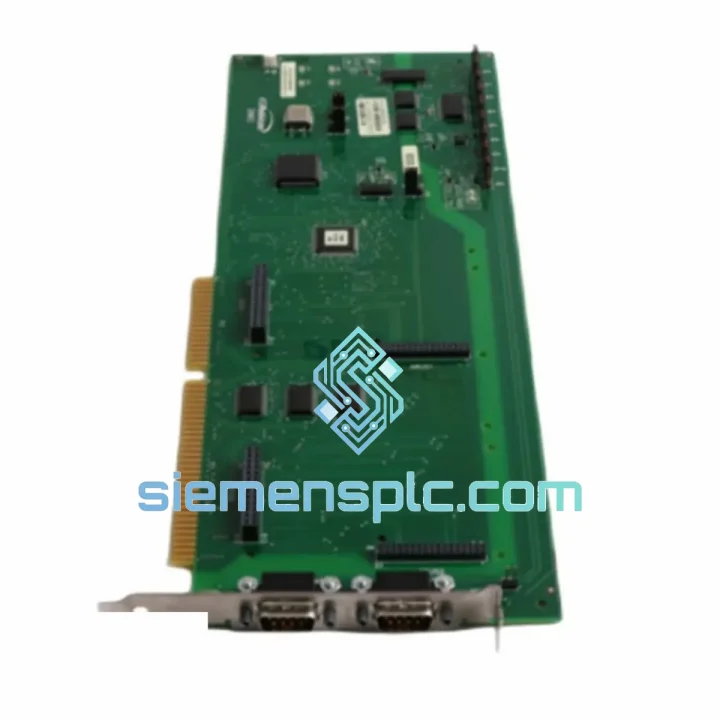
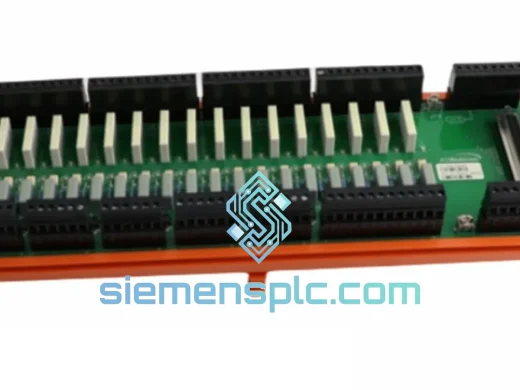
ROBICON A1A363818.00M Fieldbus Interface Board – Perfect Harmony NXG Series
Request verified availability, condition, replacement risk review, packing options and courier lead time for A1A363818.00M.
BrandROBICON
Part NumberA1A363818.00M
ConditionAvailability Check
Lead TimeRFQ Confirmation
DocumentsDatasheet / photos by RFQ
ShippingExport packing available
Auto-filled RFQ
A1A363818.00M
Click Request Quote and the part number is inserted into the inquiry form automatically.
- Reply by email: [email protected]
- WhatsApp / Tel: +86 18359268345
- Mon-Sat 9:00-18:00 GMT+8
Procurement Data
Key Product Information
Core fields for model confirmation and RFQ routing. Detailed product narrative remains below.
- Brand
- ROBICON
- Primary Part Number
- A1A363818.00M
- Product Type
- Fieldbus Interface Board
- Product Family
- Other series
- Manufacturer
- ROBICON (Siemens Perfect Harmony Division)
- Country of Origin
- China (export-ready, Xiamen)
- Catalog Category
- Motor Drives
- Operating Temp.
- 0 °C to +55 °C (forced-air cooled cabinet ambient)
- Warranty
- 12 months from shipment date
Model confirmed for inquiry
A1A363818.00M
Send quantity, destination and urgency. The RFQ form keeps this part number attached.
Request Quote
Product Overview
ROBICON A1A363818.00M — Serial Communications Interface Board for NXG-Controlled Perfect Harmony GH180 Medium-Voltage Variable Frequency Drives
The ROBICON A1A363818.00M is a dedicated serial fieldbus interface board engineered for installation within the NXG control rack of the Perfect Harmony GH180 medium-voltage variable frequency drive (MV-VFD) platform. Its function within the control architecture is structurally non-redundant: it constitutes the sole protocol boundary between the NXG processor card and any external supervisory network operating over Modbus RTU, Profibus DP V0/V1, or DeviceNet. The board does not share processing resources with the NXG main CPU. It carries an independent embedded microcontroller, a self-contained protocol state machine, and a dual-port shared-memory interface through which CRC-validated parameter data is committed to the NXG control kernel at each 2 ms cycle boundary — without any CPU polling overhead or interrupt latency imposed on the drive’s closed-loop regulation path.
In process-critical MV-VFD applications — boiler feed pump stations, induced-draft and forced-draft fan drives, large centrifugal compressor trains, and high-inertia pump systems in water treatment and petrochemical facilities — the communications subsystem is a determinism-critical component, not a convenience layer. Speed and torque references arriving from a DCS or SCADA master must be delivered within the deterministic window of the drive’s closed-loop control cycle. Any protocol processing burden placed on the main CPU introduces jitter into the speed-regulation loop, degrading closed-loop bandwidth and, in cascade control architectures, propagating instability into upstream process controllers. The A1A363818.00M resolves this by maintaining strict architectural separation: the fieldbus transaction layer executes entirely on the board’s own processor, and the NXG CPU reads only committed, validated data from shared memory — never waiting on a fieldbus acknowledgement or CRC retry cycle.
The board is formatted as a keyed, latching PCB module for direct installation into the NXG control rack. Connector interfaces are rated for the vibration environment of an industrial drive cabinet subject to motor-induced mechanical excitation at 50–60 Hz and associated harmonic frequencies. All fieldbus signal lines entering the board pass through opto-coupler isolation stages before reaching the protocol microcontroller, establishing a galvanic barrier against the common-mode voltage transients generated by switching events on the drive’s 3.3 kV to 6.6 kV power cell stack. This isolation is a functional requirement in MV-VFD installations, not a regulatory formality — the EMI environment of a medium-voltage drive cabinet is categorically different from that of a low-voltage PLC panel.
siemensplc.com maintains on-hand inventory of the A1A363818.00M at our Xiamen, China facility, sourced through verified industrial distribution channels. Each unit undergoes incoming inspection against authenticity and condition criteria before entering available stock. Export documentation — commercial invoice, packing list, and certificate of origin — is prepared as standard for all international shipments. Both planned maintenance procurement and emergency replacement scenarios are supported from available inventory with same-day dispatch capability for in-stock units.
Real-time Stock & RFQ: [email protected] | WhatsApp: +86 18359268345
Technical Parameters
| Parameter | Specification |
|---|---|
| Manufacturer | ROBICON (Siemens Perfect Harmony Division) |
| Part Number | A1A363818.00M |
| Module Function | Serial Fieldbus Communications Interface Board — NXG Control Platform |
| Compatible Drive Platform | Perfect Harmony GH180 / NXG Control Architecture |
| Supported Protocols | Modbus RTU, Profibus DP V0/V1, DeviceNet (variant-dependent) |
| Physical Form Factor | Keyed PCB module, NXG control rack slot mount |
| Logic Supply Voltage | 3.3 VDC / 5 VDC via NXG backplane power rails |
| Signal Isolation Method | Opto-coupler galvanic isolation on all fieldbus I/O lines |
| Isolation Voltage Rating | ≥ 500 V RMS (signal-to-logic ground) |
| Modbus Baud Rate Range | 1,200 – 115,200 bps (auto-detect on applicable variants) |
| Profibus DP Data Rate | 9.6 kbps – 12 Mbps (auto-negotiated per EN 50170) |
| Shared-Memory Update Rate | Synchronized to NXG 2 ms control cycle boundary |
| Operating Temperature | 0 °C to +55 °C (forced-air cooled cabinet ambient) |
| Storage Temperature | −25 °C to +70 °C |
| Relative Humidity | 5% – 95% RH, non-condensing |
| PCB Trace Impedance | 120 Ω characteristic impedance, RS-485 / Profibus physical layer |
| Connector Insertion Rating | ≥ 500 cycles, gold-plated contacts |
| Shipped Weight | Approx. 5.1 kg (unit + protective packaging) |
| Condition Available | New / Surplus New / Tested Refurbished |
| Warranty | 12 months from shipment date |
| Country of Origin | China (export-ready, Xiamen) |
Hardware Logical Analysis
The A1A363818.00M implements a co-processor architecture in which the fieldbus protocol stack executes entirely on a dedicated microcontroller resident on the communications board — architecturally distinct from a DMA-assisted peripheral arrangement. The on-board microcontroller maintains its own execution context, manages the complete protocol state machine including Profibus DP token-ring arbitration and GSD-file-defined I/O mapping, and writes finalized parameter data to a dual-port SRAM region shared with the NXG main CPU. The NXG CPU reads this shared-memory region at each 2 ms control cycle boundary, consuming whatever data was last committed by the communications microcontroller. The NXG CPU never stalls on a fieldbus transaction, never waits for a CRC retry, and never participates in baud-rate negotiation. A sustained burst of SCADA polling — for example, a 100 ms scan cycle reading 40 process variables across 12 Modbus registers each — produces zero measurable effect on the drive’s speed-regulation loop latency.
The opto-coupler isolation on every fieldbus signal line addresses a specific failure mode endemic to MV-VFD installations. Power cell switching events on a 3.3 kV to 6.6 kV drive stack generate dV/dt transients on the order of several kV/μs. These transients couple into low-voltage signal wiring through parasitic capacitance between power and control cable bundles routed in shared cable trays — a common installation practice in compact substations. Simultaneously, ground-potential differences of 2–10 V between the drive cabinet earth and the DCS marshalling panel earth are routine in large industrial facilities with distributed earthing systems. Without a galvanic barrier at the fieldbus interface, either mechanism is sufficient to corrupt Modbus frame data or trigger Profibus token-loss faults. The A1A363818.00M’s isolation stage absorbs both common-mode disturbances and differential transients before they reach the protocol logic, maintaining data integrity under the EMI conditions inherent to MV-VFD installations.
PCB layout follows controlled-impedance design discipline throughout the fieldbus transceiver section. RS-485 and Profibus signal traces are routed at 120 Ω characteristic impedance, matched to the physical layer specification of both protocols. Ground planes are segmented: the fieldbus transceiver ground is separated from the digital logic ground by a single-point connection at the isolation barrier, preventing high-frequency return currents from the RS-485 line driver from coupling into the analog reference circuits used by the NXG’s ADC subsystem. Decoupling capacitors — 100 nF X7R ceramic in parallel with 10 μF electrolytic — are placed at each IC power supply pin, suppressing supply-rail noise below the 50 mV threshold that would degrade ADC linearity in the NXG’s process variable measurement chain. Connector contacts are gold-plated and rated for a minimum of 500 insertion cycles, consistent with the maintenance intervals of a drive installation with a 20-year design life.
System Integration Benefits
- No intermediate gateway hardware required: The board presents a native Profibus DP slave or Modbus RTU slave interface directly to the plant network master. No protocol converter, no intermediate gateway, and no additional panel wiring are required between the drive and the DCS, eliminating a potential single point of failure in the communications path.
- Preserved closed-loop determinism under all network loads: The co-processor architecture guarantees the NXG main CPU’s 2 ms speed-regulation cycle is never interrupted by fieldbus transaction processing. Full closed-loop bandwidth and dynamic stiffness specifications are maintained under all network load conditions, including peak SCADA polling bursts.
- Full NXG parameter set exposed to supervisory layer: The board makes the complete NXG parameter set addressable — DC bus voltage, per-phase output current, individual cell bypass status, drive fault codes, and process variable feedback — as Modbus registers or Profibus DP data objects. Condition-based maintenance is possible without physical access to the drive cabinet.
- Multi-drive speed reference distribution via Profibus multicast: In tandem or parallel drive configurations, a single DCS output can distribute speed references to multiple A1A363818.00M-equipped drives via Profibus multicast, eliminating the analog signal distribution hardware and calibration overhead that hardwired setpoint architectures require.
- Layered fault code logging with timestamp resolution: Communication faults detected by the board — CRC errors, timeout events, node-address conflicts, and Profibus token-loss incidents — are logged as discrete fault codes in the NXG fault buffer with timestamps. Maintenance engineers can distinguish drive-internal faults from network-layer issues without ambiguity or oscilloscope access.
- Reduced commissioning steps via auto-baud detection: Auto-baud-rate detection on Modbus-capable variants eliminates manual baud-rate DIP-switch configuration, reducing commissioning steps and the risk of parameter mismatch during initial startup or after a board replacement in the field.
- Short maintenance window for board replacement: The board is designed for replacement without full drive de-energization in installations where NXG control power remains active. A communications board swap can be completed in under 30 minutes in most cabinet configurations, minimizing process downtime during corrective maintenance.
- EMC-hardened signal integrity across full operating temperature range: The opto-coupler isolation and controlled-impedance PCB layout maintain data integrity in the high-EMI environment of MV-VFD cabinets across 0 °C to +55 °C, reducing the incidence of spurious communication faults that would otherwise trigger nuisance drive trips and unplanned process shutdowns.
- Long-term spare supply continuity for extended-life installations: siemensplc.com maintains stocked inventory of the A1A363818.00M to support the extended operational life of Perfect Harmony installations, many of which carry 20+ year design lifetimes in power generation, petrochemical, and water treatment applications where full drive replacement is not economically justified.
- Standardized export documentation for international procurement: Every shipment includes a commercial invoice, packing list, and certificate of origin, simplifying customs clearance for international procurement teams and reducing administrative delays at destination ports.
Quality Assurance & Global Logistics
All A1A363818.00M units entering siemensplc.com inventory are factory-original ROBICON components sourced through verified industrial distribution channels. Incoming inspection covers four criteria applied to every unit: PCB marking and revision code verification against authenticated reference units; connector-pin condition assessment for corrosion, mechanical deformation, or evidence of prior field removal; label and part-number font verification aligned with IDEA-STD-1010 visual inspection guidelines; and functional power-on verification where compatible test fixtures are available. Units that do not satisfy all four criteria are quarantined and excluded from available inventory without exception.
Our Xiamen, China facility serves Asia-Pacific, Middle East, European, and Americas markets with competitive transit times. Standard export shipments are dispatched via DHL Express or FedEx International Priority, with typical door-to-door transit of 3–5 business days to Southeast Asia and the Middle East, and 5–7 business days to Europe and North America. Incoterms EXW and FOB Xiamen are standard; FOB Shanghai is available for volume orders. All units are shipped in anti-static bags within foam-lined, double-wall corrugated cartons. Part number and serial number (where available) are referenced on the packing slip for traceability upon receipt at the customer’s goods-in department.
A 12-month warranty from the date of shipment covers all units against manufacturing defects and dead-on-arrival (DOA) conditions. Warranty claims are acknowledged within 24 hours of receipt notification and processed with a target resolution time of 48 hours from receipt of the defective unit at our Xiamen facility. Replacement units are dispatched from available stock to minimize drive downtime during the warranty resolution period.
Contact Information
Email: [email protected]
WhatsApp: +86 18359268345
Web: siemensplc.com
Location: Xiamen, China
© 2026 siemensplc.com. All rights reserved.
Ready to quote
[email protected]
Send This Part Number to Sales
RFQ workflow
Quality workflow ->
Confirmation Process
01Model confirmation
We check the full part number, brand, series and visible nameplate information before quotation.
02Availability reply
Sales confirms stock path, condition option, quantity and realistic lead time for export dispatch.
03Packing & courier
DHL, FedEx, UPS or buyer courier arrangements can be reviewed with packing requirements.
Continue sourcing
Browse full catalog ->
Related Automation Parts
Similar brand or category products for fast comparison and multi-item RFQ lists.
ROBICON
RFQ Ready
ROBICON A5E01649325 Signal Distribution Board – Perfect Drives Series
Origin Germany (OEM manufacture)
Signal Distribution Board