Schneider Electric
RFQ Ready
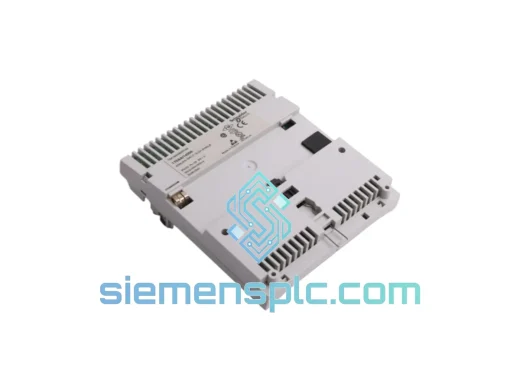
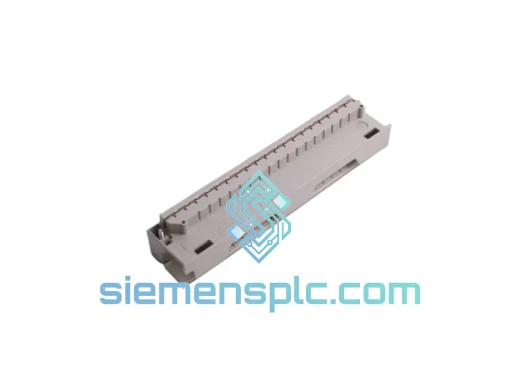
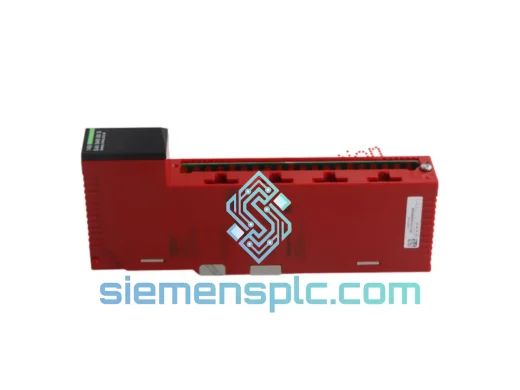
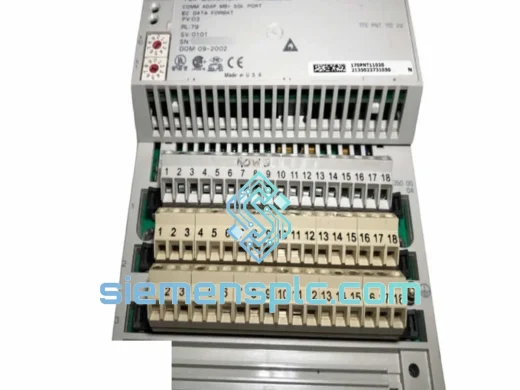
Schneider Electric 170ADO35000 Discrete Output Module – Modicon Quantum
Modicon Quantum
Origin FR
Discrete Output Module
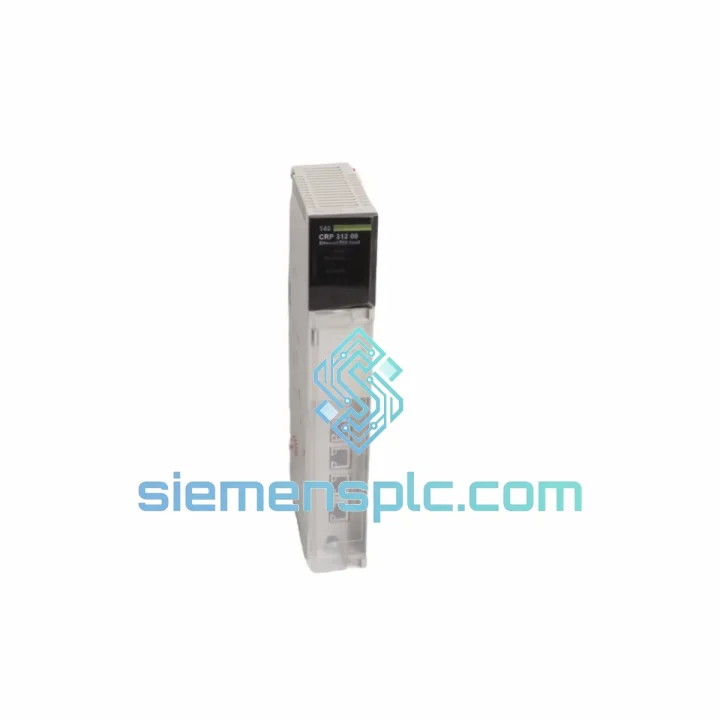
Request verified availability, condition, replacement risk review, packing options and courier lead time for 140CRP31200.
Click Request Quote and the part number is inserted into the inquiry form automatically.
Core fields for model confirmation and RFQ routing. Detailed product narrative remains below.
The Schneider Electric 140CRP31200 is a Remote I/O (RIO) adapter module engineered for the Modicon Quantum programmable automation controller platform. Its primary function within a control loop is to extend the I/O capacity of a Quantum CPU rack across geographically distributed field panels without introducing additional scan-cycle latency that would compromise deterministic process control. The module occupies a single slot in a Quantum I/O drop and serves as the termination point for the Modicon Remote I/O coaxial cable network, translating backplane-level data exchanges into a serialized, token-passing bus protocol that the head-end CPU processes within its normal I/O scan.
In large-scale process installations—continuous chemical reactors, offshore platform control rooms, municipal water treatment SCADA architectures—the 140CRP31200 allows field I/O drops to be positioned within 3,000 meters of the primary rack using RG-6 or equivalent 75-ohm coaxial cable. Each drop operates as a logically transparent extension of the local rack, meaning the CPU’s I/O map treats remote points identically to locally mounted modules. This transparency eliminates the need for explicit peer-to-peer messaging or application-layer data mapping that would otherwise consume CPU processing bandwidth and complicate program maintenance.
Real-time Stock & RFQ: [email protected] | WhatsApp: +86 18359268345
| Parameter | Specification |
|---|---|
| Part Number | 140CRP31200 |
| Platform Compatibility | Modicon Quantum (140-series) |
| Bus Protocol | Modicon Remote I/O (token-passing, coaxial) |
| Cable Type | 75-ohm coaxial (RG-6 or equivalent) |
| Maximum Cable Length | 3,000 m (single segment, without repeater) |
| Maximum Remote Drops per Network | 31 drops |
| Maximum I/O Points per Drop | Up to 64 discrete or 32 analog channels (module-dependent) |
| Backplane Bus Interface | Modicon Quantum Backplane (parallel, 32-bit data path) |
| Supply Voltage | 5 VDC via backplane (no external power required) |
| Power Consumption | ≤ 1.5 W from backplane |
| Operating Temperature | 0 °C to +60 °C |
| Storage Temperature | -40 °C to +85 °C |
| Relative Humidity | 5% to 95% non-condensing |
| Vibration Resistance | IEC 60068-2-6: 10–57 Hz, 0.075 mm; 57–150 Hz, 1 g |
| Shock Resistance | IEC 60068-2-27: 15 g, 11 ms half-sine |
| EMC Immunity | IEC 61000-4-2 (ESD), IEC 61000-4-4 (EFT), IEC 61000-4-5 (Surge) |
| Certifications | CE, UL 508, CSA C22.2 No. 142 |
| Mounting | Modicon Quantum I/O rack (single slot) |
| Dimensions (H × W × D) | Standard Quantum module form factor |
| Warranty | 12 months from date of shipment |
Token-Passing Bus Architecture and Scan Determinism
The 140CRP31200 implements the Modicon Remote I/O protocol using a token-passing arbitration scheme on the coaxial cable segment. The head-end adapter (mounted in the CPU rack) issues a token sequentially to each drop adapter on the network. The 140CRP31200, acting as a drop adapter, holds the token only long enough to transfer its I/O data block before passing control to the next drop. This mechanism bounds the worst-case bus cycle time mathematically as a function of the number of active drops and the data volume per drop, making the network latency predictable and verifiable against the CPU’s I/O scan period. Engineers can calculate the maximum RIO bus cycle time and confirm it fits within the application’s required scan rate without empirical testing on live hardware.
Optical Isolation on the Backplane Interface
The module’s backplane-to-bus signal path incorporates optical isolation between the coaxial cable driver circuitry and the Quantum backplane logic. This galvanic barrier prevents ground potential differences between the CPU rack and remote field panels—common in large industrial facilities where panel grounds may differ by several volts—from coupling noise or fault currents into the backplane. The isolation barrier is rated to withstand transient voltages consistent with IEC 61000-4-5 surge immunity requirements, protecting both the module and adjacent rack-mounted modules from conducted disturbances originating in the field wiring environment.
EMC Design and Cable Shielding Protocol
The 140CRP31200’s coaxial interface inherently provides a shielded transmission medium. The 75-ohm impedance-matched design minimizes signal reflections at cable terminations, which would otherwise manifest as data errors at high cable lengths. The module’s internal line driver maintains signal integrity across the full 3,000-meter cable span by compensating for cable attenuation characteristics. Ferrite suppression components on the backplane connector reduce high-frequency common-mode noise from adjacent switching power supplies and variable-frequency drives—equipment categories routinely co-located with Quantum racks in process control panels.
Hot-Standby Compatibility
In Quantum Hot Standby (HSBY) configurations, the 140CRP31200 drop adapters remain on the RIO network and are accessible by both the primary and standby CPUs through the head-end adapter pair. During a CPU switchover event, the RIO network continues operating without interruption; the new primary CPU resumes I/O scanning within the time defined by the HSBY switchover specification. This behavior is a function of the RIO protocol’s stateless drop architecture—the 140CRP31200 does not maintain session state with a specific CPU, so it responds to the new head-end adapter’s token immediately upon switchover.
Every 140CRP31200 unit supplied by siemensplc.com is sourced as genuine Schneider Electric original equipment. Each module undergoes incoming inspection that includes visual examination of the housing, connector condition, and label integrity, followed by functional verification on a Modicon Quantum test rack to confirm backplane communication and RIO bus participation prior to shipment. Units are stored in an ESD-controlled warehouse environment in Xiamen, China, in accordance with IEC 61340-5-1 electrostatic discharge protection requirements for sensitive electronic assemblies.
Xiamen’s geographic position provides direct access to major international freight corridors. Air freight shipments to European destinations typically transit in 3–5 business days; shipments to North American destinations in 4–6 business days; Southeast Asian destinations in 1–3 business days. All shipments are packed in anti-static foam-lined cartons with moisture-barrier bags and desiccant packs to protect against humidity exposure during transit. Export documentation, including commercial invoices, packing lists, and certificates of origin, is prepared in compliance with destination country import requirements to minimize customs clearance delays.
A 12-month warranty covers all units against manufacturing defects and functional failures under normal operating conditions. Warranty claims are processed with a target response time of 24 hours from receipt of the defective unit. Replacement units are dispatched from Xiamen stock upon confirmation of the warranty claim, minimizing plant downtime for customers with critical process applications.
Email: [email protected]
WhatsApp: +86 18359268345
Web: siemensplc.com
Location: Xiamen, China
© 2026 siemensplc.com. All rights reserved.
We check the full part number, brand, series and visible nameplate information before quotation.
Sales confirms stock path, condition option, quantity and realistic lead time for export dispatch.
DHL, FedEx, UPS or buyer courier arrangements can be reviewed with packing requirements.
Similar brand or category products for fast comparison and multi-item RFQ lists.