Schneider Electric
RFQ Ready
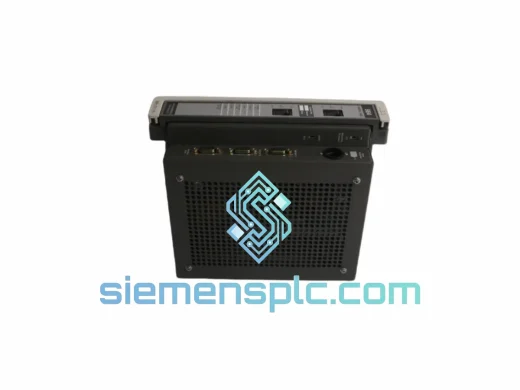
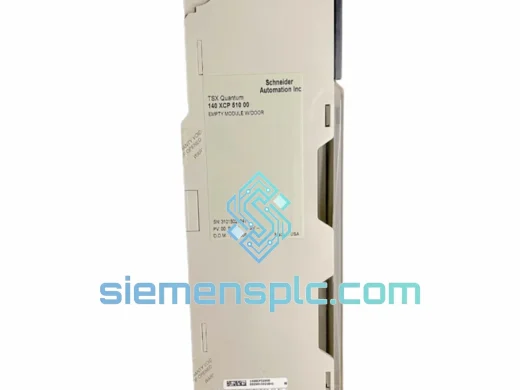
Schneider Electric 140CPU43412A PLC CPU Module
Modicon Quantum
Origin FR
PLC CPU Module
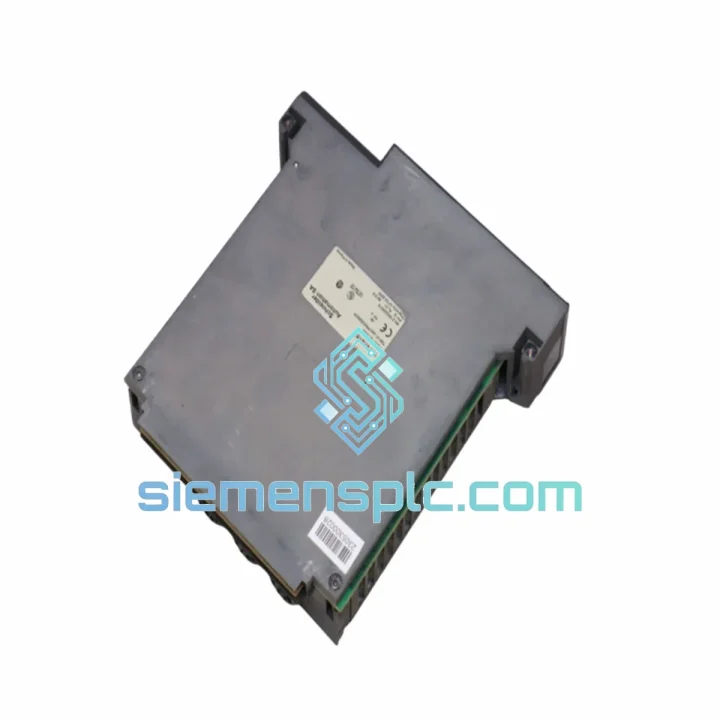
Request verified availability, condition, replacement risk review, packing options and courier lead time for TSXP57203M.
Click Request Quote and the part number is inserted into the inquiry form automatically.
Core fields for model confirmation and RFQ routing. Detailed product narrative remains below.
The TSXP57203M occupies the role of central processing authority within the TSX Premium rack architecture. As a double-format PL7 processor, it manages all scan-cycle execution, fieldbus arbitration, and inter-module data exchange across the backplane. In a distributed control topology, this CPU functions as the deterministic master: it enforces task scheduling across MAST, FAST, and event-driven tasks, coordinates Fipio bus polling cycles, and maintains data coherency between the program memory and the I/O image table — all within a single scan period measured in sub-millisecond increments for Boolean-intensive programs.
For procurement engineers evaluating this module, the TSXP57203M represents a mature, field-proven platform with a substantial installed base across European and Asian manufacturing facilities. Its double-slot form factor is not a design compromise — it reflects the physical requirement of housing a more capable processor die, expanded SRAM banks, and the integrated Fipio bus master transceiver on a single module PCB, eliminating the need for a dedicated communication slot and reducing overall rack BOM cost.
Real-time Stock & RFQ: [email protected] | WhatsApp: +86 18359268345
| Parameter | Specification |
|---|---|
| Part Number | TSXP57203M |
| Brand | Schneider Electric |
| Series | TSX Premium |
| Module Format | Double-slot (occupies 2 rack positions) |
| Processor Architecture | PL7 Pro CPU — 32-bit internal data path |
| Program Memory | 64 KB words (onboard flash) |
| Data Memory | 64 KB words (battery-backed SRAM) |
| Boolean Execution Speed | ~0.3 ms per 1,000 Boolean instructions |
| Max. Discrete I/O | 1,024 points (local + remote via Fipio) |
| Max. Analog Channels | 128 channels (application-dependent) |
| Integrated Communication | Uni-Telway terminal port (RS-485, 9-pin SUB-D) |
| Fieldbus | Fipio bus master (1 Mbit/s, up to 127 device addresses) |
| Supported Protocols | Modbus RTU/ASCII (via terminal port), Uni-TE, Fipio |
| Real-Time Clock | Integrated, battery-backed (CR2032 or equivalent) |
| PCMCIA Slot | 1× Type II (program backup, extended data storage) |
| Rack Compatibility | TSX RKY 4EX / 6EX / 8EX / 12EX |
| Operating Temperature | 0 °C to +60 °C |
| Storage Temperature | −25 °C to +70 °C |
| Relative Humidity | 5% to 95%, non-condensing |
| Vibration Resistance | IEC 60068-2-6: 1 g, 10–150 Hz |
| Shock Resistance | IEC 60068-2-27: 15 g, 11 ms half-sine |
| EMC Immunity | IEC 61000-4-2/3/4/5/6 (industrial level) |
| Certifications | CE (LVD + EMC), UL 508, CSA C22.2, IEC 61131-2 |
| Programming Software | PL7 Pro v4.x (IL, LD, FBD, SFC, ST) |
| Module Weight | 1,180 g |
| Country of Origin | France |
| Warranty | 12 months from date of shipment (siemensplc.com) |
| Lead Time | In-stock units: 1–3 business days. Non-stock: 7–21 business days subject to global sourcing confirmation. |
Backplane Bus Architecture: The TSXP57203M communicates with I/O modules via the TSX Premium X-bus backplane, a proprietary parallel bus operating at 8 MHz with a 16-bit data width. The CPU arbitrates bus access using a fixed-priority token-passing scheme: the MAST task holds the highest priority for I/O image refresh, followed by FAST task interrupts, then event tasks triggered by hardware interrupts from specific I/O modules. This architecture guarantees that time-critical control loops are not starved by lower-priority background processing — a fundamental requirement in process control applications where a missed scan can trigger a safety interlock.
Memory Segmentation and Data Integrity: Program memory resides in onboard flash, which is write-protected during normal run-mode operation. Data memory (internal bits, words, timers, counters) is held in battery-backed SRAM, ensuring that process state is preserved across power interruptions without requiring a cold-start initialization sequence. The separation of program and data memory into distinct physical banks eliminates the risk of a runaway write operation corrupting executable code — a design discipline that distinguishes industrial-grade CPUs from general-purpose embedded controllers.
Fipio Bus Master Integration: The integrated Fipio master transceiver operates at 1 Mbit/s over a shielded twisted-pair segment up to 1,000 m in length (with repeaters). The bus uses a producer-consumer model with time-slot allocation: each remote I/O device is assigned a fixed polling slot within the bus cycle, providing bounded latency for I/O data exchange. This determinism is critical in applications where analog setpoints must be updated at a consistent rate — for example, a PID loop controlling a variable-speed drive via a remote Fipio analog output module. The master also supports acyclic messaging for parameter download and diagnostic reads without disrupting the cyclic I/O exchange.
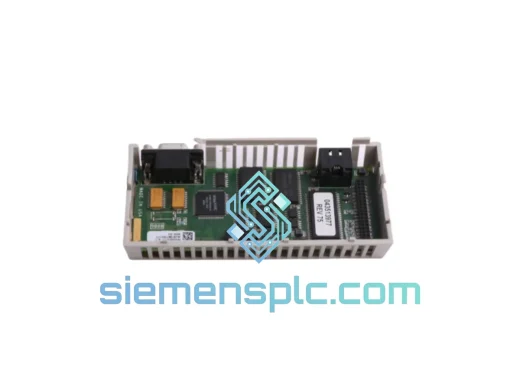
EMC Design and Isolation: The module PCB employs multi-layer ground plane construction with localized decoupling capacitors at each IC power rail. The Uni-Telway terminal port is transformer-isolated from the internal logic ground, preventing common-mode noise from field wiring from coupling into the CPU logic domain. The Fipio transceiver incorporates differential signaling with 120 Ω termination impedance matching, providing inherent rejection of common-mode interference on the bus cable — a practical necessity in environments with large motor drives generating conducted emissions on shared cable trays.
Diagnostic and Self-Test Mechanisms: At power-on, the CPU executes a ROM checksum verification, RAM read-write test, and backplane communication self-test before entering RUN mode. During operation, the watchdog timer monitors scan-cycle completion; if the MAST task overruns its configured watchdog period, the CPU transitions to STOP mode and sets a diagnostic bit accessible via the terminal port or Fipio acyclic channel. This fail-safe behavior prevents a hung program from holding outputs in an indeterminate state.
Every TSXP57203M unit dispatched from siemensplc.com undergoes a structured verification protocol before packaging. Physical inspection covers connector pin integrity, housing condition, label authenticity, and PCB revision marking cross-referenced against Schneider Electric’s published hardware revision history. Functional verification includes a power-on boot sequence confirmation, memory self-test pass, and Uni-Telway port response check using calibrated test equipment. Units that do not pass all checkpoints are quarantined and not offered for sale.
Authenticity screening is conducted by comparing batch codes, date codes, and PCB silk-screen markings against reference documentation. Counterfeit industrial modules are a documented risk in the secondary market; our screening process is designed to identify the most common indicators of non-genuine product before any unit reaches a customer’s facility.
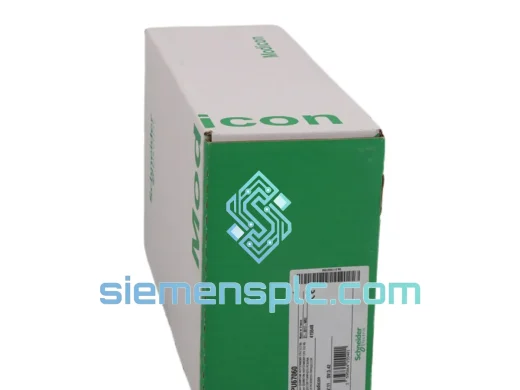
All units are packed in anti-static bags with foam cushioning inside double-wall corrugated cartons. For shipments to humid climates, moisture-barrier bags with desiccant packs are used. Each shipment includes a commercial invoice, packing list, and certificate of origin for customs clearance. HS Code 8537.10 is applied as standard for PLC CPU modules.
Logistics from Xiamen, China: Xiamen Gaoqi International Airport and Xiamen Port together form one of China’s most efficient export hubs for industrial goods. DHL, FedEx, and UPS express services from Xiamen provide transit times of 3–5 business days to most destinations in Europe, North America, Southeast Asia, and the Middle East. For time-critical plant shutdowns, same-day dispatch is available for orders confirmed before 14:00 CST. Sea freight consolidation is available for large-volume orders requiring cost-optimized delivery. Export documentation is prepared in compliance with Xiamen Customs regulations, and we have established relationships with licensed customs brokers for smooth clearance in major import markets.
A 12-month warranty covers all units against defects in materials and workmanship from the date of shipment. Warranty claims are processed with photographic evidence of the defect; replacement units or credit notes are issued within 5 business days of claim approval. Technical pre-sales support is available via email and WhatsApp for compatibility verification, system BOM review, and lead-time confirmation before purchase commitment.
Email: [email protected]
WhatsApp: +86 18359268345
Web: siemensplc.com
Location: Xiamen, China
© 2026 siemensplc.com. All rights reserved.
We check the full part number, brand, series and visible nameplate information before quotation.
Sales confirms stock path, condition option, quantity and realistic lead time for export dispatch.
DHL, FedEx, UPS or buyer courier arrangements can be reviewed with packing requirements.
Similar brand or category products for fast comparison and multi-item RFQ lists.