Schneider Electric
RFQ Ready
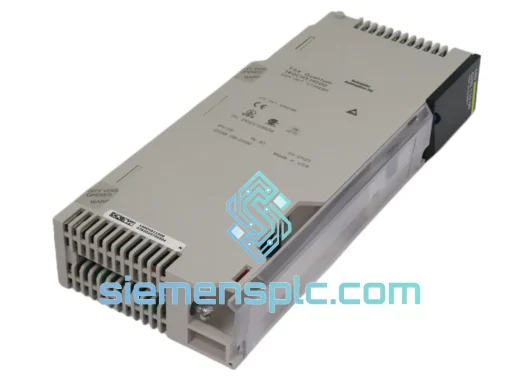
Schneider Electric XPSAF5130 Safety Relay Module
Inductive Sensor Monitor
Origin FR
Safety Relay Module
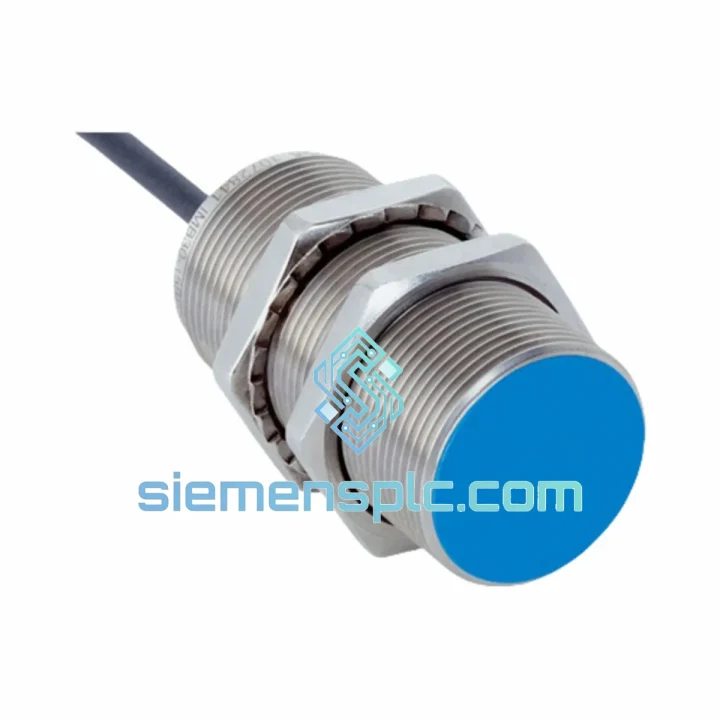
Request verified availability, condition, replacement risk review, packing options and courier lead time for XSAV11373.
Click Request Quote and the part number is inserted into the inquiry form automatically.
Core fields for model confirmation and RFQ routing. Detailed product narrative remains below.
Your line stopped. The HMI is throwing a sensor fault. Maintenance pulled the failed unit and confirmed it: Schneider Electric XSAV11373 — dead. You’ve got a production manager breathing down your neck, a shift supervisor calculating lost output, and a procurement team that can’t find stock locally. This is exactly the scenario we exist to solve.
At siemensplc.com, we maintain ready inventory of the XSAV11373 and ship same-day via DHL Express or FedEx International Priority from our Xiamen warehouse. While your local distributor quotes you a 4–6 week lead time, your replacement is already in transit. That’s the difference between a 2-hour fix and a 2-week production loss.
URGENT REQUIREMENT? Contact: [email protected] | WhatsApp: +86 18359268345
| Parameter | Specification |
|---|---|
| Part Number | XSAV11373 |
| Brand | Schneider Electric |
| Series | Telemecanique Sensors – XSAV |
| Sensor Type | Inductive Proximity Sensor |
| Housing Style | Barrel (Cylindrical) |
| Detection Principle | Non-contact electromagnetic induction |
| Target Material | Ferrous and non-ferrous metals |
| Output Type | PNP / NPN (verify with datasheet for exact variant) |
| Connection Type | Cable or M12 connector (variant-dependent) |
| Protection Rating | IP67 (dust-tight, immersion-resistant) |
| Operating Temperature | -25°C to +70°C |
| Country of Origin | France |
| Stock Status | ✅ Ready to Ship — Xiamen Warehouse |
| Shipping Method | DHL Express / FedEx International Priority |
| Typical Transit Time | 2–5 business days (most destinations) |
After a decade of field work, here are the failure modes and swap pitfalls I see most often with the XSAV barrel sensor family:
Common Failure Modes:
Replacement Procedure — Field Checklist:
Fault Codes to Watch: On Schneider Modicon PLCs, a stuck XSAV11373 typically surfaces as a persistent %I input TRUE with no target condition, or a short-circuit detected on digital input diagnostic if the output transistor has failed shorted. On third-party PLCs, check your I/O diagnostic page for input overcurrent flags.
The XSAV series was not designed for a climate-controlled lab. It was built for the floor — and the floor is brutal.
Vibration resistance: The XSAV11373’s stainless steel barrel housing and potted internal electronics are rated to withstand continuous mechanical vibration typical of press lines, compressors, and conveyor drive systems. The sensing coil assembly is encapsulated in resin, eliminating the resonance failures that plague cheaper sensors with air-gap internal construction.
Thermal cycling: Operating range of -25°C to +70°C covers the majority of industrial environments, from outdoor installations in northern climates to proximity to heat treatment furnaces. The oscillator circuit is temperature-compensated, meaning your switching point doesn’t drift as the ambient temperature changes across a shift.
Ingress protection — IP67: Fully sealed against dust ingress and capable of withstanding temporary immersion up to 1 meter for 30 minutes. In practice, this means the sensor survives coolant flooding, high-pressure washdowns, and condensation from temperature differentials in cold storage facilities. The M12 connector version maintains IP67 rating only when mated with a compatible IP67-rated cordset — verify your connector and cable assembly if you’re operating in a wet environment.
Chemical resistance: The PTFE-coated sensing face and PBT housing resist common industrial fluids including cutting oils, hydraulic fluid, and mild cleaning agents. Avoid prolonged exposure to strong solvents (acetone, MEK) or concentrated acids, which will degrade the housing material over time.
EMC performance: Compliant with EN 60947-5-2 and CE marked. The internal circuit includes suppression for inductive load switching transients, protecting the output transistor from voltage spikes generated by relay coils or solenoid valves on the same power rail.
Our Xiamen warehouse is positioned specifically for fast international dispatch. Here’s exactly how your order moves from our shelf to your facility:
We’ve shipped to over 60 countries. If your facility is reachable by DHL or FedEx, we can get this sensor to you.
📧 Email: [email protected]
💬 WhatsApp: +86 18359268345
🌐 Web: siemensplc.com
© 2026 siemensplc.com. All rights reserved.
We check the full part number, brand, series and visible nameplate information before quotation.
Sales confirms stock path, condition option, quantity and realistic lead time for export dispatch.
DHL, FedEx, UPS or buyer courier arrangements can be reviewed with packing requirements.
Similar brand or category products for fast comparison and multi-item RFQ lists.