Siemens
In Stock OK
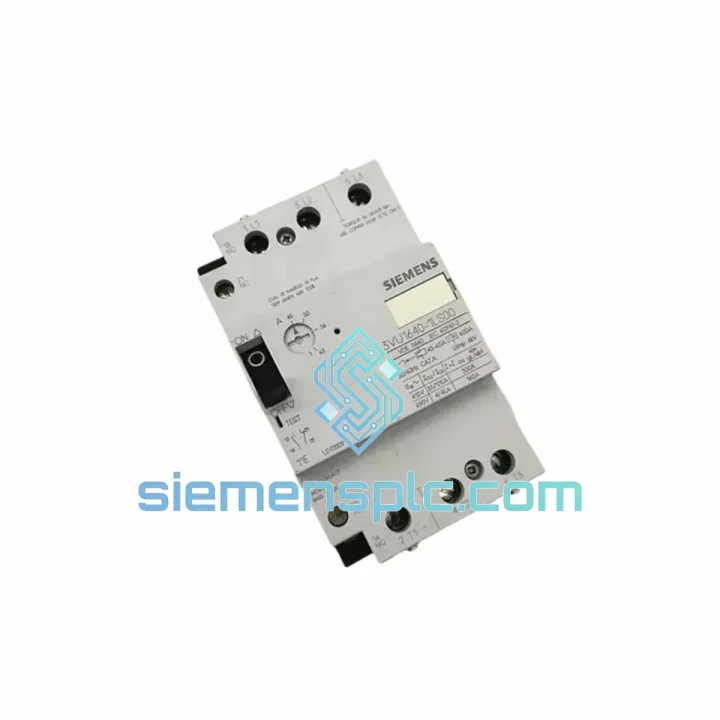
Siemens 3VU1640-1MJ00 Motor Protection Circuit Breaker – SIRIUS 3VU Series
Request verified availability, condition, replacement risk review, packing options and courier lead time for 3VU1640-1MJ00.
BrandSiemens
Part Number3VU1640-1MJ00
ConditionAvailability Check
Lead TimeRFQ Confirmation
DocumentsDatasheet / photos by RFQ
ShippingExport packing available
Auto-filled RFQ
3VU1640-1MJ00
Click Request Quote and the part number is inserted into the inquiry form automatically.
- Reply by email: [email protected]
- WhatsApp / Tel: +86 18359268345
- Mon-Sat 9:00-18:00 GMT+8
Procurement Data
Key Product Information
Core fields for model confirmation and RFQ routing. Detailed product narrative remains below.
- Brand
- Siemens
- Primary Part Number
- 3VU1640-1MJ00
- Product Type
- Motor Protection Circuit Breaker
- Series / Family
- SIRIUS
- Manufacturer
- Siemens AG
- Country of Origin
- DE
- Catalog Category
- Relays & Protection
- Warranty
- 12 months from date of shipment
Model confirmed for inquiry
3VU1640-1MJ00
Send quantity, destination and urgency. The RFQ form keeps this part number attached.
Request Quote
Product Overview
Siemens 3VU1640-1MJ00 — Thermal-Magnetic Motor Protection in the SIRIUS 3VU Platform
The 3VU1640-1MJ00 occupies a well-defined position in the SIRIUS low-voltage protection hierarchy: it is a 3-pole, thermal-magnetic motor protection circuit breaker (MPCB) rated for a current adjustment range of 6.3–10 A, with a short-circuit breaking capacity of 100 kA at 400 V AC (IEC 60947-2). Within a motor control center (MCC) or standalone starter panel, this device performs two physically distinct protection functions through a single compact housing — inverse-time thermal overload tripping via a bimetallic element, and instantaneous electromagnetic short-circuit release via a calibrated magnetic trip coil. The integration of both mechanisms eliminates the need for a separate thermal overload relay (TOR) in the branch circuit, reducing component count, wiring nodes, and potential failure points in the protection chain.
In a typical DOL (direct-on-line) motor starter topology, the 3VU1640-1MJ00 is installed upstream of the SIRIUS 3RT-series contactor. The MPCB handles fault isolation autonomously — it does not require a control signal from the PLC or relay logic to trip. This hardware-level independence is critical in applications where communication bus latency or PLC scan-cycle delays would otherwise allow a fault current to persist long enough to damage motor windings. The 3VU1640-1MJ00’s magnetic release responds within milliseconds of a short-circuit event, well within the thermal withstand envelope of standard IEC motor winding insulation classes (Class B, F, H).
The device’s rotary current-setting dial allows field adjustment of the thermal trip threshold across the 6.3–10 A band without disassembly or recalibration tools. This is particularly relevant in multi-motor panels where the same MPCB frame size serves motors of slightly different ratings — a 7.5 kW and a 5.5 kW motor at 400 V, for instance, both fall within this adjustment window. The trip class is IEC Class 10, meaning the bimetallic element will trip within 10 seconds at 7.2× the set current (cold start condition), which aligns with the starting current profile of standard squirrel-cage induction motors under DOL conditions.
Real-time Stock & RFQ: [email protected] | WhatsApp: +86 18359268345
Technical Parameters
| Parameter | Value |
|---|---|
| Part Number / SKU | 3VU1640-1MJ00 |
| Manufacturer | Siemens AG |
| Series | SIRIUS 3VU |
| Device Type | Motor Protection Circuit Breaker (MPCB) |
| Poles | 3-pole |
| Current Setting Range | 6.3 – 10 A (adjustable via rotary dial) |
| Trip Class | IEC Class 10 |
| Rated Operational Voltage (Ue) | 690 V AC (50/60 Hz) |
| Rated Insulation Voltage (Ui) | 690 V |
| Rated Impulse Withstand Voltage (Uimp) | 6 kV |
| Short-Circuit Breaking Capacity (Ics/Icu) | 100 kA at 400 V AC (IEC 60947-2) |
| Protection Function | Thermal overload (bimetallic) + Magnetic short-circuit release |
| Mounting | 35 mm DIN rail (EN 60715) or screw panel mounting |
| Degree of Protection | IP20 (terminal area) |
| Ambient Temperature (Operation) | -25 °C to +60 °C |
| Standards | IEC/EN 60947-2, IEC/EN 60947-4-1, UL 508 |
| Approvals | CE, UL, cUL |
| Country of Origin | Germany |
| Warranty | 12 months from date of shipment |
Hardware Logical Analysis
Bimetallic Thermal Element — Inverse-Time Characteristic: The thermal overload release in the 3VU1640-1MJ00 uses a bimetallic strip assembly that deflects proportionally to I²t (current squared × time). This inverse-time characteristic mirrors the thermal model of a motor winding: a sustained moderate overload (e.g., 1.2× In) produces a slow, cumulative temperature rise, while a severe overload (e.g., 6× In) produces rapid deflection and a fast trip. The bimetallic element is temperature-compensated, meaning ambient temperature variations between -25 °C and +60 °C do not significantly shift the trip threshold — a critical requirement in outdoor switchgear enclosures and unventilated control cabinets.
Magnetic Short-Circuit Release — Instantaneous Response: The electromagnetic trip coil is set to respond at approximately 13× the maximum current setting (i.e., ~130 A for a 10 A setting). This threshold is deliberately positioned above the motor’s locked-rotor current (typically 6–8× In for standard IEC motors) to prevent nuisance tripping during normal starting, while still providing sub-cycle response to genuine short-circuit faults. The magnetic plunger mechanism operates independently of the thermal element — both can trip the common trip bar simultaneously in a bolted fault scenario.
EMC Design and Arc Quenching: The 3VU1640-1MJ00 incorporates a deion arc chute chamber on each pole. During contact separation under fault current, the arc is driven into the chute by the magnetic field of the fault current itself (electromagnetic arc blowout), where it is split into multiple shorter arcs by the steel deion plates. This reduces arc voltage and energy, limiting the let-through energy (I²t) to downstream components. The arc chute geometry is optimized for the 400–690 V AC range, ensuring arc extinction within the first current zero crossing in most fault scenarios.
Mechanical Endurance and Contact Material: The silver-alloy contact tips are rated for a minimum of 100,000 mechanical operations and 25,000 electrical operations at rated current. The toggle mechanism uses a stored-energy spring design — once the trip threshold is crossed, the contact opening velocity is determined by the spring, not by the fault current magnitude. This ensures consistent contact separation speed regardless of whether the trip is caused by a marginal overload or a bolted short circuit, which is important for arc energy management and contact erosion control.
System Integration Benefits
- Eliminates Separate TOR in Branch Circuit: The integrated thermal-magnetic design removes the need for a standalone thermal overload relay (e.g., 3RU2 series) in standard DOL applications, reducing panel depth by approximately 45 mm and eliminating two wiring termination points per phase.
- Hardware-Level Fault Isolation — PLC-Independent: The MPCB trips autonomously on overcurrent without requiring a PLC output command or relay logic signal. This removes the PLC scan cycle (typically 1–10 ms) and communication latency from the fault response path, ensuring motor protection is not compromised by controller faults or program errors.
- Deterministic Trip Characteristic for Motor Thermal Modeling: The IEC Class 10 trip curve is a defined, reproducible characteristic that can be directly mapped to motor thermal models in SCADA or energy management systems. Engineers can calculate the exact thermal margin remaining before trip without empirical testing.
- Auxiliary Contact Compatibility for Remote Diagnostics: The 3VU1640-1MJ00 accepts snap-on auxiliary contact blocks (e.g., 3VU9210-1TK00) that provide NO/NC signal outputs for trip status, ready status, and manual-off position. These signals can be wired to PLC digital inputs for remote fault annunciation and motor status monitoring without modifying the main circuit.
- Coordinated Protection with SIRIUS 3RT Contactors: Siemens publishes Type 2 coordination tables for 3VU + 3RT combinations. Type 2 coordination guarantees that after a short-circuit event, both the MPCB and contactor remain serviceable without replacement — a significant advantage in high-availability production environments where maintenance windows are constrained.
- Reversing Starter Compatibility: The 3VU1640-1MJ00 is rated for use in reversing starter configurations (two 3RT contactors with mechanical and electrical interlocking). The MPCB’s breaking capacity covers the worst-case fault current in both forward and reverse directions without derating.
- DIN Rail Space Efficiency — 45 mm Width: The 3VU frame occupies 45 mm of DIN rail width per 3-pole unit. In a 24-circuit MCC section with 600 mm rail length, this allows up to 13 MPCBs per rail without exceeding mechanical limits, compared to 8–9 units for equivalent frame-size alternatives from other manufacturers.
- Phase-Loss Sensitivity: The bimetallic assembly detects single-phase loss conditions (phase failure) through differential heating of the three bimetallic elements. When one phase is lost, the remaining two phases carry increased current to maintain motor torque, causing accelerated bimetallic deflection and a trip within the Class 10 time window. This protects the motor from the sustained negative-sequence current that causes rapid rotor heating during single-phasing.
Quality Assurance & Global Logistics
Every 3VU1640-1MJ00 unit dispatched from our Xiamen, China facility is a factory-original Siemens component sourced through verified industrial distribution channels. Each unit carries the Siemens holographic authenticity label, CE marking, and UL/cUL listing mark as applied at the Siemens manufacturing facility. Batch traceability records — including production date code, factory identifier, and inspection stamp — are retained and available upon request for quality audit purposes.
Pre-shipment inspection covers: housing integrity check (no cracks, deformation, or label damage), rotary dial operation across the full adjustment range, manual trip and reset function verification, and terminal torque check against Siemens published values (typically 2.5–3 Nm for M4 terminals in this frame size). Units that do not pass all inspection criteria are quarantined and not shipped.
Packaging uses anti-static foam inserts within double-wall corrugated cartons, rated for a 1.2 m drop test per ISTA 1A. For international air freight, units are packed to IATA DGR standards where applicable. Export documentation provided as standard: commercial invoice, packing list, and certificate of origin (China). Additional documents — EUR.1 movement certificate, FORM A GSP certificate, or third-party inspection reports — can be arranged upon request with 2–3 business days lead time.
Standard dispatch from Xiamen: DHL Express (3–5 business days to Europe/North America), FedEx International Priority (3–5 days), or sea freight consolidation for bulk orders (18–25 days to major ports). Air freight tracking numbers are provided within 24 hours of dispatch. All shipments are covered by cargo insurance as standard.
Contact Information
Email: [email protected]
WhatsApp: +86 18359268345
Web: siemensplc.com
Location: Xiamen, China
© 2026 siemensplc.com. All rights reserved.
Ready to quote
[email protected]
Send This Part Number to Sales
RFQ workflow
Quality workflow ->
Confirmation Process
01Model confirmation
We check the full part number, brand, series and visible nameplate information before quotation.
02Availability reply
Sales confirms stock path, condition option, quantity and realistic lead time for export dispatch.
03Packing & courier
DHL, FedEx, UPS or buyer courier arrangements can be reviewed with packing requirements.
Continue sourcing
Browse full catalog ->
Related Automation Parts
Similar brand or category products for fast comparison and multi-item RFQ lists.
Siemens
RFQ Ready
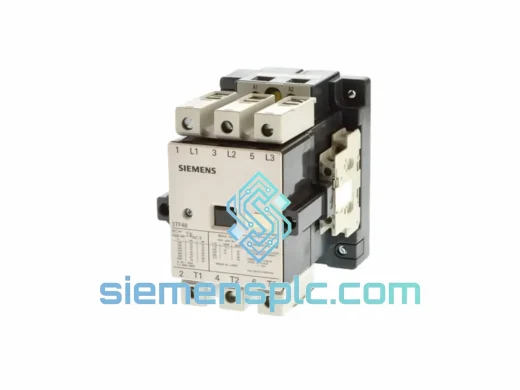
Siemens 3TF47 22-OXMO AC Contactor – 3TF Series SIRIUS Classic
SIRIUS
Origin DE
AC Contactor