Siemens
RFQ Ready
Siemens 505-6108A Analog Input Module – SIMATIC 505
SIMATIC 505 PLC
Origin DE
Analog Input Module
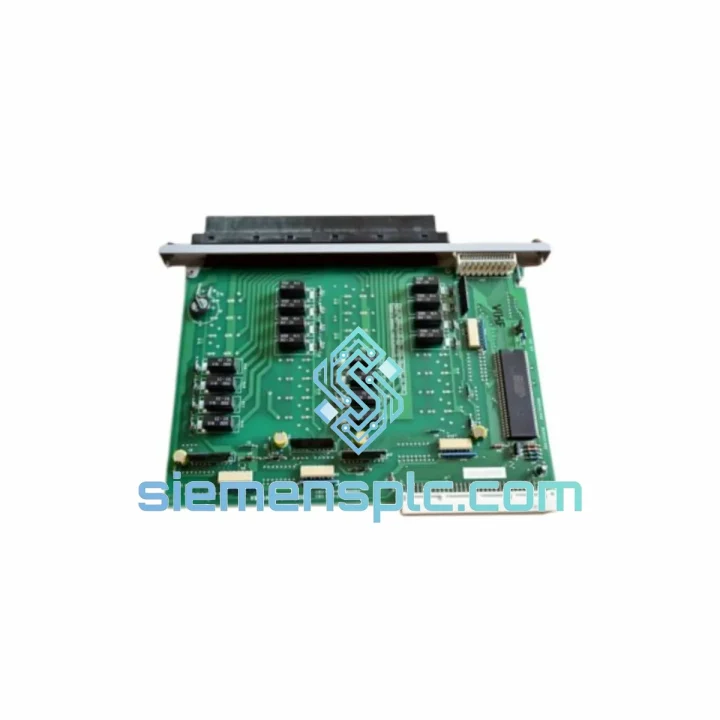
Request verified availability, condition, replacement risk review, packing options and courier lead time for 505-4916A.
Click Request Quote and the part number is inserted into the inquiry form automatically.
Core fields for model confirmation and RFQ routing. Detailed product narrative remains below.
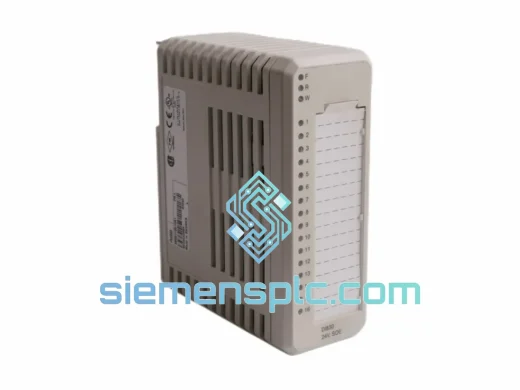
The Siemens 505-4916A is a 16-channel relay output module engineered for the SIMATIC 505 programmable logic controller platform — a distributed I/O architecture that defined industrial discrete control standards across process, manufacturing, and infrastructure sectors throughout the 1980s and 1990s. Within a 505-series control loop, this module occupies the final execution layer: it receives binary state commands from the CPU via the parallel I/O backplane bus and translates them into galvanically isolated relay contact closures capable of switching both AC and DC load circuits without exposing the controller logic to load-side transients.
Each of the 16 output channels is driven by an independent electromechanical relay, providing true dry-contact switching. This architecture is fundamentally different from solid-state transistor or triac output modules: relay contacts impose no polarity constraint on the load circuit, tolerate mixed AC/DC loads on the same module, and present near-zero leakage current in the open state — a critical requirement in safety-sensitive valve and motor starter applications where phantom current can cause unintended actuation.
The module interfaces with the SIMATIC 505 I/O backplane through a 32-bit parallel bus segment. The CPU allocates a fixed I/O address block to the module during rack configuration; output state data is written to the module’s internal latch register on each PLC scan cycle. The latch holds the last commanded state through momentary bus interruptions, preventing spurious output transitions during CPU-to-I/O communication retries — a behavior that distinguishes the 505 backplane architecture from early serial fieldbus implementations.
Optocoupler isolation between the backplane logic interface and the relay coil drive circuit provides a minimum 1500 V AC isolation barrier. This two-stage isolation topology — optocoupler followed by relay contact — ensures that load-side fault voltages cannot propagate back into the CPU backplane, protecting the entire rack from single-point electrical failures on the field wiring side.
The 505-4916A is compatible with all standard SIMATIC 505 I/O racks, including the 505-6860, 505-6870, and 505-6880 chassis variants. No external module power supply is required; the module draws operating power directly from the backplane’s regulated 5 VDC logic rail. Relay coil excitation is derived from the backplane’s auxiliary power segment, keeping field-side switching energy fully separated from logic-side power distribution.
Programming is handled through TISOFT or equivalent 505-compatible configuration tools. The module’s I/O address is determined by its physical slot position within the rack, following the 505 platform’s slot-based addressing convention. No DIP switch configuration or firmware parameterization is required for standard discrete output operation.
Real-time Stock & RFQ: [email protected] | WhatsApp: +86 18359268345
| Parameter | Specification |
|---|---|
| Part Number | 505-4916A |
| Manufacturer | Siemens AG |
| Platform | SIMATIC 505 Series PLC |
| Module Category | Discrete Relay Output |
| Number of Output Channels | 16 points |
| Output Device Type | Electromechanical relay (dry contact) |
| Contact Configuration | Normally open (NO) per channel |
| Rated Contact Voltage | Up to 120 V AC / 30 V DC per point |
| Rated Contact Current | 2 A per output point |
| Isolation Voltage (Logic to Field) | 1500 V AC minimum (optocoupler + relay) |
| Backplane Interface | SIMATIC 505 parallel I/O bus |
| Module Power Supply | Backplane-powered (5 VDC logic rail) |
| Operating Temperature | 0 °C to +60 °C |
| Storage Temperature | -40 °C to +85 °C |
| Relative Humidity | 5% to 95%, non-condensing |
| Module Weight | 700 g |
| Form Factor | Standard SIMATIC 505 single-slot module |
| Compatible Racks | 505-6860, 505-6870, 505-6880 |
| Programming Environment | TISOFT, STEP 5 (505-compatible) |
| Country of Origin | Germany |
| Warranty | 12 months from date of shipment |
The 505-4916A’s output architecture is built around a two-barrier isolation philosophy that addresses the primary failure modes encountered in industrial discrete output applications.
Optocoupler Front-End: Each output channel’s drive signal passes through a dedicated optocoupler before reaching the relay coil transistor. The optocoupler’s LED side is driven by the backplane logic at 5 VDC; the phototransistor side operates at the relay coil excitation voltage. This arrangement ensures that any reverse EMF spike generated when the relay coil de-energizes — typically 50–200 V transient — is absorbed within the relay drive circuit and cannot couple back into the 5 VDC logic bus. A flyback suppression diode across each relay coil clamps the de-energization transient to within 1 V above the coil supply rail, limiting stress on the phototransistor and extending relay coil driver MTBF.
Relay Contact Architecture: The electromechanical relay provides the second isolation barrier. Unlike solid-state outputs, the relay contact presents a true open circuit in the de-energized state, with off-state leakage measured in microamperes rather than milliamperes. This characteristic is essential in applications where the load circuit includes sensitive pilot devices — pressure switches, proximity sensors used as interlock inputs — that can be falsely triggered by leakage current from solid-state outputs.
EMC Design Considerations: The module’s PCB layout routes high-current relay switching paths away from the low-level optocoupler signal traces, minimizing inductive coupling between the field-side switching transients and the logic-side signal integrity. The backplane connector pinout assigns ground return pins adjacent to each signal pin, reducing loop area and associated radiated emissions during high-frequency bus transactions. The module housing provides a continuous conductive enclosure that attenuates external RF fields, supporting compliance with EN 61000-4-3 radiated immunity requirements applicable to industrial control equipment.
Output State Latching: The module incorporates an internal D-type latch register that holds the last valid output state written by the CPU. If the backplane bus enters a retry cycle due to a momentary communication error, the latch maintains the current output state rather than defaulting to zero. This behavior prevents the uncontrolled output transitions that would otherwise occur in applications where relay outputs drive motor starters or solenoid valves — devices where an unintended de-energization followed by immediate re-energization can cause mechanical damage or process upsets.
Every Siemens 505-4916A unit supplied by siemensplc.com is sourced through verified channels and subjected to a structured pre-shipment inspection protocol. Visual examination confirms that the module housing, backplane connector, and labeling are consistent with genuine Siemens manufacturing standards. Functional verification confirms that all 16 relay output channels respond correctly to logic-level drive signals and that the backplane interface connector presents the correct impedance characteristics on all active pins.
Units are shipped from our Xiamen, China facility, which maintains bonded warehouse stock of SIMATIC 505 series modules to support both planned procurement and emergency MRO requirements. Xiamen’s port infrastructure supports direct air freight connections to major industrial hubs across Southeast Asia, the Middle East, Europe, and the Americas, with typical transit times of 3–7 business days for air shipment to most destinations.
Export documentation — including commercial invoice, packing list, certificate of conformance, and ECCN classification statement — is prepared for every international shipment. Customers requiring specific customs documentation formats for their country of import can request customized documentation at the time of order placement. All units are packed in anti-static bags within rigid foam-lined cartons to prevent mechanical and electrostatic damage during transit.
A 12-month warranty covers all units against defects in materials and workmanship from the date of shipment. Warranty claims are processed with a target response time of 48 hours; replacement units are dispatched from Xiamen stock upon claim approval.
📧 Email: [email protected]
💬 WhatsApp: +86 18359268345
🌐 Web: siemensplc.com
📍 Location: Xiamen, China
© 2026 siemensplc.com. All rights reserved.
We check the full part number, brand, series and visible nameplate information before quotation.
Sales confirms stock path, condition option, quantity and realistic lead time for export dispatch.
DHL, FedEx, UPS or buyer courier arrangements can be reviewed with packing requirements.
Similar brand or category products for fast comparison and multi-item RFQ lists.