
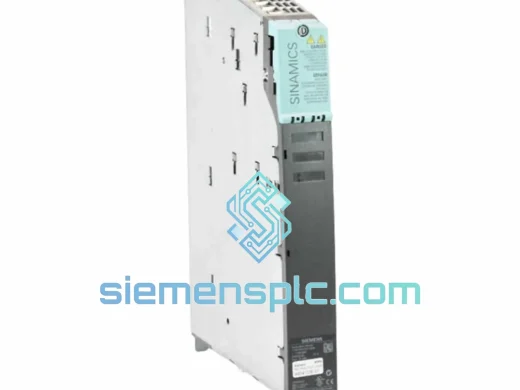
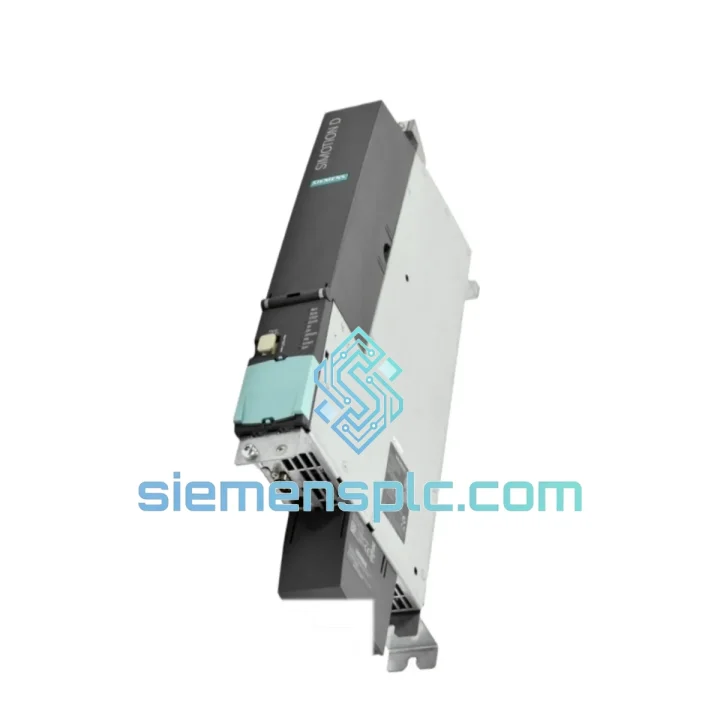
Siemens
In Stock OK
Siemens 6AU1425-2AD00-0AA0 Motion Controller – SIMOTION D425-2 DP/PN
Request verified availability, condition, replacement risk review, packing options and courier lead time for 6AU1425-2AD00-0AA0.
BrandSiemens
Part Number6AU1425-2AD00-0AA0
ConditionAvailability Check
Lead TimeRFQ Confirmation
DocumentsDatasheet / photos by RFQ
ShippingExport packing available
Auto-filled RFQ
6AU1425-2AD00-0AA0
Click Request Quote and the part number is inserted into the inquiry form automatically.
- Reply by email: [email protected]
- WhatsApp / Tel: +86 18359268345
- Mon-Sat 9:00-18:00 GMT+8
Procurement Data
Key Product Information
Core fields for model confirmation and RFQ routing. Detailed product narrative remains below.
- Brand
- Siemens
- Primary Part Number
- 6AU1425-2AD00-0AA0
- Product Type
- Motion Controller
- Series / Family
- SINAMICS
- Country of Origin
- DE
- Catalog Category
- Motor Drives
- Operating Temp.
- 0 °C to +55 °C
- Warranty
- 12 months functional warranty; DOA units replaced within 7 business days
Model confirmed for inquiry
6AU1425-2AD00-0AA0
Send quantity, destination and urgency. The RFQ form keeps this part number attached.
Request Quote
Product Overview
Siemens 6AU1425-2AD00-0AA0 SIMOTION D425-2 DP/PN — Drive-Integrated Servo Motion Controller for Precision Multi-Axis Machines
The 6AU1425-2AD00-0AA0 is the SIMOTION D425-2 DP/PN, a Control Unit from Siemens that mounts directly within the SINAMICS S120 booksize drive line-up and assumes full responsibility for motion interpolation, PLC task execution, and fieldbus master functions — all within a single 50 mm-wide module. The architecture departs fundamentally from the external-controller model: rather than issuing setpoints across a fieldbus to a separate drive controller, the D425-2 DP/PN shares the same backplane as the Motor Modules and communicates with them over DRIVE-CLiQ, Siemens’ isochronous serial protocol operating at 100 Mbit/s with hardware-generated synchronization pulses accurate to ±1 µs. This physical co-location is not a marketing distinction — it is the mechanism by which the platform achieves axis-to-axis phase synchronization below ±10 µs, a figure that external controller topologies cannot match without specialized hardware additions.
The MLFB suffix structure encodes the hardware configuration precisely. The “D425” designator places this unit in the mid-range SIMOTION D family, above the D410-2 single-axis variant and below the D435-2 and D445-2 high-axis-count platforms. The “-2” generation designation indicates the second-generation dual-core processor architecture. The “DP/PN” suffix confirms factory-fitted PROFIBUS DP and PROFINET IO interfaces, both active simultaneously without mutual exclusion. This dual-protocol capability is operationally significant: the PROFINET IRT port serves as master for distributed I/O with sub-millisecond cycle times, while the two PROFIBUS DP ports handle legacy encoder interfaces, operator panels, and field devices that predate PROFINET adoption — all managed from a single engineering project in SCOUT TIA.
Native axis capacity is six servo axes, expandable to 32 axes by connecting CX32-2 Supplementary Controller Modules over DRIVE-CLiQ without modifying the base controller or its project license structure. Each axis object supports electronic cam, electronic gear, synchronous operation, and path interpolation as standard technology functions — no separate technology option license is required for these functions on the D425-2 platform.
Real-time Stock & RFQ: [email protected] | WhatsApp: +86 18359268345
Technical Parameters
| Parameter | Specification |
|---|---|
| MLFB / Order Number | 6AU1425-2AD00-0AA0 |
| Product Family | SIMOTION D425-2 DP/PN |
| Host Drive Platform | SINAMICS S120 Booksize |
| CPU Architecture | Dual-core, 800 MHz, dedicated motion + PLC core partitioning |
| Servo Axes (native) | 6 axes at minimum 125 µs cycle time |
| Servo Axes (with CX32-2) | Up to 32 axes |
| Minimum Servo Cycle Time | 125 µs (0.125 ms) |
| DRIVE-CLiQ Ports | 4 × DRIVE-CLiQ, 100 Mbit/s, isochronous, ±1 µs sync accuracy |
| PROFIBUS DP | 2 × DP Master/Slave, up to 12 Mbit/s, equidistant bus cycle |
| PROFINET IO | 1 × PROFINET IRT, 100 Mbit/s, RT Class 3 (IRT) capable |
| Service Ethernet (X127) | 1 × 10/100 Mbit/s, isolated from production network |
| USB | 1 × USB 2.0, front panel, firmware and project transfer |
| CompactFlash Slot | 1 × CF card — project, drive parameters, license keys |
| Supported Drive Objects | SERVO, VECTOR, V/f, Active Line Module, Basic Positioner |
| Technology Functions | Electronic cam, electronic gear, path interpolation, synchronous shaft, electronic shaft |
| IEC 61131-3 Languages | ST, LAD, FBD, MCC (Motion Control Chart) |
| Safety Functions | STO, SS1, SBC via PROFIsafe — SIL 2 / PLd without external safety relay |
| Supply Voltage | 24 V DC via SINAMICS S120 backplane interface |
| Operating Temperature | 0 °C to +55 °C |
| Storage Temperature | −40 °C to +70 °C |
| Relative Humidity | 5 % to 95 %, non-condensing (IEC 60068-2-78) |
| Degree of Protection | IP20 (EN 60529) |
| Dimensions W × H × D | 50 mm × 380 mm × 270 mm |
| Weight | Approx. 3.6 kg |
| Certifications | CE, UL, cUL, RoHS 2011/65/EU |
| Country of Origin | Germany |
| Warranty | 12 months functional warranty; DOA units replaced within 7 business days |
Hardware Logical Analysis
The dual-core processor in the D425-2 DP/PN is partitioned at the firmware level, not merely at the OS scheduling level. Core 0 executes the motion kernel exclusively: interpolation calculations, cam table traversal, axis state machine transitions, and DRIVE-CLiQ frame assembly all run on this core with no preemption from PLC or communication tasks. Core 1 handles IEC 61131-3 PLC tasks (T1 through T4 in priority order), technology object management, PROFIBUS DP stack processing, and PROFINET IO stack processing. The consequence of this hard partitioning is that a PLC task overrun — caused by a complex ladder rung or a slow function block — cannot introduce jitter into the motion interpolation cycle. This is a structural guarantee, not a tuning parameter.
DRIVE-CLiQ synchronization operates on a hardware pulse distributed from the Control Unit to all connected components simultaneously. Each Motor Module, SMC sensor module, and Active Line Module latches its actual-value capture to this pulse within ±1 µs. The isochronous exchange that follows carries encoder position, motor current feedback, status words, and setpoint acknowledgments in a single frame per cycle — there is no separate polling phase. The practical result is that position data from all axes reflects the same physical instant in time, which is the prerequisite for accurate electronic cam and synchronous operation across multiple axes.
The PROFINET IRT implementation uses a dedicated communication ASIC separate from the main processor cores. IRT frames are placed in reserved time slots within each PROFINET bus cycle by this ASIC, independent of processor load. Frame delivery jitter is specified below 1 µs, which is the defining characteristic of IRT versus standard RT. This hardware separation means that a spike in PLC scan time or a PROFIBUS DP retransmission event does not affect IRT frame scheduling — the two communication domains are electrically and logically isolated at the ASIC level.
EMC mitigation on the D425-2 DP/PN follows a segmented ground plane topology. The PCB separates the PROFIBUS/PROFINET signal ground from the 24 V DC supply return and the DRIVE-CLiQ transceiver ground. PROFIBUS cable shield termination points on the front panel connect to chassis ground directly, bypassing the signal ground plane. This prevents common-mode noise generated by the SINAMICS S120 DC bus switching transients — typically in the 5–50 kHz range — from coupling into the PROFIBUS differential pair. In installations with multiple drive axes and high PWM switching frequencies, this ground architecture measurably reduces PROFIBUS CRC error rates compared to controllers without segmented ground planes.
System Integration Benefits
- Eliminated fieldbus latency in the setpoint path: DRIVE-CLiQ carries motion setpoints from the interpolator to the Motor Module within the same isochronous cycle — no external fieldbus round-trip, no 1–4 ms transport delay that accumulates across axis groups in distributed architectures.
- Concurrent dual-fieldbus mastering without gateway hardware: PROFIBUS DP and PROFINET IRT operate on independent stacks simultaneously. Mixed field device populations — legacy PROFIBUS encoders alongside PROFINET distributed I/O — are managed from a single controller without protocol converters or additional CPU modules.
- Linear axis scalability via DRIVE-CLiQ ring expansion: Adding CX32-2 modules to the DRIVE-CLiQ topology increases axis count to 32 without replacing the master controller, re-licensing the project, or modifying the SCOUT TIA project structure beyond adding axis objects.
- Single-tool engineering environment: SCOUT TIA within TIA Portal covers drive parameterization, motion program development, PLC logic, safety configuration, and HMI variable export in one project file — eliminating the version synchronization overhead of separate drive and controller engineering tools.
- CF card-based field replacement procedure: The CompactFlash card holds the complete project image, all drive parameter sets, and hardware license keys. Replacing a failed unit in the field requires transferring the CF card and cycling power — no engineering laptop, no re-parameterization in standard configurations.
- SIL 2 / PLd safety without external relay modules: STO, SS1, and SBC safety functions are implemented in firmware and activated via PROFIsafe frames over the existing PROFINET connection. No additional safety relay hardware or wiring is required, reducing cabinet volume and BOM cost while meeting EN ISO 13849-1 PLd requirements.
- PROFINET-native diagnostic transparency: Axis state, drive fault codes, motion program execution counters, and communication error statistics are exposed as standard PROFINET diagnostic records. Any PROFINET-capable HMI or SCADA system can read these records without a proprietary OPC server or diagnostic software layer.
- Isolated service access during live production: The X127 Ethernet port provides a dedicated path to SCOUT TIA and the integrated web server. Because X127 is electrically isolated from the production PROFINET port, engineers can connect for diagnostics or parameter adjustments during live machine operation without introducing traffic that could disturb IRT frame scheduling.
Quality Assurance & Global Logistics
Each 6AU1425-2AD00-0AA0 unit shipped from our Xiamen, China operations center undergoes a structured pre-dispatch inspection before packaging. The inspection sequence covers: verification of the Siemens holographic authenticity label against the unit serial number; MLFB barcode scan cross-referenced to the order number; physical inspection of all DRIVE-CLiQ port latches, the CompactFlash slot ejector mechanism, and PROFIBUS sub-D connector pins; and firmware version confirmation against the nameplate data. Units that do not pass all inspection points are quarantined and not dispatched.
Packaging uses anti-static foam inserts sized to the D425-2 DP/PN form factor, with silica gel desiccant packs sealed inside the carton to maintain relative humidity below 40 % during transit. Each shipment includes a commercial invoice, packing list, CE declaration of conformity, and inspection report. Export documentation for customs clearance — including dual-use classification statements where applicable — is prepared for every international shipment and provided upon request.
Standard dispatch from Xiamen is within 2 business days of order confirmation for in-stock units. Carrier options include DHL Express (3–5 business days to Europe and North America), FedEx International Priority, and sea freight consolidation for pallet-quantity orders. The 12-month functional warranty covers confirmed manufacturing defects. DOA units are replaced within 7 business days of fault confirmation. Pre-purchase technical support — covering firmware version selection, CX32-2 axis expansion planning, and PROFINET IRT topology design — is available from our engineering team at no additional charge.
Contact Information
Email: [email protected]
WhatsApp: +86 18359268345
Web: siemensplc.com
Location: Xiamen, China
© 2026 siemensplc.com. All rights reserved.
Ready to quote
[email protected]
Send This Part Number to Sales
RFQ workflow
Quality workflow ->
Confirmation Process
01Model confirmation
We check the full part number, brand, series and visible nameplate information before quotation.
02Availability reply
Sales confirms stock path, condition option, quantity and realistic lead time for export dispatch.
03Packing & courier
DHL, FedEx, UPS or buyer courier arrangements can be reviewed with packing requirements.
Continue sourcing
Browse full catalog ->
Related Automation Parts
Similar brand or category products for fast comparison and multi-item RFQ lists.
Siemens
RFQ Ready
Siemens 6SL3210-1KE18-8UP1 AC Drive Power Module
SINAMICS
Origin DE
AC Drive Power Module
Siemens
RFQ Ready
Siemens 383VA21N1F Control Interface Board – SINAMICS
SINAMICS
Origin DE
Control Interface Board
Siemens
RFQ Ready
Siemens ULC0186 A5E00182136 PCB Drive Control Board – SINAMICS MICROMASTER
SINAMICS
Origin DE
PCB Drive Control Board