Siemens
RFQ Ready
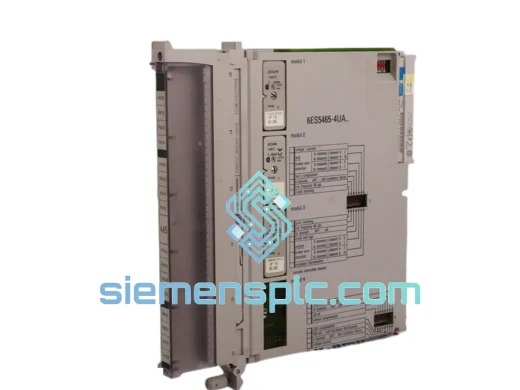
Siemens 900S50-0460 Digital Output Module – SIMATIC S5
SIMATIC S5
Origin DE
Digital Output Module
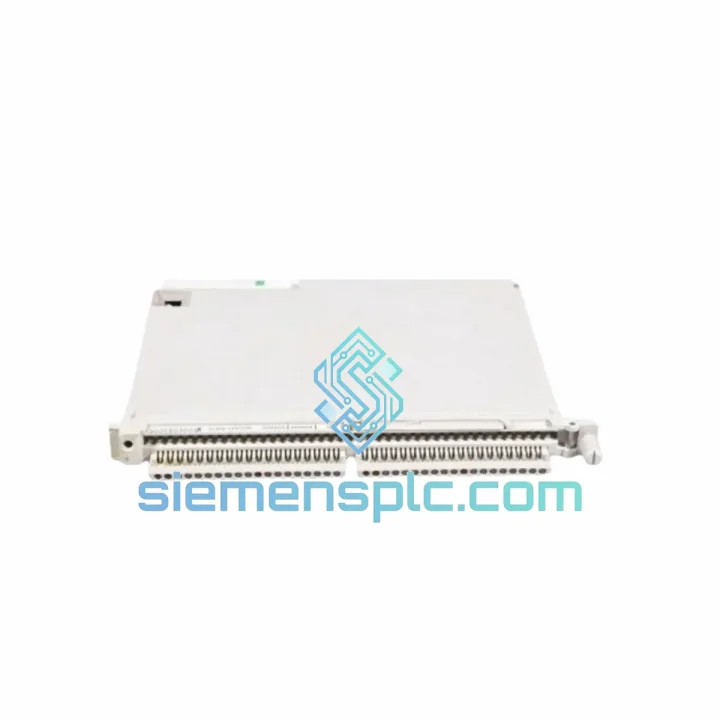
Request verified availability, condition, replacement risk review, packing options and courier lead time for 6ES5441-4UA12.
Click Request Quote and the part number is inserted into the inquiry form automatically.
Core fields for model confirmation and RFQ routing. Detailed product narrative remains below.
A failed digital output module on an S5 rack doesn’t announce itself politely. One moment the line is running; the next, the CPU’s SF LED is solid red, sixteen field devices have gone dark, and your shift supervisor is already on the phone. The Siemens 6ES5441-4UA12 is a 16-channel, 24 VDC transistor output module for the SIMATIC S5 platform — and it is one of the most failure-prone cards in aging S5 installations because of its transistor output stage, which degrades under sustained inductive load switching over years of continuous operation.
We stock the 6ES5441-4UA12 in our Xiamen warehouse. Not “available to order” — physically on the shelf, inspected, and ready to pack the moment your purchase is confirmed. If you place your order before 15:00 CST, it moves today.
⚡ URGENT REQUIREMENT? Contact: [email protected] | WhatsApp: +86 18359268345
| Parameter | Specification |
|---|---|
| Part Number | 6ES5441-4UA12 |
| Manufacturer | Siemens |
| Series | SIMATIC S5 |
| Module Function | Digital Output (DO) |
| Output Channels | 16 × 24 VDC, transistor sourcing (PNP) |
| Max Current per Channel | 0.5 A |
| Max Group Current | 4 A per 8-channel group |
| Field-to-Logic Isolation | Optocoupler |
| Bus Interface | SIMATIC S5 parallel I/O bus (backplane) |
| Load Voltage | 24 VDC (external, via terminal block) |
| Operating Temperature | 0 °C to +60 °C |
| Storage Temperature | −40 °C to +70 °C |
| Humidity (non-condensing) | Up to 95% RH |
| Protection Rating | IP20 |
| Compatible Racks | S5-115U / S5-135U / S5-155U |
| Compatible CPUs | CPU 941 / 942 / 943 / 944 / 945 |
| Programming Environment | STEP 5 |
| Origin | Germany |
| Stock Status | ✅ Ready to Ship — Xiamen Warehouse |
Ten years of emergency callouts to S5 installations across automotive, chemical, and food processing plants. Here is what you actually need to know when you’re replacing a 6ES5441-4UA12 under production pressure — not what the manual says, but what the floor teaches you.
Step 1 — Verify the module is actually the fault. Before you pull anything, check the 24 VDC supply fuse on the load terminal block. A blown fuse kills all 16 outputs and looks identical to a dead module. Measure voltage at the terminal block with a multimeter. If you have 24 VDC at the block and zero output activity, then the module is the problem. This check takes 90 seconds and has saved more than a few unnecessary module swaps.
Step 2 — Slot addressing on the 6ES5441-4UA12 is automatic. There are no DIP switches, no rotary address selectors, no jumpers to configure. The S5 backplane assigns the I/O address based on physical slot position. Seat the replacement in the exact same slot as the failed unit and the address is inherited. The critical point: if your STEP 5 program references a fixed output address — for example, Q 32.0 through Q 33.7 — and you install the replacement in a different slot, the CPU will run without errors but your outputs will be mapped to the wrong physical channels. Silent failure. Always match the slot number.
Step 3 — Revision substitution (-4UA12 vs -4UA13). If you cannot source a -4UA12 and are considering a -4UA13 as a drop-in, understand the difference: the -4UA13 has a revised output driver stage with marginally improved short-circuit response. In the vast majority of applications they are interchangeable. The exception is installations running outputs at or near the 0.5 A per channel limit with highly inductive loads (large solenoid valves, motor starters). In those cases, test under full load before releasing to production. We stock the correct -4UA12 revision — no substitution required.
Common fault signatures and their actual causes:
Field replacement sequence (safe for live plant environment):
The SIMATIC S5 was not designed for climate-controlled server rooms. It was designed for the floor — press shops, chemical dosing lines, paper mills, water treatment plants. The 6ES5441-4UA12 carries that design philosophy into its output stage. The optocoupler isolation between the field side and the S5 logic bus is not a marketing feature; it is the barrier that keeps a 24 VDC transient from a large contactor from propagating into the CPU backplane and corrupting program execution. In environments with variable-frequency drives, arc welders, and high-current motor starters generating continuous EMI, this isolation is what keeps the system running.
The mechanical design of the S5 module form factor provides inherent vibration resistance. The edge connector and module locking mechanism maintain reliable electrical contact under the continuous low-frequency vibration typical of press lines, compressor rooms, and pump stations. Modules pulled from 20-year-old installations frequently test within original specification — not because they were protected from the environment, but because the original design included sufficient mechanical and electrical margin.
For high-humidity environments — coastal installations, food processing facilities, paper mills — inspect the PCB and bus connector fingers of any S5 module, including new-old-stock units, for corrosion before installation. Modules that have been warehoused in uncontrolled environments for extended periods can develop oxidation on the connector fingers that causes intermittent bus faults even when the module itself is electrically sound. All units from our Xiamen warehouse are stored in controlled conditions and inspected for connector integrity before shipment.
We do not sell refurbished modules as new. Every unit shipped is inspected for physical damage, PCB rework, and label authenticity. Units showing signs of re-marking or counterfeit labeling are rejected at intake. What you receive is what we describe.
Our Xiamen warehouse is positioned for rapid export to manufacturing regions across Asia, Europe, the Middle East, and the Americas. The logistics process from order confirmation to carrier handoff is structured to eliminate delays at every step.
Order confirmed before 15:00 CST: Same-day pick, pack, and export documentation. Commercial invoice, packing list, and HS code declaration (8537.10) are prepared in parallel with packing. No waiting for paperwork after the box is sealed.
Carrier selection: DHL Express and FedEx International Priority are the primary carriers for urgent shipments. Both provide door-to-door tracking from Xiamen Gaoqi International Airport. For Southeast Asia destinations, SF Express International provides cost-effective next-day delivery to major industrial zones in Vietnam, Thailand, and Malaysia.
Estimated transit times from Xiamen:
Customs and documentation: All export documents are prepared in compliance with Chinese customs regulations and destination country import requirements. For EU shipments, EUR.1 movement certificates are provided where applicable. For US imports, goods are declared under HTS 8537.10.9170. Declared values are accurate — we do not under-declare. Customers are responsible for import duties and local VAT at destination.
Tracking: AWB number is provided within 2 hours of carrier pickup. Tracking link is sent via email and WhatsApp. For critical shipments, we monitor delivery status and proactively notify customers of customs holds or delivery exceptions before they become delays.
If your plant is down and you need the fastest possible delivery confirmation before committing to an order, contact us directly on WhatsApp. We will confirm physical stock availability, carrier options, and a realistic delivery date within minutes.
Email: [email protected]
WhatsApp: +86 18359268345
Web: siemensplc.com
© 2026 siemensplc.com. All rights reserved.
We check the full part number, brand, series and visible nameplate information before quotation.
Sales confirms stock path, condition option, quantity and realistic lead time for export dispatch.
DHL, FedEx, UPS or buyer courier arrangements can be reviewed with packing requirements.
Similar brand or category products for fast comparison and multi-item RFQ lists.