
Siemens
In Stock OK
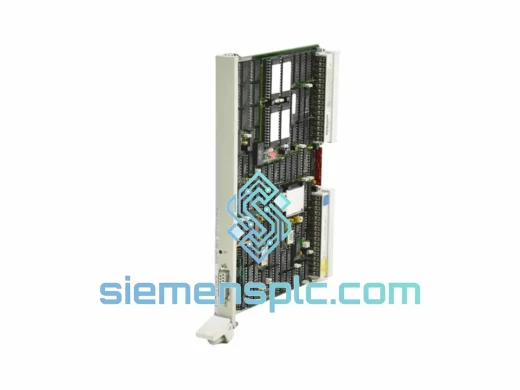
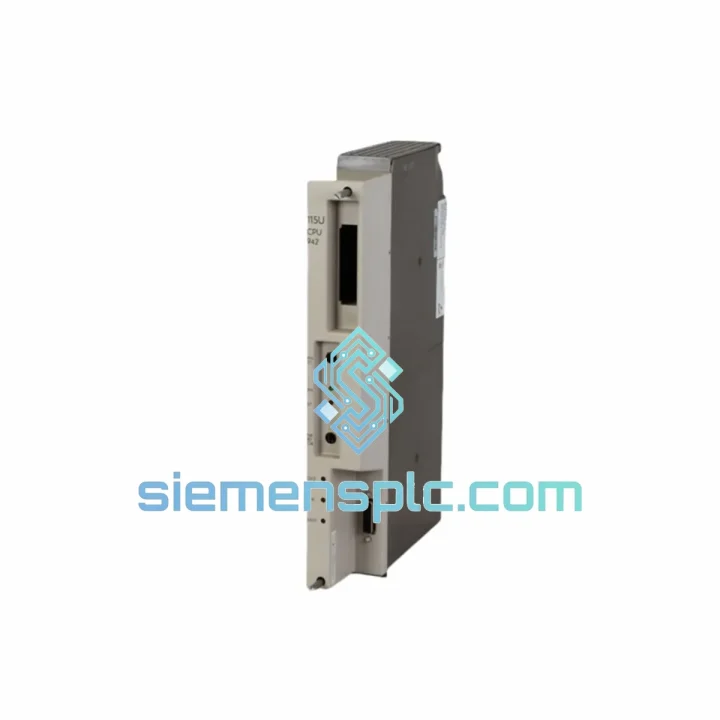
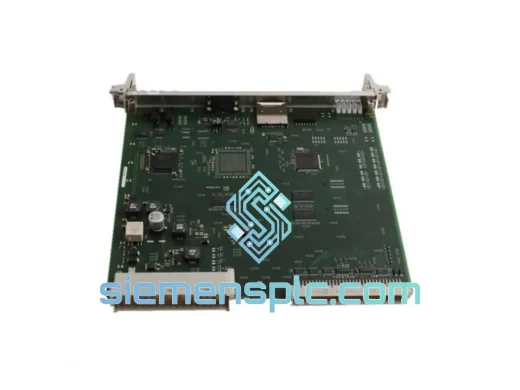
Siemens 6ES5942-7UA13 PLC CPU Module — SIMATIC S5
Request verified availability, condition, replacement risk review, packing options and courier lead time for 6ES5942-7UA13.
BrandSiemens
Part Number6ES5942-7UA13
ConditionAvailability Check
Lead TimeRFQ Confirmation
DocumentsDatasheet / photos by RFQ
ShippingExport packing available
Auto-filled RFQ
6ES5942-7UA13
Click Request Quote and the part number is inserted into the inquiry form automatically.
- Reply by email: [email protected]
- WhatsApp / Tel: +86 18359268345
- Mon-Sat 9:00-18:00 GMT+8
Procurement Data
Key Product Information
Core fields for model confirmation and RFQ routing. Detailed product narrative remains below.
- Brand
- Siemens
- Primary Part Number
- 6ES5942-7UA13
- Product Type
- PLC CPU Module
- Series / Family
- SIMATIC S5
- Country of Origin
- DE
- Catalog Category
- PLCs & Controllers
- Operating Temp.
- 0 °C to +60 °C
- Warranty
- 12 months from shipment date
Model confirmed for inquiry
6ES5942-7UA13
Send quantity, destination and urgency. The RFQ form keeps this part number attached.
Request Quote
Product Overview
Siemens 6ES5942-7UA13 — Backplane Bus Master CPU for SIMATIC S5-135U/155U Rack Systems
The Siemens 6ES5942-7UA13 is the central processing unit designated for the SIMATIC S5-135U and S5-155U modular rack platforms. Within these rack architectures, the CPU occupies the leftmost slot of the central rack and assumes full ownership of the S5 backplane bus — a parallel, synchronous data bus operating at 8-bit width with a cycle time governed by the CPU’s internal instruction clock. Every I/O module, communication processor, and function module installed in the rack communicates exclusively through this bus under the arbitration of the 6ES5942-7UA13. There is no peer-to-peer data path between peripheral modules; all data exchange is serialized through the CPU’s bus interface logic, which means the processing throughput and bus cycle latency of this specific CPU variant directly determine the deterministic response ceiling of the entire control system.
The 6ES5942-7UA13 executes STEP 5 instruction sets compiled into binary object code stored in pluggable memory submodules — either battery-backed CMOS RAM (6ES5 374-series) or UV-erasable EPROM (6ES5 375-series). The CPU’s program memory interface supports both submodule types without hardware reconfiguration, allowing field engineers to swap between volatile and non-volatile program storage depending on commissioning phase. The internal program execution model is scan-based: the CPU completes one full scan of the user program per cycle, updates the process image input table (PII) at the start of each scan, executes all programmed logic blocks (OBs, FBs, FCs, DBs), then writes the process image output table (PIO) to the physical outputs at cycle end. Interrupt-driven organization blocks (OB 2, OB 13, OB 34/35) allow time-controlled and hardware-triggered deviations from the standard scan sequence, enabling sub-cycle response to time-critical process events.
The module’s front panel carries a 5-position rotary mode selector (STOP / STEP / RUN-P / RUN / MRES), a battery compartment for program memory backup, and a multi-color LED status array covering RUN, STOP, BASP (output disable), and fault conditions. The BASP signal — Befehlsausgabesperre — is a hardware-level output inhibit that the CPU asserts during startup sequencing and fault states, preventing undefined output states from reaching field devices during CPU initialization. This is a critical safety interlock absent in many third-party CPU alternatives.
Real-time Stock & RFQ: [email protected] | WhatsApp: +86 18359268345
Technical Parameters
| Parameter | Value |
|---|---|
| Part Number (SKU) | 6ES5942-7UA13 |
| Brand | Siemens AG |
| Product Series | SIMATIC S5 |
| Module Category | Central Processing Unit (CPU) |
| Compatible Rack | SIMATIC S5-135U / S5-155U (Central Rack, Slot 0) |
| Programming Language | STEP 5 (STL / LAD / FBD) |
| Program Memory Interface | Pluggable RAM (6ES5 374-x) / EPROM (6ES5 375-x) submodules |
| Process Image Table | 128 bytes PII + 128 bytes PIO |
| Internal Flags (Merkers) | 2048 bits (256 bytes) |
| Timers / Counters | 128 / 128 |
| Organization Blocks | OB 1 (cyclic), OB 2 (process interrupt), OB 13 (time interrupt), OB 20/21/22 (startup), OB 34/35 (watchdog) |
| Backplane Bus Width | 8-bit parallel S5 bus |
| Communication Interface | SINEC H1 (Ethernet) / SINEC L2 (PROFIBUS) via CP modules |
| Operating Temperature | 0 °C to +60 °C |
| Storage Temperature | −40 °C to +70 °C |
| Relative Humidity | 5 % to 95 %, non-condensing |
| Degree of Protection | IP20 (EN 60529) |
| Power Supply | Via S5 backplane bus (from PS 955-series) |
| Approx. Weight | 2,120 g |
| Country of Origin | Germany |
| Warranty | 12 months from shipment date |
Hardware Logical Analysis
The 6ES5942-7UA13 implements a multi-layer EMC hardening strategy that reflects the electrical environment of heavy industrial installations. The backplane bus interface is galvanically isolated from the CPU’s internal logic plane via optocoupler arrays on all data, address, and control lines. This isolation barrier — rated to withstand common-mode transients exceeding 1 kV — prevents conducted interference generated by high-current actuators, variable-frequency drives, and contactor switching from propagating into the CPU’s instruction pipeline. The isolation capacitance is kept below 10 pF per channel to preserve signal integrity at the bus clock frequency.
The CPU’s internal power regulation employs a linear post-regulator stage downstream of the backplane bus supply, filtering high-frequency switching noise introduced by the rack’s switch-mode power supply. This architecture ensures that the CPU’s core logic voltage remains within ±2 % of nominal even during load transients caused by simultaneous I/O module switching — a condition that can generate current spikes of several amperes on the backplane supply rail.
The watchdog timer circuit operates independently of the main CPU clock domain, driven by a dedicated RC oscillator. If the user program fails to service the watchdog within the configured monitoring interval — configurable between 10 ms and 650 ms via STEP 5 system parameters — the watchdog asserts a hardware reset and simultaneously activates the BASP output inhibit signal. This two-stage response ensures that field outputs are de-energized before the CPU re-initializes, preventing the brief undefined output state that would otherwise occur during a software-only reset sequence.
Memory submodule access is managed through a dedicated memory bus controller that arbitrates between program fetch cycles and data read/write cycles. The controller implements a priority scheme that grants program fetch requests precedence over data access, maintaining instruction throughput during data-intensive operations such as block data transfers (SPA, SPB instructions operating on large DB blocks). The EPROM submodule interface includes a programming voltage switching circuit, allowing in-system EPROM programming via the programming device interface without removing the submodule from the CPU.
System Integration Benefits
- Deterministic Scan Cycle: The CPU’s fixed scan architecture guarantees that worst-case cycle time is bounded and calculable from the instruction count and memory access latency — a prerequisite for safety-related control loops where response time must be formally verified.
- BASP Hardware Interlock: The output inhibit signal is asserted at the hardware level during CPU startup, fault, and STOP states, ensuring field devices receive no spurious commands during CPU state transitions — a behavior that cannot be replicated by software alone.
- Interrupt-Driven Time Control: OB 34 and OB 35 provide cyclic time interrupts with configurable periods, enabling time-controlled process sequences (e.g., dosing timers, sampling intervals) that execute independently of the main scan cycle length.
- Process Image Consistency: The PII/PIO snapshot mechanism ensures that all logic within a single scan operates on a consistent view of input states, eliminating race conditions that would arise if inputs were read directly during logic execution.
- Modular Memory Architecture: Separation of program storage (submodule) from CPU hardware allows program updates and memory capacity changes without CPU replacement — reducing maintenance intervention time in production environments.
- Integrated Diagnostic LEDs: The front-panel LED array provides immediate visual indication of CPU operating state, output inhibit status, and fault conditions without requiring a connected programming device — accelerating fault localization during unplanned downtime.
- SINEC Network Compatibility: The S5-135U/155U rack accommodates SINEC H1 and L2 communication processors in adjacent slots, enabling the 6ES5942-7UA13 to participate in peer-to-peer and supervisory SCADA networks without CPU replacement or firmware modification.
- Backward Program Compatibility: STEP 5 programs developed for earlier S5 CPU variants compile and execute on the 6ES5942-7UA13 without modification, preserving the investment in existing control logic and eliminating re-validation costs.
- Rack Slot Flexibility: The S5-135U/155U rack supports up to 18 peripheral module slots in the central rack plus expansion racks connected via IM (Interface Module) pairs, all managed by this single CPU — supporting large I/O point counts without additional processing hardware.
- Battery-Backed Retentive Data: Retentive flags, timers, counters, and data block contents are preserved through power loss by the CPU’s internal battery circuit, maintaining process state across unplanned power interruptions.
Quality Assurance & Global Logistics
Every Siemens 6ES5942-7UA13 unit dispatched from our Xiamen facility undergoes a structured pre-shipment inspection protocol. Visual examination covers PCB surface condition, component seating, connector pin integrity, and front-panel label authenticity — including date code verification against Siemens manufacturing records. Functional verification includes power-on sequencing, LED state confirmation, and where test fixtures permit, backplane bus communication checks. Units are individually packaged in anti-static (ESD) shielding bags, placed in foam-lined cartons, and sealed with tamper-evident tape. Each shipment includes a packing list with unit serial number and inspection record.
Logistics from Xiamen, China to global destinations are handled via DHL Express, FedEx International Priority, and UPS Worldwide Express — all with door-to-door tracking and shipment insurance. Transit times to major industrial hubs: Europe 3–5 business days, North America 4–6 business days, Southeast Asia 2–3 business days, Middle East 4–7 business days. For emergency maintenance situations, same-day dispatch is available for orders confirmed before 14:00 CST. All export documentation — commercial invoice, packing list, certificate of origin — is prepared in compliance with destination country customs requirements. A 12-month warranty covers manufacturing defects and functional failure under normal operating conditions.
Contact Information
Email: [email protected]
WhatsApp: +86 18359268345
Web: siemensplc.com
Location: Xiamen, China
© 2026 siemensplc.com. All rights reserved.
Ready to quote
[email protected]
Send This Part Number to Sales
RFQ workflow
Quality workflow ->
Confirmation Process
01Model confirmation
We check the full part number, brand, series and visible nameplate information before quotation.
02Availability reply
Sales confirms stock path, condition option, quantity and realistic lead time for export dispatch.
03Packing & courier
DHL, FedEx, UPS or buyer courier arrangements can be reviewed with packing requirements.
Continue sourcing
Browse full catalog ->
Related Automation Parts
Similar brand or category products for fast comparison and multi-item RFQ lists.
Siemens
RFQ Ready
Siemens 6ES5734-1BD20 S5 Programming Cable
SIMATIC S5
Origin DE
PLC Programming Cable
Siemens
RFQ Ready
SIEMENS K3R072 528605 PLC Controller Module – SIMATIC S5
SIMATIC S5
Origin DE
PLC Controller Module