Siemens
RFQ Ready
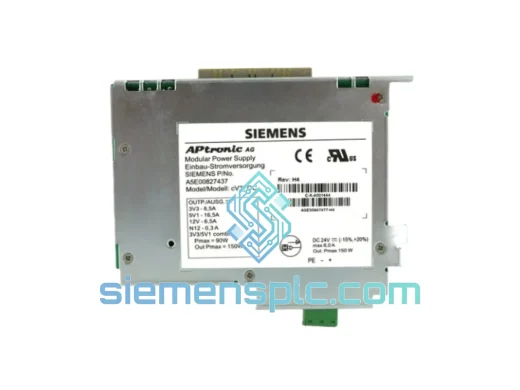
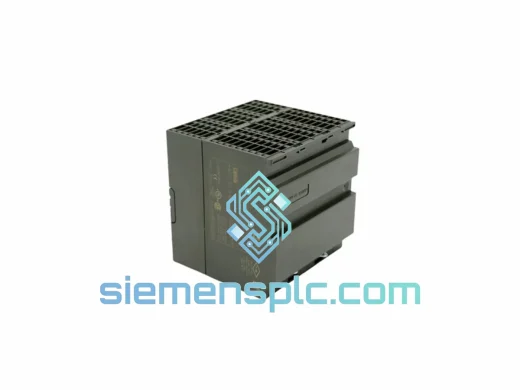
Siemens 6ES7307-1KA01-0AA0 PLC Power Supply Module
SIMATIC S7-300
Origin DE
PLC Power Supply Module
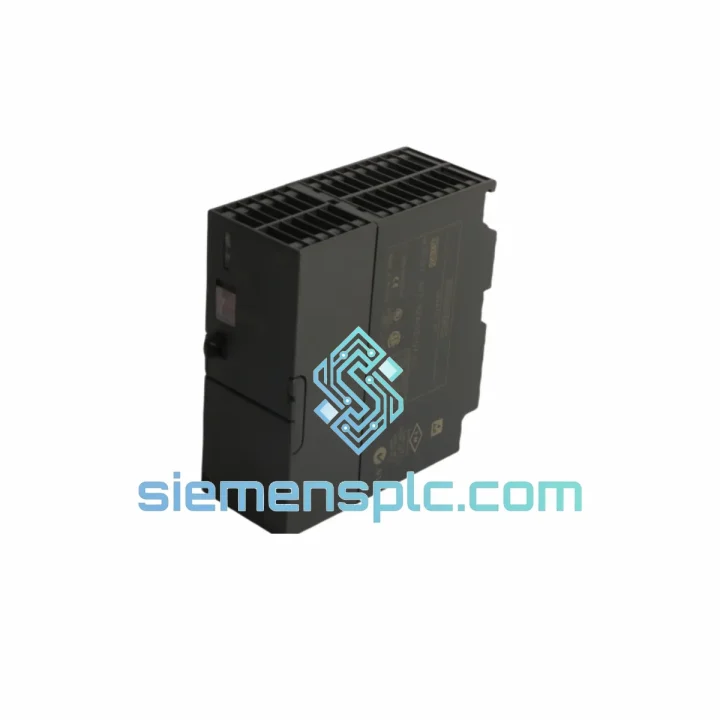
Request verified availability, condition, replacement risk review, packing options and courier lead time for 6ES7307-1BA00-0AA0.
Click Request Quote and the part number is inserted into the inquiry form automatically.
Core fields for model confirmation and RFQ routing. Detailed product narrative remains below.
Your S7-300 rack just went dark. The CPU is unresponsive, the backplane bus is dead, and your line supervisor is already on the phone. Nine times out of ten, when an S7-300 system drops without a CPU fault code, the culprit is the PS307 power supply — and the Siemens 6ES7307-1BA00-0AA0 is the exact module you need to get back online. We stock it in Xiamen, tested and ready to ship same day.
This is not a listing page. This is a recovery tool. If you are reading this during an active stoppage, scroll to the contact block below and reach out now. We have shipped emergency units to plants in Southeast Asia, the Middle East, and Europe within 24 hours of inquiry.
⚡ URGENT REQUIREMENT? Contact: [email protected] | WhatsApp: +86 18359268345
| Parameter | Specification | Status |
|---|---|---|
| Part Number (MLFB) | 6ES7307-1BA00-0AA0 | ✅ Ready to Ship |
| Product Series | SIMATIC S7-300 PS307 | ✅ Ready to Ship |
| Input Voltage | 120 / 230 V AC (selectable), 50/60 Hz | — |
| Output Voltage | 24 V DC (stabilized, regulated) | — |
| Output Current | 2 A continuous | — |
| Output Power | 48 W | — |
| Mounting | S7-300 profile rail (DIN rail) | — |
| Module Width | 50 mm | — |
| Dimensions (W×H×D) | 50 × 125 × 120 mm | — |
| Protection Class | IP20 | — |
| Operating Temperature | 0 °C to +60 °C | — |
| Storage Temperature | −40 °C to +70 °C | — |
| Relative Humidity | 10% – 95% (non-condensing) | — |
| Short-Circuit Protection | Electronic, auto-restart | — |
| Isolation | Safe electrical isolation per EN 60950 | — |
| Approvals | CE, UL 508, EN 61131-2, RoHS | — |
| Weight | Approx. 0.45 kg | — |
| Origin | Germany | — |
After ten years of field work on S7-300 systems, here is what I see most often when a PS307 fails — and what you need to know before you swap the module:
Symptom 1 — No LED on the PSU, CPU completely dead: Before condemning the power supply, check the AC input fuse on the panel and verify the 120/230V selector switch position. A mismatch (e.g., switch set to 120V on a 230V supply) will blow the internal fuse and present as a dead module. If the selector is correct and AC input is confirmed, the PS307 is the fault.
Symptom 2 — Intermittent CPU resets, no fault code logged: This is a classic sign of a degraded PS307 output. The 24V rail sags under load, the CPU brownouts, and the system restarts — but because the PSU recovers quickly, no fault is captured. Measure the DC output under full rack load. Anything below 22.8V (5% droop) on a 2A module with a moderate I/O count is a failing supply.
Symptom 3 — INTF LED on CPU, modules not recognized: A noisy or unstable 24V rail from a failing PS307 can corrupt backplane communication. The CPU may report internal faults or fail to initialize I/O modules. Replace the PSU first before chasing CPU or I/O module faults.
Replacement Procedure — Key Steps:
Common Fault Codes Associated with PS307 Failure:
The PS307 series was engineered for the realities of industrial cabinet life — not lab conditions. The 6ES7307-1BA00-0AA0 carries an operating temperature range of 0 °C to +60 °C, which covers the vast majority of panel environments including those without active cooling. In practice, we have seen these units running reliably in steel mill control rooms where ambient temperatures regularly hit 55 °C during summer production peaks.
The module’s IP20 enclosure protects against direct contact with live parts and ingress of solid particles larger than 12.5 mm. For environments with conductive dust, oil mist, or aggressive chemical vapors, the module should be housed in a sealed IP54 or IP65 enclosure — standard practice for food processing, chemical, and offshore applications.
Vibration and shock resistance meets EN 61131-2 requirements: 10–57 Hz at 0.075 mm amplitude and 57–150 Hz at 1g. This covers conveyor systems, compressor skids, and mobile equipment panels where mechanical vibration is a constant. The DIN rail mounting with integrated locking mechanism prevents the module from walking off the rail under sustained vibration — a failure mode we have seen on cheaper third-party PSUs that lack proper rail retention.
The electronic short-circuit protection with auto-restart eliminates the need for manual intervention after transient overloads — critical in unmanned remote stations where a technician visit costs hours, not minutes. The isolation design per EN 60950 ensures that AC-side faults do not propagate to the 24V DC field wiring, protecting both personnel and downstream instrumentation.
Our warehouse is located in Xiamen, Fujian Province — one of China’s primary export hubs with direct access to international freight lanes via Xiamen Gaoqi International Airport and Xiamen Port. This geography is not accidental: it allows us to reach most global destinations faster than suppliers based in inland China or Europe.
Standard Express Routing:
Every shipment includes real-time tracking from pickup to delivery. For emergency orders, we offer same-day dispatch on orders confirmed before 14:00 CST. Anti-static ESD packaging and foam-lined cartons are standard — the module arrives in the same condition it left our warehouse. For high-value or multi-unit orders, we provide insurance coverage and can arrange door-to-door customs clearance in most markets.
If your plant is facing an active shutdown and you need a committed delivery date before placing an order, contact us directly. We will confirm stock availability, dispatch timeline, and estimated delivery window within the hour.
📧 Email: [email protected]
📱 WhatsApp: +86 18359268345
🌐 Web: siemensplc.com
© 2026 siemensplc.com. All rights reserved.
We check the full part number, brand, series and visible nameplate information before quotation.
Sales confirms stock path, condition option, quantity and realistic lead time for export dispatch.
DHL, FedEx, UPS or buyer courier arrangements can be reviewed with packing requirements.
Similar brand or category products for fast comparison and multi-item RFQ lists.