Siemens
RFQ Ready
Siemens A5E03378158 Communication Processor – SIMATIC S7-300 CP 343-1
SIMATIC S7-300
Origin DE
Communication Processor
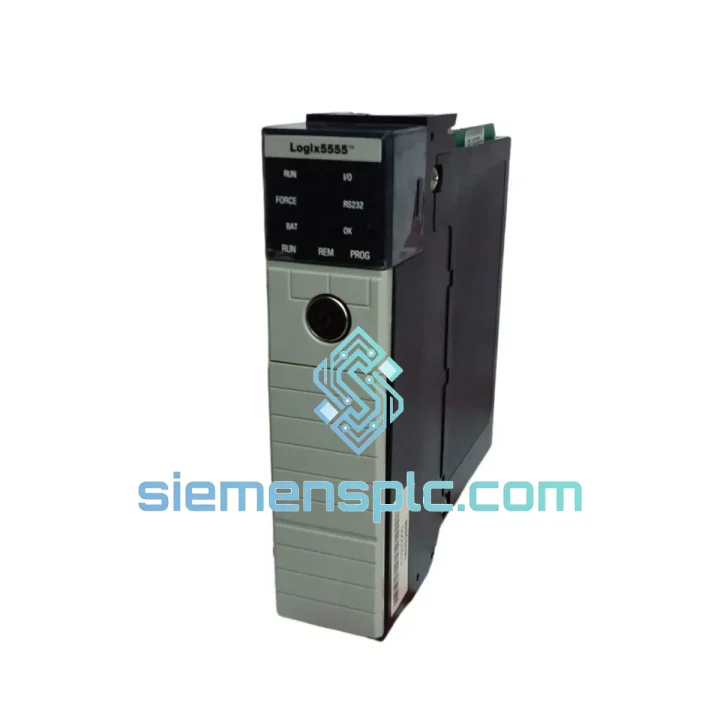
Request verified availability, condition, replacement risk review, packing options and courier lead time for 6ES7315-2EH14-0AB0.
Click Request Quote and the part number is inserted into the inquiry form automatically.
Core fields for model confirmation and RFQ routing. Detailed product narrative remains below.
The Siemens 6ES7315-2EH14-0AB0 is a mid-range central processing unit belonging to the SIMATIC S7-300 programmable logic controller family. It integrates a PROFINET IO controller interface and a PROFIBUS-DP master/slave interface on a single module, enabling simultaneous operation across two independent fieldbus domains without consuming additional communication module slots. This dual-interface architecture positions the CPU 315-2 PN/DP as the preferred processing node in distributed I/O topologies where deterministic cycle times, high I/O point density, and transparent network diagnostics are non-negotiable engineering requirements.
The module occupies a single slot in any S7-300 rail-mounted chassis and draws power directly from the backplane bus. Its 384 KB work memory — partitioned into 256 KB for program code and 128 KB for data — accommodates structured control programs of moderate-to-high complexity, including multi-instance function blocks, PID loops, and motion sequencing routines. The integrated 512 KB load memory (Flash) retains the program image across power cycles without a battery, reducing maintenance overhead in remote or unmanned installations.
Real-time Stock & RFQ: [email protected] | WhatsApp: +86 18359268345
| Parameter | Value |
|---|---|
| Order Number | 6ES7315-2EH14-0AB0 |
| Product Family | SIMATIC S7-300 |
| CPU Designation | CPU 315-2 PN/DP |
| Work Memory (Program) | 256 KB |
| Work Memory (Data) | 128 KB |
| Load Memory (integrated Flash) | 512 KB (expandable via MMC) |
| Bit Processing Speed | 0.05 µs per binary instruction |
| Word Processing Speed | 0.1 µs per word instruction |
| Floating-Point Processing | 0.6 µs per FP instruction |
| Max. Digital I/O | 16,384 inputs / 16,384 outputs |
| Max. Analog I/O | 1,024 inputs / 1,024 outputs |
| PROFINET Interface | 1× RJ45, 10/100 Mbit/s, IO Controller + Device |
| PROFIBUS-DP Interface | 1× RS-485, Master/Slave, up to 12 Mbit/s |
| Max. PROFINET IO Devices | 64 IO devices |
| Max. PROFIBUS-DP Slaves | 124 slaves |
| MPI Interface | Integrated (shared with PROFIBUS port), 187.5 kbit/s |
| Supply Voltage | DC 24 V (via backplane from PS 307) |
| Current Consumption (5 VDC bus) | 1.2 A |
| Power Dissipation | 4.0 W typical |
| Operating Temperature | 0 °C to +60 °C (horizontal mounting) |
| Storage Temperature | -40 °C to +70 °C |
| Relative Humidity | 10% to 95%, non-condensing |
| Degree of Protection | IP20 |
| Dimensions (W × H × D) | 80 × 125 × 130 mm |
| Weight | Approx. 490 g |
| Programming Software | STEP 7 V5.5 SP4 or higher; TIA Portal V13 SP1+ |
| Certifications | CE, UL, cULus, ATEX Zone 2, IECEx, GL, FM |
| Warranty | 12 months from date of shipment |
The 6ES7315-2EH14-0AB0 is built around a 32-bit RISC-class processor core clocked to deliver a binary instruction throughput of 0.05 µs — a figure that translates directly into sub-millisecond scan cycle times for programs of typical industrial complexity. The internal memory architecture separates work memory from load memory at the silicon level: the 384 KB SRAM work memory operates at full bus speed for real-time execution, while the 512 KB integrated Flash load memory serves as non-volatile program storage, eliminating the battery-backed SRAM dependency that historically represented a maintenance liability in S7-300 deployments.
Dual-Port Fieldbus Architecture: The PROFINET IO controller port and the PROFIBUS-DP master port operate through independent communication ASICs, each with dedicated DMA channels to the CPU’s internal bus. This hardware separation ensures that a burst of PROFIBUS-DP polling traffic — for example, during a 124-slave network scan — does not introduce jitter into the PROFINET IO update cycle. The PROFINET interface supports IRT (Isochronous Real-Time) mode with a minimum send clock of 1 ms, enabling deterministic motion-class communication without an additional CP module.
EMC Design: The module housing is a die-cast zinc alloy shell with continuous perimeter grounding contact to the DIN rail mounting clip. Internal PCB layers include a dedicated ground plane between the signal layers and the power distribution layer, reducing radiated emissions and improving immunity to conducted interference per EN 61000-6-2 (industrial immunity standard). The PROFIBUS-DP RS-485 transceiver incorporates galvanic isolation rated at 500 V DC, protecting the CPU backplane from ground potential differences common in large plant installations.
Redundancy Arbitration Logic: While the 315-2 PN/DP is not a hot-standby CPU, its PROFINET interface supports media redundancy protocol (MRP) ring topology, allowing the network infrastructure to recover from a single cable fault within 200 ms — well within the watchdog tolerance of most process I/O devices. The CPU’s internal watchdog timer operates independently of the operating system scheduler, triggering a controlled STOP transition if the cyclic program execution overruns the configured monitoring time by more than one cycle.
Micro Memory Card (MMC) Interface: The front-panel MMC slot accepts Siemens-formatted cards up to 8 MB, extending load memory for large symbol tables, recipe data blocks, and firmware archives. The MMC interface uses a proprietary SPI-derived protocol with hardware write-protect logic, preventing accidental program overwrite during online operations.
Every 6ES7315-2EH14-0AB0 unit dispatched from our Xiamen facility is a genuine Siemens-manufactured module sourced through verified supply channels. Each unit undergoes a structured pre-shipment inspection protocol:
Shipments originate from Xiamen, China with DHL Express, FedEx International Priority, and UPS Worldwide Expedited as standard carrier options. Transit times to major industrial hubs: Europe 3–5 business days, North America 4–6 business days, Southeast Asia 2–3 business days. Export documentation including commercial invoice, packing list, and HS code declaration (8537.10) is prepared for every shipment. Customers requiring a Certificate of Conformance, material traceability record, or third-party inspection report should specify at the time of order.
Warranty: 12 months from the date of shipment. Defective units are replaced or refunded within 5 business days of confirmed fault diagnosis. No restocking fee for warranty returns.
Email: [email protected]
WhatsApp: +86 18359268345
Web: siemensplc.com
Location: Xiamen, China
© 2026 siemensplc.com. All rights reserved.
We check the full part number, brand, series and visible nameplate information before quotation.
Sales confirms stock path, condition option, quantity and realistic lead time for export dispatch.
DHL, FedEx, UPS or buyer courier arrangements can be reviewed with packing requirements.
Similar brand or category products for fast comparison and multi-item RFQ lists.