Siemens
RFQ Ready
Siemens 6ES7321-1BL00-0AA0 Digital Input Module
SIMATIC
Origin DE
PLC Digital Input Module
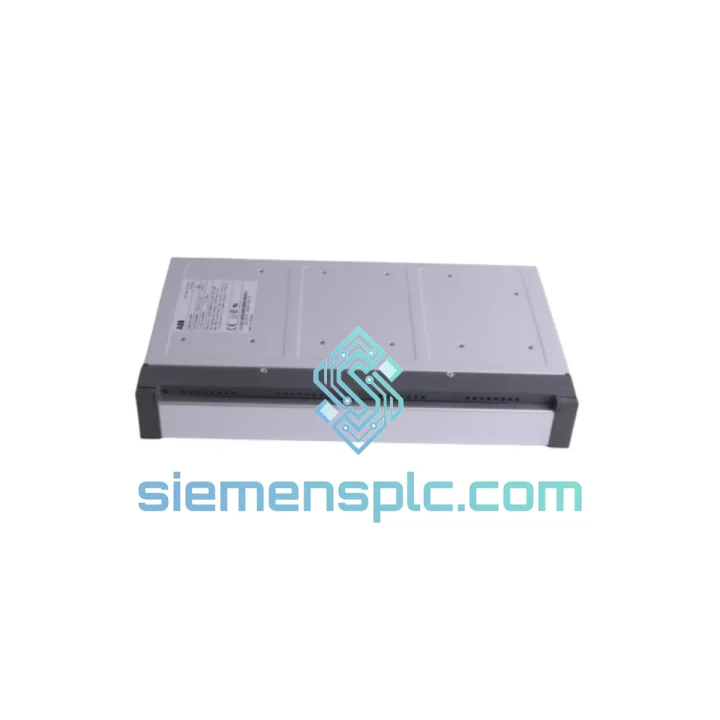
Request verified availability, condition, replacement risk review, packing options and courier lead time for 6ES7321-1BL00-0AA0.
Click Request Quote and the part number is inserted into the inquiry form automatically.
Core fields for model confirmation and RFQ routing. Detailed product narrative remains below.
The diagnostic buffer doesn’t lie. Slot fault on the SM321, K-bus timeout, SF LED locked on — you’ve already ruled out the front connector and the field wiring. The module is dead. What happens next depends entirely on how fast a verified replacement lands in your hands.
We carry the Siemens 6ES7321-1BL00-0AA0 as live, shelf stock in our Xiamen facility — not a catalog entry, not a lead-time estimate. Physical units, individually inspected, original Siemens packaging, full manufacturer traceability documentation included. Cut-off for same-day dispatch is 14:00 CST. If your order is confirmed before that window, the module leaves today. For genuine plant-down emergencies, call us on WhatsApp and we coordinate next-flight-out handling directly with DHL or FedEx at origin — no middlemen, no delays waiting for a freight forwarder to open in the morning.
Every unit ships with a commercial invoice, certificate of origin, and HS code 8537.10 documentation pre-prepared. Your receiving team and customs broker will not be chasing paperwork while your line sits idle.
URGENT REQUIREMENT? Contact: [email protected] | WhatsApp: +86 18359268345
| Parameter | Specification |
|---|---|
| Order Number | 6ES7321-1BL00-0AA0 |
| Brand | Siemens |
| Series | SIMATIC S7-300 |
| Module Type | SM321 — Digital Input Module |
| Number of Inputs | 32 × DI |
| Rated Input Voltage | 24 V DC |
| Typical Input Current | 7 mA @ 24 V DC per channel |
| Signal “1” Range | 15 V DC to 30 V DC |
| Signal “0” Range | −3 V DC to +5 V DC |
| Input Filter Delay | 0.1 / 0.5 / 3 / 15 / 20 ms (CPU hardware config) |
| Galvanic Isolation | Optocoupler — 8 channels per isolated group |
| Backplane Bus | S7-300 K-bus |
| Operating Temp (horizontal) | 0 °C to +60 °C |
| Operating Temp (vertical) | 0 °C to +40 °C |
| Storage Temperature | −40 °C to +70 °C |
| Protection Rating | IP20 |
| Dimensions (W × H × D) | 40 × 125 × 120 mm |
| Weight | approx. 220 g |
| Certifications | CE, UL, cUL, RoHS, ATEX Zone 2 |
| Firmware | None — hardware-only module, no update required |
| Origin | Germany |
| Stock Status | ✔ Ready to Ship — Xiamen Warehouse |
Ten years of field calls on S7-300 systems produce patterns. The SM321 6ES7321-1BL00-0AA0 is a hardware-only module — no firmware, no address DIP switches, no slot-specific configuration stored on the card itself. A like-for-like swap is mechanically straightforward. The mistakes happen in the details around the swap, not in the swap itself.
Step 1 — Verify the fault before ordering. Open STEP 7 or TIA Portal and pull the diagnostic buffer for the affected slot. Fault code 0x0100 (module not responding) is consistent with a dead module or a seating failure — reseat the module first and cycle power before condemning it. Fault code 0x0200 (configuration mismatch) means the order number on the physical module does not match the hardware configuration in the project — check the label before placing a replacement order. If specific input bits are frozen while the module itself shows no fault, the problem is almost certainly in the field wiring or the front connector, not the module. Swap the front connector to a known-good spare before pulling the module.
Step 2 — De-energize the field supply before removing the front connector. The 24 V DC field supply runs through the 40-pin front connector. Pulling it live generates a burst of false input transitions that the CPU logs as process events. In safety-instrumented loops, this can initiate an unplanned shutdown sequence. Always kill the field supply first.
Step 3 — Inspect the front connector before reuse. The connector is reusable and carries all field wiring. Before transferring it to the replacement module, check for cracked housing, bent pins, and corroded screw terminals. A corroded terminal transferred to a new module will reproduce the original fault within weeks.
Step 4 — Insert into the same slot, power up, verify. The S7-300 assigns logical I/O addresses by physical slot position. Insert the replacement into the same slot and the CPU recognizes it on the next power cycle or hot-swap event — no STEP 7 reconfiguration required for a like-for-like replacement. If the CPU was also replaced, verify the input filter delay settings in the hardware properties. Filter delay is stored in the CPU, not the module. A factory-default CPU reverts to 3 ms, which will cause missed signals on high-speed pulse inputs.
Common fault indicators:
Isolation group wiring — the most common source of callbacks. The 32 inputs are divided into four groups of 8, each with its own M (common) terminal. Field devices in different groups that reference different potentials require each group’s M terminal to be connected to the correct reference for that group. Cross-connecting M terminals between groups with different potentials causes erratic input behavior and degrades the optocouplers progressively — a failure mode that develops slowly and is difficult to trace without a wiring diagram in hand.
The 6ES7321-1BL00-0AA0 was not designed for a climate-controlled server room. It was built for the inside of a steel enclosure in a paper mill, a chemical plant, or a food processing facility — environments where electrical noise, humidity, and mechanical vibration are normal operating conditions, not edge cases.
Optocoupler isolation between field inputs and the K-bus backplane is the module’s primary defense against electrical interference. Each group of 8 inputs is isolated from the bus and from adjacent groups. A ground fault or high-voltage transient on one input group cannot propagate to the CPU or to other modules in the rack. A wiring fault in one section of the plant will not cascade into a system-wide shutdown.
The PCB carries conformal coating to resist condensation and airborne contaminants. In coastal installations, offshore platforms, and high-humidity process environments — breweries, fish processing, pulp and paper — conformal coating is the difference between a module that runs for five years and one that fails in eighteen months due to electrochemical migration between signal traces.
Vibration resistance is qualified to IEC 60068-2-6: 10 Hz to 58 Hz at 0.075 mm displacement amplitude, 58 Hz to 150 Hz at 1 g acceleration. This covers the vibration spectrum generated by pumps, compressors, and conveyor drives mounted in the same structure as the control panel. DIN rail mounting with positive locking prevents the module from working loose under sustained vibration — an intermittent fault mode that is nearly impossible to diagnose remotely.
EMC immunity is tested to the IEC 61000-4 series: ESD at Level 3 (8 kV contact, 15 kV air discharge), EFT/burst at Level 3 (2 kV on signal lines), surge at Level 2 (1 kV line-to-line). In practical terms, the module will not generate spurious input signals when a large motor starts on the same distribution board — a scenario that causes false process triggers on lower-grade I/O hardware and is one of the most common sources of nuisance trips in industrial plants.
Our warehouse is located in Xiamen, Fujian Province — one of China’s primary export hubs with direct access to international air freight via Xiamen Gaoqi International Airport. We hold physical stock and ship from our own facility. No brokers, no intermediaries, no re-routing through a third-party warehouse.
Email: [email protected]
WhatsApp: +86 18359268345
Web: siemensplc.com
© 2026. All rights reserved.
We check the full part number, brand, series and visible nameplate information before quotation.
Sales confirms stock path, condition option, quantity and realistic lead time for export dispatch.
DHL, FedEx, UPS or buyer courier arrangements can be reviewed with packing requirements.
Similar brand or category products for fast comparison and multi-item RFQ lists.