
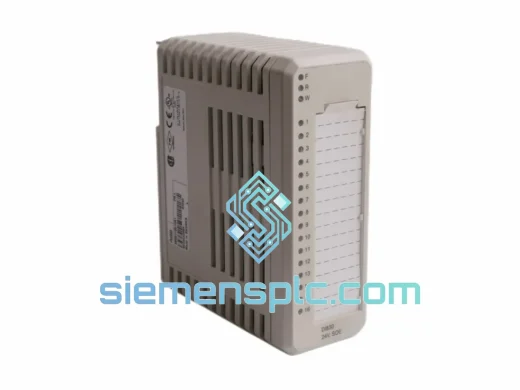
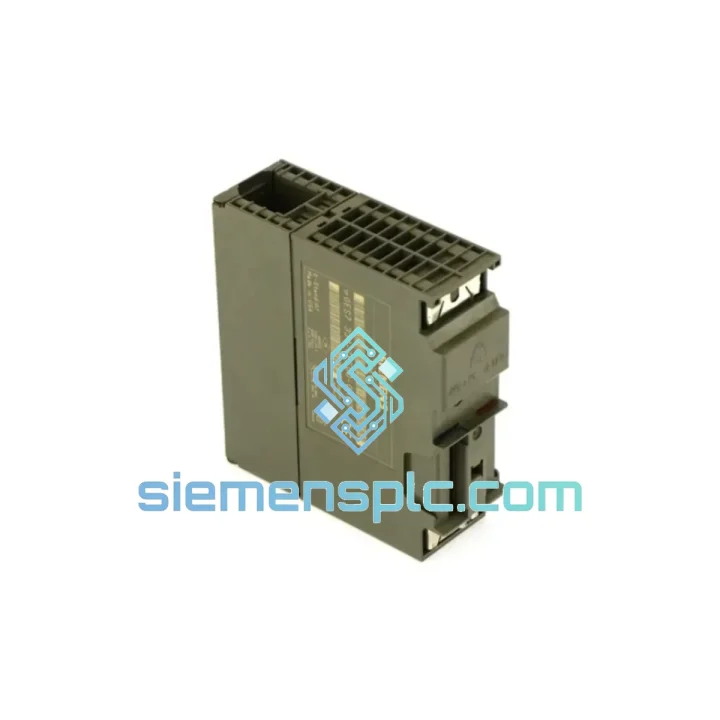
Siemens
In Stock OK
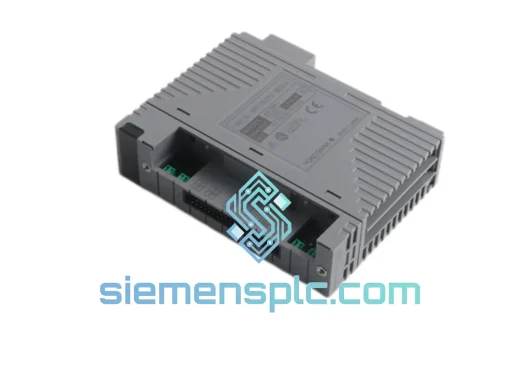
Siemens 6ES7331-7PF00-0AB0 Analog Input Module – SIMATIC S7-300
Request verified availability, condition, replacement risk review, packing options and courier lead time for 6ES7331-7PF00-0AB0.
BrandSiemens
Part Number6ES7331-7PF00-0AB0
ConditionAvailability Check
Lead TimeRFQ Confirmation
DocumentsDatasheet / photos by RFQ
ShippingExport packing available
Auto-filled RFQ
6ES7331-7PF00-0AB0
Click Request Quote and the part number is inserted into the inquiry form automatically.
- Reply by email: [email protected]
- WhatsApp / Tel: +86 18359268345
- Mon-Sat 9:00-18:00 GMT+8
Procurement Data
Key Product Information
Core fields for model confirmation and RFQ routing. Detailed product narrative remains below.
- Brand
- Siemens
- Primary Part Number
- 6ES7331-7PF00-0AB0
- Product Type
- Analog Input Module
- Series / Family
- SIMATIC S7-300
- Country of Origin
- DE
- Catalog Category
- I/O Modules
- Operating Temp.
- 0 °C to +60 °C
- Warranty
- 12 months against manufacturing defects
Model confirmed for inquiry
6ES7331-7PF00-0AB0
Send quantity, destination and urgency. The RFQ form keeps this part number attached.
Request Quote
Product Overview
Siemens 6ES7331-7PF00-0AB0 SM331: 8-Channel Universal Analog Input Module for SIMATIC S7-300 Process Control
The 6ES7331-7PF00-0AB0 is a signal module (SM 331) within the Siemens SIMATIC S7-300 family, engineered to serve as the primary analog acquisition front-end in closed-loop process control architectures. Its core function is to convert field-level analog signals — spanning voltage, current, resistance temperature detectors (RTDs), and thermocouples — into digitized process values that the S7-300 CPU can act upon within a deterministic scan cycle. Unlike simpler fixed-range modules, the 7PF00 variant implements per-channel-pair configurability, allowing a single physical slot to simultaneously handle heterogeneous signal types without additional marshalling hardware.
In a typical control loop, this module sits between the field transmitter and the CPU’s process image input (PII). The CPU reads the digitized value from the PII at the start of each OB1 cycle, executes the control algorithm (PID, cascade, ratio, or feedforward), and writes the result to the process image output (PIQ) for downstream analog output modules. The 6ES7331-7PF00-0AB0 therefore directly determines the quality of the input data entering every control calculation — its resolution, conversion accuracy, and noise rejection characteristics propagate through the entire control chain.
Real-time Stock & RFQ: [email protected] | WhatsApp: +86 18359268345
Technical Parameters
| Parameter | Specification |
|---|---|
| Order Number | 6ES7331-7PF00-0AB0 |
| Module Designation | SM 331 Analog Input |
| Product Series | SIMATIC S7-300 |
| Number of Analog Inputs | 8 channels (4 groups of 2) |
| Resolution | 13-bit + sign (14-bit word) |
| Voltage Input Ranges | ±10 V, ±5 V, ±2.5 V, 1–5 V |
| Current Input Ranges | 0–20 mA, 4–20 mA, ±20 mA |
| RTD Input Types | Pt100, Ni100 (2-wire, 3-wire, 4-wire) |
| Thermocouple Types | B, C, E, J, K, L, N, R, S, T, U |
| Conversion Time (all 8 ch) | 52 ms (60 Hz interference suppression) |
| Conversion Time (4 ch active) | 26 ms |
| Measurement Error (voltage/current) | ≤ ±0.05% of full-scale range (at 25 °C) |
| Measurement Error (RTD) | ≤ ±1.5 °C (Pt100, 4-wire) |
| Interference Suppression | 50 Hz / 60 Hz selectable |
| Input Resistance (voltage) | ≥ 100 kΩ |
| Input Resistance (current) | ≤ 50 Ω |
| Backplane Bus Supply | DC 5 V via S7-300 backplane (max. 30 mA) |
| Load Voltage Supply | DC 24 V (L+), max. 50 mA |
| Power Dissipation | Max. 1.2 W |
| Galvanic Isolation | Between channel groups and backplane bus |
| Permissible Common-Mode Voltage | AC/DC ≤ 12 V (channel-to-channel) |
| Overvoltage Protection | ±35 V continuous (voltage inputs) |
| Dimensions (W × H × D) | 40 × 125 × 120 mm |
| Weight | Approx. 300 g |
| Operating Temperature | 0 °C to +60 °C |
| Storage Temperature | −40 °C to +70 °C |
| Relative Humidity | 5% to 95% (non-condensing) |
| Degree of Protection | IP 20 |
| Certifications | CE, UL 508, cUL, IEC 61131-2, RoHS |
| Country of Origin | Germany |
| Warranty | 12 months against manufacturing defects |
Hardware Logical Analysis
The 6ES7331-7PF00-0AB0 implements a successive-approximation register (SAR) ADC architecture with a 14-bit conversion word (13 data bits plus sign). The analog front-end multiplexes all eight input channels through a single high-precision ADC core, sequencing through each active channel pair in a round-robin pattern. This architecture trades simultaneous sampling for component economy, which is an acceptable trade-off in process control applications where signal bandwidths rarely exceed 10 Hz.
Galvanic Isolation Architecture: The module implements transformer-based galvanic isolation between the field-side analog circuitry and the S7-300 backplane bus. This isolation barrier sustains a test voltage of 500 V AC (1 minute) between channel groups and the backplane, suppressing common-mode interference that originates from ground potential differences across large plant installations. In petrochemical and power generation environments, ground loops between field instruments and control panels can introduce noise voltages of several volts — the isolation barrier prevents this from corrupting the ADC input.
EMC Design: The module’s PCB layout routes analog signal traces away from digital clock lines, and the front connector interface includes RC filter networks on each input to attenuate high-frequency electromagnetic interference. The selectable 50/60 Hz interference suppression filter is implemented as a digital integrating filter (equivalent to a notch filter at the selected line frequency), which rejects power-line-coupled noise by averaging the ADC samples over one full line cycle. This is particularly effective in environments with variable-frequency drives (VFDs) and large motor starters that generate conducted EMI on signal cables.
RTD Measurement Circuit: For resistance temperature detector inputs, the module sources a precision constant current through the RTD element and measures the resulting voltage drop. In 4-wire mode, separate sense leads eliminate the resistance of the connection cables from the measurement, achieving the ≤ ±1.5 °C accuracy specification. In 3-wire mode, the module compensates for one lead resistance by measuring the voltage drop across a reference lead. The 2-wire mode is suitable only for short cable runs where lead resistance is negligible relative to the RTD’s nominal resistance.
Thermocouple Cold-Junction Compensation: When configured for thermocouple inputs, the module requires an external compensation box or internal reference junction. The measured thermoelectric voltage is compensated against the reference junction temperature to produce an absolute temperature reading. The module supports all standard IEC 60584 thermocouple types, with linearization tables stored in firmware.
Backplane Bus Interface: The module communicates with the S7-300 CPU via the proprietary K-bus (backplane bus), which operates at a fixed clock rate. The CPU reads the module’s process image during the input update phase of the OB1 cycle. The module’s internal buffer holds the most recently converted values for all active channels, ensuring the CPU always reads a consistent snapshot regardless of the ADC conversion timing.
System Integration Benefits
- Heterogeneous Signal Consolidation: A single 6ES7331-7PF00-0AB0 slot can simultaneously accept 4–20 mA transmitters, ±10 V transducers, Pt100 RTDs, and Type K thermocouples across its four channel groups, reducing the total module count in a rack and lowering panel wiring complexity.
- Deterministic Process Image Update: All converted values are latched into the module’s output buffer at the end of each conversion cycle and transferred to the CPU’s process image input (PII) at the start of the next OB1 scan, ensuring that the CPU’s control algorithm always operates on a temporally consistent set of input values.
- STEP 7 and TIA Portal Hardware Configuration: The module is fully catalogued in both STEP 7 Classic (V5.5+) and TIA Portal (V13 SP1+), enabling drag-and-drop hardware configuration, automatic address assignment, and online diagnostics without manual register mapping.
- Integrated Diagnostic Reporting: The module generates diagnostic interrupts (OB82) for wire-break detection on current inputs (4–20 mA), overflow/underflow conditions, and common-mode voltage violations. These interrupts allow the CPU to execute fault-handling routines without polling, preserving scan cycle time for control tasks.
- Scalable Rack Architecture: Up to 8 SM 331 modules can be installed in a single S7-300 rack (slots 4–11), providing up to 64 analog input channels per rack. With IM 360/361 expansion interfaces, the architecture scales to 3 additional expansion racks, supporting large-scale process installations.
- Noise-Immune 4–20 mA Current Loop Compatibility: Current-mode inputs are inherently immune to resistive voltage drops along cable runs, making the module suitable for field instruments located up to 200 m from the control panel without signal conditioning repeaters.
- Per-Channel-Pair Measurement Range Selection: Each of the four channel groups (CH0/1, CH2/3, CH4/5, CH6/7) is independently configurable for input type and range via the hardware configuration tool, eliminating the need to install separate modules for different signal types on the same process unit.
- Backward Compatibility with Existing S7-300 Infrastructure: The module is mechanically and electrically compatible with all S7-300 CPUs (CPU 312 through CPU 319-3 PN/DP) and all S7-300 power supply modules, protecting existing rack and wiring investments during system expansions or partial upgrades.
- Reduced Spare-Parts Inventory: The universal input capability means a single module type covers the majority of analog input requirements across a plant, simplifying MRO procurement and reducing the number of distinct spare-part line items that maintenance teams must stock.
- IEC 61131-2 Compliance: All electrical characteristics — including input impedance, isolation voltage, and environmental ratings — conform to IEC 61131-2, ensuring compatibility with third-party field instruments and compliance with plant-wide electrical safety standards.
Quality Assurance & Global Logistics
Every 6ES7331-7PF00-0AB0 unit supplied by siemensplc.com is sourced as genuine Siemens original equipment. Each module carries the Siemens factory holographic label, CE marking, and UL listing mark applied at the point of manufacture in Germany. Prior to dispatch, our technical team verifies the module’s factory markings, date code, and physical condition against Siemens’ published authenticity criteria.
Units are packaged in anti-static ESD bags with foam-lined cartons to protect the analog front-end circuitry from electrostatic discharge and mechanical shock during international transit. All shipments originate from our warehouse in Xiamen, China, with access to DHL Express, FedEx International Priority, and UPS Worldwide Expedited services. Standard international delivery times are 3–7 business days to most destinations in Europe, North America, Southeast Asia, and the Middle East. Expedited next-flight-out options are available for urgent plant maintenance requirements.
Full lot traceability documentation — including Siemens factory certificates of conformance where available — can be provided upon request for OEM procurement teams and EPC contractors requiring material traceability records. A 12-month replacement warranty covers all units against manufacturing defects from the date of invoice.
Contact Information
Email: [email protected]
WhatsApp: +86 18359268345
Web: siemensplc.com
Location: Xiamen, China
© 2026 siemensplc.com. All rights reserved.
Ready to quote
[email protected]
Send This Part Number to Sales
RFQ workflow
Quality workflow ->
Confirmation Process
01Model confirmation
We check the full part number, brand, series and visible nameplate information before quotation.
02Availability reply
Sales confirms stock path, condition option, quantity and realistic lead time for export dispatch.
03Packing & courier
DHL, FedEx, UPS or buyer courier arrangements can be reviewed with packing requirements.
Continue sourcing
Browse full catalog ->
Related Automation Parts
Similar brand or category products for fast comparison and multi-item RFQ lists.
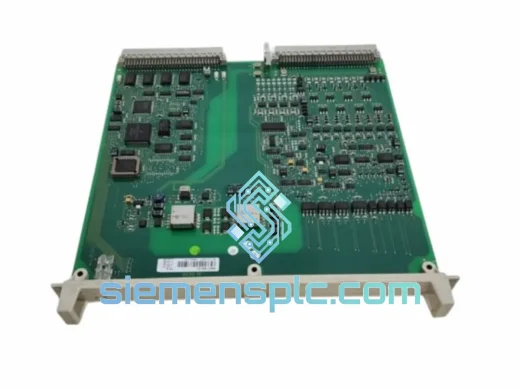
Siemens
RFQ Ready
Siemens 6ES7 315-2EH14-0AB0 CPU 315-2 PN/DP Module
SIMATIC S7-300
Origin DE
PLC CPU Module
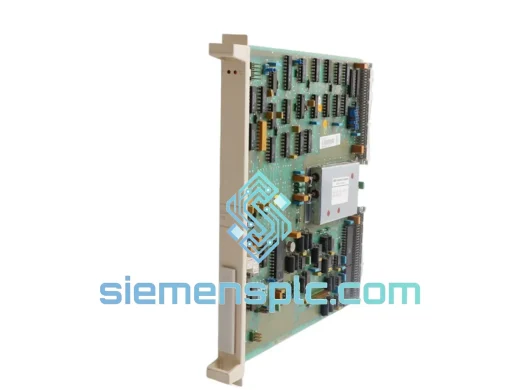
Siemens
RFQ Ready
Siemens 6ES7315-2EH14-0AB0 CPU 315-2 PN/DP PLC Module
SIMATIC S7-300
Origin DE
PLC CPU Module
Siemens
RFQ Ready
Siemens 6ES7 321-1BL00-0AA0 Digital Input Module
SIMATIC S7-300
Origin DE
PLC Digital Input Module