Siemens
RFQ Ready
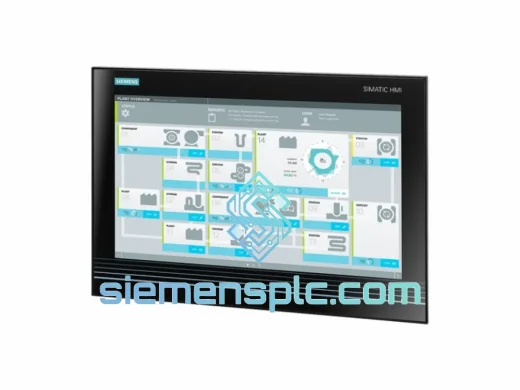
Siemens 6AV7260-5GA10-0BX0 Industrial Panel PC
SIMATIC
Origin DE
Industrial Panel PC
Request verified availability, condition, replacement risk review, packing options and courier lead time for 6ES7412-1XJ05-0AB0.
Click Request Quote and the part number is inserted into the inquiry form automatically.
Core fields for model confirmation and RFQ routing. Detailed product narrative remains below.
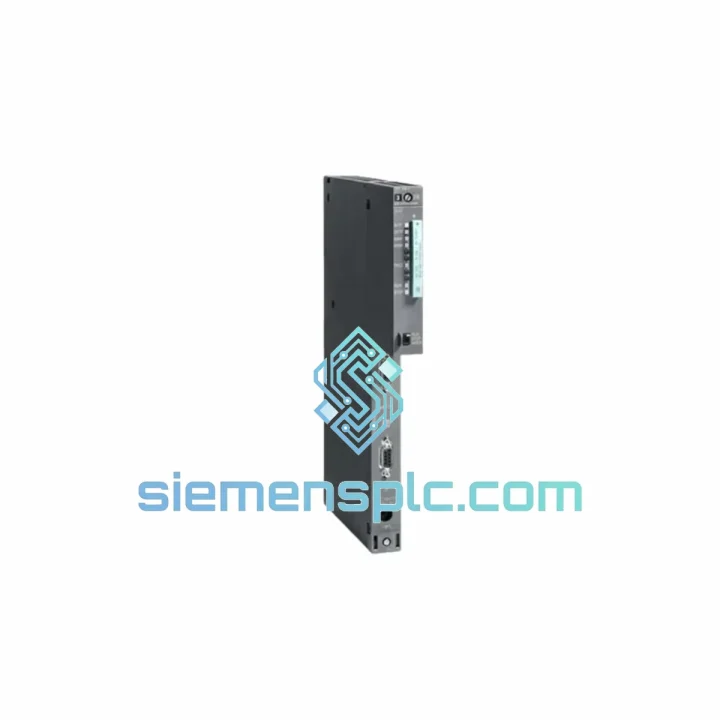
The 6ES7412-1XJ05-0AB0 is the entry-level central processing unit of the Siemens SIMATIC S7-400 rack-based PLC platform. It occupies a single slot in the S7-400 central rack (CR) and assumes full ownership of the backplane bus arbitration cycle, executing the IEC 61131-3 program stack while simultaneously managing I/O refresh, interrupt handling, and MPI communication scheduling. This CPU is not a general-purpose embedded controller — it is a deterministic, scan-cycle-driven processor whose every clock domain is subordinated to the demands of industrial process control.
In a typical S7-400 installation, the CPU 412-1 serves as the sole bus master on the P-bus (peripheral bus) and the C-bus (communication bus). The P-bus handles synchronous I/O data exchange with signal modules (SMs) at a raw transfer rate of up to 48 MB/s, while the C-bus carries asynchronous communication traffic between the CPU and communication processors (CPs) or function modules (FMs). This dual-bus architecture prevents I/O latency from being contaminated by communication overhead — a design constraint that is non-negotiable in closed-loop process control where scan jitter directly translates to control deviation.
Real-time Stock & RFQ: [email protected] | WhatsApp: +86 18359268345
| Parameter | Specification |
|---|---|
| Order Number (MLFB) | 6ES7412-1XJ05-0AB0 |
| Product Series | SIMATIC S7-400 |
| CPU Designation | CPU 412-1 |
| Firmware Release | V5.x (05 hardware index) |
| Work Memory (Integrated RAM) | 256 KB (code + data combined) |
| Load Memory | 256 KB integrated RAM + SIMATIC MMC slot (up to 8 MB) |
| Bit Processing Speed | 0.1 µs per binary logic operation |
| Word Processing Speed | 0.2 µs per integer arithmetic operation |
| Floating-Point Speed | 3.0 µs per IEEE 754 single-precision operation |
| Max. Digital I/O Addresses | 65,536 DI / 65,536 DO |
| Max. Analog I/O Addresses | 4,096 AI / 4,096 AO |
| Organization Blocks (OBs) | OB1, OB10–OB17, OB20–OB23, OB30–OB38, OB40–OB47, OB60, OB80–OB87, OB100–OB102, OB121, OB122 |
| Timers / Counters | 2,048 IEC timers / 2,048 IEC counters |
| Data Blocks (DBs) | Up to 8,191 DBs |
| MPI Interface | 1 × MPI, 187.5 kbps to 12 Mbps, max. 32 nodes |
| PROFIBUS DP | Not integrated — requires CP 443-5 Basic/Extended |
| Industrial Ethernet | Not integrated — requires CP 443-1 Advanced |
| Max. Expansion Racks | 21 total (1 CR + 20 ER via IM 460/461) |
| Supply Voltage | DC 24 V (supplied via PS 407 power supply module) |
| Typical Power Consumption | ≈ 1.5 W (CPU module only) |
| Backplane Bus Transfer Rate | Up to 48 MB/s (P-bus) |
| Operating Temperature | 0 °C to +60 °C (horizontal mounting) |
| Storage Temperature | −40 °C to +70 °C |
| Relative Humidity | 10% – 95%, non-condensing (per IEC 60068-2-30) |
| Vibration Resistance | 10–58 Hz: 0.075 mm amplitude; 58–150 Hz: 1 g (IEC 60068-2-6) |
| Shock Resistance | 15 g / 11 ms half-sine (IEC 60068-2-27) |
| Protection Class | IP 20 (EN 60529) |
| Dimensions (W × H × D) | 25 mm × 290 mm × 219 mm |
| Weight | Approx. 1,250 g |
| Certifications | CE, UL, cULus, ATEX Zone 2 (II 3 G Ex nA IIC T4) |
| Country of Origin | Germany |
| Programming Environment | STEP 7 V5.x (SIMATIC Manager); TIA Portal via migration tool |
| Warranty | 12 months against manufacturing defects |
Backplane Bus Arbitration and Scan-Cycle Determinism
The CPU 412-1 implements a fixed-priority bus arbitration scheme on the S7-400 P-bus. During each OB1 scan cycle, the CPU issues a process image update (PIU) command at the start of the cycle, latching all digital and analog input states into the process image input table (PII). At cycle end, the process image output table (PIQ) is written back to the output modules in a single burst transfer. This input-latch / output-burst model eliminates mid-cycle I/O state changes from affecting program logic — a fundamental requirement for deterministic closed-loop control. The P-bus operates at a fixed 48 MB/s clock, and the CPU’s bus interface unit (BIU) manages slot addressing via the rack’s backplane connector matrix without software overhead.
Interrupt Handling Architecture
The CPU 412-1 supports a structured interrupt hierarchy governed by OB priority levels (1–29). Hardware interrupts from signal modules (OB40–OB47) preempt the cyclic OB1 at defined priority levels, with interrupt response times in the range of 0.5–2.0 ms depending on the current scan position. Diagnostic interrupts (OB82) and rack failure interrupts (OB86) are handled asynchronously, allowing the CPU to log fault events to the diagnostic buffer (500 entries, FIFO) without halting the control program. This non-blocking fault architecture is critical in continuous process plants where a CPU STOP state is operationally unacceptable.
EMC Design and Electrical Isolation
The S7-400 rack employs a segmented ground plane design that electrically isolates the CPU’s logic ground from the backplane shield ground. The CPU module’s front connector carries only MPI signals; all power is delivered via the backplane’s 5 VDC and 24 VDC rails from the PS 407 module. Signal modules in the same rack use optocoupler-based galvanic isolation between field wiring and the backplane bus — isolation voltages typically rated at 500 VAC (basic insulation per IEC 61010-1). This architecture ensures that field-side transients (inductive load switching, ground loops) do not propagate to the CPU’s instruction pipeline. The CPU module itself meets EN 61000-6-2 (industrial immunity) and EN 61000-6-4 (industrial emissions) without additional filtering hardware.
Memory Architecture and Retention
The CPU 412-1 uses a three-tier memory model: (1) integrated 256 KB RAM for work memory (volatile, lost on power cycle without battery); (2) SIMATIC Micro Memory Card (MMC) for load memory — the MMC is a Flash-based card that retains the program and data blocks without battery backup; (3) an optional backup battery (BB 1297) for retentive data area (M, DB, T, C) preservation during power outages. The MMC slot accepts cards from the 6ES7953-8Lxx0-0AA0 series (64 KB to 8 MB). For applications requiring data retention without battery maintenance, the MMC-based load memory model is the preferred configuration.
Every 6ES7412-1XJ05-0AB0 unit dispatched from our Xiamen facility undergoes a structured pre-shipment verification protocol. The process begins with a visual inspection of the module housing, front connector pins, and label authenticity — counterfeit S7-400 CPUs are identified at this stage by label font inconsistencies and housing mold marks that deviate from Siemens production standards. Each unit is then powered on in a test rack with a compatible PS 407 supply module; the CPU’s diagnostic LED sequence (STOP → RUN transition) and firmware version string are recorded and cross-referenced against the declared MLFB. Serial numbers are verified against Siemens SIOS (Siemens Industry Online Support) where traceability documentation is available.
Units are packed in ESD-safe anti-static bags (per ANSI/ESD S20.20), placed in foam-lined corrugated cartons, and sealed with tamper-evident tape. Original Siemens packaging is preserved where available. For international shipments, we declare HS Code 8537.10.91 on the commercial invoice and provide a full packing list, certificate of origin (China), and — on request — a material safety data sheet (MSDS) for customs clearance in regulated import markets.
Logistics from Xiamen, China to major industrial hubs: DHL Express to Germany (Frankfurt) 3–4 business days; to the United States (Chicago, Houston) 4–5 business days; to Singapore and Southeast Asia 2–3 business days; to the Middle East (Dubai, Riyadh) 3–5 business days. FedEx International Priority and UPS Worldwide Express are available as alternatives. All shipments are fully insured and tracked from dispatch to delivery confirmation.
A 12-month operational warranty covers manufacturing defects and verified functional failures under normal operating conditions (within the rated temperature, humidity, and voltage envelope). Warranty claims are processed via email with a fault description and photographic evidence; replacement or repair is dispatched within 5 business days of claim approval.
Email: [email protected]
WhatsApp: +86 18359268345
Web: siemensplc.com
Location: Xiamen, China
© 2026 siemensplc.com. All rights reserved.
We check the full part number, brand, series and visible nameplate information before quotation.
Sales confirms stock path, condition option, quantity and realistic lead time for export dispatch.
DHL, FedEx, UPS or buyer courier arrangements can be reviewed with packing requirements.
Similar brand or category products for fast comparison and multi-item RFQ lists.