Siemens
RFQ Ready
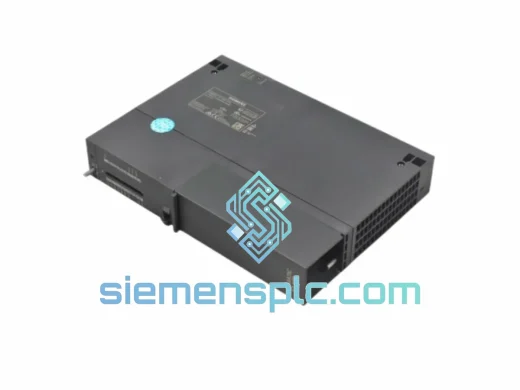
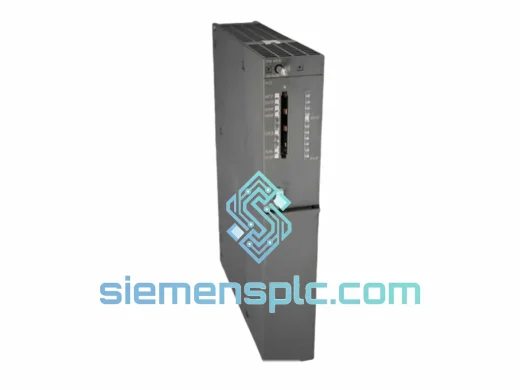
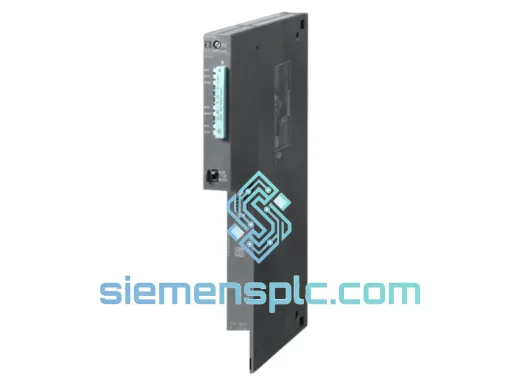
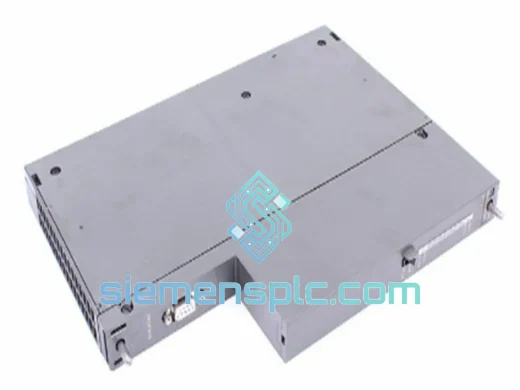
Siemens 6ES7467-5GJ02-0AB0 PLC Interface Module
SIMATIC S7-400
Origin DE
PLC Interface Module
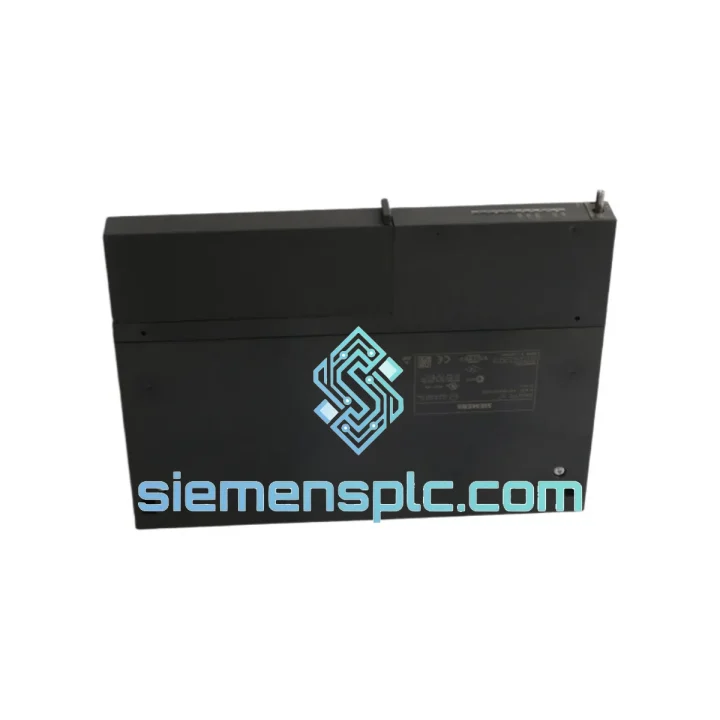
Request verified availability, condition, replacement risk review, packing options and courier lead time for 6ES7441-1AA04-0AE0.
Click Request Quote and the part number is inserted into the inquiry form automatically.
Core fields for model confirmation and RFQ routing. Detailed product narrative remains below.
The Siemens 6ES7441-1AA04-0AE0 is a single-channel point-to-point (PtP) communication processor belonging to the CP 441-1 product line, engineered specifically for integration into the SIMATIC S7-400 programmable logic controller platform. Its primary function within a control loop is to assume full ownership of serial data exchange between the S7-400 rack and external field devices — including third-party drives, barcode readers, weighing terminals, analytical instruments, and legacy SCADA gateways — without consuming CPU scan-cycle bandwidth. This architectural separation is not cosmetic: in high-throughput applications where the CPU is simultaneously executing PID loops, safety interlocks, and HMI data serving, offloading serial I/O to a dedicated processor is the difference between deterministic response and unpredictable jitter.
The module occupies a single slot in any S7-400 expansion rack (UR1, UR2, ER1, ER2) and draws its 5 VDC operating power entirely from the backplane bus — no external wiring or auxiliary supply is required. Its single configurable serial port supports RS-232C, RS-422, and RS-485 physical layers, selectable through STEP 7 or TIA Portal parameter blocks without hardware jumper changes. Supported application-layer protocols include ASCII, 3964(R), RK 512, USS drive protocol, and Modbus RTU/ASCII via loadable driver — covering the vast majority of serial device ecosystems encountered in industrial plant environments.
Real-time Stock & RFQ: [email protected] | WhatsApp: +86 18359268345
| Parameter | Value |
|---|---|
| Order Number (MLFB) | 6ES7441-1AA04-0AE0 |
| Product Family | SIMATIC S7-400 CP 441-1 |
| Module Category | Communication Processor — Point-to-Point Serial |
| Number of Serial Channels | 1 (single-channel) |
| Physical Interface Options | RS-232C / RS-422 / RS-485 (software-selectable) |
| Maximum Transmission Rate | 76.8 kbps |
| Supported Protocols | ASCII, 3964(R), RK 512, USS, Modbus RTU, Modbus ASCII |
| Backplane Bus | SIMATIC S7-400 P-bus / K-bus |
| Power Supply | 5 VDC via backplane (no external supply) |
| Current Consumption (5 V) | Approx. 0.8 A |
| Operating Temperature | 0 °C to +60 °C |
| Storage Temperature | −40 °C to +70 °C |
| Relative Humidity | 15 % to 95 % (non-condensing) |
| Degree of Protection | IP 20 |
| Module Width | Single-width S7-400 form factor (25 mm) |
| Weight | Approx. 760 g |
| Certifications | CE, UL, cULus, ATEX Zone 2, FM Class I Div 2 |
| Engineering Tool | SIMATIC STEP 7 V5.x / TIA Portal V13+ |
| Firmware Upgrade | Via STEP 7 online function |
| Warranty | 12 months from date of shipment |
The CP 441-1 implements a dedicated microprocessor architecture that operates independently of the S7-400 CPU’s main processing cycle. Communication tasks — frame assembly, protocol state machine execution, baud rate timing, and error detection — are handled entirely within the CP’s own processor and RAM. Data transfer to and from the CPU occurs via the S7-400 backplane P-bus using a shared-memory handshake mechanism, which guarantees that serial I/O latency does not propagate into the CPU’s OB1 cycle time.
EMC Design: The module’s serial interface circuitry is galvanically isolated from the backplane logic through optocoupler stages on the RS-422 and RS-485 signal paths. This isolation barrier — rated to withstand transient voltages common in industrial cable runs — prevents ground loop currents and common-mode noise from corrupting backplane data integrity. The RS-232C path, while not optically isolated by default, incorporates transient voltage suppression (TVS) diodes on all signal lines to clamp ESD events within IEC 61000-4-2 Level 4 limits.
Protocol State Machine: The 3964(R) and RK 512 protocol engines are implemented in firmware as interrupt-driven state machines. Character timeout detection, block check character (BCC) computation, and acknowledgement arbitration are handled at the CP level, meaning the CPU receives only complete, validated data records — not raw byte streams. This reduces CPU interrupt load and eliminates the need for application-layer error-handling code in the user program.
Loadable Driver Architecture: Modbus RTU/ASCII and USS protocol support is delivered through Siemens’ loadable driver mechanism. Drivers are downloaded to the CP’s flash memory via STEP 7 and persist across power cycles. This architecture allows protocol updates without hardware replacement — a significant advantage in long-lifecycle plant environments where field devices may be upgraded independently of the control system.
Diagnostic Register: The CP 441-1 maintains an internal diagnostic buffer accessible via SFB 52 (RDREC) from the CPU. The buffer records communication errors, protocol violations, buffer overflows, and hardware faults with millisecond-resolution timestamps, enabling root-cause analysis without external test equipment.
Every Siemens 6ES7441-1AA04-0AE0 unit supplied by siemensplc.com is sourced as genuine Siemens-manufactured hardware. Product authenticity is verified against Siemens’ MLFB (Machine-Readable Product Designation) database, with physical inspection of label typography, holographic security features, and PCB marking consistency. Units exhibiting any discrepancy are quarantined and excluded from inventory.
Pre-shipment functional verification includes backplane bus communication check, serial port continuity measurement across all three physical interface modes, and power consumption measurement against published datasheet limits. Each unit is packed in anti-static (ESD) shielding bags, surrounded by closed-cell foam inserts, and sealed in moisture-barrier outer packaging — meeting JEDEC J-STD-033 handling requirements for moisture-sensitive electronic assemblies.
Shipments originate from our warehouse in Xiamen, China, with access to DHL Express, FedEx International Priority, and UPS Worldwide Express services. Standard export documentation — commercial invoice, packing list, certificate of origin, and HS code declaration (HS 8537.10) — is prepared for every international order. For orders requiring CITES, dual-use, or end-user certificate documentation, our logistics team coordinates the necessary paperwork prior to dispatch. Typical transit time to major industrial hubs in Europe, North America, and Southeast Asia is 3–7 business days via express courier.
All units are covered by a 12-month warranty from the date of shipment. Warranty claims are processed through direct technical review — no third-party RMA routing. Replacement units are dispatched within 5 business days of confirmed fault verification.
Email: [email protected]
WhatsApp: +86 18359268345
Web: siemensplc.com
Location: Xiamen, China
© 2026 siemensplc.com. All rights reserved.
We check the full part number, brand, series and visible nameplate information before quotation.
Sales confirms stock path, condition option, quantity and realistic lead time for export dispatch.
DHL, FedEx, UPS or buyer courier arrangements can be reviewed with packing requirements.
Similar brand or category products for fast comparison and multi-item RFQ lists.