Siemens
RFQ Ready
Siemens 6GK5786-2HC00-1AA0 Industrial Wireless Access Point
SIMATIC
Origin DE
Industrial Wireless Access Point
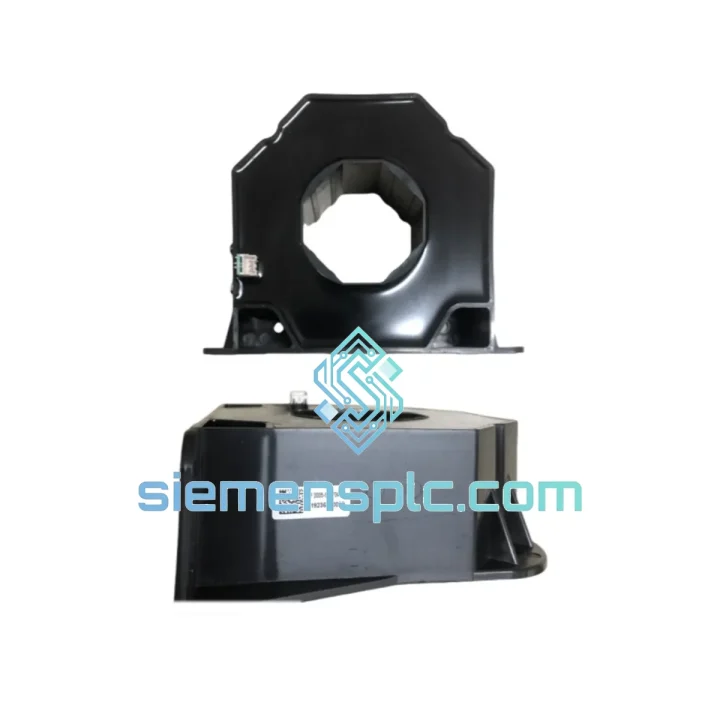
Request verified availability, condition, replacement risk review, packing options and courier lead time for LF2005-S/SP34.
Click Request Quote and the part number is inserted into the inquiry form automatically.
Core fields for model confirmation and RFQ routing. Detailed product narrative remains below.
Every minute your line is down, you’re bleeding money. A failed current transformer in your SENTRON metering loop doesn’t just kill your power monitoring — it can trip protection relays, blind your SCADA, and force a full panel shutdown pending CT replacement sign-off. We stock the Siemens A5E31867280 LF2005-S/SP34 precisely for this scenario. Same-day dispatch from Xiamen. DHL Express to your site in 2–5 business days. No MOQ. No waiting on factory lead times.
URGENT REQUIREMENT? Contact: [email protected] | WhatsApp: +86 18359268345
| Parameter | Specification |
|---|---|
| Manufacturer | Siemens AG |
| Part Number | A5E31867280 |
| Model | LF2005-S/SP34 |
| Series | SENTRON LF2005 |
| Type | Split-core / Bus-bar Current Transformer |
| Primary Current (Ipn) | 2000 A |
| Secondary Current (Isn) | 5 A |
| Transformation Ratio | 2000/5 A |
| Accuracy Class | Class 0.5 (metering) / Class 1 (monitoring) |
| Rated Burden | Per IEC 61869-2 |
| Insulation Voltage | 0.72 kV |
| Mounting Style | Bus-bar / Panel Mount |
| Standard | IEC 61869-2, CE Marked |
| Weight | ~500 g |
| Origin | Germany |
| Stock Status | ✔ Ready to Ship — Xiamen Warehouse |
In the field, CT failures on the LF2005-S/SP34 typically present in one of three ways. Knowing which failure mode you’re dealing with cuts your diagnosis time in half.
Fault Mode 1 — Open Secondary Circuit (Most Dangerous)
Symptom: PAC meter shows zero current on one or more phases while the primary circuit is live. Relay may log a CT supervision alarm (e.g., Siemens SIPROTEC 7SJ fault code CT Open Circuit). Root cause: secondary terminal corrosion, broken lead wire, or internal winding failure. Never open a CT secondary under load — short the secondary terminals before disconnecting. Failure to do so generates a lethal voltage spike across the open winding.
Fault Mode 2 — Accuracy Drift / Metering Error
Symptom: PAC3200/PAC4200 energy readings diverge from utility meter by >1%. Often caused by core saturation from sustained overcurrent events, or secondary burden exceeding rated value. Before condemning the CT, measure total secondary burden (meter input impedance + cable resistance). If burden is within spec and error persists, the CT core is degraded — replace the unit.
Fault Mode 3 — Insulation Breakdown
Symptom: Earth leakage alarm, nuisance tripping of downstream RCDs, or visible tracking/carbonization on CT body. Typically caused by moisture ingress in humid environments or mechanical damage to the housing. Insulation resistance should read >100 MΩ at 500 V DC between primary and secondary. Anything below 10 MΩ — pull and replace immediately.
Replacement Procedure (Step-by-Step)
Configuration Notes: The LF2005-S/SP34 has no internal DIP switches or firmware — it is a passive transformer. However, confirm the CT ratio is correctly programmed in your PAC meter (Menu → Settings → CT Ratio → 2000:5) and in any connected SIPROTEC relay protection settings. A mismatch here will cause systematic metering error or incorrect relay pickup thresholds.
Industrial switchgear rooms are not laboratory environments. The LF2005-S/SP34 is built to operate where conditions are unforgiving — and it shows in the design details.
The toroidal core uses grain-oriented silicon steel with a thermally stable epoxy encapsulation. This construction maintains accuracy class across the full operating temperature range of -5°C to +55°C continuous, with short-term excursions to +70°C without permanent core magnetization shift. In coastal and chemical plant environments where relative humidity regularly exceeds 90%, the sealed housing prevents moisture from reaching the secondary winding — a common failure point on cheaper open-frame CTs.
Vibration resistance is validated to IEC 60068-2-6 (sinusoidal, 10–150 Hz, 2g). In compressor rooms and pump stations where structural vibration is constant, this matters. Secondary terminal screws use a captive design that resists loosening under vibration — a detail that eliminates one of the most common field failure modes we see on generic CTs.
The bus-bar window aperture and clamping system are designed for rigid installation with no relative movement between CT and primary conductor. This eliminates the micro-arcing and insulation wear that occurs when a CT shifts position over years of thermal cycling. When you install this unit correctly, it stays put.
Our Xiamen warehouse operates Monday through Saturday with a 2:00 PM CST same-day dispatch cutoff. Here’s exactly what happens after you confirm your order:
Day 0 (Order Confirmed): Unit pulled from shelf, inspected against part number A5E31867280, photographed, and packed in anti-static foam with original-equivalent protective packaging. Commercial invoice and packing list generated. DHL/FedEx shipment booked.
Day 1: Parcel collected by DHL Express or FedEx International Priority. Tracking number sent to your email within 2 hours of pickup scan. Customs documentation (HS Code 8504.90, country of origin: Germany) pre-prepared to minimize clearance delays.
Days 2–5: Transit to major industrial hubs — Singapore, Dubai, Rotterdam, Houston, Sydney — typically 2–3 business days via DHL Express. Remote destinations add 1–2 days. We proactively monitor shipments and flag any customs holds to you immediately.
Delivery: Door-to-door with signature confirmation. For sites with restricted access (refineries, power stations), advise us at order time and we coordinate with your site logistics team.
For genuine emergencies — line down, production stopped — contact us on WhatsApp +86 18359268345 and we will prioritize your shipment and provide a committed delivery window within 30 minutes.
📧 Email: [email protected]
💬 WhatsApp: +86 18359268345
🌐 Web: siemensplc.com
© 2026 siemensplc.com. All rights reserved.
We check the full part number, brand, series and visible nameplate information before quotation.
Sales confirms stock path, condition option, quantity and realistic lead time for export dispatch.
DHL, FedEx, UPS or buyer courier arrangements can be reviewed with packing requirements.
Similar brand or category products for fast comparison and multi-item RFQ lists.