Tektronix
RFQ Ready
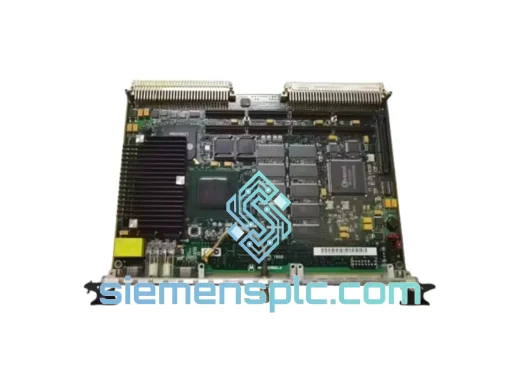
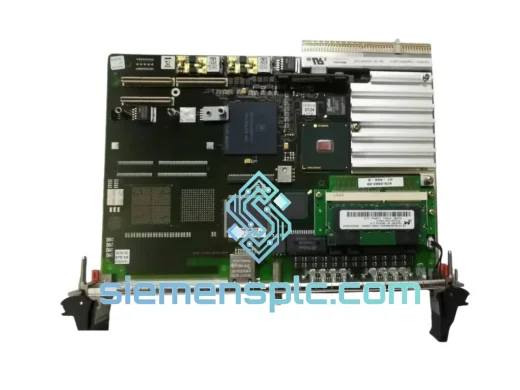
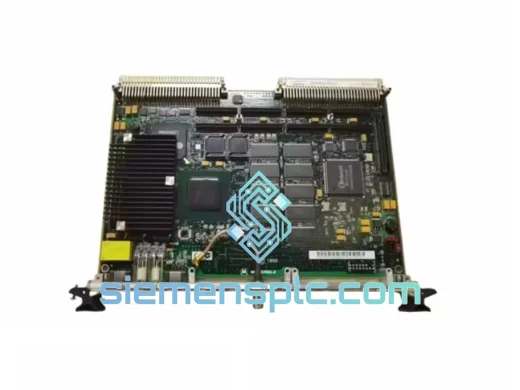
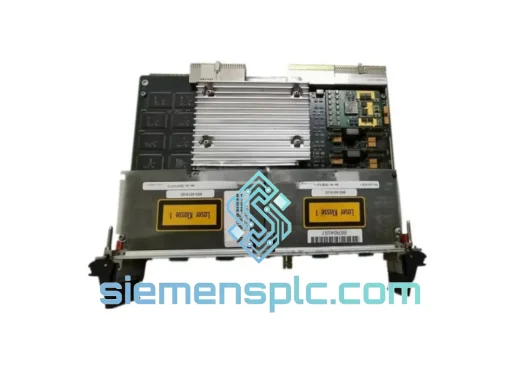
Tektronix PCE-2 LIF-1 K15MB000 671-5532-02 PCB Control Board
Origin US
PCB Control Board
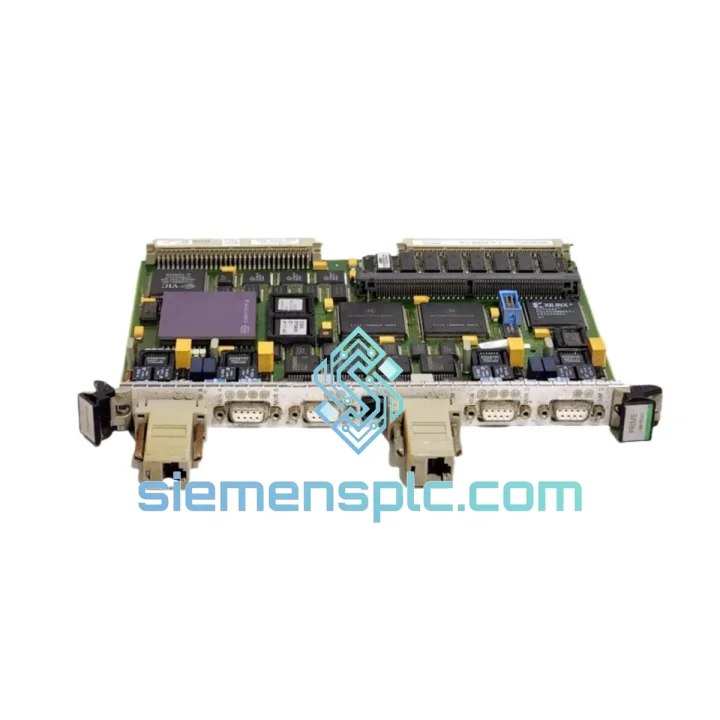
Request verified availability, condition, replacement risk review, packing options and courier lead time for 7KK1297-2PT11.
Click Request Quote and the part number is inserted into the inquiry form automatically.
Core fields for model confirmation and RFQ routing. Detailed product narrative remains below.
The Tektronix 7KK1297-2PT11 C7329-A97-L2-8 is a T1/DS1 primary rate interface board operating at the North American standard data rate of 1.544 Mbit/s. Designed for integration into Tektronix modular test mainframes, this board provides a structured, hardware-level interface for DS1 framing analysis, bit-error-rate testing (BERT), and synchronization performance evaluation in carrier-grade telecom environments. Its architecture is built around deterministic signal handling — the board does not rely on software polling for frame synchronization; instead, dedicated framing logic embedded in the ASIC layer locks onto the DS1 superframe (SF) or extended superframe (ESF) structure within microseconds of signal acquisition.
At the physical layer, the board interfaces via a standard RJ-48C or bantam jack termination (depending on mainframe chassis configuration), presenting a 100 Ω balanced impedance to match the characteristic impedance of T1 twisted-pair transmission lines. The line interface unit (LIU) on-board handles pulse shaping, jitter attenuation, and AMI/B8ZS line code decoding autonomously, offloading these tasks from the mainframe CPU and ensuring that signal conditioning does not introduce latency artifacts into measurement data. This hardware-level decoupling is critical in environments where timing accuracy at the nanosecond scale determines the validity of jitter transfer function measurements.
The board’s clock recovery circuit uses a phase-locked loop (PLL) with a narrow capture range tuned to the DS1 nominal frequency of 1,544,000 Hz ± 32 ppm, conforming to ANSI T1.101 network synchronization requirements. Recovered clock signals are made available to the mainframe backplane, enabling the host system to use the incoming T1 stream as a reference for synchronized multi-port measurements — a capability essential when characterizing timing relationships between multiple DS1 tributaries in a PDH hierarchy.
From a signal integrity standpoint, the C7329-A97-L2-8 board incorporates transformer-coupled isolation at the line interface, providing galvanic separation between the measurement circuitry and the live telecom plant. This isolation withstands longitudinal voltages up to 600 V RMS, protecting both the instrument and the operator in environments where ground potential differences between network elements are non-negligible. The transformer coupling also suppresses common-mode noise, which is particularly relevant in central office environments where power-frequency interference on cable pairs can reach tens of volts.
siemensplc.com maintains verified stock of this board, sourced through authenticated supply channels. Each unit undergoes pre-shipment inspection covering physical label integrity, part number cross-verification, and connector condition assessment. Units are dispatched from our logistics hub in Xiamen, China, with DHL Express and FedEx International Priority options providing 3–5 business day delivery to most global destinations. A 12-month warranty against manufacturing defects is included with every unit.
Real-time Stock & RFQ: [email protected] | WhatsApp: +86 18359268345
| Parameter | Specification |
|---|---|
| Manufacturer | Tektronix |
| Part Number (SKU) | 7KK1297-2PT11 C7329-A97-L2-8 |
| Interface Standard | T1 / DS1 (ANSI T1.102, T1.107) |
| Data Rate | 1.544 Mbit/s ± 32 ppm |
| Line Code | AMI / B8ZS (auto-detect) |
| Framing Format | D4 Superframe (SF) / Extended Superframe (ESF) |
| Line Impedance | 100 Ω balanced |
| Connector Type | RJ-48C / Bantam (chassis-dependent) |
| Isolation Voltage | 600 V RMS longitudinal (transformer-coupled) |
| Clock Recovery | PLL-based, ANSI T1.101 compliant |
| Form Factor | Plug-in module for Tektronix modular mainframe |
| Unit Weight | 1,540 g |
| Country of Origin | USA |
| Condition | Genuine OEM (new / low-hours pull, as available) |
| Warranty | 12 months against manufacturing defects |
The 7KK1297-2PT11 board’s internal architecture separates three functional domains: the line interface domain, the framing and synchronization domain, and the backplane communication domain. This separation is not merely organizational — it is implemented in hardware through distinct signal paths that prevent timing jitter generated in one domain from propagating into another.
The line interface domain centers on the LIU ASIC, which performs receive equalization using an adaptive decision-feedback equalizer (DFE). The DFE compensates for cable attenuation across the full T1 loop length range (0 to 655 feet of 22 AWG cable, per ANSI T1.102), adjusting its tap coefficients in real time based on the measured eye opening of the incoming signal. This adaptive equalization eliminates the need for manual cable length configuration — the board self-calibrates to the line conditions within the first 100 ms of signal acquisition. On the transmit side, the LIU applies pulse shaping conforming to the DS1 pulse template defined in ANSI T1.102, ensuring that transmitted pulses do not violate the spectral mask even at maximum output amplitude.
The framing and synchronization domain implements a hardware state machine for DS1 frame alignment. The state machine searches for the framing bit pattern (the F-bit sequence in SF format, or the FAS/DL bit interleaving in ESF format) by scanning the incoming bit stream in parallel across all 24 possible frame alignment positions. Once a candidate alignment is identified, the state machine enters a verification phase requiring a statistically improbable number of consecutive correct framing bits before declaring frame lock — this two-stage approach prevents false lock on data patterns that mimic framing sequences, a failure mode that software-based framers are susceptible to under high BER conditions.
The EMC design of the board addresses both conducted and radiated emissions. The PCB stackup uses a dedicated ground plane layer immediately adjacent to the signal routing layers, minimizing loop area for high-frequency return currents. Decoupling capacitors are placed within 0.5 mm of each power pin on the LIU and framing ASICs, with values selected to provide low impedance across the 1 MHz to 500 MHz range. The board edge connector uses a ground-signal-ground pin assignment pattern that maintains controlled impedance on backplane signal traces and provides a continuous ground reference for the mainframe chassis shield.
Every unit of the Tektronix 7KK1297-2PT11 C7329-A97-L2-8 dispatched by siemensplc.com passes a structured pre-shipment inspection protocol. Physical inspection confirms that the board’s part number label, revision marking, and serial number are intact and consistent with Tektronix OEM labeling conventions. Connector pins are examined under magnification for oxidation, mechanical deformation, or contamination. Where test equipment is available, a power-on continuity check verifies that the board’s internal power rails are intact before packaging.
Packaging uses anti-static ESD bags rated to ANSI/ESD S20.20, placed inside rigid foam-lined cartons that maintain the board’s position during transit and absorb shock loads from courier handling. For international shipments, the carton is sealed with tamper-evident tape and accompanied by a commercial invoice, packing list, and — upon request — a certificate of conformance for B2B procurement compliance.
Logistics operations are based in Xiamen, China (Fujian Province), with direct access to Xiamen Gaoqi International Airport for air freight consolidation. Standard express options via DHL Express and FedEx International Priority deliver to North America, Europe, Southeast Asia, and the Middle East within 3–5 business days. Economy air options are available for cost-sensitive shipments with a 7–12 business day transit window. All shipments include tracking numbers issued within 24 hours of dispatch. Export documentation is prepared in compliance with Chinese customs regulations and the destination country’s import requirements.
The 12-month warranty covers defects in materials and workmanship under normal operating conditions. Warranty claims are processed via email with a target response time of one business day. Replacement units are dispatched from Xiamen stock upon claim approval, with return freight costs covered for confirmed defective units.
Email: [email protected]
WhatsApp: +86 18359268345
Web: siemensplc.com
Location: Xiamen, China
© 2026 siemensplc.com. All rights reserved.
We check the full part number, brand, series and visible nameplate information before quotation.
Sales confirms stock path, condition option, quantity and realistic lead time for export dispatch.
DHL, FedEx, UPS or buyer courier arrangements can be reviewed with packing requirements.
Similar brand or category products for fast comparison and multi-item RFQ lists.