
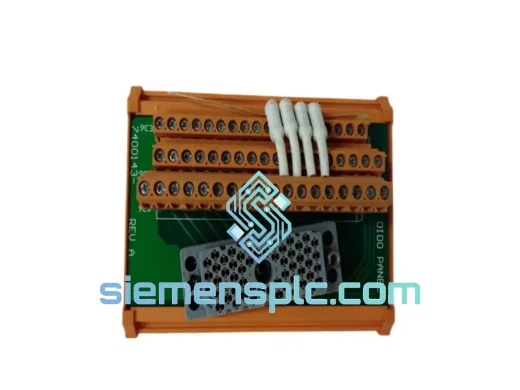
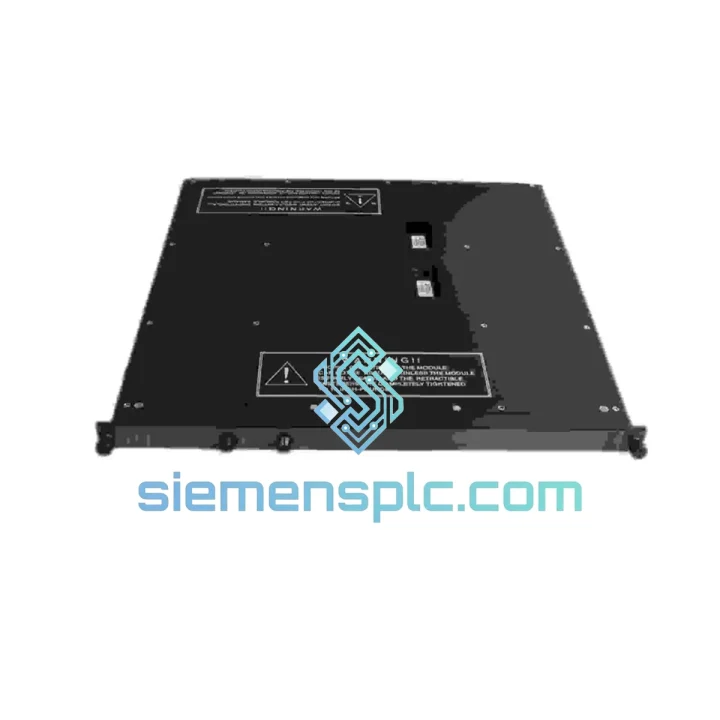
TRICONEX
In Stock OK
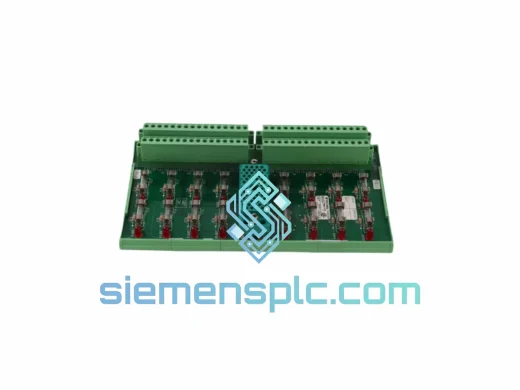
Triconex 4201 Safety PLC Processor Module – Tricon TMR Series
Request verified availability, condition, replacement risk review, packing options and courier lead time for 4201.
BrandTRICONEX
Part Number4201
ConditionAvailability Check
Lead TimeRFQ Confirmation
DocumentsDatasheet / photos by RFQ
ShippingExport packing available
Auto-filled RFQ
4201
Click Request Quote and the part number is inserted into the inquiry form automatically.
- Reply by email: [email protected]
- WhatsApp / Tel: +86 18359268345
- Mon-Sat 9:00-18:00 GMT+8
Procurement Data
Key Product Information
Core fields for model confirmation and RFQ routing. Detailed product narrative remains below.
- Brand
- TRICONEX
- Primary Part Number
- 4201
- Product Type
- Safety PLC Processor Module
- Series / Family
- Tricon
- Manufacturer
- Triconex (Schneider Electric)
- Country of Origin
- US
- Catalog Category
- DCS & Safety Modules
- Operating Temp.
- 0 °C to +60 °C
- Warranty
- 12 months from confirmed shipment date
Model confirmed for inquiry
4201
Send quantity, destination and urgency. The RFQ form keeps this part number attached.
Request Quote
Product Overview
Triconex 4201 TMR Main Processor Module: Fault-Tolerant CPU Architecture for SIL 3 Safety Instrumented Systems
The Triconex 4201 is the central processing unit of the Tricon Triple Modular Redundant (TMR) safety platform, designed for deployment in safety instrumented systems (SIS) where IEC 61508 SIL 3 integrity is a mandatory design requirement. Installed in the dedicated main processor slot of the Tricon chassis, the 4201 assumes full authority over safety application execution, inter-leg arbitration, backplane bus mastering, and system-wide diagnostic aggregation. Its operational model is fundamentally different from conventional single-CPU safety PLCs: three physically independent processing legs — each carrying its own microprocessor, local SRAM, and I/O interface logic — execute an identical compiled application in strict synchrony. The outputs of all three legs are continuously compared by a hardware-implemented 2-out-of-3 (2oo3) voter circuit. A single-leg fault produces a diagnostic event and a latched alarm without altering the voted process output, preserving both the safety function and process continuity. Two concurrent leg faults trigger a safe-state output transition in accordance with the defined SIF logic. This fault-response hierarchy is the architectural basis for the 4201’s SIL 3 certification under IEC 61508 and its suitability for IEC 61511 safety instrumented function (SIF) applications including emergency shutdown (ESD), high-integrity pressure protection (HIPPS), and burner management systems (BMS).
Real-time Stock & RFQ: [email protected] | WhatsApp: +86 18359268345
Technical Parameters
| Parameter | Specification |
|---|---|
| Part Number | 4201 |
| Manufacturer | Triconex (Schneider Electric) |
| Product Series | Tricon TMR Safety System |
| Module Function | Main Processor Module (CPU) |
| Processing Architecture | Triple Modular Redundant (TMR) — 3 independent legs (A, B, C) |
| Voting Mechanism | Hardware 2-out-of-3 (2oo3) discrete voter per output channel |
| Safety Integrity Level | SIL 3 per IEC 61508 / IEC 61511 |
| Backplane Bus Role | Bus master — synchronous parallel read/write to all I/O slots |
| Application Memory | Non-volatile flash; application retained through power loss |
| Scan Cycle Behavior | Deterministic fixed-period; configurable via TriStation 1131 |
| Hot-Swap Capability | Yes — online leg replacement without process interruption |
| Operating Temperature | 0 °C to +60 °C |
| Storage Temperature | −40 °C to +85 °C |
| Relative Humidity | 5% to 95% RH, non-condensing |
| Power Supply | Chassis backplane-fed; no external DC rail required |
| Compatible Chassis | Tricon 3006, 3007, 3008 main chassis |
| Programming Tool | TriStation 1131 v4.x / v4.12 and above |
| Certifications | IEC 61508 SIL 3, TÜV-assessed, FM approved |
| Country of Origin | United States of America |
| Warranty | 12 months from confirmed shipment date |
Hardware Logical Analysis
The 4201’s internal layout separates the three processing legs onto physically distinct PCB sections, each with its own microprocessor core, dedicated SRAM bank, and an independent backplane interface transceiver. Leg isolation is enforced at the board level through galvanic separation of inter-leg signal paths, preventing a single component failure from propagating across leg boundaries — a design constraint directly traceable to IEC 61508 Part 2 requirements for independence of redundant channels.
The backplane bus operates as a synchronous parallel data highway under the 4201’s bus master control. During each scan cycle, the processor issues timed read tokens to each installed I/O module in a fixed sequence, collects the returned data into three independent input image tables (one per leg), and initiates the application execution phase. After all three legs complete their logic solve, the voter circuit compares the three output image tables bit-by-bit. Only output states where at least two of three legs agree are written to the physical output modules. The entire read-solve-vote-write sequence is bounded by a configurable watchdog timer; any overrun triggers a controlled safe-state transition rather than an undefined output condition.
EMC hardening on the 4201 is implemented at multiple levels. The PCB uses a six-layer stackup with dedicated power and ground planes to suppress conducted emissions and provide a low-impedance return path for high-frequency transients. All inter-leg communication lines use differential signaling with matched-length routing to minimize common-mode noise susceptibility. Backplane interface pins are protected by transient voltage suppression (TVS) diodes rated for ±15 kV ESD per IEC 61000-4-2 contact discharge. The module’s metal guide rails maintain chassis ground continuity, contributing to the system’s overall radiated immunity performance at 10 V/m per IEC 61000-4-3 — a level consistent with the electromagnetic environment of oil and gas processing facilities and high-voltage switchgear rooms.
Onboard diagnostics run continuously and autonomously. Each leg independently executes RAM integrity checks via CRC-32 verification on every scan cycle, monitors its CPU clock against a hardware watchdog reference oscillator, and performs periodic loopback tests on the backplane transceiver. Diagnostic results are time-stamped and written to the module’s internal event log, accessible through TriStation 1131 without requiring a process hold. This architecture supports the IEC 61511 requirement for proof-test interval documentation by providing a continuous, auditable record of diagnostic coverage activity between scheduled functional safety tests.
System Integration Benefits
- Bounded scan time under variable I/O load: The 4201 enforces a fixed-period scan cycle regardless of the number of populated I/O slots, ensuring that the safety function response time (SFRT) remains within the process safety time (PST) budget defined in the SIL verification calculation across all chassis configurations.
- Online hardware maintenance without process interruption: A degraded leg can be physically removed and replaced while the remaining two legs sustain 2oo2 voted output continuity. The replacement leg performs an automatic synchronization sequence upon reinsertion, restoring full TMR operation without a process shutdown.
- Structured diagnostic transparency: All leg-level fault codes, CRC errors, watchdog events, and voting discrepancies are time-stamped and stored in the onboard event log. This record satisfies the functional safety management system (FSMS) audit trail requirements of IEC 61511 Clause 5 and supports HAZOP deviation tracking.
- Direct chassis backward compatibility: The 4201 is electrically and firmware-compatible with Tricon 3006, 3007, and 3008 main chassis without requiring chassis rewiring, I/O module reconfiguration, or application recompilation — reducing upgrade project scope and associated functional safety revalidation effort.
- Scalable I/O capacity via backplane bus management: The 4201’s bus master logic supports up to 16 I/O module slots per main chassis. Expansion chassis connectivity, managed through the same processor, extends total I/O point count for large-scale process unit control without introducing additional CPU resources or scan time penalties.
- Native communication module integration: The 4201 interfaces directly with Triconex Communication Modules (TCM series, e.g., 4351B) for Modbus RTU, Modbus TCP, OPC DA, and peer-to-peer Tricon-to-Tricon data exchange. No external protocol gateway is required, reducing network topology complexity and eliminating an additional failure point in the safety system boundary.
- Hardware-enforced application integrity: The compiled safety application in the 4201’s non-volatile flash is protected by a hardware write-lock that prevents runtime modification. This satisfies IEC 61508 Part 3 software safety requirements for fixed-program safety PLCs and supports change management controls under the plant’s management of change (MOC) procedure.
- Accelerated fault isolation via front-panel diagnostics: The module’s front-panel LED array provides real-time visual indication of individual leg status (healthy / degraded / failed), backplane communication activity, and power rail health. Field engineers can isolate a fault to the specific leg within minutes of arrival on-site, reducing mean time to repair (MTTR) compared to systems requiring laptop-based diagnostic sessions before fault localization.
Quality Assurance & Global Logistics
Each Triconex 4201 unit dispatched from siemensplc.com is verified as genuine OEM hardware through a structured incoming inspection process. Inspection steps include firmware revision verification against Triconex factory release documentation, physical examination of PCB connector integrity and component condition, label authenticity cross-check, and where test equipment is available, a powered functional verification against a reference Tricon chassis. Units are held in a climate-controlled warehouse in Xiamen, China, stored in anti-static ESD packaging compliant with ANSI/ESD S20.20 handling standards to prevent electrostatic damage during storage and transit preparation.
International shipments are dispatched via DHL Express, FedEx International Priority, or UPS Worldwide Expedited, with typical door-to-door transit times of 3–5 business days to industrial procurement hubs in Southeast Asia, the Middle East, Europe, and the Americas. For volume orders, sea freight consolidation is available with a complete export documentation package: commercial invoice, packing list, certificate of origin, and MSDS where required by destination customs authority. All shipments are reviewed for EAR/ECCN export classification compliance prior to dispatch. A 12-month warranty covering manufacturing defects and functional failure under normal operating conditions accompanies every unit.
Contact Information
Email: [email protected]
WhatsApp: +86 18359268345
Web: siemensplc.com
Location: Xiamen, China
© 2026 siemensplc.com. All rights reserved.
Ready to quote
[email protected]
Send This Part Number to Sales
RFQ workflow
Quality workflow ->
Confirmation Process
01Model confirmation
We check the full part number, brand, series and visible nameplate information before quotation.
02Availability reply
Sales confirms stock path, condition option, quantity and realistic lead time for export dispatch.
03Packing & courier
DHL, FedEx, UPS or buyer courier arrangements can be reviewed with packing requirements.
Continue sourcing
Browse full catalog ->
Related Automation Parts
Similar brand or category products for fast comparison and multi-item RFQ lists.
TRICONEX
RFQ Ready
Triconex 8311 SIS Pressure Measuring Module
Tricon
Origin US
Safety Instrumented System Module
TRICONEX
RFQ Ready
Triconex 7400208C-020 Safety Terminator Module
Tricon
Origin US
Safety Terminator Module
TRICONEX
RFQ Ready
Triconex 7400169-310 9662-1XX Termination Panel
Tricon
Origin US
Safety PLC Termination Panel