TRICONEX
RFQ Ready
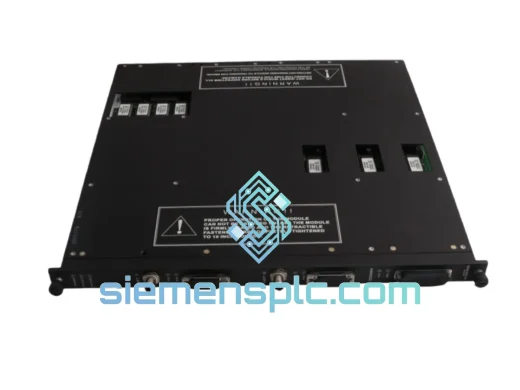
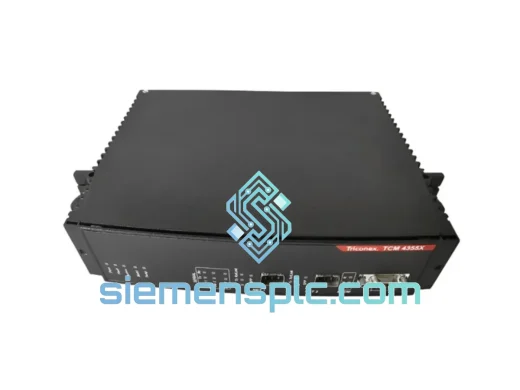
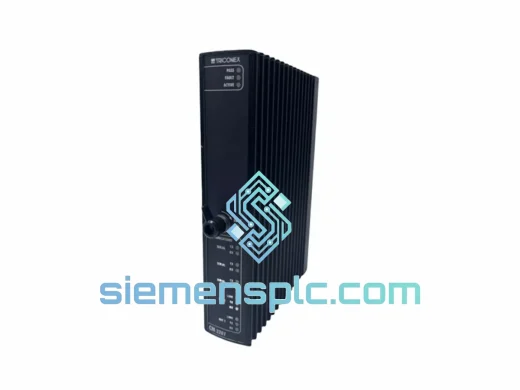
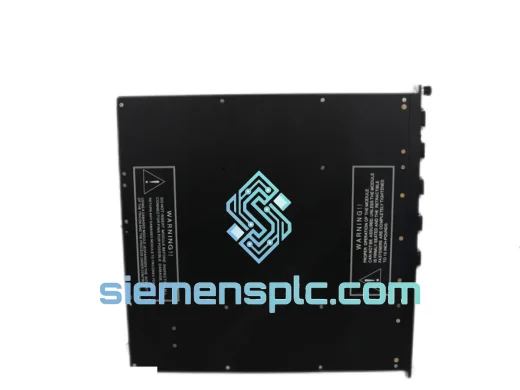
TRICONEX 4351B Communication Module – Tricon TMR
Tricon
Origin US
Communication Module
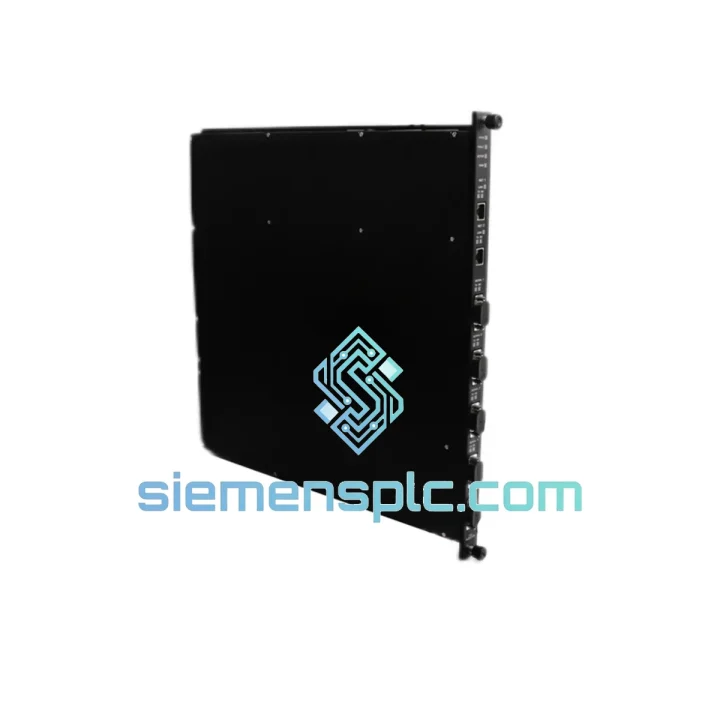
Request verified availability, condition, replacement risk review, packing options and courier lead time for 4305A.
Click Request Quote and the part number is inserted into the inquiry form automatically.
Core fields for model confirmation and RFQ routing. Detailed product narrative remains below.
The TRICONEX 4305A is a single-slot network communication module purpose-built for the Tricon Triple Modular Redundant (TMR) Safety PLC platform. Its primary function within a safety-instrumented system (SIS) is to provide a structurally isolated, protocol-compliant data pathway between the Tricon Main Processor (MP) modules and plant-level supervisory networks — including DCS historians, SCADA servers, and peer Tricon nodes — without introducing any failure mode that could compromise the 2-out-of-3 (2oo3) voting logic governing safety outputs.
Unlike general-purpose communication cards, the 4305A is designed around a fundamental constraint: the communication layer must never become a single point of failure for the safety function. This is achieved through electrical isolation of the Ethernet interface from the TMR backplane bus, combined with a firmware-enforced access-control boundary that prevents inbound network commands from directly modifying output states. The MP modules retain sole authority over actuator commands; the 4305A operates strictly as a data relay and status reporter.
In process industries where SIL 3 certification is a contractual and regulatory requirement — upstream oil and gas, LNG terminals, petrochemical reactors, offshore platforms — the 4305A is the standard-fit communication interface for Tricon v9.x through v11.x chassis. Its compatibility with TriStation 1131 v4.x and above means engineering teams can configure, monitor, and diagnose the module entirely within the native Triconex programming environment, eliminating the integration overhead associated with third-party middleware or protocol converters.
Real-time Stock & RFQ: [email protected] | WhatsApp: +86 18359268345
| Parameter | Specification |
|---|---|
| Part Number | 4305A |
| Manufacturer | TRICONEX (Schneider Electric) |
| Module Category | Network Communication Module |
| Platform Compatibility | Tricon TMR Safety PLC — Chassis v9.x / v10.x / v11.x |
| Supported Protocols | Triconex Enhanced Peer-to-Peer (TEPP), Modbus TCP/IP, OPC DA |
| Physical Interface | Dual RJ-45 Ethernet, 10/100 Mbps auto-negotiation |
| Redundancy Architecture | Triple Modular Redundant (TMR), 2oo3 voting logic |
| Safety Integrity Level | SIL 3 per IEC 61508 |
| Operating Temperature | 0 °C to +60 °C |
| Storage Temperature | −40 °C to +85 °C |
| Relative Humidity | 5 % to 95 % RH, non-condensing |
| Form Factor | Single-slot Tricon module card |
| Approximate Weight | 500 g |
| Certifications | IEC 61508 SIL 3, CE, UL Listed |
| Firmware Compatibility | TriStation 1131 v4.x and above |
| Hot-Swap Support | Yes — online replacement without chassis shutdown |
| Warranty | 12 months from shipment date |
Backplane Bus Isolation Architecture
The 4305A connects to the Tricon Main Chassis backplane via a dedicated communication slot that is electrically separated from the I/O and MP slots. Data from the three MP legs is aggregated by the backplane arbiter and presented to the 4305A’s internal buffer as a single, voted dataset. This means the communication module never sees raw, pre-vote data from individual processor legs — it only transmits the post-arbitration result, preserving the integrity boundary between the TMR core and the external network.
EMC Design and Signal Integrity
The module’s PCB layout employs multi-layer ground plane segmentation to suppress common-mode noise coupling between the Ethernet magnetics and the backplane interface circuitry. Transient voltage suppression (TVS) diodes are placed at both RJ-45 ports to clamp ESD events to within IEC 61000-4-2 Level 4 limits (±8 kV contact discharge). Ferrite bead filtering on the power supply rails attenuates high-frequency switching noise originating from the chassis power module, maintaining signal integrity on the 10/100 Mbps Ethernet lines under industrial EMI conditions.
Dual-Port Failover Logic
The two Ethernet ports operate in an active/standby configuration managed by the module’s onboard link-state monitor. Port switchover latency is sub-100 ms, transparent to the connected SCADA or DCS client. This architecture supports both ring (IEC 62439-3 PRP/HSR-compatible upstream switches) and star topologies without firmware reconfiguration. Link-loss events are logged to the Tricon event journal with millisecond-resolution timestamps, enabling post-incident forensic analysis.
Access Control and Command Validation
Inbound Modbus TCP write requests are filtered through a configurable access-control table stored in non-volatile memory. Only pre-authorized register addresses can be written from the network; all other write attempts are silently discarded and flagged in the module’s diagnostic register. This firmware-level boundary ensures that a compromised SCADA workstation or misconfigured DCS tag cannot inadvertently command a safety output — the MP modules remain the sole source of truth for actuator states.
Every TRICONEX 4305A unit supplied by siemensplc.com is sourced as genuine OEM hardware manufactured under Schneider Electric’s production and quality management system. Units are not rebranded, reconditioned from non-OEM components, or sourced through unverified secondary channels. Prior to dispatch, each module undergoes a structured pre-shipment inspection protocol: visual examination of PCB, connector pins, and label markings against OEM reference standards; firmware version verification against the unit’s serial number record; and functional bench test confirming Ethernet link establishment and Modbus register response.
Packaging complies with IPC/JEDEC J-STD-033 anti-static handling requirements: each unit is sealed in a conductive ESD bag, cushioned in foam-lined carton, and enclosed in a moisture barrier with desiccant. A Certificate of Conformance (COC) documenting serial number, firmware revision, inspection date, and inspector ID is included with every shipment on request.
Logistics operations are based in Xiamen, China — a major international freight hub with direct access to DHL Express, FedEx International Priority, and UPS Worldwide Express services. Standard delivery to Europe, North America, Southeast Asia, and the Middle East is 3–7 business days from order confirmation. For time-critical plant shutdowns or emergency spares requirements, same-day dispatch is available for in-stock units confirmed before 14:00 CST. All shipments include full commercial documentation: packing list, commercial invoice, COC, and airway bill — supporting customs clearance in regulated import markets.
Email: [email protected]
WhatsApp: +86 18359268345
Web: siemensplc.com
Location: Xiamen, China
© 2026 siemensplc.com. All rights reserved.
We check the full part number, brand, series and visible nameplate information before quotation.
Sales confirms stock path, condition option, quantity and realistic lead time for export dispatch.
DHL, FedEx, UPS or buyer courier arrangements can be reviewed with packing requirements.
Similar brand or category products for fast comparison and multi-item RFQ lists.