Vibro-Meter
RFQ Ready
VIBRO-METER VM600 RLC16 200-570-000-014 Relay Output Card
Origin Switzerland
Relay Output Card
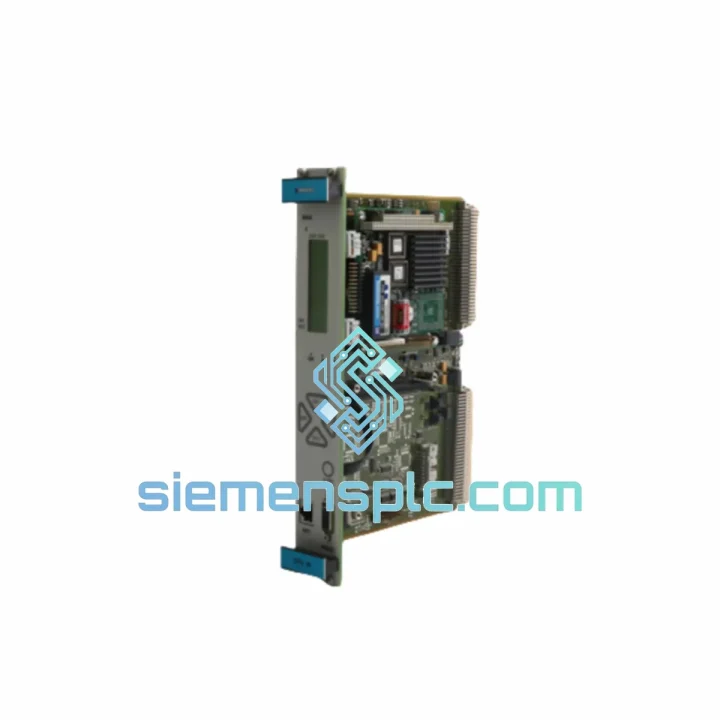
Request verified availability, condition, replacement risk review, packing options and courier lead time for 200-595-075-122.
Click Request Quote and the part number is inserted into the inquiry form automatically.
Core fields for model confirmation and RFQ routing. Detailed product narrative remains below.
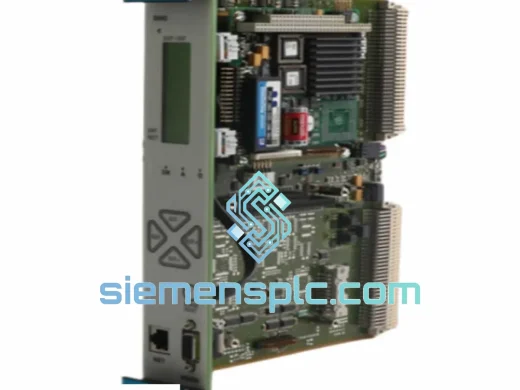
The Vibro-Meter VM600 CPU-M, part number 200-595-075-122, is the central processing and communication controller for the VM600 modular rack platform developed by Vibro-Meter SA, a Meggitt Group company headquartered in Fribourg, Switzerland. This card occupies the dedicated CPU slot within the VM600 rack chassis and assumes full supervisory authority over all installed measurement and protection modules — including AMC8 (acceleration monitoring), MPC4 (machinery protection), IOC4T (I/O conditioning), and RPS6U (relay and power supply) cards. Its integrated Ethernet submodule distinguishes it from earlier CPU variants by consolidating network connectivity directly onto the card, eliminating the need for a discrete communication slot and reducing overall rack footprint.
In turbomachinery protection architectures — gas turbines, steam turbines, centrifugal compressors, and hydro-turbine installations — the CPU-M functions as the deterministic arbitration layer between raw transducer data and plant-level supervisory systems. It initializes the VM600 proprietary backplane bus on power-up, polls each installed I/O module at fixed scan intervals, aggregates measurement vectors (vibration amplitude, phase, speed, gap voltage, process temperature), evaluates alarm and trip thresholds, and transmits structured data upstream to SCADA, DCS, or historian platforms via Modbus TCP or OPC. The card’s real-time operating environment enforces sub-millisecond alarm response latency — a non-negotiable requirement in API 670-compliant machinery protection systems where delayed trip signals can result in catastrophic bearing or seal failures.
Real-time Stock & RFQ: [email protected] | WhatsApp: +86 18359268345
| Manufacturer | Vibro-Meter SA (Meggitt Group), Fribourg, Switzerland |
| Part Number / SKU | 200-595-075-122 |
| Model Designation | VM600 CPU-M |
| Card Function | Central Processing Unit with integrated Ethernet submodule |
| Form Factor | Eurocard, VM600 rack-mount (single slot) |
| Backplane Interface | VM600 proprietary parallel bus; full-duplex, deterministic polling |
| Network Interface | 10/100 Mbps Ethernet (RJ-45), integrated submodule |
| Supported Protocols | Modbus TCP, OPC DA (via VM600 RCS software stack), VM600 native bus |
| Alarm Response Latency | < 1 ms (backplane arbitration cycle) |
| Operating Temperature | 0 °C to +55 °C |
| Storage Temperature | −25 °C to +70 °C |
| Relative Humidity | 5 % to 95 % RH, non-condensing |
| Power Supply | Via VM600 rack backplane (supplied by RPS6U or equivalent) |
| Compatible Modules | AMC8, MPC4, IOC4T, RPS6U, XMC16, and all standard VM600 I/O cards |
| Configuration Tool | Meggitt VM600 Rack Configuration Software (RCS), Ethernet-connected |
| Compliance | CE marked; system architecture compatible with IEC 61511 / SIL-capable deployments |
| Country of Origin | Switzerland |
| Shipping Weight | Approx. 4,460 g (packaged) |
| Warranty | 12 months from date of shipment (hardware defects; DOA coverage) |
The CPU-M card’s internal architecture is structured around three functional domains: backplane bus management, real-time data processing, and external network communication.
Backplane Bus Management: The VM600 backplane operates as a synchronous parallel bus with deterministic slot-addressing. The CPU-M holds bus master authority and issues timed polling frames to each occupied slot. Each I/O module responds within a fixed window, ensuring that measurement data from all channels arrives at the CPU within a single scan cycle. This architecture prevents bus contention and guarantees that no single module’s latency can delay the aggregate alarm evaluation loop — a design principle directly aligned with API 670 Section 5.3 requirements for protection system response time.
EMC and Signal Integrity: The card incorporates multi-layer PCB construction with dedicated ground planes separating the analog signal conditioning circuitry (on I/O modules) from the digital processing domain on the CPU-M. Optical isolation barriers at the backplane interface prevent ground loop currents from propagating between the rack’s measurement circuits and the CPU’s logic domain. This is particularly relevant in installations near large rotating machines where shaft-induced common-mode voltages can reach several volts — sufficient to corrupt unprotected digital bus signals.
Ethernet Submodule Integration: The integrated Ethernet submodule connects to the CPU-M’s internal data bus via a dedicated high-speed interface, bypassing the backplane entirely. This architectural decision ensures that network traffic — including Modbus TCP polling from SCADA clients and OPC data subscriptions — does not compete with backplane scan cycles for CPU bandwidth. The submodule handles TCP/IP stack processing independently, offloading packet assembly and acknowledgment from the main real-time processor. The result is that network load variations (e.g., multiple simultaneous SCADA client connections) do not introduce jitter into the protection system’s alarm evaluation timing.
Firmware and Configuration Persistence: System configuration — channel assignments, alarm thresholds, relay mappings, and communication parameters — is stored in non-volatile memory on the CPU-M. On power cycle or rack reset, the card reloads its configuration autonomously without requiring a connected PC, enabling unattended restart in remote installations such as offshore platforms or unmanned compressor stations.
Every VM600 CPU-M 200-595-075-122 unit dispatched from our Xiamen, China facility undergoes a structured pre-shipment verification process. Visual inspection confirms that the original Vibro-Meter part number label, serial number, and revision marking are intact and unaltered. Functional power-on verification confirms that the card initializes correctly and that the Ethernet submodule responds to network ping and Modbus TCP connection requests. Firmware version is documented and included in the shipment package.
Units are packed in anti-static ESD shielding bags, placed in foam-lined inner cartons, and enclosed in double-wall corrugated outer cartons rated for international air and sea freight handling. Each shipment includes a commercial invoice, packing list, certificate of conformance, and pre-shipment inspection report. DHL Express, FedEx International Priority, and UPS Worldwide Express are standard carrier options, with typical transit times of 3–5 business days to Europe, North America, and the Middle East. Sea freight consolidation is available for multi-unit orders. Export documentation for customs clearance — including HS code classification and country of origin certification — is prepared for all destinations.
A 12-month warranty covers hardware defects and dead-on-arrival (DOA) conditions from the date of shipment. Warranty claims are processed via email with photographic evidence; replacement or credit is issued within 5 business days of claim verification. Extended warranty and spare-unit consignment arrangements are available for customers with ongoing maintenance contracts.
Email: [email protected]
WhatsApp: +86 18359268345
Web: siemensplc.com
Location: Xiamen, China
© 2026 siemensplc.com. All rights reserved.
We check the full part number, brand, series and visible nameplate information before quotation.
Sales confirms stock path, condition option, quantity and realistic lead time for export dispatch.
DHL, FedEx, UPS or buyer courier arrangements can be reviewed with packing requirements.
Similar brand or category products for fast comparison and multi-item RFQ lists.