
Westinghouse
In Stock OK
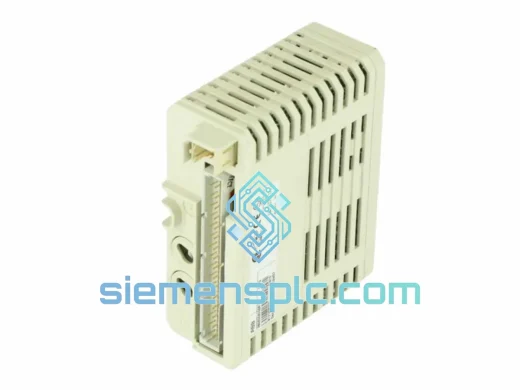
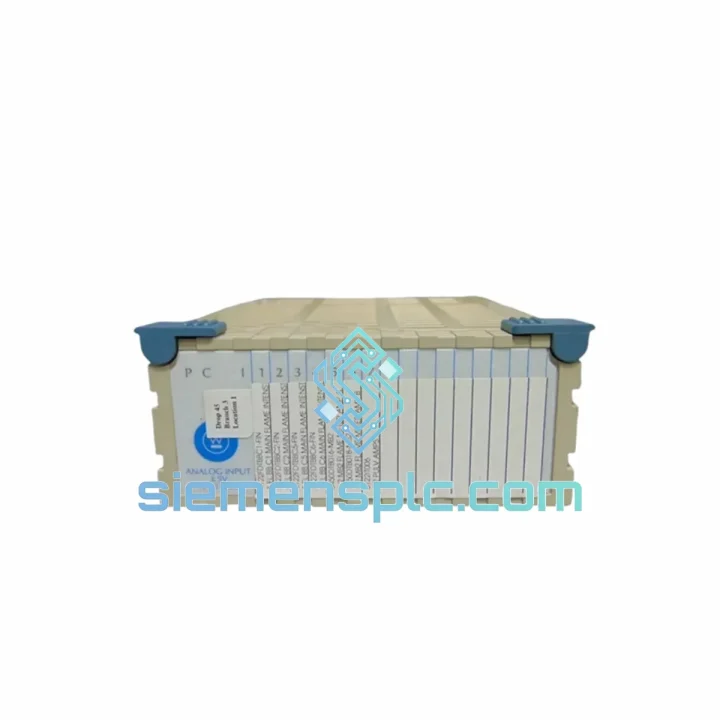
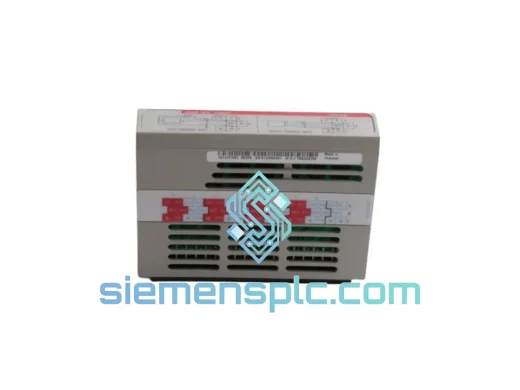
WESTINGHOUSE 1C31113G05 Analog Input Module – OVATION DCS
Request verified availability, condition, replacement risk review, packing options and courier lead time for 1C31113G05.
BrandWestinghouse
Part Number1C31113G05
ConditionAvailability Check
Lead TimeRFQ Confirmation
DocumentsDatasheet / photos by RFQ
ShippingExport packing available
Auto-filled RFQ
1C31113G05
Click Request Quote and the part number is inserted into the inquiry form automatically.
- Reply by email: [email protected]
- WhatsApp / Tel: +86 18359268345
- Mon-Sat 9:00-18:00 GMT+8
Procurement Data
Key Product Information
Core fields for model confirmation and RFQ routing. Detailed product narrative remains below.
- Brand
- Westinghouse
- Primary Part Number
- 1C31113G05
- Product Type
- Analog Input Module
- Series / Family
- Ovation
- Manufacturer
- WESTINGHOUSE Electric / Emerson Process Management
- Country of Origin
- US
- Catalog Category
- I/O Modules
- Operating Temp.
- 0°C to +60°C
- Warranty
- 12 months from shipment date
Model confirmed for inquiry
1C31113G05
Send quantity, destination and urgency. The RFQ form keeps this part number attached.
Request Quote
Product Overview
WESTINGHOUSE 1C31113G05 – 16-Channel Analog Input Module for OVATION Distributed Control Systems
The WESTINGHOUSE 1C31113G05 is a 16-channel analog input module engineered for deployment within the Emerson OVATION Distributed Control System architecture. Its primary function is the deterministic acquisition of field-level process signals — current loops, voltage references, and thermocouple inputs — and their conversion into digitized engineering-unit values that the OVATION controller can act upon within a single scan cycle. In power generation, refinery, and chemical process environments where control-loop latency directly affects product quality and plant safety, the 1C31113G05 occupies a structurally critical position between the field instrument layer and the controller’s execution engine.
Unlike generic I/O cards, the 1C31113G05 is designed around OVATION’s proprietary I/O bus protocol, which enforces a fixed, deterministic data-transfer schedule. Each module slot on the OVATION I/O backplane is assigned a dedicated time slot within the controller’s scan frame. This eliminates bus arbitration overhead and guarantees that analog data from all 16 channels is delivered to the controller’s memory map within a bounded, repeatable window — a prerequisite for closed-loop PID control in processes with fast dynamics such as turbine speed governing or boiler drum-level regulation.
The module’s signal conditioning chain begins at the field terminal block, where each channel accepts a 4–20 mA current loop or a 1–5 V / 0–10 V voltage signal. An input protection network clamps transient overvoltages before the signal reaches the precision instrumentation amplifier stage. The amplified signal passes through a 16-bit successive-approximation ADC, delivering a resolution of approximately 0.0015% of full scale — sufficient to resolve sub-milliamp deviations in a 4–20 mA loop, which translates to sub-0.1% process variable accuracy in most field calibrations. Channel-to-channel isolation is implemented via optical coupling on each input path, preventing ground-loop currents from one field instrument from corrupting the measurement of adjacent channels.
The 1C31113G05 communicates with the OVATION controller module via the backplane’s parallel I/O bus. The module’s onboard microcontroller manages the ADC sequencing, performs linearization for thermocouple inputs (where applicable), applies engineering-unit scaling, and flags out-of-range or open-circuit conditions in the module status word. The controller reads this status word on every scan, enabling the application logic to implement sensor-failure fallback strategies without requiring additional diagnostic programming at the HMI layer.
From a maintenance perspective, the module supports hot-swap replacement on OVATION backplanes equipped with the appropriate carrier. Configuration data — channel ranges, engineering-unit limits, alarm thresholds — is stored in the OVATION database and downloaded automatically to a replacement module upon insertion, reducing mean time to repair (MTTR) to the physical swap time rather than requiring manual reconfiguration at the module level.
Real-time Stock & RFQ: [email protected] | WhatsApp: +86 18359268345
Technical Parameters
| Parameter | Specification |
|---|---|
| Part Number / SKU | 1C31113G05 |
| Manufacturer | WESTINGHOUSE Electric / Emerson Process Management |
| Module Category | Analog Input (AI) Module |
| Platform / Series | OVATION Distributed Control System (DCS) |
| Number of Channels | 16 (single-ended) / 8 (differential, configuration-dependent) |
| Input Signal Types | 4–20 mA current loop; 1–5 V / 0–10 V voltage; thermocouple (type-dependent) |
| ADC Resolution | 16-bit successive-approximation |
| Measurement Accuracy | ±0.1% of full scale (at 25°C, after calibration) |
| Channel Isolation | Optical isolation, channel-to-channel and channel-to-backplane |
| Input Impedance | >1 MΩ (voltage mode); 250 Ω burden (current mode) |
| Scan / Update Rate | Synchronized to OVATION controller scan cycle (typically 100–500 ms) |
| Backplane Interface | OVATION proprietary parallel I/O bus |
| Power Consumption | Supplied via OVATION I/O backplane (5 VDC / 24 VDC rails) |
| Operating Temperature | 0°C to +60°C |
| Storage Temperature | -40°C to +85°C |
| Relative Humidity | 5% to 95% non-condensing |
| EMC Compliance | Designed per IEC 61000-4 series (ESD, EFT, surge, conducted RF) |
| Form Factor | Single-width OVATION I/O module card |
| Mounting | OVATION I/O backplane carrier slot |
| Hot-Swap Support | Yes (with compatible OVATION carrier) |
| Warranty | 12 months from shipment date |
Hardware Logical Analysis
Optical Isolation Architecture: Each of the 16 input channels incorporates a dedicated optocoupler stage positioned between the field terminal and the analog signal conditioning circuitry. This design choice is not merely a protection measure — it is a ground-reference decoupling mechanism. In large industrial plants, field instruments are often grounded at their installation point, creating ground-potential differences of several volts between instruments on different structural steel sections. Without per-channel optical isolation, these potential differences would appear as common-mode voltages on the ADC input, directly degrading measurement accuracy. The 1C31113G05’s isolation barrier sustains a minimum of 500 V RMS channel-to-backplane, ensuring that even severe ground faults in the field wiring do not propagate into the controller’s data domain.
EMC Hardening: The module’s PCB layout follows a split-plane strategy: the analog signal ground plane is physically separated from the digital logic ground plane, with a single star-point connection at the ADC’s reference pin. This minimizes the injection of digital switching noise — generated by the onboard microcontroller and backplane bus drivers — into the high-impedance analog front end. Ferrite beads are placed on all power supply traces entering the analog section, and the input protection network includes transient-voltage suppression (TVS) diodes rated for IEC 61000-4-5 Level 4 surge immunity (4 kV open-circuit, 2 kA peak current). This level of hardening is necessary in substations and motor control centers where capacitor bank switching generates high-energy transients on field cable shields.
Deterministic Backplane Protocol: The OVATION I/O bus operates on a time-division multiplexing (TDM) scheme managed by the controller module. Each I/O slot is assigned a fixed time slot within the bus frame, and the 1C31113G05’s onboard bus interface logic responds only during its assigned slot. This eliminates the non-deterministic latency associated with token-ring or CSMA/CD bus protocols used in some competing DCS platforms. The result is a guaranteed worst-case data-delivery latency that is independent of the number of modules installed on the backplane — a property that simplifies the control engineer’s task of verifying loop timing margins during system commissioning.
Onboard Diagnostics Engine: The module’s microcontroller continuously monitors each channel for open-circuit conditions (loss of 4–20 mA loop current below 3.8 mA), over-range inputs, and ADC conversion errors. Fault flags are written to a dedicated status register that the OVATION controller reads on every scan cycle. This means that a broken field wire or a failed transmitter is detected and reported to the operator within one scan cycle — typically under 500 ms — without requiring the application programmer to implement explicit diagnostic polling logic.
System Integration Benefits
- Zero-configuration replacement: Module configuration (channel ranges, EU limits, alarm setpoints) is stored in the OVATION database server, not in the module’s non-volatile memory. A replacement 1C31113G05 receives its full configuration automatically upon backplane insertion, eliminating manual re-parameterization and the associated risk of transcription errors during emergency maintenance.
- Deterministic scan-cycle integration: The TDM backplane protocol guarantees that all 16 channels’ data is available in the controller’s I/O image table at the start of each execution cycle, enabling the application logic to treat analog inputs as synchronously sampled values — a requirement for model-predictive control (MPC) and cascade loop implementations.
- Per-channel fault transparency: Individual channel fault flags are exposed as discrete tags in the OVATION tag database, allowing the HMI and historian to log sensor-level fault events with millisecond-resolution timestamps. This granularity supports root-cause analysis of process upsets without requiring additional field instrumentation.
- Hot-swap maintainability: Compatible OVATION carriers allow the 1C31113G05 to be removed and replaced under power without interrupting adjacent channels or requiring a controller restart. This reduces planned maintenance windows and eliminates the need to take a process unit offline for I/O module replacement.
- Scalable channel density: The 16-channel density per module slot reduces the number of backplane slots consumed by analog inputs, leaving more slots available for specialty modules (e.g., pulse input, serial communication) within a fixed-size I/O cabinet — a significant advantage in retrofit projects where cabinet space is constrained.
- Engineering-unit scaling onboard: The module’s microcontroller applies user-configured slope and offset scaling to convert raw ADC counts into engineering units (e.g., °C, bar, m³/h) before placing values on the backplane bus. This offloads scaling computation from the controller’s CPU, reducing scan-cycle execution time and freeing controller resources for application logic.
- Historian and compliance integration: Because each channel’s value and quality status are exposed as standard OVATION tags, they are automatically archived by the OVATION historian at the configured compression rate. This provides a continuous, tamper-evident process data record suitable for regulatory compliance reporting in industries subject to EPA, FDA, or IEC 61511 functional safety audits.
- Backward compatibility across OVATION generations: The 1C31113G05 is electrically and mechanically compatible with OVATION backplanes spanning multiple hardware generations, allowing it to serve as a direct replacement in systems originally commissioned in the 1990s through current installations running OVATION 3.x and 4.x software platforms — protecting the plant’s existing infrastructure investment.
Quality Assurance & Global Logistics
Every WESTINGHOUSE 1C31113G05 unit dispatched from our Xiamen, China facility is sourced through traceable industrial supply channels and subjected to a structured pre-shipment verification protocol. Visual inspection confirms PCB integrity, connector pin condition, and label authenticity against OEM reference documentation. Functional verification is performed by powering the module in a compatible OVATION backplane test fixture and confirming that all 16 channels respond correctly to calibrated input signals across the full 4–20 mA range. Modules that do not meet the acceptance criteria are quarantined and not offered for sale.
Packaging follows anti-static handling procedures: each module is placed in a conductive foam tray inside an ESD shielding bag, then secured in a double-wall corrugated carton with foam corner protection. This packaging standard is designed to withstand the mechanical shock and vibration levels specified in ISTA 2A for international air freight.
Shipments are dispatched via DHL Express, FedEx International Priority, UPS Worldwide Express, and SF Express International, with typical transit times of 3–7 business days to North America and Europe, and 2–5 business days to Southeast Asia and the Middle East. All shipments include a commercial invoice, packing list, and HS code declaration (HS 8537.10 or 8471.49 as applicable). Country-of-origin certificates and CITES/export control compliance documentation are available upon request for regulated destinations.
A 12-month warranty covers manufacturing defects and functional failures under normal operating conditions. Warranty claims are processed within 5 business days of receipt of the returned unit, with replacement or credit issued upon confirmation of the defect.
Contact Information
Email: [email protected]
WhatsApp: +86 18359268345
Web: siemensplc.com
Location: Xiamen, China
© 2026 siemensplc.com. All rights reserved.
Ready to quote
[email protected]
Send This Part Number to Sales
RFQ workflow
Quality workflow ->
Confirmation Process
01Model confirmation
We check the full part number, brand, series and visible nameplate information before quotation.
02Availability reply
Sales confirms stock path, condition option, quantity and realistic lead time for export dispatch.
03Packing & courier
DHL, FedEx, UPS or buyer courier arrangements can be reviewed with packing requirements.
Continue sourcing
Browse full catalog ->
Related Automation Parts
Similar brand or category products for fast comparison and multi-item RFQ lists.
Westinghouse
RFQ Ready
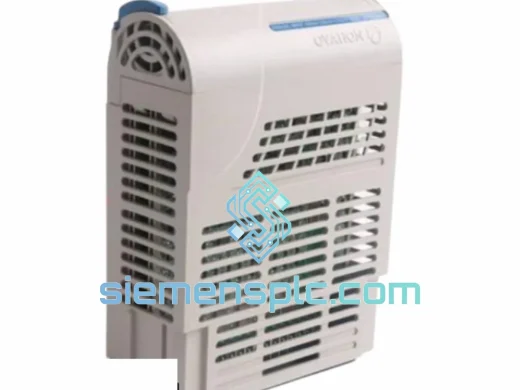
Westinghouse R-S108V01-16-24VDC-C5-1 Analog Input Module
OVATION
Origin US
DCS Analog Input Module
Westinghouse
RFQ Ready
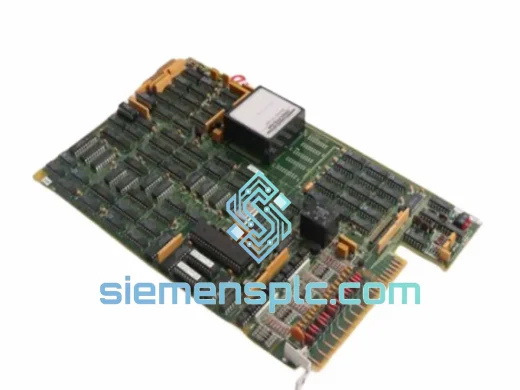
Westinghouse IC31224G01 Analog Input Module
Ovation
Origin US
Analog Input Module
Westinghouse
RFQ Ready
Westinghouse IC31227G01 Analog Input Module
Ovation
Origin US
DCS Analog Input Module