Woodward
In Stock OK
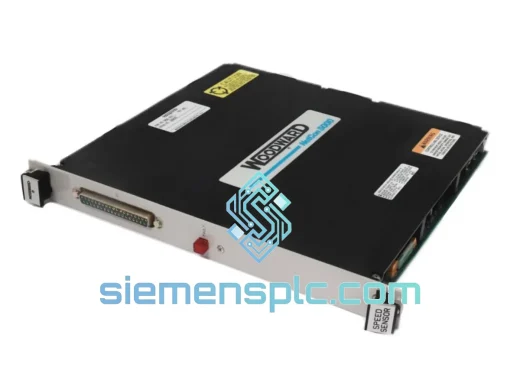
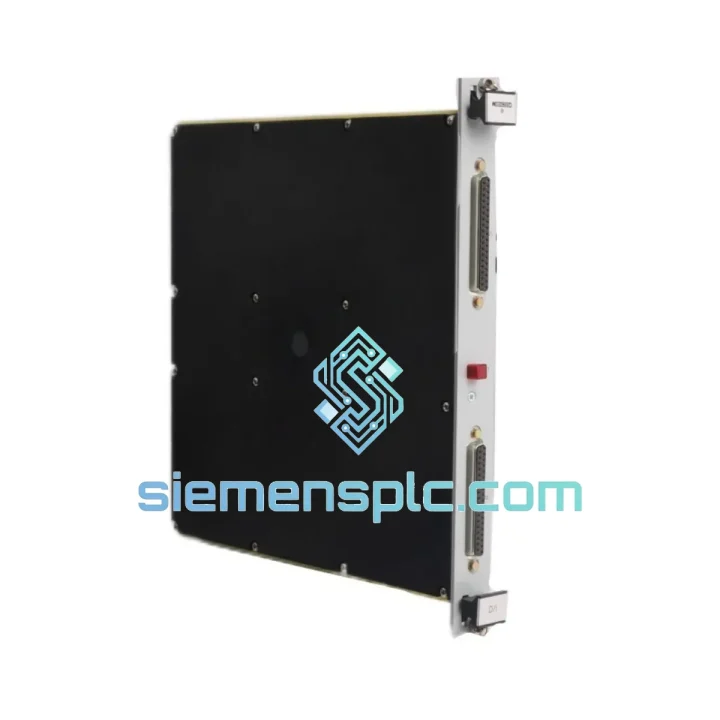
WOODWARD 5464-850 Digital Speed Sensor
Request verified availability, condition, replacement risk review, packing options and courier lead time for 5464-850.
BrandWoodward
Part Number5464-850
ConditionAvailability Check
Lead TimeRFQ Confirmation
DocumentsDatasheet / photos by RFQ
ShippingExport packing available
Auto-filled RFQ
5464-850
Click Request Quote and the part number is inserted into the inquiry form automatically.
- Reply by email: [email protected]
- WhatsApp / Tel: +86 18359268345
- Mon-Sat 9:00-18:00 GMT+8
Procurement Data
Key Product Information
Core fields for model confirmation and RFQ routing. Detailed product narrative remains below.
- Brand
- Woodward
- Primary Part Number
- 5464-850
- Product Type
- Speed Sensor
- Product Family
- Other series
- Manufacturer
- WOODWARD
- Country of Origin
- US
- Catalog Category
- Sensors & Switches
Model confirmed for inquiry
5464-850
Send quantity, destination and urgency. The RFQ form keeps this part number attached.
Request Quote
Product Overview
WOODWARD 5464-850 — Stop the Clock on Your Downtime: Same-Day Dispatch Available
Every minute your turbine or engine governor sits idle, you’re bleeding money. A failed speed sensor shouldn’t be the reason your entire production line grinds to a halt. The WOODWARD 5464-850 Digital Speed Sensor is on our shelf in Xiamen right now — inspected, documented, and ready to leave our warehouse today. We’ve shipped this exact part to power plants in Southeast Asia, refineries in the Middle East, and marine facilities across Europe. When the clock is ticking, you need a supplier who picks up the phone and ships the same day — that’s us.
The 5464-850 is a variable reluctance (magnetic pickup) speed sensor purpose-built for WOODWARD governor and turbine control platforms. It generates a clean digital pulse output proportional to shaft rotational speed, feeding critical feedback to the control loop. Loss of this signal triggers governor faults, emergency shutdowns, and in worst cases, uncontrolled overspeed events. Don’t improvise with an unverified substitute — get the exact OEM part, fast.
URGENT REQUIREMENT? Contact: [email protected] | WhatsApp: +86 18359268345
Quick Technical Datasheet
| Manufacturer | WOODWARD |
| Part Number | 5464-850 |
| Series | WOODWARD Governor & Turbine Control |
| Sensor Type | Digital Speed Sensor (Variable Reluctance / Magnetic Pickup) |
| Output Signal | Digital pulse, passive VR output |
| Sensing Principle | Magnetic reluctance — no external power required for signal generation |
| Connector | Industrial-grade per WOODWARD standard pinout |
| Weight | 940 g |
| Operating Environment | Industrial / Hazardous-area rated, vibration and moisture resistant |
| Compatible Controllers | WOODWARD 505/505E, MicroNet TMR, MicroNet Plus, NetCon 5000, Peak 150/200 |
| Origin | WOODWARD OEM — sourced through verified industrial channels |
| Stock Status | ✅ Ready to Ship — Xiamen Warehouse |
| Lead Time | Same-day dispatch for in-stock orders placed before 15:00 CST |
| Documentation | Certificate of Conformance (CoC) available; test report on request |
Troubleshooting & Replacement Tips
After handling hundreds of governor-related emergency callouts, here’s what field engineers consistently get wrong when replacing the 5464-850 — and how to avoid those mistakes:
1. Air Gap Setting — The #1 Cause of Post-Replacement Faults
The 5464-850 is a passive VR sensor. Its output amplitude is directly proportional to the air gap between the sensor tip and the gear tooth. Too wide a gap = weak signal = governor fault F01 or F03 (speed signal loss). Too tight = mechanical contact risk. Standard air gap: 0.5 mm to 1.0 mm (verify against your specific gear module pitch). Use a feeler gauge — don’t eyeball it.
2. Connector Pinout Verification Before Power-Up
The 5464-850 uses a 2-wire passive output. Pin A = Signal+, Pin B = Signal−. Reversed polarity won’t damage the sensor but will invert the pulse waveform — some WOODWARD input cards will reject the signal and log a “speed sensor open circuit” fault. Verify with a multimeter before energizing the controller.
3. Thread Engagement and Torque
The sensor body uses a standard metric thread (confirm your housing spec). Under-torquing causes vibration-induced loosening and intermittent signal dropout — a fault that’s notoriously difficult to diagnose remotely. Torque to spec and apply thread-locking compound (medium strength) on the locknut.
4. Firmware Compatibility Check
If you’re replacing a 5464-850 on a WOODWARD 505E or MicroNet Plus, confirm the controller firmware version supports the sensor’s output frequency range at your operating RPM. Older firmware revisions (pre-2018) may require a parameter adjustment in the speed input configuration block. Check WOODWARD Service Bulletin SB-5464 series before commissioning.
5. Common Fault Codes After Replacement
- F01 / Speed Signal Loss: Air gap too wide, broken wire in harness, or connector not fully seated.
- F03 / Speed Signal Noise: Shielding not grounded at controller end, or sensor mounted too close to high-current cable runs.
- F07 / Overspeed Trip Immediately After Start: Sensor polarity reversed or wrong gear tooth count entered in controller configuration.
- Intermittent dropout at high RPM: Air gap at the tight end of tolerance — back off 0.1–0.2 mm and retest.
Replacement Procedure (Condensed):
- Isolate and lock out the prime mover. Confirm zero energy state.
- Disconnect the sensor harness at the junction box — do not pull on the cable.
- Remove the locknut and unscrew the sensor body. Note the number of turns for reference.
- Clean the sensor port threads. Inspect the gear tooth face for wear or debris.
- Install the new 5464-850. Set air gap to 0.75 mm (midpoint) as a starting point.
- Reconnect harness. Verify pinout with multimeter before controller power-up.
- Power up controller. Monitor speed signal on the diagnostic screen during slow-roll.
- Adjust air gap if signal amplitude is below controller threshold (typically >1.0 Vpp at minimum RPM).
- Perform full functional test through operating speed range before returning to service.
Reliability in Harsh Conditions
The WOODWARD 5464-850 is not a commercial-grade sensor dressed up in industrial packaging. It was designed from the ground up for continuous operation in environments that destroy lesser components. Here’s what it’s built to handle:
Vibration: Turbine and engine governor applications subject sensors to sustained broadband vibration across 10–2000 Hz. The 5464-850’s stainless steel body and potted internal construction resist resonance-induced fatigue failure — a common failure mode in cheaper aftermarket alternatives. The locknut design provides positive mechanical retention even under continuous vibration loading.
Temperature Extremes: Installed in close proximity to engine blocks, exhaust manifolds, and turbine casings, the 5464-850 operates reliably across a wide ambient temperature range. The sensor’s magnetic core and winding insulation are rated for sustained elevated temperatures without signal drift or insulation breakdown.
Moisture and Contamination: Oil mist, coolant spray, and condensation are facts of life in turbine halls and engine rooms. The 5464-850’s sealed construction and industrial-grade connector system prevent ingress that would cause corrosion of the internal winding or connector pins — the two most common failure points in speed sensors operating in wet environments.
EMI Resistance: In power generation facilities, the sensor cable runs alongside high-voltage bus bars and variable frequency drives. The 5464-850’s shielded cable and differential signal output provide inherent common-mode noise rejection, maintaining signal integrity even in electrically noisy environments.
Every unit we ship has been visually inspected and verified against the original WOODWARD part number. We do not sell grey-market or refurbished units without disclosure. If you need a test report or CoC, ask — we’ll provide it before the box leaves our warehouse.
Global Express Logistics
Our warehouse is located in Xiamen, Fujian, China — one of China’s primary export hubs with direct access to DHL, FedEx, and UPS international express networks. Here’s exactly how your order moves from our shelf to your site:
Step 1 — Order Confirmation (within 2 hours): Once payment or PO is confirmed, our warehouse team pulls the unit, photographs it for your records, and prepares the export documentation — commercial invoice, packing list, and CoC.
Step 2 — Same-Day Dispatch: Orders confirmed before 15:00 CST are handed to DHL or FedEx the same business day. You receive the tracking number within 4 hours of pickup.
Step 3 — Express Transit Times (from Xiamen):
- Southeast Asia (Singapore, Thailand, Malaysia, Indonesia): 2–3 business days
- Middle East (UAE, Saudi Arabia, Qatar, Kuwait): 3–4 business days
- Europe (Germany, Netherlands, UK, France): 3–5 business days
- North America (USA, Canada): 3–5 business days
- Australia / New Zealand: 3–4 business days
- South America / Africa: 5–7 business days
Customs & Documentation: We prepare HS code-compliant export documentation for all shipments. For customers in countries with import duty exemptions on industrial automation components, we can provide the necessary supporting documents. We have experience clearing shipments into over 60 countries — customs delays due to documentation errors are not something our customers experience.
Freight Options: For urgent single-unit replacements, DHL Express or FedEx International Priority is standard. For project-based procurement of multiple units, we can consolidate into a single air freight or sea freight shipment with full insurance coverage.
If your plant is down right now and you need a committed delivery date before placing an order — call or WhatsApp us. We’ll give you a real answer, not a marketing estimate.
Contact Information
📧 Email: [email protected]
💬 WhatsApp: +86 18359268345
🌐 Web: siemensplc.com
© 2026 siemensplc.com. All rights reserved.
Ready to quote
[email protected]
Send This Part Number to Sales
RFQ workflow
Quality workflow ->
Confirmation Process
01Model confirmation
We check the full part number, brand, series and visible nameplate information before quotation.
02Availability reply
Sales confirms stock path, condition option, quantity and realistic lead time for export dispatch.
03Packing & courier
DHL, FedEx, UPS or buyer courier arrangements can be reviewed with packing requirements.
Continue sourcing
Browse full catalog ->
Related Automation Parts
Similar brand or category products for fast comparison and multi-item RFQ lists.