Woodward
In Stock OK
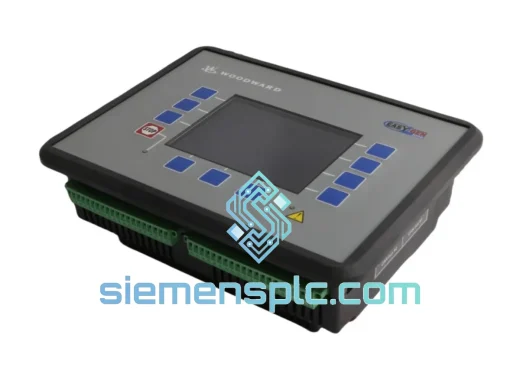
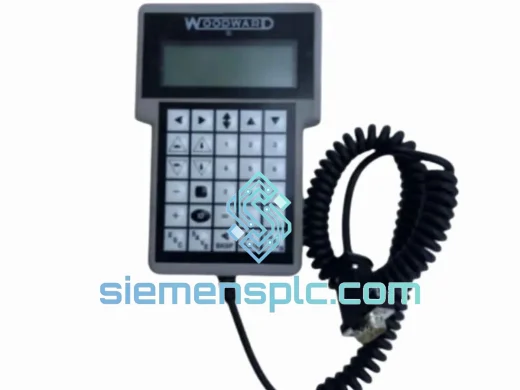
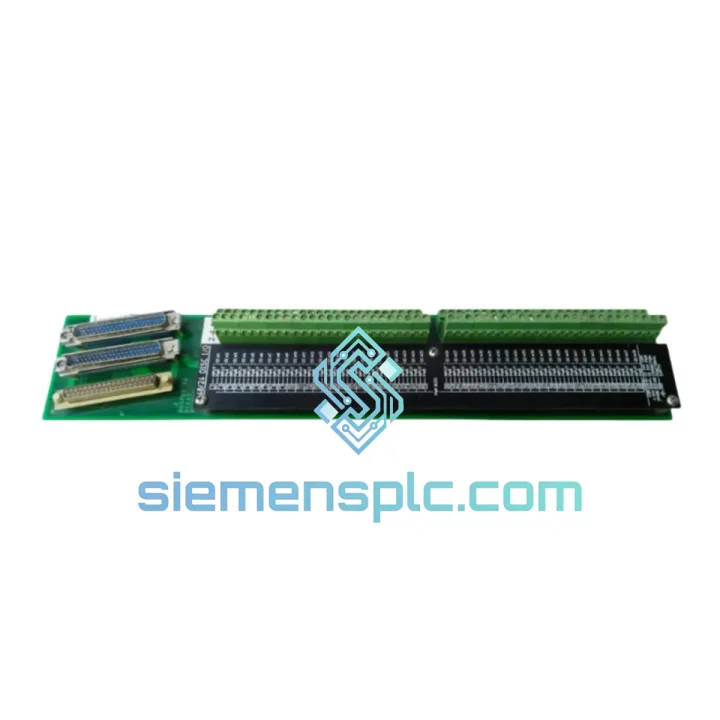
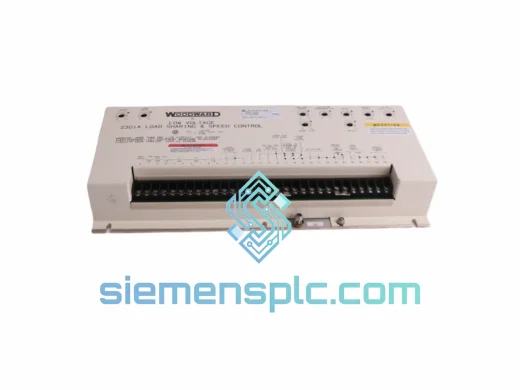
WOODWARD 5501-367 Electronic Governor Controller – 5501 Series
Request verified availability, condition, replacement risk review, packing options and courier lead time for 5501-367.
BrandWoodward
Part Number5501-367
ConditionAvailability Check
Lead TimeRFQ Confirmation
DocumentsDatasheet / photos by RFQ
ShippingExport packing available
Auto-filled RFQ
5501-367
Click Request Quote and the part number is inserted into the inquiry form automatically.
- Reply by email: [email protected]
- WhatsApp / Tel: +86 18359268345
- Mon-Sat 9:00-18:00 GMT+8
Procurement Data
Key Product Information
Core fields for model confirmation and RFQ routing. Detailed product narrative remains below.
- Brand
- Woodward
- Primary Part Number
- 5501-367
- Product Type
- Electronic Governor Controller
- Product Family
- Other series
- Manufacturer
- WOODWARD
- Country of Origin
- US
- Catalog Category
- PLCs & Controllers
- Operating Temp.
- –40 °C to +70 °C
- Warranty
- 12 Months
Model confirmed for inquiry
5501-367
Send quantity, destination and urgency. The RFQ form keeps this part number attached.
Request Quote
Product Overview
WOODWARD 5501-367: Closed-Loop Digital Governor for Turbine and Reciprocating Engine Speed Control
The WOODWARD 5501-367 is a panel-mount digital electronic governor designed for continuous-duty speed and load regulation of steam turbines, gas turbines, and reciprocating engines in power generation and mechanical drive applications. Within the 5501 Series architecture, this module occupies the position of the primary closed-loop control processor — receiving shaft speed data from a magnetic pickup (MPU), executing a configurable PID algorithm at a fixed deterministic scan rate, and issuing a proportional actuator command to maintain speed within a defined steady-state droop band or in isochronous mode.
Unlike analog governor designs that rely on passive RC networks for derivative filtering and are subject to component drift over temperature, the 5501-367 implements all control functions in firmware running on a fixed-point DSP core. This architecture eliminates the gain drift associated with aging potentiometers and capacitors, and allows PID coefficients to be stored in non-volatile EEPROM and recalled identically after each power cycle. The result is a governor whose dynamic response characteristics remain consistent across the full –40 °C to +70 °C operating envelope without field recalibration.
Real-time Stock & RFQ: [email protected] | WhatsApp: +86 18359268345
Technical Parameters
| Parameter | Specification |
|---|---|
| Part Number | 5501-367 |
| Manufacturer | WOODWARD |
| Product Series | 5501 Series |
| Controller Function | Digital PID Electronic Governor |
| Speed Sensor Input | Magnetic Pickup (MPU), 100 Hz – 25 kHz frequency range |
| MPU Input Impedance | ≥ 5 kΩ differential |
| Actuator Output Signal | 4–20 mA current source, max load 600 Ω |
| Output Resolution | 16-bit DAC, ≈ 0.24 µA per LSB |
| Load Reference Input | 4–20 mA auxiliary analog input for droop / load sharing |
| Supply Voltage | 18–40 VDC, reverse-polarity protected |
| Power Consumption | ≤ 15 W at 24 VDC nominal |
| Communication Port | Modbus RTU over RS-485 (2-wire), up to 115.2 kbps |
| Control Task Cycle | 10 ms deterministic (fixed-rate real-time kernel) |
| Droop Range | 0% (isochronous) to 10%, software-configurable |
| Operating Temperature | –40 °C to +70 °C |
| Storage Temperature | –55 °C to +85 °C |
| Relative Humidity | 5–95% RH, non-condensing |
| Vibration | IEC 60068-2-6, 5–500 Hz, 2 g |
| EMC Compliance | CE, EN 61000-4 series (ESD, EFT, surge, conducted RF) |
| Enclosure Rating | IP20, panel-mount or DIN rail |
| Dimensions (W×H×D) | Approx. 160 × 120 × 60 mm |
| Weight | Approx. 1,500 g |
| Certifications | UL, CE, RoHS |
| Warranty | 12 Months |
| Condition | Genuine New / Tested Surplus |
Hardware Logical Analysis
The MPU signal conditioning front-end of the 5501-367 uses an adaptive zero-crossing detector rather than a fixed-threshold comparator. As the MPU air gap widens over service life — a common failure mode in toothed-wheel speed sensing — the signal amplitude at the controller input decreases. A fixed threshold would begin generating missed-pulse errors at amplitudes below the threshold level, corrupting the speed measurement and causing the governor to over-fuel. The adaptive circuit continuously tracks the peak-to-peak amplitude of the incoming waveform and sets the threshold at 50% of the measured peak, maintaining accurate pulse counting from approximately 0.5 V to 50 V peak input amplitude without operator intervention.
The actuator output stage is galvanically isolated from the DSP logic supply via an optocoupler barrier rated at 500 V working isolation. This topology is specifically relevant in turbine enclosures where the actuator solenoid shares a chassis ground with high-current hydraulic valve drivers. Without isolation, ground-loop currents of several milliamps can flow through the 4–20 mA signal loop, introducing a DC offset that shifts the actuator position by a fixed error proportional to the loop resistance. The isolated output eliminates this error source entirely, ensuring that the 4 mA minimum corresponds to the fully closed actuator position regardless of the enclosure grounding topology.
EMC hardening at the PCB level is implemented through a four-layer board stack-up: signal layer, ground plane, power plane, and a second signal layer. Common-mode chokes are placed on all I/O entry points, and TVS diodes rated at 600 W peak pulse power protect the 24 VDC supply input against load-dump transients generated when the turbine is suddenly disconnected from a large inductive load. The RS-485 port includes a fail-safe biasing resistor network that holds the differential bus voltage at a defined logic-high state during open-circuit conditions, preventing the Modbus RTU receiver from interpreting line noise as valid framing and writing spurious values to the speed setpoint register.
Integral windup protection is enforced by clamping the integrator accumulator to the actuator output saturation limits (4 mA and 20 mA). When the actuator reaches a physical stop — for example, during a startup sequence where the fuel valve is held at minimum — the integrator does not continue accumulating error. This prevents the large integrator discharge transient that would otherwise cause an overspeed event when the actuator constraint is released. The derivative term is filtered by a first-order low-pass filter with a configurable time constant (default 80 ms), attenuating MPU signal noise above approximately 2 Hz from entering the derivative path and causing actuator hunting.
System Integration Benefits
- Deterministic 10 ms control cycle: Speed corrections are computed and transmitted to the actuator within a single 10 ms task period following any disturbance, supporting isochronous load-sharing across parallel generator sets without requiring external synchronization relays or inter-controller communication latency compensation.
- Full Modbus RTU register transparency: PID gains, speed setpoint, actuator output percentage, measured shaft speed, droop setting, and all active fault codes are mapped to a published Modbus holding register table. Any DCS, SCADA, or PLC with an RS-485 port can read and write these parameters without proprietary configuration software.
- Three-phase gain scheduling in firmware: Startup, synchronization, and rated-load PID coefficient sets are stored in EEPROM and selected automatically at configurable speed thresholds. This eliminates the external PLC logic rungs or relay ladder circuits that older installations required to switch between gain sets, reducing panel wiring complexity and removing a class of sequencing faults.
- Software-configurable droop from 0% to 10%: The same hardware unit can operate in isochronous mode for isolated bus applications or in droop mode for grid-parallel generation, with the droop percentage adjustable via Modbus register write or front-panel potentiometer without firmware changes or hardware jumpers.
- Actuator loop fault detection within 50 ms: The output stage monitors the 4–20 mA loop continuously. An open-circuit condition (loop current below 2 mA) or a short-circuit condition (loop current above 21 mA) asserts a discrete fault relay output within 50 ms and writes a fault code to the Modbus status register, enabling the DCS to initiate a controlled shutdown before the turbine reaches an uncontrolled speed condition.
- –40 °C cold-start capability: The lower operating temperature limit, combined with the wide 18–40 VDC supply range, allows the governor to initialize and begin closed-loop control in unheated turbine enclosures in arctic or high-altitude installations. No auxiliary panel heater is required to bring the unit within its operating range before turbine start.
- EEPROM parameter retention with 1,000,000-cycle endurance: All commissioned parameters — PID gains, setpoint, droop, gain-scheduling thresholds — are written to EEPROM with a minimum 1,000,000 write-cycle endurance. Power interruptions do not require re-commissioning, and the unit resumes operation with the last saved configuration immediately upon power restoration.
- Terminal-compatible with earlier 5501 Series revisions: The 5501-367 maintains the same terminal block pinout as earlier 5501 Series board revisions. Direct board-swap replacement in existing panel installations does not require rewiring, connector modification, or changes to the external wiring documentation, reducing maintenance downtime to the time required for physical board exchange and parameter verification.
Quality Assurance & Global Logistics
Each WOODWARD 5501-367 unit dispatched from siemensplc.com undergoes a structured incoming inspection protocol before it is allocated to any order. The inspection sequence covers MPU input frequency response verification across the full 100 Hz to 25 kHz operating range, actuator output linearity measurement at five points (4 mA, 7.2 mA, 12 mA, 16.8 mA, 20 mA), Modbus RTU communication integrity testing at both 9600 bps and 115200 bps baud rates, and supply voltage rejection testing at the 18 V and 40 V supply extremes. Units that do not meet the original WOODWARD factory acceptance criteria at any test point are quarantined and not dispatched.
Packaging uses anti-static foam-lined cartons with silica gel desiccant sachets and a humidity indicator card visible through the carton window. Each shipment is accompanied by a packing list, commercial invoice, and Certificate of Conformance. For international orders, export documentation including HS code classification and country-of-origin declaration is prepared as standard, reducing customs clearance delays at the destination port.
Logistics operations are based in Xiamen, China, with daily consolidated freight departures to industrial hubs across Southeast Asia, the Middle East, Europe, and the Americas. Air freight transit times are 3–7 business days to most destinations via DHL Express, FedEx International Priority, or UPS Worldwide Express. Sea freight consolidation is available for bulk orders exceeding 50 kg gross weight. All shipments carry full cargo insurance and end-to-end tracking from dispatch confirmation to delivery receipt. The 12-month warranty covers defects in materials and workmanship under rated operating conditions, with replacement units dispatched by air freight within 5 business days of confirmed fault diagnosis.
Contact Information
Email: [email protected]
WhatsApp: +86 18359268345
Web: siemensplc.com
Location: Xiamen, China
© 2026 siemensplc.com. All rights reserved.
Ready to quote
[email protected]
Send This Part Number to Sales
RFQ workflow
Quality workflow ->
Confirmation Process
01Model confirmation
We check the full part number, brand, series and visible nameplate information before quotation.
02Availability reply
Sales confirms stock path, condition option, quantity and realistic lead time for export dispatch.
03Packing & courier
DHL, FedEx, UPS or buyer courier arrangements can be reviewed with packing requirements.
Continue sourcing
Browse full catalog ->
Related Automation Parts
Similar brand or category products for fast comparison and multi-item RFQ lists.
Woodward
RFQ Ready
WOODWARD 9905-028 Load Sharing Speed Control Module
Origin US
Load Sharing & Speed Control Module