Woodward
In Stock OK
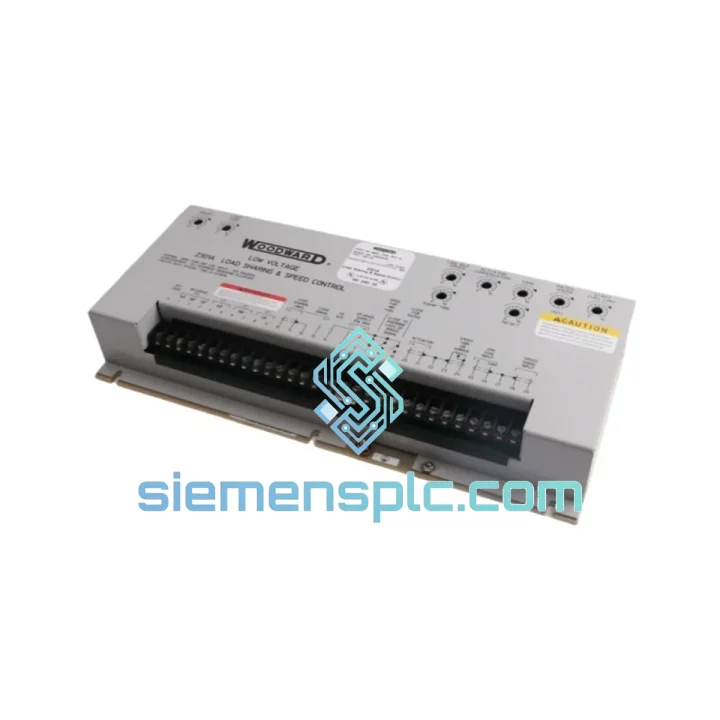
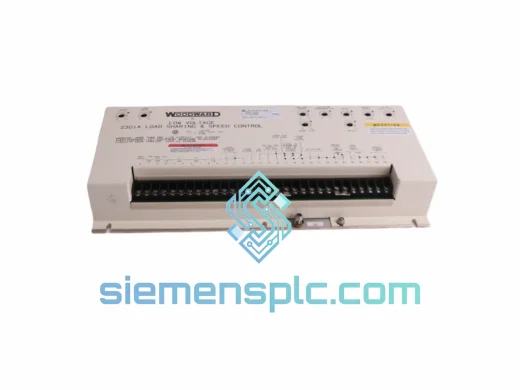
WOODWARD 9907-018/2301A Governor Control Module – 2301A Series
Request verified availability, condition, replacement risk review, packing options and courier lead time for 9907-018/2301A.
BrandWoodward
Part Number9907-018/2301A
ConditionAvailability Check
Lead TimeRFQ Confirmation
DocumentsDatasheet / photos by RFQ
ShippingExport packing available
Auto-filled RFQ
9907-018/2301A
Click Request Quote and the part number is inserted into the inquiry form automatically.
- Reply by email: [email protected]
- WhatsApp / Tel: +86 18359268345
- Mon-Sat 9:00-18:00 GMT+8
Procurement Data
Key Product Information
Core fields for model confirmation and RFQ routing. Detailed product narrative remains below.
- Brand
- Woodward
- Primary Part Number
- 9907-018/2301A
- Product Type
- Governor Control Module
- Product Family
- Other series
- Manufacturer
- WOODWARD, Inc. — Fort Collins, Colorado, USA
- Country of Origin
- US
- Catalog Category
- PLCs & Controllers
- Operating Temp.
- –40 °C to +70 °C (MIL-spec environmental qualification)
- Warranty
- 12 months against manufacturing defects from date of shipment
Model confirmed for inquiry
9907-018/2301A
Send quantity, destination and urgency. The RFQ form keeps this part number attached.
Request Quote
Product Overview
WOODWARD 9907-018/2301A: Proportional-Integral Governor with Analog Load Sharing Bus for Multi-Generator Installations
The WOODWARD 9907-018/2301A is a panel-mount isochronous speed governor and real-power load sharing controller designed for paralleled generator sets operating on isolated or grid-tied AC buses. It belongs to the 2301A product family — a series with a decades-long field record in marine propulsion auxiliaries, oil and gas compression stations, data center standby power, and industrial co-generation plants. The 9907-018 suffix designates the low-voltage input variant, distinguishing it from the high-voltage 9907-017 configuration in terms of power supply range and actuator drive characteristics.
At its functional core, the module performs two interdependent control tasks. First, it regulates prime mover shaft speed by comparing a magnetic pickup unit (MPU) derived speed signal against an internal frequency setpoint and driving an electro-hydraulic or electric actuator through a proportional-integral (PI) output stage. Second, it participates in a peer-to-peer analog load sharing network that continuously equalizes real power output — measured in kilowatts — across all paralleled units connected to a common sharing bus. These two functions are not sequential; they execute simultaneously within the same analog signal chain, with the load sharing correction injected as a bias into the speed setpoint rather than as a separate control loop. This architecture ensures that load equalization does not introduce phase lag into the speed regulation path.
The MPU input conditioning circuit uses a differential zero-crossing detector with Schmitt-trigger hysteresis. This design choice is deliberate: generator rooms present cable runs of 20–50 meters between the MPU and the control panel, during which the MPU’s sinusoidal output is susceptible to capacitive coupling from adjacent power cables. The Schmitt-trigger threshold prevents false triggering on noise shoulders that would corrupt the speed measurement word. The resulting pulse train feeds a frequency-to-voltage converter whose output linearity is maintained across the full engine speed range from cranking (typically 20–30% of rated speed) to overspeed trip threshold.
The PI controller’s integral term is implemented in the analog domain using an operational amplifier integrator rather than a digital accumulator. This eliminates the quantization-induced limit cycling that manifests as a ±0.1–0.2 Hz frequency oscillation in digitally governed systems operating at low update rates. The proportional gain (labeled Gain on the front panel) and the integral rate (labeled Stability) are each set via sealed multi-turn cermet potentiometers, providing fine resolution without the contact resistance drift associated with carbon-track trimmers. Field calibration requires only a frequency meter and a load bank — no laptop or proprietary software interface.
The actuator output stage is a voltage-controlled transconductance amplifier. Its output current is proportional to the PI controller’s output voltage and is independent of the actuator coil’s DC resistance. This matters in outdoor installations where actuator winding temperature can vary by 60–80 °C between a cold-start winter morning and a full-load summer afternoon, causing coil resistance to shift by 20–25%. A voltage-output driver would deliver proportionally less current as resistance rises, introducing a gain error into the control loop. The transconductance topology eliminates this error without requiring temperature compensation circuitry.
Load sharing is implemented through a single-wire analog bus. Each 9907-018/2301A module measures its generator’s real power output via a current transformer and potential transformer input, computes a normalized per-unit kW signal, and drives this signal onto the shared bus through a low-impedance buffer. Simultaneously, it reads the bus voltage — which represents the fleet average kW — through a high-impedance differential input. The difference between the unit’s own kW signal and the bus average is integrated and added as a bias to the speed setpoint. A unit carrying more than its share of the load will see a negative bias, causing it to reduce fuel admission and shed load to the other units. The bus impedance architecture ensures that connecting or disconnecting a unit does not alter the bus voltage seen by the remaining modules, preserving load sharing calibration across the fleet.
Governing mode — isochronous or droop — is selectable via a front-panel switch or a remote contact closure. Isochronous mode is appropriate for isolated bus operation where the governor must hold rated frequency with zero steady-state error. Droop mode introduces a configurable speed-versus-load slope (typically 3–5%) that allows the unit to operate stably in parallel with a utility grid or a larger synchronous machine without hunting. The ability to switch modes without hardware modification makes the 9907-018/2301A suitable for facilities that transition between grid-tied and island operation, such as hospitals, offshore platforms, and industrial plants with embedded generation.
Real-time Stock & RFQ: [email protected] | WhatsApp: +86 18359268345
Technical Parameters
| Parameter | Specification |
|---|---|
| Part Number | 9907-018 |
| Series Designation | WOODWARD 2301A Load Sharing & Speed Control |
| Voltage Class | Low Voltage Input Variant |
| Governing Modes | Isochronous / Droop (field-selectable, contact or switch) |
| Speed Sensing Input | Magnetic Pickup Unit (MPU); AC sinusoidal, frequency-proportional |
| MPU Input Conditioning | Differential zero-crossing detector with Schmitt-trigger hysteresis; CMRR >60 dB |
| Control Algorithm | Analog Proportional-Integral (PI); Gain and Stability adjustable via multi-turn cermet potentiometers |
| Actuator Output Type | Transconductance (voltage-to-current); output independent of actuator coil resistance |
| Actuator Compatibility | WOODWARD EG-series electro-hydraulic actuators; compatible with third-party proportional actuators |
| Load Sharing Input | CT + PT derived real power (kW); normalized per-unit signal |
| Load Sharing Bus | Single-wire analog; high-impedance differential input, low-impedance buffered output |
| Operating Temperature | –40 °C to +70 °C (MIL-spec environmental qualification) |
| Form Factor | Panel-mount module; DIN-rail adapter available |
| Approximate Weight | 80 g (module only, excluding mounting hardware) |
| Manufacturer | WOODWARD, Inc. — Fort Collins, Colorado, USA |
| Country of Origin | United States of America |
| Warranty | 12 months against manufacturing defects from date of shipment |
Hardware Logical Analysis
The board-level EMC architecture of the 9907-018/2301A reflects the electromagnetic environment of generator rooms, where high-dV/dt switching transients from SCR-based automatic voltage regulators (AVRs), motor starters, and variable-frequency drives are present on both the power rails and the signal cable infrastructure. The power supply section uses a linear regulator topology rather than a switching converter, eliminating the 50–500 kHz conducted emissions that switching-mode supplies inject into the control circuitry ground plane. This design choice accepts a modest efficiency penalty in exchange for a noise floor that is 30–40 dB lower than an equivalent SMPS-based supply — a trade-off that is rational in a control module where supply current draw is measured in milliamps rather than amperes.
Signal lines crossing the board boundary — MPU input, load sharing bus, CT/PT inputs, and actuator output — are each filtered with ferrite bead and bypass capacitor networks tuned to attenuate frequencies above 1 MHz. The ground plane is a continuous copper pour on the inner layer, providing a low-impedance return path for high-frequency displacement currents that would otherwise couple into the signal traces. The actuator output stage is galvanically isolated from the control signal chain through an optocoupler barrier, preventing actuator inrush currents during engine startup from coupling ground bounce into the PI integrator — a failure mode that manifests as a speed spike at the moment of actuator energization.
The load sharing bus interface deserves specific attention from a systems integration perspective. The high-impedance differential input (input impedance >100 kΩ) ensures that the bus voltage is not loaded down when multiple units are connected in parallel. The low-impedance buffered output (output impedance <100 Ω) ensures that the unit’s kW signal drives the bus without being attenuated by the parallel combination of other units’ input impedances. This asymmetric impedance architecture is what allows the bus to represent a true average of all connected units’ kW signals without requiring a dedicated summing amplifier or a master controller.
The Schmitt-trigger hysteresis on the MPU zero-crossing detector is set to approximately 200 mV, which is sufficient to reject the capacitive coupling noise typical of 30-meter shielded cable runs in a 480 V generator room environment, while remaining sensitive enough to detect the MPU signal at cranking speeds where signal amplitude may be as low as 1 V peak-to-peak. This hysteresis value represents a deliberate engineering compromise between noise immunity and low-speed sensitivity — a compromise that is documented in WOODWARD’s application engineering notes for the 2301A series.
System Integration Benefits
- Zero steady-state frequency error in isochronous mode: The analog PI integrator drives speed error to zero at steady state, holding bus frequency at the setpoint regardless of load magnitude. This eliminates the frequency offset that droop governors introduce at partial load — an offset that causes problems for frequency-sensitive loads such as synchronous clocks, precision timers, and some variable-speed drive control boards.
- Continuous automatic kW equalization: The load sharing bus corrects real-power imbalances in real time without operator intervention. Unequal load distribution — which causes one generator to operate near its thermal limit while another runs lightly loaded — is eliminated, extending winding insulation life and reducing the frequency of overhaul events across the generator fleet.
- Transient-free mode switching: The isochronous-to-droop transition is designed to be bumpless, with the droop slope introduced gradually rather than as a step change. This prevents the sudden speed perturbation that would otherwise trigger underfrequency or rate-of-change-of-frequency (ROCOF) protective relays during grid synchronization sequences.
- Actuator-agnostic proportional current output: The transconductance output stage is compatible with any proportional actuator whose coil resistance falls within the specified range, including WOODWARD EG-series, Barber-Colman DYNA series, and various OEM actuators. This reduces the engineering effort and spare parts inventory required when retrofitting older governor systems or integrating the 2301A into mixed-vendor installations.
- No single point of failure in the load sharing network: The peer-to-peer bus architecture has no master controller. Any unit can be removed from service — for maintenance, calibration, or fault isolation — while the remaining units continue sharing load among themselves. The bus voltage automatically re-averages to reflect the reduced fleet size without requiring reconfiguration of any remaining unit.
- Field-tunable dynamic response: The Gain and Stability potentiometers allow on-site adjustment of the PI controller’s dynamic response to match the specific rotational inertia and fuel system time constant of each prime mover. A high-inertia diesel genset and a low-inertia gas turbine require fundamentally different PI settings; the 9907-018/2301A accommodates both without hardware changes.
- Direct form-fit-function replacement for legacy 2301A low-voltage units: The 9907-018/2301A maintains backward compatibility with earlier 2301A low-voltage variants in terms of connector pinout, panel cutout dimensions, and wiring interface. This allows maintenance replacements to be completed without panel modifications, rewiring, or recalibration of the load sharing bus — reducing planned maintenance downtime to the time required for physical module swap and dynamic re-tuning.
- MIL-spec environmental qualification: The module is tested to military-grade temperature cycling, vibration, and humidity standards. This qualification level is relevant for offshore platform installations, mobile generator trailers, and tropical industrial facilities where diurnal temperature swings, salt-laden air, and mechanical vibration from the prime mover itself degrade commercial-grade electronics within 12–18 months of service.
- Diagnostic access via front-panel test points: Dedicated test points expose the speed error signal, actuator output level, and load sharing bus voltage for direct measurement with a standard multimeter or oscilloscope. This eliminates the need for a laptop or proprietary diagnostic interface during commissioning and fault diagnosis, reducing the skill level required for field service and shortening mean time to repair (MTTR).
- Scalable parallel bus architecture: Additional generator sets and 2301A modules can be added to the load sharing bus without modifying the wiring or recalibrating existing units. The bus impedance architecture accommodates up to the specified maximum number of paralleled units without degradation of load sharing accuracy, supporting incremental capacity expansion without system redesign.
Quality Assurance & Global Logistics
Each WOODWARD 9907-018/2301A unit dispatched from siemensplc.com passes a structured incoming inspection protocol executed before the unit is allocated to any order. Physical inspection covers connector pin straightness and seating depth, PCB surface condition for evidence of rework or component substitution, label print quality and part number legibility, and housing dimensional conformance to WOODWARD’s published outline drawing. Functional verification applies a simulated MPU signal at multiple frequencies and confirms that the actuator output responds with the correct proportional current. Units that exhibit any anomaly during inspection are quarantined and removed from available stock — they are not offered for sale at a reduced grade.
All shipments originate from our warehouse in Xiamen, Fujian Province, China. Xiamen Gaoqi International Airport operates direct cargo services to Frankfurt, Amsterdam, Los Angeles, Dubai, Singapore, and Sydney, providing transit times of 3–5 business days to most major industrial markets via DHL Express, FedEx International Priority, and UPS Worldwide Express. For customers in Southeast Asia, road freight to Singapore and Kuala Lumpur is available with 2–3 day transit. Sea freight consolidation via Xiamen Port is available for large-volume orders where lead time permits, with weekly sailings to European and North American ports.
Standard export documentation provided with every shipment includes a commercial invoice, detailed packing list, and certificate of conformance referencing the inspection protocol. For customers in regulated markets, additional documentation — including country-of-origin certificates, ECCN classification statements, and customs HS code declarations — can be prepared on request at no additional charge. All documentation is provided in English; Chinese-language versions are available for domestic customers.
Packaging is specified for the transit stresses of international air freight: an anti-static inner bag rated for <100 V surface resistance, closed-cell polyethylene foam cushioning rated for 50G shock per ASTM D4169, and a double-wall corrugated outer carton with burst strength exceeding 275 kPa. Shipment tracking numbers are provided at the time of dispatch. A 12-month warranty covers all units against manufacturing defects from the date of shipment; warranty claims are acknowledged within 2 business days and replacement units are dispatched before the defective unit is returned, minimizing plant downtime for customers with critical operational schedules.
Contact Information
Email: [email protected]
WhatsApp: +86 18359268345
Web: siemensplc.com
Location: Xiamen, China
© 2026 siemensplc.com. All rights reserved.
Ready to quote
[email protected]
Send This Part Number to Sales
RFQ workflow
Quality workflow ->
Confirmation Process
01Model confirmation
We check the full part number, brand, series and visible nameplate information before quotation.
02Availability reply
Sales confirms stock path, condition option, quantity and realistic lead time for export dispatch.
03Packing & courier
DHL, FedEx, UPS or buyer courier arrangements can be reviewed with packing requirements.
Continue sourcing
Browse full catalog ->
Related Automation Parts
Similar brand or category products for fast comparison and multi-item RFQ lists.
Woodward
RFQ Ready
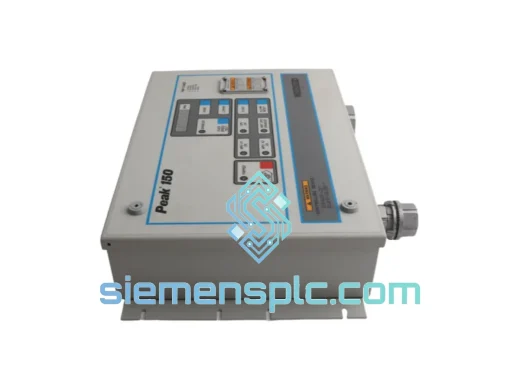
WOODWARD 9905-028 Load Sharing Speed Control Module
Origin US
Load Sharing & Speed Control Module