
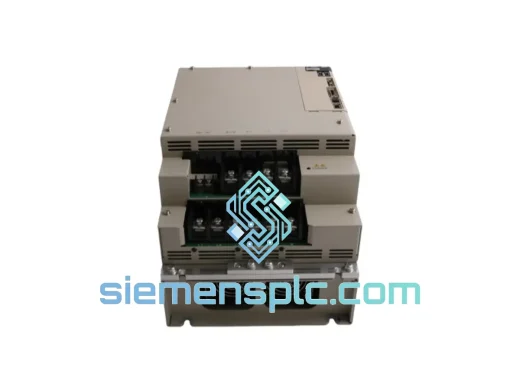
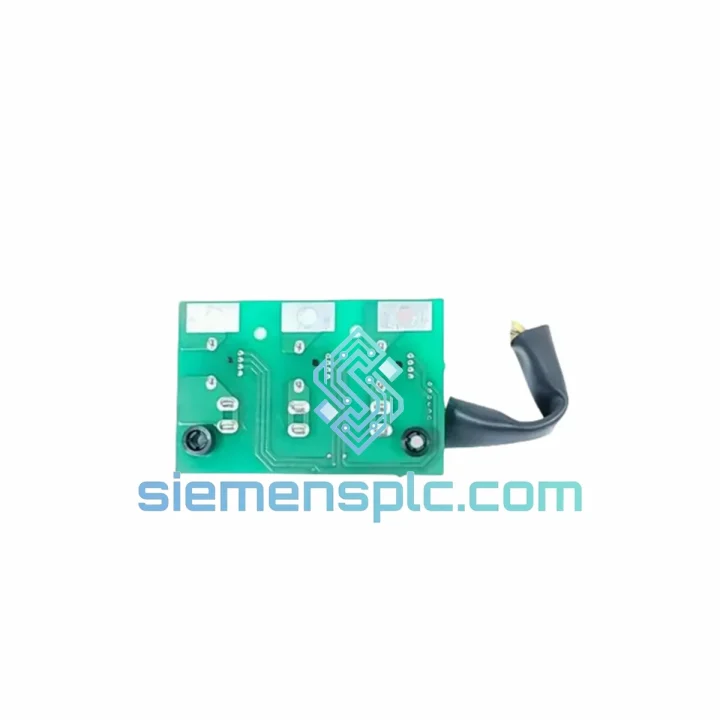
Yaskawa
In Stock OK
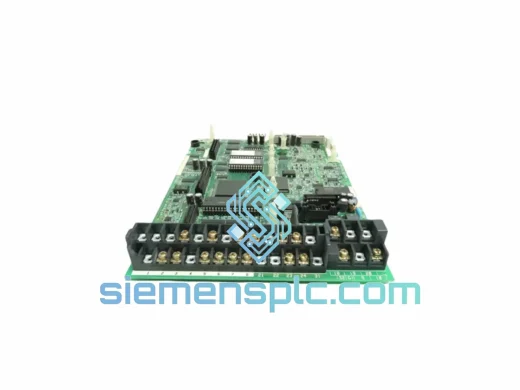
YASKAWA DESIG-3PCB PCB Module – DESIG Series
Request verified availability, condition, replacement risk review, packing options and courier lead time for DESIG-3PCB.
BrandYaskawa
Part NumberDESIG-3PCB
ConditionAvailability Check
Lead TimeRFQ Confirmation
DocumentsDatasheet / photos by RFQ
ShippingExport packing available
Auto-filled RFQ
DESIG-3PCB
Click Request Quote and the part number is inserted into the inquiry form automatically.
- Reply by email: [email protected]
- WhatsApp / Tel: +86 18359268345
- Mon-Sat 9:00-18:00 GMT+8
Procurement Data
Key Product Information
Core fields for model confirmation and RFQ routing. Detailed product narrative remains below.
- Brand
- Yaskawa
- Primary Part Number
- DESIG-3PCB
- Product Type
- PCB Module
- Product Family
- Other series
- Manufacturer
- YASKAWA Electric Corporation
- Country of Origin
- JP
- Catalog Category
- Motor Drives
- Operating Temp.
- −10 °C to +55 °C (ambient, forced-air cooled enclosure)
- Warranty
- 12 months against manufacturing defects
Model confirmed for inquiry
DESIG-3PCB
Send quantity, destination and urgency. The RFQ form keeps this part number attached.
Request Quote
Product Overview
YASKAWA DESIG-3PCB Servo Drive Internal Control Board — Signal Processing Architecture in Closed-Loop Motion Systems
The YASKAWA DESIG-3PCB is a multi-layer printed circuit board assembly that functions as the internal control substrate within YASKAWA DESIG Series servo amplifiers. Its primary role is to condition encoder feedback signals, execute current-loop compensation algorithms, and relay gate-drive commands to the IGBT power stage — all within a deterministic scan cycle that sustains closed-loop bandwidth at the microsecond level. In servo systems where axis positioning error must remain below ±1 pulse count under dynamic load transients, the integrity of this board directly governs achievable contouring accuracy.
Unlike generic replacement PCBs sourced from secondary markets, the DESIG-3PCB carries YASKAWA’s factory-calibrated component tolerances. Resistor networks governing current-sensing gain and offset are laser-trimmed at the factory to match the amplifier’s rated output current range. Capacitor arrays in the DC bus voltage-sensing path are selected for low ESR across the operating temperature band of −10 °C to +55 °C. These are not parameters that can be approximated with off-the-shelf substitutes without recalibrating the entire drive — a process that requires YASKAWA’s proprietary service tooling.
Real-time Stock & RFQ: [email protected] | WhatsApp: +86 18359268345
Technical Parameters
| Part Number (SKU) | DESIG-3PCB |
| Manufacturer | YASKAWA Electric Corporation |
| Series | DESIG Series Servo Amplifier Platform |
| Component Classification | Internal Control PCB / Signal Processing Board |
| Board Construction | Multi-layer FR4, impedance-controlled traces |
| Operating Temperature | −10 °C to +55 °C (ambient, forced-air cooled enclosure) |
| Storage Temperature | −20 °C to +65 °C |
| Logic Supply Voltage | +5 VDC / ±15 VDC (derived from drive internal SMPS) |
| Encoder Interface | Incremental / absolute serial (drive-model dependent) |
| Communication Interface | Internal backplane bus to main control DSP |
| EMC Compliance | CE (EMC Directive 2014/30/EU), IEC 61800-3 Category C2 |
| Safety Compliance | RoHS 2011/65/EU; ISO 9001 manufacturing origin |
| Connector Type | Board-to-board press-fit and ZIF ribbon connectors |
| Shipping Weight | 6,280 g (packaged) |
| Country of Origin | Japan |
| Warranty | 12 months against manufacturing defects |
Hardware Logical Analysis
The DESIG-3PCB occupies the signal-chain layer between the encoder interface and the IGBT gate-driver stage. Its architecture can be decomposed into three functional blocks:
1. Encoder Signal Conditioning & Interpolation: Differential line-receiver ICs (typically RS-422 compatible) accept the encoder’s A/B/Z quadrature signals and pass them through a hardware interpolation circuit that multiplies the base encoder resolution by a factor of 4× before forwarding position data to the DSP. This hardware interpolation — rather than software-based counting — eliminates jitter introduced by interrupt latency in the main processor, maintaining position-count integrity at encoder frequencies up to several MHz.
2. Current-Sensing Signal Path & ADC Front-End: Hall-effect current transducers on the power stage output two analog voltage signals proportional to phase currents Iu and Iv. The DESIG-3PCB routes these signals through a precision instrumentation amplifier stage with a common-mode rejection ratio (CMRR) exceeding 80 dB, then into a 12-bit or higher successive-approximation ADC. The ADC sampling is synchronized to the PWM carrier via a hardware trigger line, ensuring that current samples are always taken at the PWM valley — the point of minimum switching noise on the DC bus — rather than at an arbitrary software-scheduled interval.
3. EMC Hardening & Isolation Architecture: The board employs optocoupler-based galvanic isolation on all I/O signal lines that cross the power/logic boundary. Ferrite bead arrays are placed at the board’s edge connectors to suppress common-mode noise conducted from the power stage. Ground plane partitioning separates the analog signal ground from the digital logic ground, with a single-point star connection at the ADC reference pin — a layout discipline that prevents digital switching currents from modulating the analog reference voltage and introducing systematic current-measurement offset.
The net result of this architecture is a current-loop bandwidth that YASKAWA specifies in the range of 1–2 kHz for the DESIG platform, with position-loop bandwidths of 50–100 Hz achievable under typical mechanical load conditions — figures that are only sustainable when the signal-chain hardware operates within its calibrated tolerance stack.
System Integration Benefits
- Direct OEM Drop-In Compatibility: The DESIG-3PCB installs into the DESIG Series amplifier chassis using the original board-to-board connectors and mounting standoffs. No firmware parameter re-initialization is required in standard replacement scenarios, reducing commissioning time to under 30 minutes for a trained technician.
- Deterministic Current-Loop Execution: Hardware-synchronized ADC sampling eliminates the timing jitter that software-polled current sensing introduces. This preserves the drive’s rated current-loop bandwidth and prevents torque ripple artifacts that degrade surface finish in precision machining applications.
- Encoder Feedback Integrity at High Speed: The hardware interpolation and RS-422 differential receiver architecture maintains signal integrity at encoder line counts up to 2,500 PPR and above, supporting spindle and linear axis applications where velocity ripple must remain below 0.1% of set speed.
- Fault Diagnostic Transparency: The board’s internal logic generates discrete fault codes — overcurrent, encoder loss, undervoltage, and overtemperature — that are latched in the drive’s non-volatile fault log. This allows maintenance engineers to reconstruct the sequence of events leading to a drive trip without requiring oscilloscope capture at the moment of failure.
- Thermal Stability Across Duty Cycles: Component selection for the analog signal path prioritizes low temperature coefficient (≤50 ppm/°C for critical resistors), ensuring that current-sensing gain drift across the drive’s operating temperature range remains within the drive’s specified accuracy band without field recalibration.
- Reduced Unplanned Downtime Exposure: Stocking one DESIG-3PCB as a maintenance spare eliminates the 4–12 week lead time associated with sourcing a replacement board through standard distribution channels during an unplanned failure event. For a production line running at 85% OEE, a single avoided 8-hour downtime event recovers the board’s cost many times over.
- Compatibility Across DESIG Platform Generations: The DESIG-3PCB is applicable across multiple DESIG Series amplifier frame sizes and power ratings. This cross-compatibility allows maintenance departments to standardize on a single spare board SKU rather than maintaining separate inventory for each drive variant in the installed base.
- Counterfeit-Resistant Traceability: Genuine YASKAWA boards carry factory-applied date codes, lot numbers, and QR-traceable component markings. These identifiers allow incoming inspection teams to verify authenticity against YASKAWA’s production records, a critical requirement for ISO 9001-certified maintenance programs and OEM warranty compliance.
Quality Assurance & Global Logistics
Every YASKAWA DESIG-3PCB unit dispatched from our Xiamen, China facility undergoes a structured incoming inspection protocol before it is allocated to customer orders:
- Visual inspection under 10× magnification for solder joint integrity, component seating, and PCB trace damage
- Part number, revision code, and date code verification against YASKAWA’s published documentation
- Anti-static handling throughout — ESD wrist straps, grounded workbenches, and conductive foam packaging
- Humidity indicator cards sealed inside each anti-static bag to detect moisture exposure during transit
- Outer carton with double-wall corrugated construction and fragile/ESD warning labeling for air and sea freight
- Full export documentation: commercial invoice, packing list, and certificate of origin for customs clearance in all major import markets
Shipments originate from Xiamen, Fujian Province, China — a major international logistics hub with direct air freight connections to Europe, North America, Southeast Asia, and the Middle East. Standard air freight transit times are 3–7 business days to most destinations. DHL Express, FedEx International Priority, and UPS Worldwide Express are available for time-critical orders. Sea freight consolidation is available for bulk spare-parts orders. All shipments are fully insured and tracked from dispatch to delivery confirmation.
Contact Information
Email: [email protected]
WhatsApp: +86 18359268345
Web: siemensplc.com
Location: Xiamen, China
© 2026 siemensplc.com. All rights reserved.
Ready to quote
[email protected]
Send This Part Number to Sales
RFQ workflow
Quality workflow ->
Confirmation Process
01Model confirmation
We check the full part number, brand, series and visible nameplate information before quotation.
02Availability reply
Sales confirms stock path, condition option, quantity and realistic lead time for export dispatch.
03Packing & courier
DHL, FedEx, UPS or buyer courier arrangements can be reviewed with packing requirements.
Continue sourcing
Browse full catalog ->
Related Automation Parts
Similar brand or category products for fast comparison and multi-item RFQ lists.
Yaskawa
RFQ Ready
YASKAWA YPHT31359-1A Servo Drive Control Board
Origin JP
Servo Drive Control Board