Yokogawa
RFQ Ready
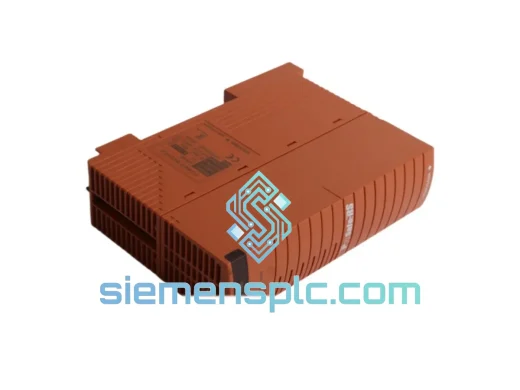
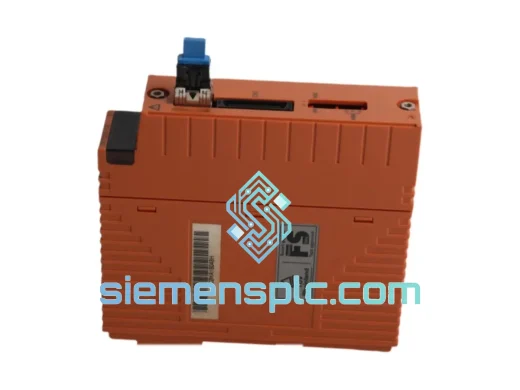
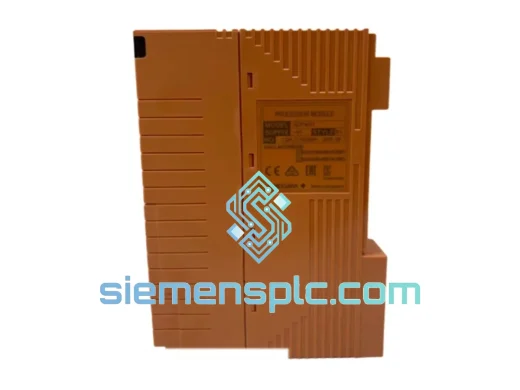
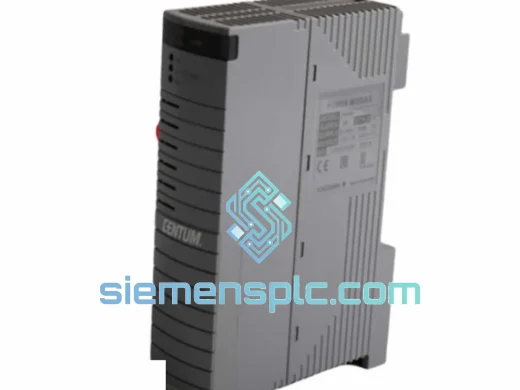
Yokogawa ASS9562DK-00 Analog Input Module – STARDOM FCN/FCJ
STARDOM
Origin JP
Analog Input Module
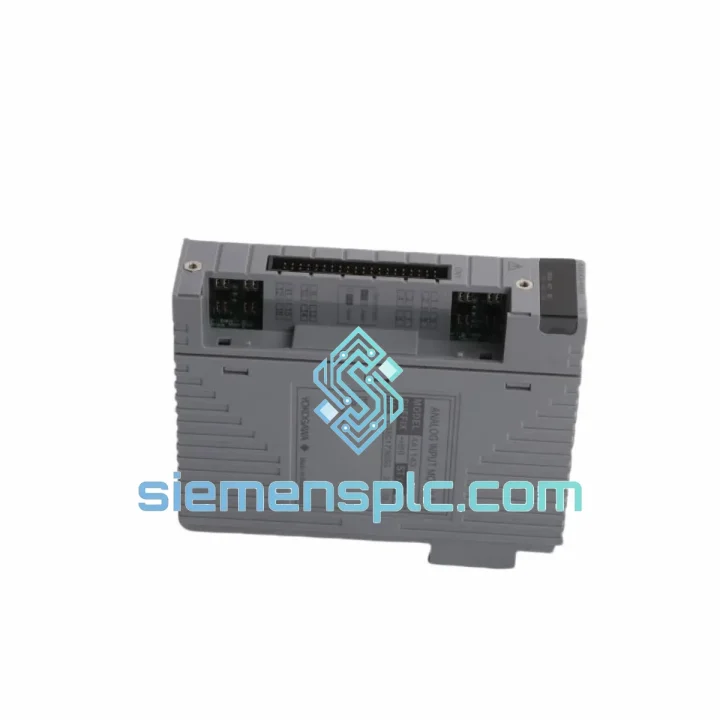
Request verified availability, condition, replacement risk review, packing options and courier lead time for AAP135-S03.
Click Request Quote and the part number is inserted into the inquiry form automatically.
Core fields for model confirmation and RFQ routing. Detailed product narrative remains below.
The AAP135-S03 S2 is a four-channel pulse input module designed for slot-based installation within Yokogawa’s STARDOM FCN and FCJ autonomous controllers. Its primary function within a control loop is deterministic pulse accumulation and frequency measurement — translating raw field-device pulse trains from turbine meters, vortex flowmeters, positive-displacement meters, and encoder outputs into engineering-unit process values accessible to the FCN/FCJ CPU over the internal I/O bus. Unlike analog input modules that rely on 4–20 mA signal conditioning chains, the AAP135-S03 S2 accepts direct digital pulse signals, eliminating one conversion stage and the associated linearity error it introduces.
In flow-metering applications, the module operates as the primary totalizer front-end. Each channel maintains an independent 32-bit hardware counter clocked at up to 10 kHz for voltage-pulse inputs, accumulating counts without CPU intervention. The FCN firmware reads these counters on each scan cycle and applies the configured K-factor (pulses per unit volume) to derive instantaneous flow rate and accumulated total. This architecture ensures that no pulse is lost between scan cycles, a critical requirement in custody-transfer and fiscal metering installations where count integrity directly affects billing accuracy.
Real-time Stock & RFQ: [email protected] | WhatsApp: +86 18359268345
| Parameter | Specification |
|---|---|
| Part Number / SKU | AAP135-S03 S2 |
| Manufacturer | Yokogawa Electric Corporation |
| Series / Platform | STARDOM FCN / FCJ Autonomous Controller |
| Module Function | Pulse Input (Accumulation & Frequency Measurement) |
| Number of Input Channels | 4 (individually isolated) |
| Input Signal Types | Voltage pulse, dry contact closure, open-collector (NPN) |
| Max Input Frequency — Voltage Pulse | 10 kHz |
| Max Input Frequency — Contact Input | 100 Hz |
| Input Voltage Range (Voltage Pulse Mode) | 5 V DC to 30 V DC |
| Counter Register Width | 32-bit per channel (max count: 4,294,967,295) |
| Internal I/O Bus | STARDOM FCN/FCJ proprietary backplane bus |
| Power Consumption | ≤ 3.5 W (from base unit backplane) |
| Operating Temperature | 0 °C to +55 °C |
| Storage Temperature | −25 °C to +70 °C |
| Relative Humidity | 5 % to 95 % RH, non-condensing |
| Module Weight | 460 g |
| Mounting Method | Direct slot insertion into FCN/FCJ base unit |
| Certifications | CE (EMC + LVD), UL, cUL, RoHS |
| Country of Origin | Japan |
| Warranty | 12 months from date of shipment |
The AAP135-S03 S2 implements per-channel galvanic isolation using optocoupler barriers rated for at least 500 V DC isolation voltage between field wiring and the backplane logic domain. This design choice directly addresses the ground-potential differences that arise in large industrial installations where field instruments, junction boxes, and control panels share separate earthing networks. Without channel isolation, a ground loop between two meters at different potential would inject a common-mode current into the counter input, producing spurious counts or saturating the input comparator. The optocoupler barrier converts the field-side current pulse into a light pulse, which is then detected by a photodiode on the logic side — breaking the galvanic path entirely.
On the logic side, each channel feeds a dedicated hardware counter register rather than relying on CPU interrupt service routines. This is architecturally significant: interrupt-driven pulse counting on a shared CPU is subject to latency jitter caused by competing interrupt sources (Ethernet, serial, watchdog timers). At 10 kHz input frequency, a 50 µs interrupt latency window is sufficient to miss one pulse per cycle under worst-case CPU loading. The AAP135-S03 S2 eliminates this failure mode by decoupling the counting function from the CPU entirely — the 32-bit counter increments in hardware on every valid pulse edge, and the CPU reads the accumulated value at its own scan rate without risk of count loss.
The module’s input comparator threshold is designed to reject slow-rising signals and contact bounce. For voltage-pulse mode, the hysteresis band between the low-to-high and high-to-low switching thresholds prevents multiple counts from a single mechanical contact closure event. For contact-closure mode, the 100 Hz maximum frequency specification reflects the debounce filter time constant built into the input conditioning circuit — a deliberate hardware constraint that trades high-frequency capability for immunity to contact chatter in relay and limit-switch applications.
EMC performance is reinforced by the module’s physical construction: the PCB employs a ground-plane layer between the field-side and logic-side circuits, and the module housing provides shielding continuity to the FCN/FCJ chassis ground. This layered approach — optocoupler isolation, ground-plane separation, and chassis shielding — allows the module to operate within IEC 61000-4-4 (electrical fast transient) and IEC 61000-4-5 (surge) test levels without auxiliary external protection devices in most standard industrial environments.
Every AAP135-S03 S2 unit dispatched from our Xiamen, China facility undergoes a structured pre-shipment verification process. Physical inspection confirms label authenticity, connector pin integrity, and the absence of mechanical damage consistent with counterfeit or refurbished units. Part numbers and revision codes are cross-referenced against Yokogawa’s official product database prior to listing and again at the point of order fulfillment.
Units are packed in anti-static bags with desiccant sachets, placed in foam-lined cartons rated for international air freight handling. For time-critical project requirements, DHL Express and FedEx International Priority services from Xiamen Gaoqi International Airport typically achieve 3–5 business day delivery to major industrial hubs in Europe, North America, Southeast Asia, and the Middle East. Sea freight consolidation is available for volume orders where lead time permits.
Export documentation — commercial invoice, packing list, certificate of origin, and HS Code 8537.10 classification — is prepared for every international shipment. For projects requiring CNAS-accredited inspection reports or third-party testing certificates, these can be arranged upon request prior to dispatch. All units carry a 12-month warranty from the date of shipment, covering manufacturing defects and functional failure under normal operating conditions.
Email: [email protected]
WhatsApp: +86 18359268345
Web: siemensplc.com
Location: Xiamen, China
© 2026 siemensplc.com. All rights reserved.
We check the full part number, brand, series and visible nameplate information before quotation.
Sales confirms stock path, condition option, quantity and realistic lead time for export dispatch.
DHL, FedEx, UPS or buyer courier arrangements can be reviewed with packing requirements.
Similar brand or category products for fast comparison and multi-item RFQ lists.