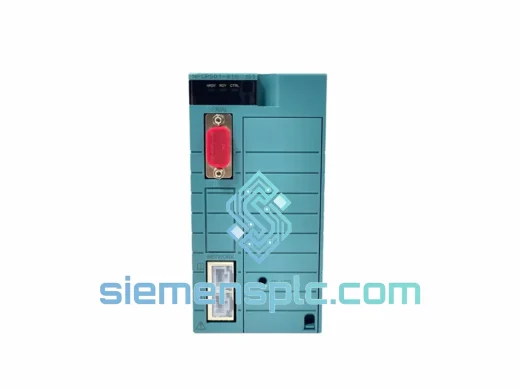
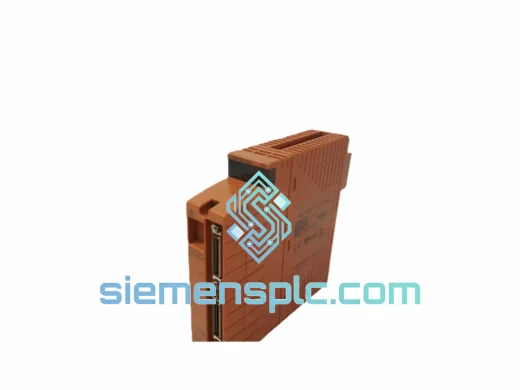
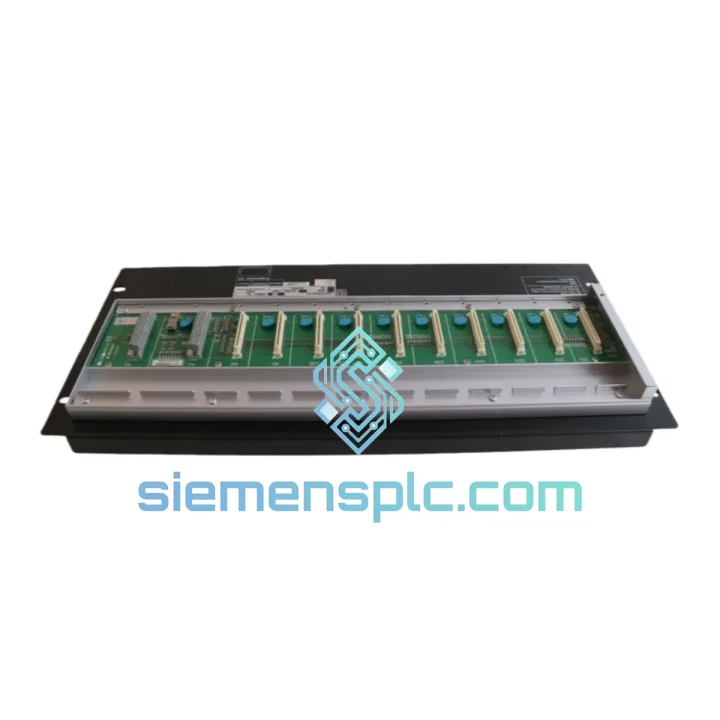
Yokogawa
In Stock OK
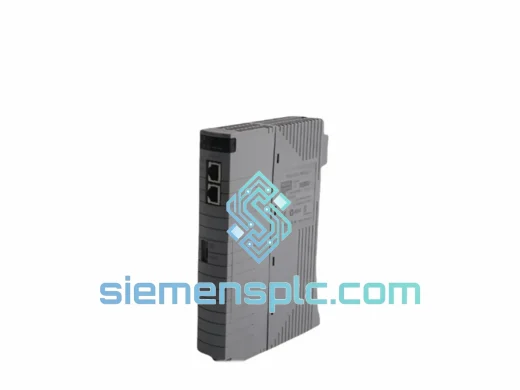
Yokogawa ANB10D-411/CU2N/NDEL DCS Node Unit – STARDOM FCN
Request verified availability, condition, replacement risk review, packing options and courier lead time for ANB10D-411/CU2N/NDEL.
BrandYokogawa
Part NumberANB10D-411/CU2N/NDEL
ConditionAvailability Check
Lead TimeRFQ Confirmation
DocumentsDatasheet / photos by RFQ
ShippingExport packing available
Auto-filled RFQ
ANB10D-411/CU2N/NDEL
Click Request Quote and the part number is inserted into the inquiry form automatically.
- Reply by email: [email protected]
- WhatsApp / Tel: +86 18359268345
- Mon-Sat 9:00-18:00 GMT+8
Procurement Data
Key Product Information
Core fields for model confirmation and RFQ routing. Detailed product narrative remains below.
- Brand
- Yokogawa
- Primary Part Number
- ANB10D-411/CU2N/NDEL
- Product Type
- DCS Node Unit
- Series / Family
- STARDOM
- Manufacturer
- Yokogawa Electric Corporation
- Country of Origin
- JP
- Catalog Category
- DCS & Safety Modules
- Operating Temp.
- 0°C to 55°C
- Warranty
- 12 months from date of shipment
Model confirmed for inquiry
ANB10D-411/CU2N/NDEL
Send quantity, destination and urgency. The RFQ form keeps this part number attached.
Request Quote
Product Overview
Yokogawa ANB10D-411/CU2N/NDEL — Dual-CPU Redundant Field Control Node for Distributed Process Automation
The ANB10D-411/CU2N/NDEL is a dual-CPU redundant field control node unit from Yokogawa’s STARDOM FCN (Field Control Node) platform. Within a distributed control architecture, this module occupies the role of the primary execution engine: it hosts the real-time control application, manages I/O bus arbitration across the FCN base chassis, and maintains deterministic scan-cycle performance regardless of upstream network load. The suffix breakdown is precise — ANB10D designates the dual-node (redundant) hardware variant; -411 identifies the hardware revision and option code; /CU2N specifies the dual-CPU redundancy configuration with automatic bumpless switchover; /NDEL classifies the unit for non-incendive, non-explosion-proof installation environments.
In a live process plant, the ANB10D-411/CU2N/NDEL operates as a self-contained control domain. Each FCN node runs an independent instance of the control application compiled in IEC 61131-3 function block or structured text. The two CPUs within the /CU2N configuration execute in lockstep: one acts as the active controller while the second maintains a fully synchronized shadow state. Switchover latency is sub-100 ms, which is below the threshold of most process loop upset conditions. This architecture eliminates single-point-of-failure risk at the controller level without requiring external redundancy hardware or software licensing.
Communication is handled natively over Vnet/IP, Yokogawa’s 100 Mbps Ethernet-based deterministic control network. The node participates in the Vnet/IP domain as a peer-level controller, exchanging process data with CENTUM VP DCS stations, ProSafe-RS safety controllers, and other FCN nodes at fixed, configurable cycle rates. The Ethernet physical layer uses standard 100BASE-TX cabling, which simplifies infrastructure planning and reduces cabling cost compared to proprietary fieldbus backbones. In addition to Vnet/IP, the ANB10D-411/CU2N/NDEL supports FOUNDATION Fieldbus H1, PROFIBUS DP, and Modbus RTU/TCP through compatible I/O modules mounted in the FCN base chassis.
The FCN base chassis accommodates up to eight I/O module slots. The node unit occupies the dedicated CPU slot and communicates with I/O modules over the internal FCN backplane bus. Backplane data transfer is synchronous with the control scan cycle, ensuring that all I/O values presented to the application are coherent within a single scan. This eliminates the inter-module timing skew that can occur in loosely coupled distributed I/O architectures. The node’s internal memory architecture separates application code, process data image, and communication buffers into distinct address spaces, preventing any single resource contention from affecting scan-cycle determinism.
Power input is 24 VDC nominal, with an operating range of 20.4 to 28.8 VDC. The unit draws approximately 15 W under full I/O load. Operating temperature range is 0°C to 55°C with 5% to 95% relative humidity (non-condensing), meeting the environmental requirements of standard industrial control rooms and field enclosures. The unit weighs approximately 2,480 g and mounts in the FCN base chassis via the dedicated node slot — no DIN rail or panel-mount adapter is required.
Real-time Stock & RFQ: [email protected] | WhatsApp: +86 18359268345
Technical Parameters
| Parameter | Value |
|---|---|
| Part Number | ANB10D-411/CU2N/NDEL |
| Manufacturer | Yokogawa Electric Corporation |
| Series | STARDOM FCN (Field Control Node) |
| Module Type | Dual-CPU Redundant Node Unit |
| Hardware Revision | -411 |
| CPU Configuration | /CU2N — Dual CPU, active/standby lockstep redundancy |
| Area Classification | /NDEL — Non-incendive, non-explosion-proof |
| Control Network | Vnet/IP (100BASE-TX Ethernet) |
| Fieldbus Support | FOUNDATION Fieldbus H1, PROFIBUS DP, Modbus RTU/TCP (via I/O modules) |
| I/O Slots per Base | Up to 8 I/O module slots |
| Programming Standard | IEC 61131-3 (Function Block, Structured Text, Ladder) |
| Switchover Latency | < 100 ms (bumpless, automatic) |
| Power Supply | 24 VDC nominal (20.4–28.8 VDC range) |
| Power Consumption | Approx. 15 W (full I/O load) |
| Operating Temperature | 0°C to 55°C |
| Relative Humidity | 5% to 95% RH, non-condensing |
| Weight | Approx. 2,480 g |
| Mounting | FCN base chassis node slot |
| Certifications | CE, UL (refer to Yokogawa datasheet for full listing) |
| Warranty | 12 months from date of shipment |
| Origin | Japan |
Hardware Logical Analysis
The /CU2N dual-CPU architecture implements a hot-standby lockstep model at the silicon level. Both CPUs execute the same instruction stream in parallel, with the active CPU driving all I/O writes and the standby CPU maintaining a continuously updated process image. A dedicated arbitration circuit monitors CPU heartbeat signals at a fixed interval — typically every 10 ms. If the active CPU fails to assert its heartbeat within the timeout window, the arbitration logic asserts a switchover signal within one scan cycle, promoting the standby CPU to active status without interrupting the control output. This mechanism requires no software intervention and no external watchdog hardware.
The FCN backplane bus uses a synchronous token-passing protocol. The node unit holds the bus token during its designated time slot, reads all I/O module input registers into the process data image, executes the control application, and writes output values back to I/O module output registers — all within a single deterministic window. This eliminates the non-deterministic latency associated with asynchronous bus architectures. The backplane clock is derived from the node unit’s internal oscillator, ensuring that I/O scan timing is independent of Ethernet network jitter.
EMC performance is achieved through a combination of hardware design choices: the node unit’s PCB uses a multi-layer stackup with dedicated ground planes between signal layers, suppressing common-mode noise coupling. All external interface connectors include transient voltage suppression (TVS) diodes rated for IEC 61000-4-5 surge immunity. The Vnet/IP Ethernet port incorporates a transformer-isolated physical layer, providing galvanic isolation between the control network and the node’s internal logic. This isolation prevents ground loop currents — a common source of measurement error in industrial environments — from propagating into the control domain.
The internal memory architecture separates application code (stored in flash), process data image (SRAM, battery-backed), and communication buffers (dedicated DPRAM) into non-overlapping address spaces. The battery-backed SRAM retains the last known process data image through a power cycle, enabling the node to resume control from a known state after an unplanned power interruption without requiring a full cold-start initialization sequence.
System Integration Benefits
- Deterministic scan-cycle execution: The FCN backplane token-passing protocol guarantees fixed I/O update latency, enabling precise PID loop tuning without accounting for variable bus delays.
- Bumpless CPU redundancy switchover: Sub-100 ms automatic failover eliminates process upsets caused by controller hardware faults, supporting continuous 24/7 operation in critical process plants.
- Native Vnet/IP integration: Direct participation in Yokogawa’s control network eliminates gateway hardware between FCN nodes and CENTUM VP DCS stations, reducing latency and configuration complexity.
- IEC 61131-3 application portability: Control logic compiled for the ANB10D-411/CU2N/NDEL is portable across the STARDOM FCN platform, simplifying spare-part management and system expansion.
- Transparent diagnostics: The node unit exposes hardware status registers — CPU health, backplane bus errors, power supply voltage, and communication link state — to the Yokogawa FAST/TOOLS engineering environment, enabling proactive fault detection without physical inspection.
- Multi-protocol fieldbus support: FOUNDATION Fieldbus H1, PROFIBUS DP, and Modbus TCP/IP coverage through I/O modules eliminates the need for external protocol converters in mixed-instrument environments.
- Battery-backed process data retention: SRAM retention through power cycles reduces restart time after unplanned outages, minimizing production loss during recovery.
- Scalable node architecture: Multiple ANB10D-411/CU2N/NDEL nodes can be deployed within a single Vnet/IP domain, each managing an independent I/O base, allowing the control system to scale from 64 to several thousand I/O points without architectural redesign.
- Galvanic isolation on all external interfaces: Transformer-isolated Ethernet and optically isolated I/O module interfaces prevent ground loop interference from corrupting process measurements or control outputs.
- Long-term platform support: The STARDOM FCN platform has an established Yokogawa support lifecycle, with spare parts and firmware updates available through authorized channels, protecting the capital investment in installed systems.
Quality Assurance & Global Logistics
Every ANB10D-411/CU2N/NDEL unit supplied through siemensplc.com is sourced as genuine Yokogawa OEM hardware. Prior to shipment, each unit undergoes a structured inspection protocol: visual examination for physical damage, power-on functional test confirming CPU initialization and backplane bus activity, Vnet/IP communication link verification, and firmware version documentation. Serial numbers are recorded against each order for full traceability.
Units are packaged in anti-static ESD bags, placed in foam-lined cartons rated for international air freight handling. Where original Yokogawa packaging is available, it is used. Export documentation — including commercial invoice, packing list, and certificate of origin — is prepared in compliance with Chinese customs regulations and the import requirements of the destination country.
Shipments originate from our warehouse in Xiamen, China. In-stock units are dispatched within 1–3 business days of payment confirmation. International delivery is handled via DHL Express, FedEx International Priority, or UPS Worldwide Expedited, with typical transit times of 3–7 business days to major industrial hubs in Southeast Asia, the Middle East, Europe, and the Americas. Tracking numbers are provided at the time of dispatch. For time-critical requirements, same-day dispatch can be arranged for orders confirmed before 14:00 CST.
All units are covered by a 12-month warranty from the date of shipment. Warranty coverage includes replacement of units confirmed defective under normal operating conditions. Units damaged by incorrect installation, overvoltage, or environmental conditions outside the specified range are not covered. Warranty claims are processed within 5 business days of receipt of the returned unit.
Contact Information
Email: [email protected]
WhatsApp: +86 18359268345
Web: siemensplc.com
Location: Xiamen, China
© 2026 siemensplc.com. All rights reserved.
Ready to quote
[email protected]
Send This Part Number to Sales
RFQ workflow
Quality workflow ->
Confirmation Process
01Model confirmation
We check the full part number, brand, series and visible nameplate information before quotation.
02Availability reply
Sales confirms stock path, condition option, quantity and realistic lead time for export dispatch.
03Packing & courier
DHL, FedEx, UPS or buyer courier arrangements can be reviewed with packing requirements.
Continue sourcing
Browse full catalog ->
Related Automation Parts
Similar brand or category products for fast comparison and multi-item RFQ lists.
Yokogawa
RFQ Ready
Yokogawa NFSBT02 S1 Autonomous Controller
STARDOM
Origin JP
PLC Autonomous Controller