Yokogawa
RFQ Ready
Yokogawa SAI143-H63/PRP S3 DCS Analog Input Module
CENTUM VP
Origin JP
DCS Analog Input Module
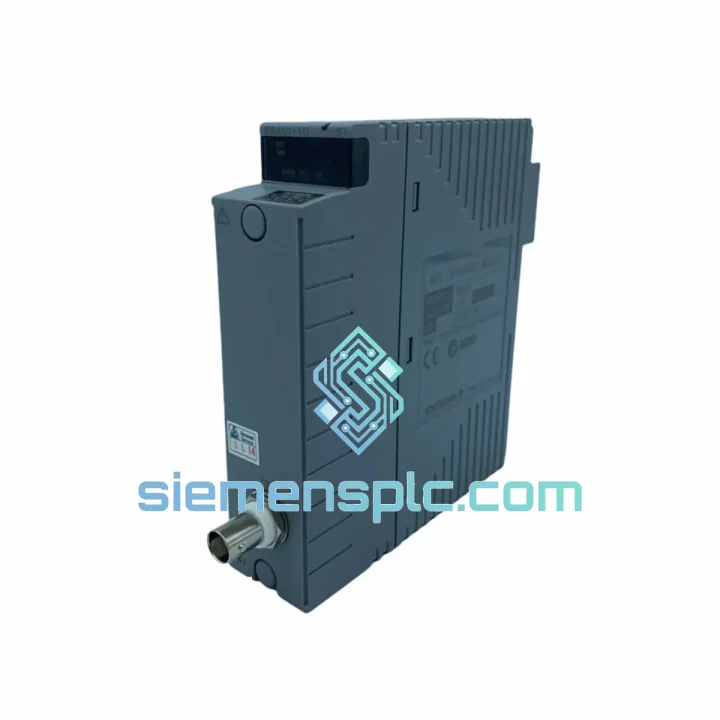
Request verified availability, condition, replacement risk review, packing options and courier lead time for EB401-10.
Click Request Quote and the part number is inserted into the inquiry form automatically.
Core fields for model confirmation and RFQ routing. Detailed product narrative remains below.
The YOKOGAWA EB401-10 occupies the master node position on the proprietary I/O bus within CENTUM VP and CS 3000 Field Control Stations (FCS). Its primary function is to arbitrate cyclic data exchange between the FCS processor backplane and all downstream remote I/O slave units. Without a correctly functioning interface master, the FCS loses visibility of field signals entirely — making the EB401-10 a single-point-of-presence component whose operational integrity directly determines control loop availability. In redundant FCS configurations, dual EB401-10 modules operate in active/standby arbitration, with bumpless switchover governed by the FCS firmware watchdog. The module’s internal bus controller manages frame sequencing, node polling, and error-frame retransmission, ensuring that process variable data arrives at the FCS scan engine within the deterministic cycle window — typically 100 ms to 500 ms depending on I/O node count and configured scan rate.
Facilities operating CENTUM VP R5.x or CS 3000 R3.x and later revisions will find the EB401-10 a direct hardware-compatible replacement for aging interface master slots. The module carries no field-side wiring — all signal conditioning is performed at the slave I/O nodes — which means replacement does not require loop isolation or field disconnection, provided the FCS is placed in manual control mode prior to hot-swap execution.
Real-time Stock & RFQ: [email protected] | WhatsApp: +86 18359268345
| Parameter | Specification |
|---|---|
| Part Number / SKU | EB401-10 |
| Manufacturer | YOKOGAWA Electric Corporation |
| Product Series | CENTUM VP / CS 3000 |
| Module Classification | I/O Bus Interface Master Module |
| Bus Role | Master (active polling controller) |
| Compatible FCS Platforms | CENTUM VP (R5.x+), CENTUM CS 3000 (R3.x+) |
| Communication Protocol | YOKOGAWA Proprietary I/O Bus (cyclic, deterministic) |
| Scan Cycle Range | 100 ms – 500 ms (configurable per FCS project) |
| Redundancy Mode | Active/Standby dual-module (FCS firmware arbitrated) |
| Mounting Interface | FCS chassis backplane slot (rack-integrated) |
| Power Source | Backplane-supplied (no external PSU required) |
| Operating Temperature | 0 °C to +55 °C |
| Storage Temperature | −20 °C to +70 °C |
| Relative Humidity | 5 % – 95 % RH, non-condensing |
| EMC Compliance | CE Mark (EN 61000 series) |
| Safety Certification | UL Listed (per YOKOGAWA product documentation) |
| RoHS Status | Compliant (refer to YOKOGAWA material declaration) |
| Module Weight | Approx. 1,250 g |
| Country of Origin | Japan |
| Warranty | 12 months from shipment date (siemensplc.com) |
The EB401-10 is built around a dedicated bus controller ASIC that handles all I/O bus frame generation, CRC validation, and node-address arbitration independently of the FCS main processor. This hardware-offload architecture means that I/O bus communication latency is not subject to FCS CPU load fluctuations — a critical design decision for process plants where CPU utilization spikes during alarm floods or historian bursts. The ASIC maintains a local node map in static RAM; if a slave node fails to respond within the configured timeout window (typically 1–3 frame cycles), the EB401-10 flags the node as faulted and inserts a substitute value per the FCS project’s configured fail-safe strategy, without halting the polling loop for remaining healthy nodes.
EMC hardening on the EB401-10 follows IEC 61000-4 test criteria. The backplane connector uses differential signal pairs with controlled impedance traces, suppressing common-mode noise induced by adjacent power modules or high-current relay outputs in the same chassis. Internal DC/DC isolation between the backplane power rail and the bus controller logic prevents ground-loop currents from corrupting bus frame timing. In installations where the FCS chassis is located in a high-vibration environment — such as offshore platforms or compressor buildings — the EB401-10’s PCB uses conformal coating on signal-layer traces, reducing the risk of dendritic growth or flux-induced leakage that could degrade bus signal integrity over multi-year service intervals.
The redundancy arbitration logic deserves specific attention. In a dual-EB401-10 configuration, the active module continuously broadcasts a heartbeat token on a dedicated arbitration line within the backplane. The standby module monitors this token with a hardware timer; if the token is absent for more than two consecutive scan cycles, the standby module asserts bus mastership autonomously — without waiting for FCS firmware intervention. This hardware-level failover mechanism limits switchover time to sub-scan-cycle duration, preserving closed-loop control continuity even during active module power failures.
Every EB401-10 unit dispatched from siemensplc.com is sourced through verified industrial supply channels with full part-number traceability to YOKOGAWA’s original manufacturing documentation. Prior to shipment, each module undergoes visual inspection covering connector pin integrity, PCB surface condition, firmware version label verification, and anti-static packaging integrity. Units are shipped in double-wall corrugated cartons with foam-in-place cushioning rated for international air freight vibration profiles per ISTA 2A test standards.
Logistics operations are based in Xiamen, China — a major international cargo hub with direct air freight connections to Singapore, Dubai, Frankfurt, Los Angeles, and Tokyo. Standard delivery to Southeast Asia and the Middle East is 3–5 business days via DHL Express or FedEx International Priority. European and North American destinations typically receive shipments within 5–8 business days. Expedited same-day dispatch is available for orders confirmed before 14:00 CST. All shipments include a commercial invoice, packing list, and certificate of conformance. Import HS code documentation is prepared per destination country requirements to minimize customs clearance delays.
A 12-month warranty from the shipment date covers manufacturing defects and functional failures under normal operating conditions as defined by YOKOGAWA’s published environmental specifications. Warranty claims are processed within 5 business days of receipt of the returned unit, with advance replacement available for qualified accounts to minimize plant downtime.
Email: [email protected]
WhatsApp: +86 18359268345
Web: siemensplc.com
Location: Xiamen, China
© 2026 siemensplc.com. All rights reserved.
We check the full part number, brand, series and visible nameplate information before quotation.
Sales confirms stock path, condition option, quantity and realistic lead time for export dispatch.
DHL, FedEx, UPS or buyer courier arrangements can be reviewed with packing requirements.
Similar brand or category products for fast comparison and multi-item RFQ lists.