Yokogawa
RFQ Ready
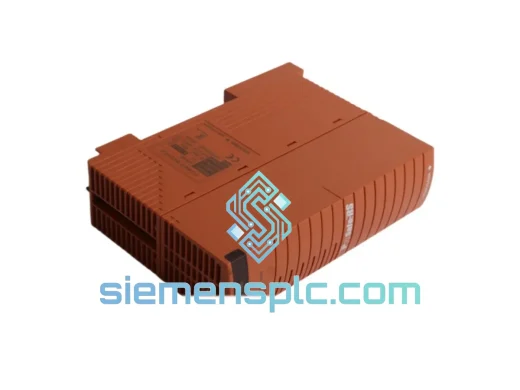
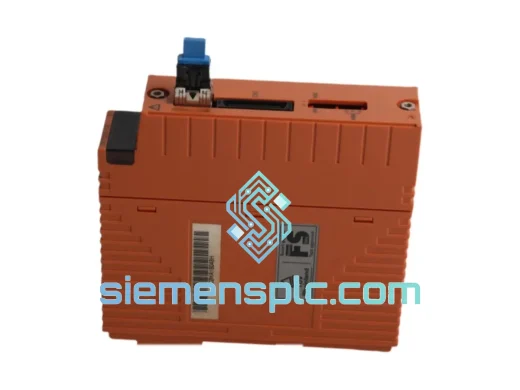
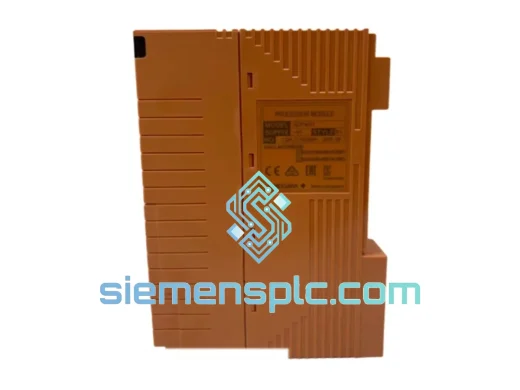
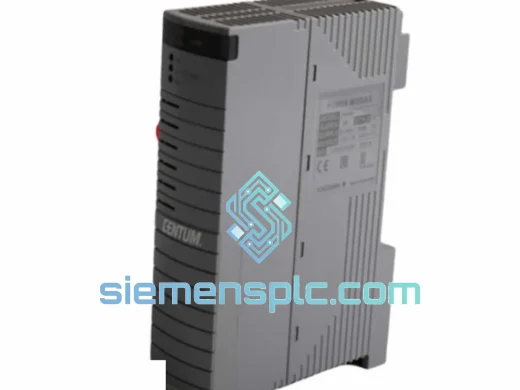
Yokogawa ASS9562DK-00 Analog Input Module – STARDOM FCN/FCJ
STARDOM
Origin JP
Analog Input Module
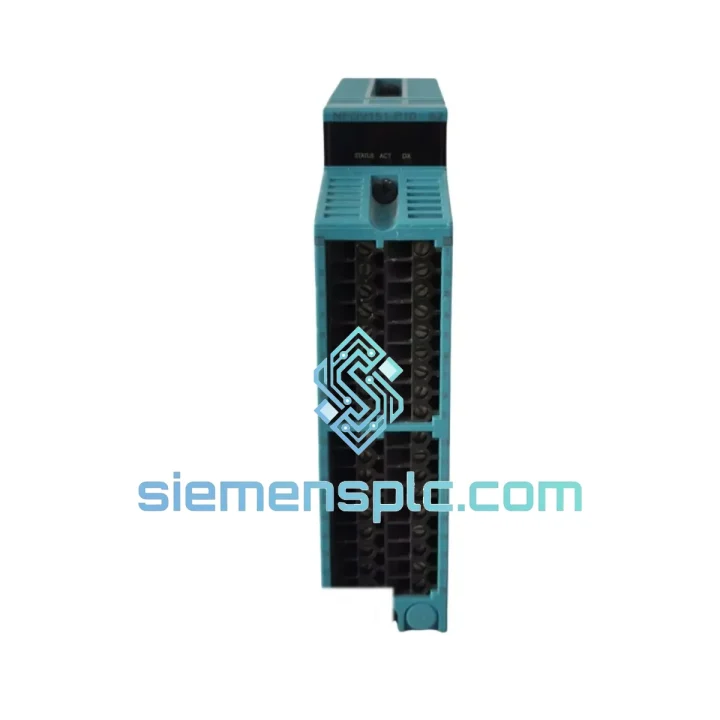
Request verified availability, condition, replacement risk review, packing options and courier lead time for NFDV151-P10.
Click Request Quote and the part number is inserted into the inquiry form automatically.
Core fields for model confirmation and RFQ routing. Detailed product narrative remains below.
The YOKOGAWA NFDV151-P10 is a 16-channel, optically isolated digital input module designed exclusively for the STARDOM FCN/FCJ distributed control platform. Within a process control loop, this module occupies the signal acquisition layer: it converts field-level discrete signals — dry contacts, proximity switches, valve position feedback, and relay outputs — into logic-level data that the FCN/FCJ CPU processes within its deterministic scan cycle. Without a reliable, noise-immune DI front-end, the controller’s decision logic operates on corrupted or ambiguous data; the NFDV151-P10 eliminates that risk through hardware-enforced channel isolation and a direct-mapped I/O bus interface.
Each of the 16 input channels is individually isolated via an optocoupler barrier rated for the 24 VDC field supply range. The optocoupler architecture physically decouples the field wiring from the module’s internal logic circuitry, preventing ground-loop currents, common-mode transients, and inductive kickback from propagating into the backplane. In high-density process environments — oil and gas wellheads, chemical reactor interlocks, turbine protection panels — field wiring runs can exceed 200 meters and traverse cable trays shared with power conductors. Under these conditions, induced noise voltages can reach several volts. The NFDV151-P10’s isolation barrier absorbs these transients without state corruption, maintaining a clean logic signal to the CPU.
The module interfaces with the FCN/FCJ base unit through YOKOGAWA’s proprietary internal I/O bus. This bus operates at a fixed, deterministic transfer rate synchronized to the CPU’s task scheduler. When the CPU executes a scan cycle — typically configured between 10 ms and 500 ms depending on application requirements — it reads the 16-bit input image from the NFDV151-P10 in a single atomic bus transaction. There is no asynchronous buffering or interrupt-driven handshake; the module’s input register is updated continuously by the optocoupler output latches, and the CPU reads a consistent snapshot at each scan boundary. This architecture guarantees that the input data age never exceeds one scan period, a critical property for interlock and safety-related logic.
Physically, the NFDV151-P10 occupies a single slot in the FCN/FCJ base unit (NFBU05S or NFBU10S). The module is hot-swap capable within the STARDOM platform’s maintenance framework, allowing field replacement without powering down the base unit — a significant operational advantage in continuous-process industries where planned shutdowns are scheduled months in advance. The front-panel LED array provides per-channel status indication: each LED mirrors the logical state of its corresponding input channel, enabling technicians to verify field signal presence without a laptop or diagnostic tool.
From a system engineering perspective, the NFDV151-P10 supports both dry-contact and wet-contact input configurations. In dry-contact mode, the module’s internal 24 VDC wetting voltage is applied to the field circuit; the contact closure completes the circuit and drives the optocoupler. In wet-contact mode, an external field voltage source drives the optocoupler directly. This dual-mode capability allows the same module to interface with passive field devices (limit switches, pushbuttons) and active field devices (PLC outputs, relay coil feedback) without additional signal conditioning hardware.
The NFDV151-P10 is fully compliant with IEC 61131-2 for programmable controller I/O equipment, CE-marked under the EMC Directive 2014/30/EU and Low Voltage Directive 2014/35/EU, and UL-listed for industrial control equipment. These certifications confirm that the module meets defined immunity levels for conducted and radiated electromagnetic interference, electrostatic discharge (ESD), and electrical fast transient (EFT) burst — the three dominant noise mechanisms in industrial panel environments.
Real-time Stock & RFQ: [email protected] | WhatsApp: +86 18359268345
| Parameter | Specification |
|---|---|
| Model Number | NFDV151-P10 |
| Manufacturer | YOKOGAWA Electric Corporation |
| Compatible Platform | STARDOM FCN / FCJ Distributed Control System |
| Module Function | Digital Input (DI) |
| Number of Input Channels | 16 channels |
| Nominal Input Voltage | 24 VDC |
| Input Signal Type | Dry contact / Wet contact (field-selectable) |
| Isolation Method | Optical isolation (optocoupler) per channel |
| Channel-to-Channel Isolation | Yes — individual optocoupler per channel |
| Channel-to-Bus Isolation | Yes — field side isolated from backplane logic |
| Internal I/O Bus Interface | STARDOM FCN/FCJ proprietary backplane bus |
| Slot Occupancy | 1 slot (NFBU05S or NFBU10S base unit) |
| Hot-Swap Support | Yes (within STARDOM maintenance framework) |
| Status Indication | 16 × per-channel LED (ON = logic HIGH) |
| Operating Temperature | 0 °C to +55 °C |
| Storage Temperature | −25 °C to +70 °C |
| Relative Humidity | 5 % to 95 % RH (non-condensing) |
| Module Weight | Approx. 100 g |
| Compliance / Certifications | IEC 61131-2, CE (EMC + LVD), UL, RoHS |
| Country of Origin | Japan |
| Warranty | 12 months from date of shipment |
The NFDV151-P10’s hardware design reflects YOKOGAWA’s process-industry engineering discipline, where signal integrity and determinism are non-negotiable constraints.
Optocoupler Isolation Architecture: Each channel employs a dedicated optocoupler rather than a shared isolation barrier. This one-to-one mapping means a fault condition on channel 7 — such as a field wiring short that drives the optocoupler into saturation — has zero electrical influence on channels 1–6 and 8–16. Shared-barrier designs, by contrast, can exhibit cross-channel coupling under fault conditions. The per-channel architecture also simplifies fault diagnosis: the LED state directly indicates whether the optocoupler is conducting, allowing technicians to isolate wiring faults at the terminal block without oscilloscope access.
EMC Design and Noise Immunity: The module’s PCB layout separates the field-side circuitry (optocoupler anodes, current-limiting resistors, terminal connections) from the logic-side circuitry (optocoupler collectors, bus interface logic) with a physical isolation gap and ground plane segmentation. This layout practice reduces capacitive coupling between field and logic domains, extending effective noise immunity beyond the minimum IEC 61131-2 requirements. In environments with variable-frequency drives (VFDs) and high-current motor starters — common in water treatment and HVAC applications — this additional margin prevents false input transitions that would otherwise trigger spurious interlock actions.
Input Filter and Debounce Logic: Hardware RC filters on each input channel suppress contact bounce from mechanical switches and relay contacts. Without debounce filtering, a single physical contact closure can generate 5–20 logic transitions within the first 5–10 ms, causing the CPU to register multiple events per physical action. The NFDV151-P10’s filter time constant is matched to the FCN/FCJ scan cycle, ensuring that only stable, settled input states are presented to the CPU’s input image register.
Backplane Bus Interface: The module’s bus interface logic implements YOKOGAWA’s FCN/FCJ I/O protocol, which uses a master-slave polling architecture. The CPU (master) initiates each read transaction; the module (slave) responds with the current 16-bit input image within a fixed response window. This synchronous protocol eliminates bus arbitration overhead and guarantees bounded latency — a requirement for deterministic control applications. The module does not generate interrupts or asynchronous events, which simplifies the CPU’s task scheduler and reduces jitter in the control loop execution time.
Every YOKOGAWA NFDV151-P10 unit dispatched from our Xiamen, China facility undergoes a structured pre-shipment inspection protocol:
Email: [email protected]
WhatsApp: +86 18359268345
Web: siemensplc.com
Location: Xiamen, China
© 2026 siemensplc.com. All rights reserved.
We check the full part number, brand, series and visible nameplate information before quotation.
Sales confirms stock path, condition option, quantity and realistic lead time for export dispatch.
DHL, FedEx, UPS or buyer courier arrangements can be reviewed with packing requirements.
Similar brand or category products for fast comparison and multi-item RFQ lists.