
Yokogawa
In Stock OK
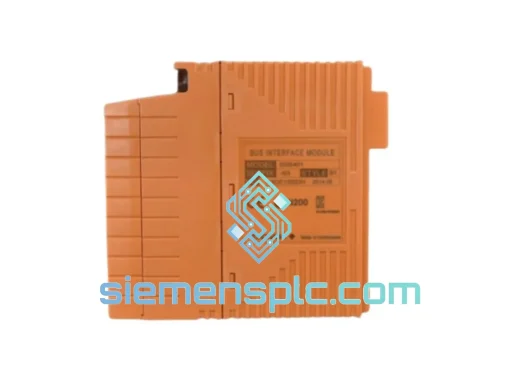
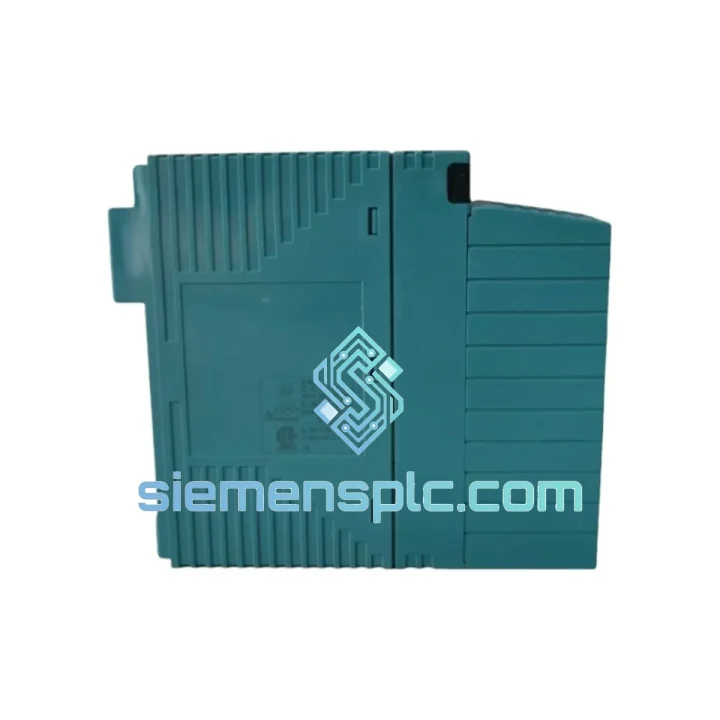
YOKOGAWA NFTB5S-00 Fieldbus Communication Module – STARDOM FCN/FCJ
Request verified availability, condition, replacement risk review, packing options and courier lead time for NFTB5S-00.
BrandYokogawa
Part NumberNFTB5S-00
ConditionAvailability Check
Lead TimeRFQ Confirmation
DocumentsDatasheet / photos by RFQ
ShippingExport packing available
Auto-filled RFQ
NFTB5S-00
Click Request Quote and the part number is inserted into the inquiry form automatically.
- Reply by email: [email protected]
- WhatsApp / Tel: +86 18359268345
- Mon-Sat 9:00-18:00 GMT+8
Procurement Data
Key Product Information
Core fields for model confirmation and RFQ routing. Detailed product narrative remains below.
- Brand
- Yokogawa
- Primary Part Number
- NFTB5S-00
- Product Type
- Fieldbus Communication Module
- Series / Family
- STARDOM
- Manufacturer
- YOKOGAWA Electric Corporation
- Country of Origin
- JP
- Catalog Category
- Communication
- Operating Temp.
- 0 °C to +55 °C
- Warranty
- 12 months against defects in materials and workmanship
Model confirmed for inquiry
NFTB5S-00
Send quantity, destination and urgency. The RFQ form keeps this part number attached.
Request Quote
Product Overview
YOKOGAWA NFTB5S-00 – FOUNDATION Fieldbus H1 Communication Module for STARDOM FCN/FCJ Distributed Control Architecture
The YOKOGAWA NFTB5S-00 is a dedicated FOUNDATION Fieldbus H1 communication module engineered for integration within the STARDOM FCN/FCJ autonomous controller platform. Its primary function is to serve as the physical and protocol-layer bridge between the FCN/FCJ backplane and field-level instrumentation networks, enabling deterministic, peer-to-peer data exchange across H1 fieldbus segments without relying on host-initiated polling cycles. In process industries where control loop integrity and diagnostic transparency are non-negotiable, the NFTB5S-00 occupies a structurally critical position in the I/O subsystem.
Unlike conventional analog I/O modules that convert 4–20 mA signals at the marshalling cabinet, the NFTB5S-00 maintains a fully digital communication path from the field device to the controller backplane. Each H1 segment operates at 31.25 kbit/s with a Manchester-encoded, voltage-mode physical layer per IEC 61158-2, supporting up to 32 device addresses per segment. The module manages the Link Active Scheduler (LAS) function, arbitrating token-passing on the bus and enforcing the scheduled communication macrocycle that guarantees deterministic data delivery to the FCN/FCJ CPU.
Real-time Stock & RFQ: [email protected] | WhatsApp: +86 18359268345
Technical Parameters
| Parameter | Specification |
|---|---|
| Part Number | NFTB5S-00 |
| Manufacturer | YOKOGAWA Electric Corporation |
| Platform | STARDOM FCN / FCJ Autonomous Controller |
| Module Function | FOUNDATION Fieldbus H1 Communication |
| Communication Protocol | FOUNDATION Fieldbus H1 (IEC 61158-2) |
| Data Rate | 31.25 kbit/s (Manchester encoded, voltage mode) |
| Max Devices per Segment | Up to 32 field device addresses |
| LAS Capability | Link Active Scheduler – primary and backup |
| Mounting Interface | FCN/FCJ backplane slot (hot-swap capable per platform revision) |
| Power Source | Backplane-supplied (no external PSU required) |
| Operating Temperature | 0 °C to +55 °C |
| Storage Temperature | −20 °C to +70 °C |
| Relative Humidity | 5 % to 95 % RH, non-condensing |
| EMC Compliance | CE (EMC Directive 2014/30/EU) |
| Safety Certification | UL Listed (verify current listing with YOKOGAWA) |
| RoHS Status | Compliant |
| Country of Origin | Japan |
| Approximate Weight | 600 g |
| Warranty | 12 months against defects in materials and workmanship |
Hardware Logical Analysis
The NFTB5S-00 implements the full IEC 61158 / IEC 61784 protocol stack in dedicated on-board firmware, offloading fieldbus stack processing from the FCN/FCJ CPU. This architectural separation is significant: the host CPU is not burdened with LAS token management or H1 macrocycle scheduling, which would otherwise introduce jitter into the controller’s real-time task execution. The module maintains its own internal clock reference for macrocycle synchronization, ensuring that scheduled function block execution at the field device level remains aligned with the controller’s scan cycle regardless of backplane bus load.
From an EMC standpoint, the H1 physical layer on the NFTB5S-00 incorporates transformer-coupled isolation at the fieldbus connector interface. This galvanic isolation barrier — typically rated to withstand transient voltages in excess of 1,500 V — decouples the backplane ground reference from the fieldbus cable shield, preventing ground loop currents from corrupting the Manchester-encoded signal. In environments with heavy variable-frequency drive (VFD) installations or high-voltage switching equipment, this isolation is the primary defense against common-mode noise injection into the fieldbus segment.
The module’s LAS arbitration logic supports both primary LAS and backup LAS roles. In a multi-module FCN/FCJ configuration, one NFTB5S-00 instance acts as the active LAS while a second can be configured as standby, enabling automatic LAS failover without interrupting the scheduled communication macrocycle. This redundancy mechanism operates at the fieldbus protocol layer and does not require intervention from the FCN/FCJ application program, making it transparent to the control strategy running in the CPU module.
Signal conditioning on the H1 output stage maintains the 0.75 V to 1.0 V peak-to-peak differential voltage specified by IEC 61158-2 across the full segment cable length (up to 1,900 m for Type A cable without repeaters). The module’s receiver circuitry applies adaptive threshold detection to accommodate signal attenuation on long cable runs, reducing the probability of framing errors in extended fieldbus topologies common in tank farm or pipeline applications.
System Integration Benefits
- Deterministic Macrocycle Execution: The LAS-managed token-passing protocol guarantees that each field device transmits its process variable within a fixed macrocycle window, eliminating the scan-time variability inherent in polled analog I/O architectures. Control loops operating on H1 segments achieve consistent update rates independent of the number of devices on the segment.
- Reduced Wiring Infrastructure Cost: A single H1 segment trunk cable replaces individual home-run cables for up to 32 field instruments. In a 200-device installation, this translates directly to fewer cable trays, fewer marshalling terminals, and a measurable reduction in installation labor hours.
- NAMUR NE 107 Diagnostic Transparency: Field devices connected via H1 continuously publish diagnostic status blocks (Failure, Out of Specification, Maintenance Required, Function Check) to the NFTB5S-00. The FCN/FCJ CPU can map these status bits to alarm management systems without additional polling logic, enabling condition-based maintenance workflows.
- Control-in-the-Field Capability: FOUNDATION Fieldbus H1 supports execution of standard function blocks (PID, AI, AO, DI, DO) directly within field devices. The NFTB5S-00 coordinates the scheduling of these distributed function blocks, allowing simple control loops to execute at the field level and reducing the computational load on the FCN/FCJ CPU.
- Seamless YOKOGAWA Ecosystem Compatibility: As a first-party STARDOM module, the NFTB5S-00 is fully supported by YOKOGAWA’s Plant Resource Manager (PRM) for device configuration, calibration records, and predictive maintenance scheduling. No third-party device management software or custom OPC bridges are required.
- Hot-Swap Maintenance (Platform Dependent): On FCN/FCJ chassis revisions that support hot-swap I/O, the NFTB5S-00 can be replaced without powering down the controller or interrupting other I/O modules, reducing planned maintenance windows in continuous-process facilities.
- Multi-Vendor Field Device Interoperability: Compliance with the Fieldbus Foundation interoperability specification means the NFTB5S-00 communicates with any certified H1 field device regardless of manufacturer. This protects the control system investment when field instruments are sourced from multiple vendors or replaced during plant life extensions.
- Scalable Segment Architecture: Multiple NFTB5S-00 modules can be installed in a single FCN/FCJ chassis to expand the total H1 segment count proportionally. Each module operates independently, so a fault on one segment does not propagate to adjacent segments managed by other modules in the same chassis.
- Reduced Engineering Overhead for Device Commissioning: H1-connected devices expose their full parameter set via the fieldbus, allowing engineers to configure transmitter ranges, damping values, and alarm limits from the control room using PRM or a compatible EDDL/FDT tool — eliminating the need for handheld communicators at the field device location.
Quality Assurance & Global Logistics
Every YOKOGAWA NFTB5S-00 unit supplied through siemensplc.com is sourced from verified supply channels and subjected to a structured incoming inspection process before dispatch. Inspection steps include visual examination of the PCB assembly and connector interfaces against OEM reference standards, label and serial number authenticity cross-check against YOKOGAWA’s published part number format, and a functional power-on verification where test fixtures permit. Units are packaged in anti-static bags with humidity indicator cards and shipped in double-wall corrugated cartons with foam insert protection rated for international air freight handling.
Our logistics operations are based in Xiamen, China — a major export hub with direct access to international air freight carriers and sea freight consolidators serving North America, Europe, Southeast Asia, the Middle East, and Oceania. Standard export documentation — commercial invoice, packing list, and certificate of origin — is prepared for every shipment. For time-critical spare part requirements, same-day dispatch on confirmed orders placed before 14:00 CST is available for in-stock units. All units are covered by a 12-month warranty against manufacturing defects, with advance replacement options available for qualified accounts.
Contact Information
Email: [email protected]
WhatsApp: +86 18359268345
Web: siemensplc.com
Location: Xiamen, China
© 2026 siemensplc.com. All rights reserved.
Ready to quote
[email protected]
Send This Part Number to Sales
RFQ workflow
Quality workflow ->
Confirmation Process
01Model confirmation
We check the full part number, brand, series and visible nameplate information before quotation.
02Availability reply
Sales confirms stock path, condition option, quantity and realistic lead time for export dispatch.
03Packing & courier
DHL, FedEx, UPS or buyer courier arrangements can be reviewed with packing requirements.
Continue sourcing
Browse full catalog ->
Related Automation Parts
Similar brand or category products for fast comparison and multi-item RFQ lists.
Yokogawa
RFQ Ready
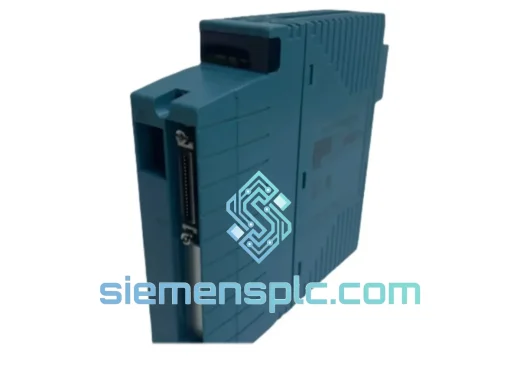
YOKOGAWA NFSB100-S50 Fieldbus Communication Module
STARDOM
Origin JP
Fieldbus Communication Module
Yokogawa
RFQ Ready
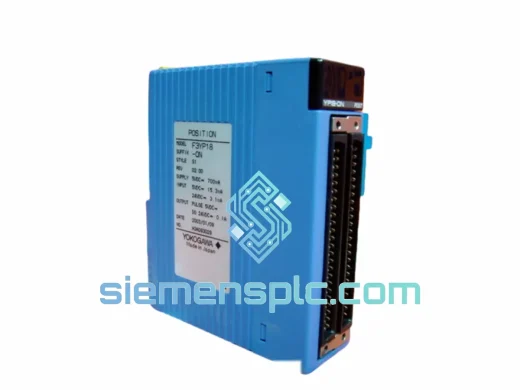
YOKOGAWA F3LC11-OZ PLC Communication Module
STARDOM
Origin JP
PLC Communication Module