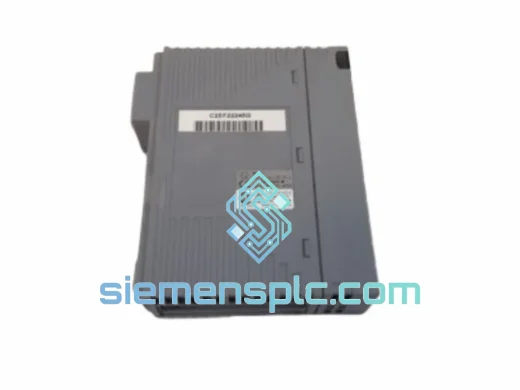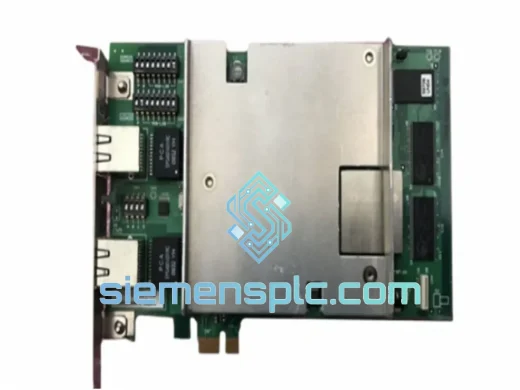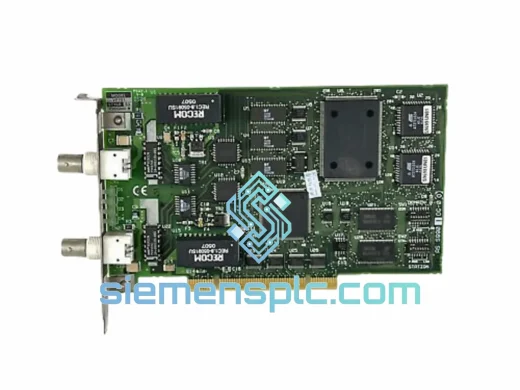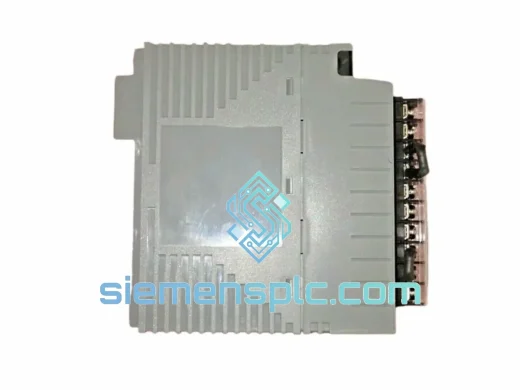
Yokogawa
RFQ Ready
Yokogawa ALR121-S51 S1 Serial Communication Module – CENTUM VP / CS 3000
CENTUM VP
Origin JP
Serial Communication Module
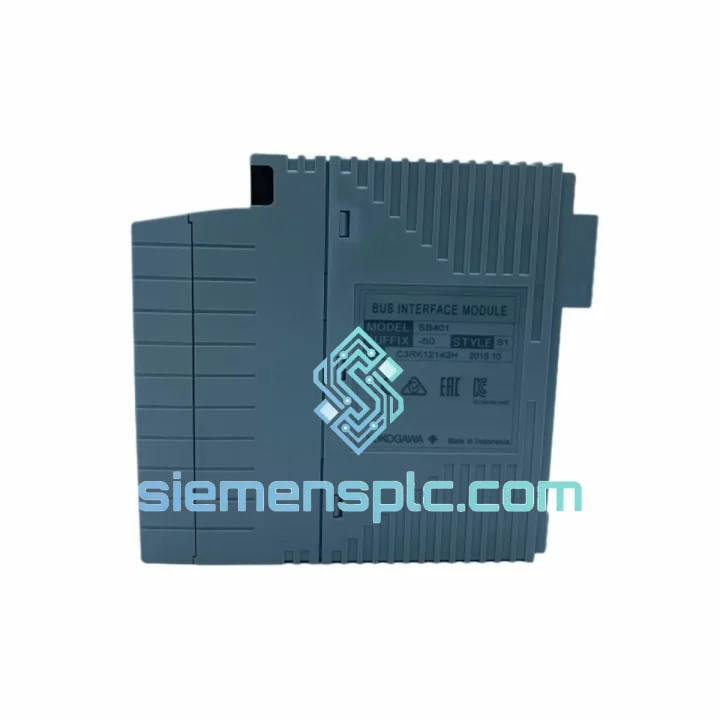
Request verified availability, condition, replacement risk review, packing options and courier lead time for SB401-50.
Click Request Quote and the part number is inserted into the inquiry form automatically.
Core fields for model confirmation and RFQ routing. Detailed product narrative remains below.
The SB401-50 occupies a structurally defined role within Yokogawa’s CENTUM VP and CS 3000 distributed control architectures: it is the dedicated serial bus interface card that bridges the high-speed V-net/IP backplane of a Field Control Station (FCS) to external devices communicating over RS-232C, RS-422, or RS-485 physical layers. Unlike generic serial converters, the SB401-50 is engineered as a native FCS node card, meaning its communication scheduling, error reporting, and configuration are fully managed within the CENTUM Engineering Environment — no external middleware, no proprietary driver stack, no additional licensing beyond the standard CENTUM VP engineering seat.
In a typical CENTUM VP topology, the FCS executes control function blocks at a deterministic scan cycle. The SB401-50 extends that determinism to the serial domain by handling protocol framing, baud-rate negotiation, and character-level buffering in hardware, then presenting received data to the FCS CPU as structured tag values on the next scan boundary. This architecture prevents serial communication latency from propagating into the control loop execution time — a critical design requirement in processes where scan-cycle overrun triggers safety system intervention.
Real-time Stock & RFQ: [email protected] | WhatsApp: +86 18359268345
| Part Number | SB401-50 |
| Manufacturer | Yokogawa Electric Corporation |
| Module Classification | Serial Bus Interface Module (FCS Node Card) |
| Compatible Platforms | CENTUM VP (all revisions), CENTUM CS 3000 |
| Physical Interfaces | RS-232C / RS-422 / RS-485 (selectable per port) |
| Topology Support | Point-to-point (RS-232C), multi-drop bus up to 32 nodes (RS-485) |
| Baud Rate Range | 1,200 bps to 115,200 bps (configurable) |
| Isolation | Optical isolation between serial field side and FCS backplane logic |
| Mounting | Single-slot plug-in card, FCS node unit chassis |
| Power Source | Backplane-supplied (FCS chassis); no external PSU required |
| Operating Temperature | 0 °C to +55 °C |
| Storage Temperature | −25 °C to +70 °C |
| Relative Humidity | 5 % to 95 % RH, non-condensing |
| EMC Compliance | CE marked; meets IEC 61000-4 series immunity levels for industrial environments |
| RoHS Status | Compliant |
| Form Factor / Weight | Single-slot card, approx. 500 g |
| Configuration Tool | CENTUM VP / CS 3000 Engineering Environment (no third-party software) |
| Warranty | 12 months from date of shipment (siemensplc.com standard terms) |
The SB401-50’s internal architecture separates the field-side serial transceiver circuitry from the FCS backplane interface through a galvanic optical isolation barrier. This barrier serves two distinct engineering functions. First, it eliminates ground-loop currents that arise when the FCS chassis ground and the field device ground exist at different potentials — a common condition in large industrial plants where cable runs span multiple electrical zones. Second, it limits the energy that can couple from a field-side transient (lightning strike on a cable tray, motor drive switching noise) into the FCS backplane, protecting the CPU and other node cards from damage that would otherwise require a full FCS shutdown for repair.
On the RS-485 side, the module’s line driver is designed to maintain a defined differential voltage across the bus even when multiple nodes are simultaneously in receive mode — a condition that can cause bus contention on lower-grade hardware. The SB401-50 implements a fail-safe biasing network that holds the bus in a known idle state when no transmitter is actively driving, preventing the spurious framing errors that occur when a floating RS-485 bus is misinterpreted as a start bit by a receiving node.
The baud-rate generator uses a crystal-controlled oscillator rather than a software-divided system clock. This design choice reduces baud-rate error to well under 1 % across the full operating temperature range, which is significant for RS-485 multi-drop networks where accumulated timing error across 32 nodes can cause intermittent framing failures at higher baud rates (57,600 bps and above) if any node’s clock drifts beyond tolerance.
Protocol framing and character assembly are handled by a dedicated UART hardware block, not by the FCS CPU. This offload architecture means that even during periods of high FCS CPU utilization — such as during a large alarm flood or a complex function block recalculation — the serial receive buffer continues to capture incoming characters without loss. The buffer depth is sufficient to hold multiple complete frames at the maximum supported baud rate, providing headroom for CPU scheduling jitter without data loss.
Every SB401-50 unit dispatched from our Xiamen, China facility is sourced through verified industrial automation supply channels and subjected to a structured pre-shipment inspection process. Visual examination covers PCB surface condition, connector pin integrity, label authenticity, and firmware revision markings. Units showing evidence of non-OEM component substitution, re-marking, or physical damage are rejected at intake and do not enter saleable stock.
Packaging follows ESD-safe handling protocols throughout: anti-static bags, foam-lined inner cartons, and moisture-barrier outer packaging are standard for all shipments. For air freight, cartons are dimensioned and labeled to comply with IATA dangerous goods regulations applicable to electronic equipment.
Export documentation — commercial invoice, packing list, certificate of origin, and HS code declaration — is prepared as standard for every international shipment. DDP and DAP Incoterms are available on request for customers requiring delivered-duty-paid pricing. Typical transit times from Xiamen to major industrial hubs: 3–5 business days to Southeast Asia, 5–7 business days to Europe and the Middle East, 5–8 business days to North America, subject to carrier and customs clearance conditions.
A 12-month warranty from the date of shipment covers manufacturing defects and confirmed functional failures under normal operating conditions. Warranty claims are processed with a target response time of 2 business days from receipt of the defective unit and supporting documentation.
Email: [email protected]
WhatsApp: +86 18359268345
Web: siemensplc.com
Location: Xiamen, China
© 2026 siemensplc.com. All rights reserved.
We check the full part number, brand, series and visible nameplate information before quotation.
Sales confirms stock path, condition option, quantity and realistic lead time for export dispatch.
DHL, FedEx, UPS or buyer courier arrangements can be reviewed with packing requirements.
Similar brand or category products for fast comparison and multi-item RFQ lists.