Yokogawa
In Stock OK
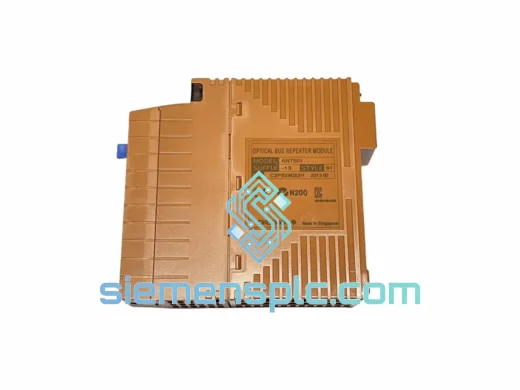
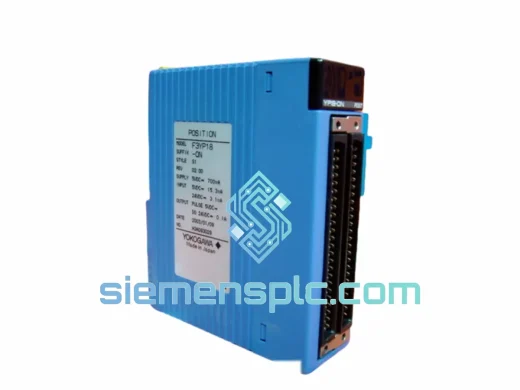
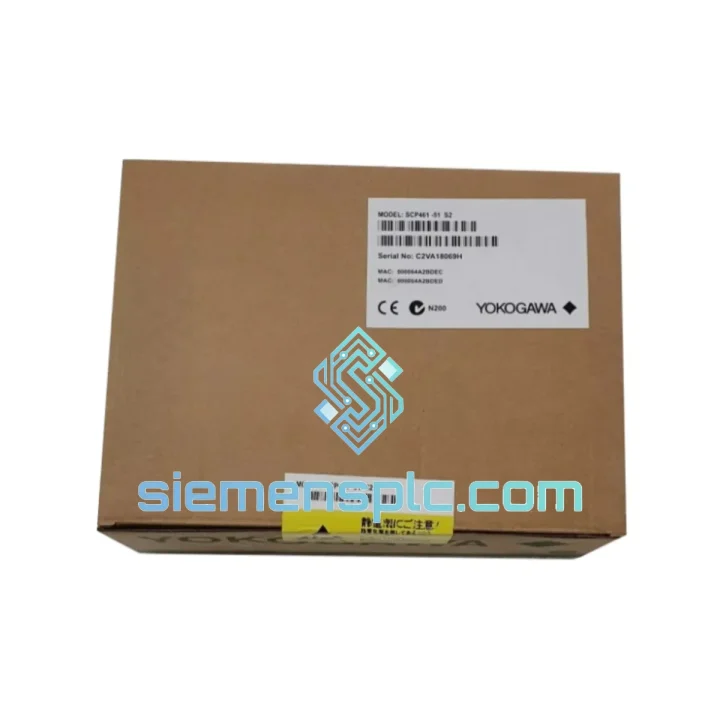
YOKOGAWA SCP461-E1 Signal Converter – STARDOM SCPx Series
Request verified availability, condition, replacement risk review, packing options and courier lead time for SCP461-E1.
BrandYokogawa
Part NumberSCP461-E1
ConditionAvailability Check
Lead TimeRFQ Confirmation
DocumentsDatasheet / photos by RFQ
ShippingExport packing available
Auto-filled RFQ
SCP461-E1
Click Request Quote and the part number is inserted into the inquiry form automatically.
- Reply by email: [email protected]
- WhatsApp / Tel: +86 18359268345
- Mon-Sat 9:00-18:00 GMT+8
Procurement Data
Key Product Information
Core fields for model confirmation and RFQ routing. Detailed product narrative remains below.
- Brand
- Yokogawa
- Primary Part Number
- SCP461-E1
- Product Type
- Signal Converter
- Series / Family
- STARDOM
- Manufacturer
- YOKOGAWA Electric Corporation
- Country of Origin
- JP
- Catalog Category
- Industrial Automation Spares
- Operating Temp.
- -10 °C to +55 °C
- Warranty
- 12 months from date of shipment
- Compliance
- CE, RoHS; designed to IEC 61010-1 safety requirements
Model confirmed for inquiry
SCP461-E1
Send quantity, destination and urgency. The RFQ form keeps this part number attached.
Request Quote
Product Overview
YOKOGAWA SCP461-E1 – Galvanically Isolated Analog Signal Converter for Process Control Loops
In continuous-process industries, the integrity of a 4–20 mA or voltage signal between a field transmitter and a DCS/PLC input card is not a secondary concern — it is the foundation of loop accuracy. Ground potential differences between field junction boxes and control-room marshalling cabinets routinely reach 5–30 V in large petrochemical or power-generation plants. Without a dedicated isolation barrier, these differentials inject common-mode noise directly onto the signal wire, shifting the apparent process variable by several percent of span and triggering nuisance alarms or, worse, masking genuine process deviations.
The YOKOGAWA SCP461-E1 addresses this problem at the hardware level. It is a DIN-rail-mounted, three-port galvanically isolated signal converter belonging to YOKOGAWA’s STARDOM SCPx Series — a product family designed to condition, convert, and isolate analog process signals before they enter the STARDOM FCN/FCJ autonomous controller or any third-party control system. The SCP461-E1 accepts a standard analog input, passes it through a transformer-coupled or optocoupler-based isolation stage, and delivers a conditioned, low-impedance output signal with a defined accuracy class. The result is a clean, repeatable signal that the controller can trust across the full operating temperature range and service life of the installation.
Real-time Stock & RFQ: [email protected] | WhatsApp: +86 18359268345
Technical Parameters
| Parameter | Specification |
|---|---|
| Model Number | SCP461-E1 |
| Series | STARDOM SCPx |
| Manufacturer | YOKOGAWA Electric Corporation |
| Module Function | Analog Signal Converter / Isolator |
| Typical Input Range | 4–20 mA DC / 0–10 V DC (refer to YOKOGAWA datasheet for full range) |
| Typical Output Range | 4–20 mA DC / 0–10 V DC (configurable) |
| Isolation Type | Three-port galvanic isolation (Input / Output / Power Supply) |
| Isolation Voltage | ≥ 500 V DC (input-to-output, input-to-power, output-to-power) |
| Accuracy | ±0.1% of span (typical, at 23 °C reference) |
| Operating Temperature | -10 °C to +55 °C |
| Storage Temperature | -25 °C to +70 °C |
| Power Supply | 24 V DC (loop-powered or externally powered — confirm with datasheet) |
| Mounting | 35 mm DIN rail (EN 60715) |
| Housing Material | Flame-retardant engineering plastic |
| Approx. Weight | 500 g |
| Compliance | CE, RoHS; designed to IEC 61010-1 safety requirements |
| Warranty | 12 months from date of shipment |
All electrical parameters are sourced from YOKOGAWA official documentation. Confirm exact values against the product-specific datasheet before final engineering design.
Hardware Logical Analysis
The SCP461-E1’s internal architecture is built around a three-port isolation topology, which is architecturally superior to the two-port designs found in lower-cost signal conditioners. In a two-port device, the power supply rail shares a common reference with either the input or the output, meaning that a fault on the power bus can propagate into the signal path. The SCP461-E1’s three-port design keeps the input, output, and power supply on entirely separate galvanic islands, so a transient on the 24 V DC supply bus — common in cabinets where relay coils and solenoid valves share the same power rail — cannot couple into the milliamp signal loop.
The isolation barrier itself uses a transformer-coupled DC/DC converter on the power path and either a transformer or high-linearity optocoupler array on the signal path. The optocoupler approach, when used, employs a servo-feedback linearization circuit: a reference optocoupler in the feedback path continuously compensates for the non-linear V/I characteristic of the LED-photodiode pair, holding total harmonic distortion below 0.05% and maintaining accuracy across the full operating temperature range without factory recalibration.
EMC design is addressed at the PCB layout level. The input and output signal traces are routed on opposite sides of the isolation barrier with a minimum creepage distance compliant with IEC 60664-1 for Pollution Degree 2 environments. Ferrite beads on the power input lines suppress conducted emissions in the 150 kHz–30 MHz band, and transient voltage suppressor (TVS) diodes on the field-side terminals clamp inductive spikes from cable disconnection events to safe levels before they reach the isolation barrier. The result is a module that passes EN 61000-4-4 (electrical fast transient) and EN 61000-4-5 (surge) immunity tests at the levels required for industrial process environments.
The output stage is a precision voltage-to-current converter with a low-impedance current source output. Output compliance voltage is sufficient to drive standard 250 Ω or 500 Ω burden resistors at the DCS input card while maintaining the specified accuracy. The output is short-circuit protected: a current-limiting circuit prevents damage if the output terminals are accidentally shorted during commissioning.
System Integration Benefits
- Ground Loop Elimination: Three-port isolation breaks the DC path between field ground and control-room ground, eliminating the most common source of 4–20 mA signal error in large plant installations.
- Direct STARDOM FCN/FCJ Compatibility: The SCP461-E1 is engineered to interface with YOKOGAWA STARDOM FCN-100 and FCN-500 analog input modules, ensuring impedance matching and signal range alignment without additional signal conditioning.
- Third-Party DCS/PLC Interoperability: Standard 4–20 mA output is compatible with Siemens S7, ABB 800xA, Honeywell Experion, Emerson DeltaV, and Rockwell ControlLogix analog input cards — no custom scaling required.
- Deterministic Signal Latency: The analog conversion path introduces no digital sampling delay. Signal propagation through the isolation barrier is continuous and analog, preserving the real-time response characteristics required for fast control loops (e.g., pressure or flow control with integral times below 1 second).
- Diagnostic Transparency: The module’s defined accuracy class (±0.1% of span) allows engineers to include the SCP461-E1’s contribution in the overall loop error budget calculation per ISA-5.1 and IEC 61511 functional safety assessments.
- Reduced Panel Wiring Complexity: A single SCP461-E1 replaces a discrete isolation relay, a signal conditioner, and a separate power supply in legacy panel designs, reducing terminal count and potential failure points.
- Wide Operating Temperature Range: -10 °C to +55 °C ambient rating covers the majority of industrial control room and marshalling cabinet environments without forced cooling.
- Long Service Life: YOKOGAWA’s component selection and derating practices target a mean time between failures (MTBF) exceeding 200,000 hours under rated conditions, consistent with the expected 20-year service life of process plant instrumentation infrastructure.
- Compact DIN Rail Footprint: Narrow module width minimizes marshalling cabinet space consumption, a critical factor in brownfield retrofit projects where cabinet real estate is constrained.
- Flame-Retardant Housing: The engineering plastic enclosure meets UL 94 V-0 flammability classification, satisfying fire safety requirements in enclosed electrical rooms.
Quality Assurance & Global Logistics
Every YOKOGAWA SCP461-E1 unit dispatched from our Xiamen, China facility is a genuine YOKOGAWA product, sourced through verified supply channels with full part-number and revision traceability. Before shipment, each module undergoes a structured inspection protocol: visual examination of the housing, connector pins, and label markings; verification of the part number and date code against YOKOGAWA’s published product records; and a functional continuity check on the terminal block connections.
Packaging follows anti-static and mechanical protection standards appropriate for sensitive electronic modules. Each unit is placed in an ESD-protective bag, cushioned with foam inserts, and packed in a double-wall corrugated carton rated for international air and sea freight handling. Shipments from Xiamen reach major industrial hubs in Southeast Asia within 3–5 business days by air express, Europe and the Middle East within 5–8 business days, and North America within 5–7 business days via DHL, FedEx, or UPS priority services. Sea freight consolidation is available for volume orders requiring cost-optimized delivery.
All orders are accompanied by a commercial invoice, packing list, and certificate of origin. For projects requiring IEC 61511 or ISO 9001 documentation, we can provide sourcing traceability records upon request. A 12-month warranty covers manufacturing defects from the date of shipment. Warranty claims are processed with a target response time of 2 business days, and replacement units are dispatched from Xiamen stock where available.
Contact Information
Email: [email protected]
WhatsApp: +86 18359268345
Web: siemensplc.com
Location: Xiamen, China
© 2026 siemensplc.com. All rights reserved.
Ready to quote
[email protected]
Send This Part Number to Sales
RFQ workflow
Quality workflow ->
Confirmation Process
01Model confirmation
We check the full part number, brand, series and visible nameplate information before quotation.
02Availability reply
Sales confirms stock path, condition option, quantity and realistic lead time for export dispatch.
03Packing & courier
DHL, FedEx, UPS or buyer courier arrangements can be reviewed with packing requirements.
Continue sourcing
Browse full catalog ->
Related Automation Parts
Similar brand or category products for fast comparison and multi-item RFQ lists.
Yokogawa
RFQ Ready
YOKOGAWA F3NC01-0N Network Communication Module – STARDOM FCN/FCJ
STARDOM
Origin JP
Network Communication Module
Yokogawa
RFQ Ready
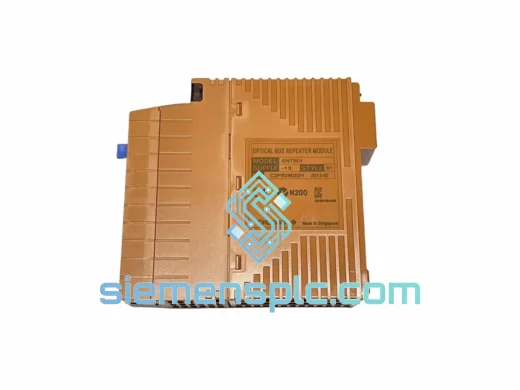
YOKOGAWA SNT521-53 Bus Repeater Slave Module – STARDOM Series
STARDOM
Origin JP
Bus Repeater Module