Yokogawa
In Stock OK
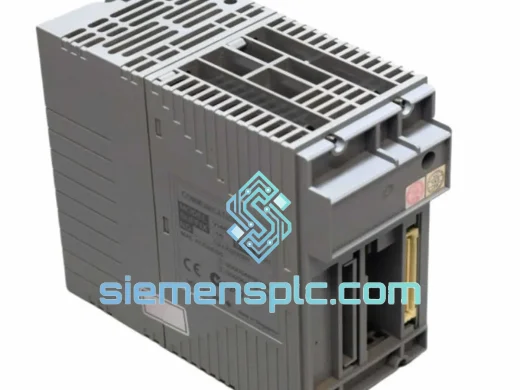
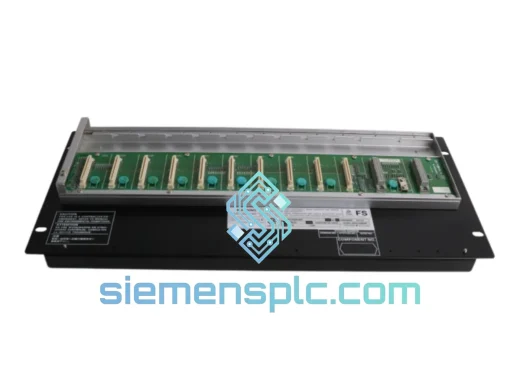
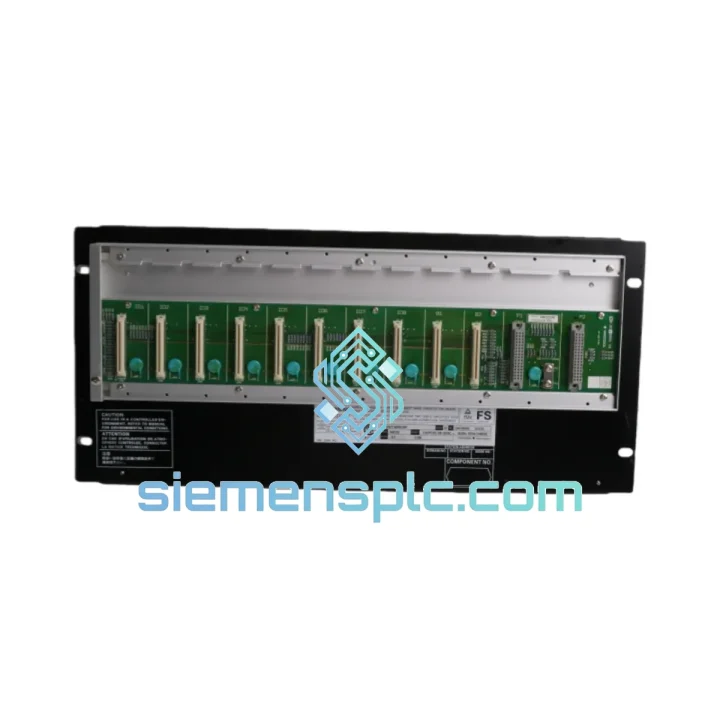
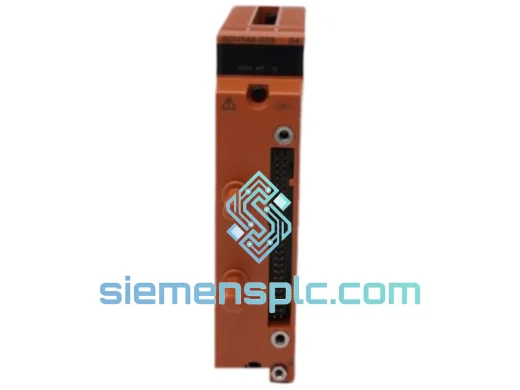
Yokogawa SNB10D-215/CU2N Safety Node Unit – ProSafe-RS
Request verified availability, condition, replacement risk review, packing options and courier lead time for SNB10D-215/CU2N.
BrandYokogawa
Part NumberSNB10D-215/CU2N
ConditionAvailability Check
Lead TimeRFQ Confirmation
DocumentsDatasheet / photos by RFQ
ShippingExport packing available
Auto-filled RFQ
SNB10D-215/CU2N
Click Request Quote and the part number is inserted into the inquiry form automatically.
- Reply by email: [email protected]
- WhatsApp / Tel: +86 18359268345
- Mon-Sat 9:00-18:00 GMT+8
Procurement Data
Key Product Information
Core fields for model confirmation and RFQ routing. Detailed product narrative remains below.
- Brand
- Yokogawa
- Primary Part Number
- SNB10D-215/CU2N
- Product Type
- Safety Node Unit
- Series / Family
- ProSafe-RS
- Country of Origin
- JP
- Catalog Category
- DCS & Safety Modules
- Operating Temp.
- 0°C to +55°C
- Warranty
- 12 months hardware warranty from shipment date
Model confirmed for inquiry
SNB10D-215/CU2N
Send quantity, destination and urgency. The RFQ form keeps this part number attached.
Request Quote
Product Overview
Yokogawa SNB10D-215/CU2N ProSafe-RS Safety Node Unit – Dual-Redundant SIL2 Logic Execution in Process Safety Architectures
The SNB10D-215/CU2N occupies a structurally critical position within the Yokogawa ProSafe-RS Safety Instrumented System (SIS) hierarchy. As a Safety Node Unit carrying the /CU2N suffix — denoting a dual-redundant CPU module pair — this device executes IEC 61508 SIL2-rated safety logic at the node level, independent of the master Safety Control Unit (SCP401). Each node maintains its own deterministic scan cycle, processes field I/O signals through isolated input conditioning circuits, and communicates over the Vnet/IP dual-redundant Ethernet safety bus. In the event of a primary CPU fault, the standby CPU assumes control within a single scan cycle, with no interruption to the safety function output state. This architecture satisfies the Hardware Fault Tolerance (HFT=1) requirement mandated by IEC 61508 for SIL2 applications without additional external redundancy measures.
The -215 suffix encodes the node’s I/O slot capacity and internal bus configuration, defining the maximum number of I/O sub-modules that can be mounted within the node chassis. This capacity tier is selected during SIS engineering to match the field device count per node, balancing cable routing economics against node-level failure containment boundaries. In large-scale ESD or HIPPS architectures, multiple SNB10D-215/CU2N nodes are distributed across the plant, each managing a discrete safety function group, while the SCP401 coordinates inter-node cause-and-effect logic over the Vnet/IP backbone.
Real-time Stock & RFQ: [email protected] | WhatsApp: +86 18359268345
Technical Parameters
| Parameter | Specification |
|---|---|
| Model Number | SNB10D-215/CU2N |
| Series | ProSafe-RS (Yokogawa SIS) |
| Unit Classification | Safety Node Unit |
| Safety Integrity Level | SIL2 per IEC 61508 |
| CPU Configuration | Dual-redundant (/CU2N), hot-standby with bumpless switchover |
| Node I/O Capacity | -215 tier (refer to ProSafe-RS engineering guide for slot count) |
| Safety Bus | Vnet/IP – dual-redundant 100 Mbps Ethernet safety network |
| Supply Voltage | 24 VDC (via ProSafe-RS dedicated power module) |
| Operating Temperature | 0°C to +55°C |
| Storage Temperature | -20°C to +70°C |
| Relative Humidity | 10% to 90% RH, non-condensing |
| Mounting | ProSafe-RS node cabinet, DIN rail compatible |
| Unit Weight | 5.9 kg (assembled node) |
| Certifications | IEC 61508 SIL2, CE (EMC Directive 2014/30/EU), cULus |
| Country of Origin | Japan |
| Warranty | 12 months hardware warranty from shipment date |
Hardware Logical Analysis
Dual-CPU Arbitration and Switchover Logic: The /CU2N configuration implements a 1oo2 (one-out-of-two) CPU arbitration scheme at the node level. Both CPUs execute the same safety application program synchronously, comparing output states at each scan boundary. Discrepancies trigger a diagnostic fault flag and initiate a controlled switchover sequence. The arbitration logic is implemented in dedicated hardware — not firmware — ensuring that a software fault in the application layer cannot corrupt the switchover decision path. This separation of safety arbitration from application execution is a fundamental design principle that distinguishes the ProSafe-RS node architecture from single-CPU safety controllers with software-based watchdog schemes.
Field Signal Conditioning and Optical Isolation: Discrete input channels on SNB10D-series I/O sub-modules employ multi-stage optical isolation between field wiring and the internal logic bus. The isolation barrier sustains a minimum of 500 VDC working voltage, protecting the CPU backplane from transient overvoltages induced by inductive field loads — a common failure mode in ESD valve solenoid circuits. Analog input channels incorporate differential amplifier front-ends with common-mode rejection ratios (CMRR) exceeding 80 dB at 50/60 Hz, suppressing ground loop interference in long cable runs typical of offshore platform installations.
EMC Design and Conducted Noise Immunity: The node chassis incorporates a multi-layer PCB ground plane strategy with localized decoupling capacitors at each IC power rail. Ferrite bead filters are placed on all inter-board signal lines crossing the chassis boundary. The Vnet/IP interface uses transformer-coupled Ethernet PHYs, providing galvanic isolation on the network port and eliminating common-mode noise paths between nodes installed in geographically separated marshalling cabinets. Radiated emissions compliance to EN 55032 Class A is achieved without external shielding enclosures, simplifying cabinet layout.
Deterministic Scan Cycle Management: The node CPU scheduler operates on a fixed-priority preemptive real-time kernel. Safety function tasks execute at the highest priority tier with a guaranteed worst-case execution time (WCET) bounded by static analysis during the ProSafe-RS Builder compilation process. The WCET value is embedded in the compiled application binary and verified against the configured scan period at download time — the system rejects configurations where WCET exceeds 80% of the scan period, preserving margin for diagnostic overhead and communication servicing.
System Integration Benefits
- Native Vnet/IP Integration with CENTUM VP: The SNB10D-215/CU2N communicates natively over Vnet/IP, the same dual-redundant Ethernet backbone used by Yokogawa’s CENTUM VP DCS. This eliminates protocol gateway hardware between the SIS and DCS layers, reducing latency on safety status signals and alarm annunciation paths. Unified network management simplifies cybersecurity zone configuration under IEC 62443.
- Cause-and-Effect Matrix Execution at Node Level: Safety logic defined in the ProSafe-RS Builder cause-and-effect matrix is compiled and downloaded to each node independently. Node-level execution means that a Vnet/IP communication interruption between the SCP401 and a node does not disable the node’s local safety functions — the node continues executing its last-downloaded logic autonomously, satisfying the fail-safe requirement for communication loss scenarios.
- Online Diagnostics Without Process Interruption: The dual-CPU architecture supports online diagnostic testing of the standby CPU while the primary CPU maintains the safety output state. Proof test intervals can be extended by leveraging the continuous self-diagnostic coverage, reducing the frequency of manual proof tests required by IEC 61511 and lowering maintenance-related process downtime.
- Scalable Node Topology for Large SIS Architectures: Multiple SNB10D-215/CU2N nodes connect to a single SCP401 over Vnet/IP, allowing SIS architectures to scale from small wellhead controllers to refinery-wide ESD systems without changing the engineering toolchain or communication protocol. Node addresses are configured in ProSafe-RS Builder with automatic conflict detection.
- Transparent Fault Reporting to DCS Alarm System: Each node generates structured diagnostic messages — including CPU switchover events, I/O channel faults, and communication errors — that are transmitted to the CENTUM VP alarm management system in real time. Maintenance engineers receive actionable fault codes with module-level granularity, reducing mean time to repair (MTTR) compared to systems that report only node-level health status.
- Hot-Swap I/O Sub-Module Support: I/O sub-modules within the SNB10D-215 chassis can be replaced under power without de-energizing the node, provided the safety function associated with the affected channels is placed in a safe state via the bypass management system. This capability is critical for continuous process plants where scheduled shutdowns for maintenance are infrequent.
- IEC 61511 Lifecycle Documentation Support: ProSafe-RS Builder generates a complete application audit trail — including change history, version checksums, and download records — that satisfies the functional safety management documentation requirements of IEC 61511 Clause 5. This reduces the engineering effort required for safety case compilation during plant certification audits.
- Cybersecurity Hardening at Node Level: Firmware updates to the SNB10D-215/CU2N require cryptographic authentication via the ProSafe-RS engineering station. Unauthorized firmware modification attempts are logged and rejected, supporting compliance with IEC 62443-3-3 security level SL2 requirements increasingly mandated by asset owners in oil and gas and chemical sectors.
Quality Assurance & Global Logistics
Every SNB10D-215/CU2N unit offered through siemensplc.com is sourced as genuine Yokogawa original equipment. Units are inspected upon receipt against Yokogawa’s published part marking standards: label typography, holographic authenticity features, PCB revision markings, and connector pin integrity are verified before the unit enters stock. Functional pre-shipment checks confirm that the unit powers on correctly and that the CPU status LEDs indicate a healthy standby state consistent with factory-default firmware.
Packaging follows IEC 60068-2 transport stress guidelines: each unit is sealed in a moisture-barrier anti-static bag with desiccant, placed in a custom-cut polyethylene foam insert, and shipped in a double-wall corrugated carton rated for the unit’s 5.9 kg mass. For international shipments, cartons are palletized and stretch-wrapped where required by the destination carrier’s freight acceptance standards.
Shipments originate from our warehouse in Xiamen, China. Xiamen’s port infrastructure supports direct sea freight to major industrial hubs in Southeast Asia, the Middle East, and Europe, with air freight options available for urgent procurement requirements. Export documentation — including commercial invoice, packing list, certificate of origin, and HS code 8537.10 classification — is prepared in-house. Customers in regions requiring import permits for industrial control equipment are advised to confirm local regulatory requirements prior to order placement. Standard lead time for in-stock units is 3–7 business days door-to-door for air freight to most destinations.
A 12-month hardware warranty covers manufacturing defects and DOA (dead-on-arrival) conditions from the shipment date. Warranty claims are processed with photographic documentation of the fault condition; replacement units are dispatched from stock upon claim approval. Extended warranty and spare-parts reservation agreements are available for project-based procurement — contact our technical team for terms.
Contact Information
Email: [email protected]
WhatsApp: +86 18359268345
Web: siemensplc.com
Location: Xiamen, China
© 2026 siemensplc.com. All rights reserved.
Ready to quote
[email protected]
Send This Part Number to Sales
RFQ workflow
Quality workflow ->
Confirmation Process
01Model confirmation
We check the full part number, brand, series and visible nameplate information before quotation.
02Availability reply
Sales confirms stock path, condition option, quantity and realistic lead time for export dispatch.
03Packing & courier
DHL, FedEx, UPS or buyer courier arrangements can be reviewed with packing requirements.
Continue sourcing
Browse full catalog ->
Related Automation Parts
Similar brand or category products for fast comparison and multi-item RFQ lists.
Yokogawa
RFQ Ready
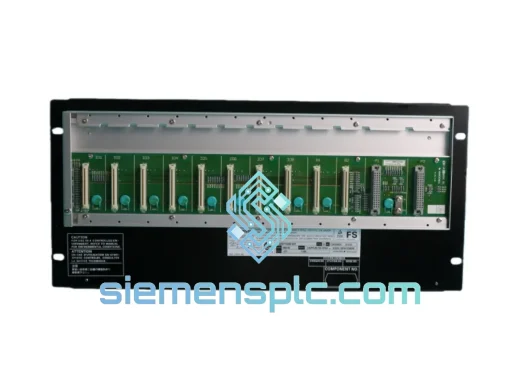
Yokogawa SNB10D-413/CU2N/ATD0C Safety Node Unit
ProSafe-RS
Origin JP
Safety Node Unit
Yokogawa
RFQ Ready
Yokogawa S2SC70D-FA412010 Safety Control Unit
ProSafe-RS
Origin JP
Safety Control Unit