ABB
RFQ Ready
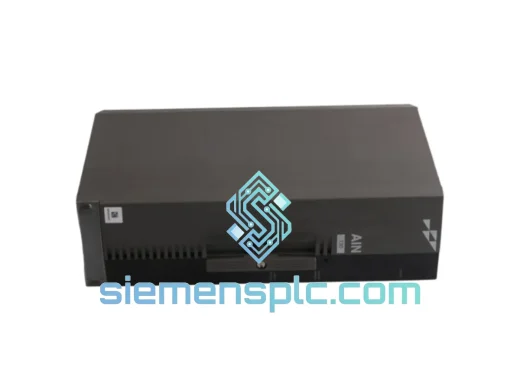
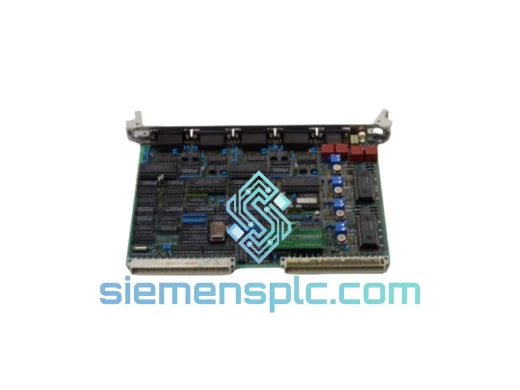
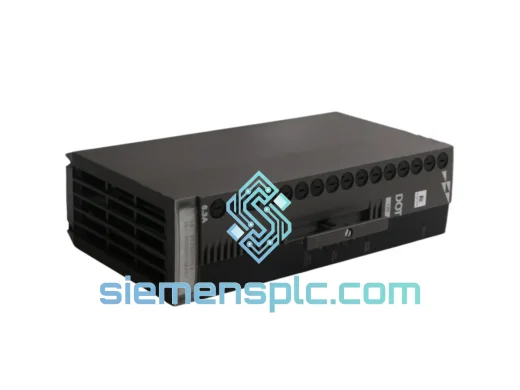
ABB P-HB-DOT-12010000 Safety Digital Output Module – AC500-S
AC500
Origin SE
Safety Digital Output Module
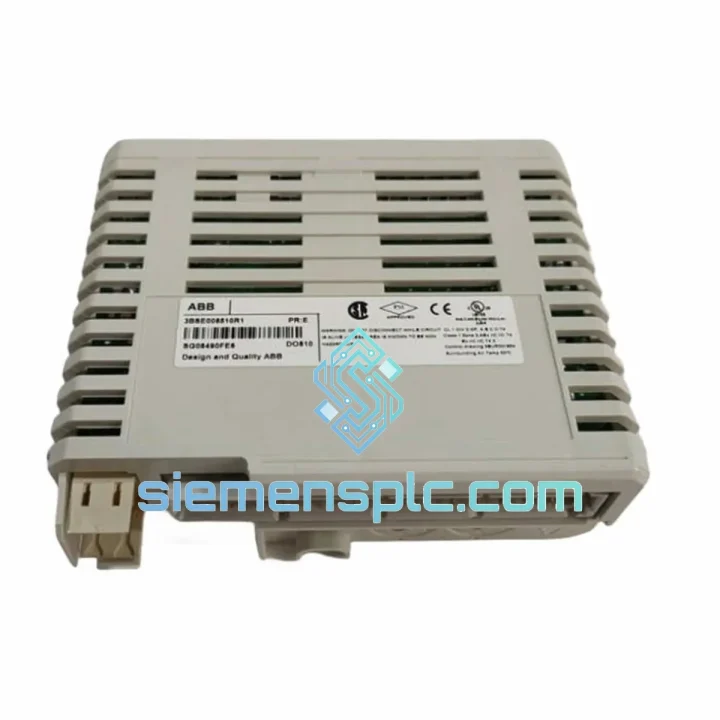
Request verified availability, condition, replacement risk review, packing options and courier lead time for ABB-TC512-3BSE006383R1.
Click Request Quote and the part number is inserted into the inquiry form automatically.
Core fields for model confirmation and RFQ routing. Detailed product narrative remains below.
The ABB TC512, identified by part number 3BSE006383R1, is a discrete digital input module engineered for deployment within ABB’s AC500 / Advant Controller 500 control platform. Its primary function is deterministic acquisition of binary field signals — limit switches, proximity sensors, push-button contacts, and relay outputs — and their transmission across the S100 I/O bus to the AC500 CPU for real-time process evaluation. In control loop terms, the TC512 occupies the signal-conditioning boundary between field instrumentation and the controller’s execution cycle, and its electrical isolation architecture directly governs the integrity of that boundary.
Unlike general-purpose I/O cards, the TC512 is designed around the AC500 backplane’s synchronous scan protocol. Each input channel is sampled within a fixed time window aligned to the CPU’s task cycle, which eliminates the jitter that asynchronous polling introduces in high-speed interlock applications. This deterministic behavior is a prerequisite for safety-adjacent logic where input latency must be bounded and verifiable.
Real-time Stock & RFQ: [email protected] | WhatsApp: +86 18359268345
| Parameter | Value |
| Part Number | 3BSE006383R1 |
| Model Designation | TC512 |
| Manufacturer | ABB Ltd. (Automation Products Division) |
| Platform Compatibility | AC500 / Advant Controller 500, S100 I/O Bus |
| Module Function | Digital Input (DI) |
| Signal Interface | S100 backplane bus (synchronous scan) |
| Input Signal Type | Discrete binary (dry contact / voltage-sourced) |
| Isolation Method | Optical isolation per channel group |
| Operating Temperature | 0 °C to +55 °C (continuous operation) |
| Storage Temperature | -25 °C to +70 °C |
| Protection Rating | IP20 (panel-mount, DIN rail or rack) |
| Power Supply | Via AC500 S100 backplane (no external PSU required) |
| Compliance / Certifications | CE, UL, cUL (per ABB product documentation) |
| Humidity (Operating) | 5 % to 95 % RH, non-condensing |
| Vibration Resistance | Per IEC 60068-2-6 (sinusoidal) |
| Warranty | 12 months against manufacturing defects |
The TC512’s hardware design addresses three principal failure modes common to digital input modules in industrial environments: ground-loop interference, common-mode voltage transients, and contact-bounce misinterpretation.
Optical Isolation Architecture: Each input channel group is galvanically separated from the S100 bus logic via an optocoupler stage. The isolation barrier presents a high impedance path to common-mode noise — typically generated by variable-frequency drives, large contactors, and inductive loads switching on shared cable trays. The optocoupler’s forward-current threshold acts as an implicit noise filter: signals below the LED activation threshold are rejected without software intervention, reducing spurious interrupt load on the CPU.
Input Filter and Debounce Logic: Hardware RC filtering on each input channel suppresses contact-bounce transients from mechanical switches and relay contacts. The filter time constant is matched to the AC500’s minimum scan cycle, ensuring that a genuine state change is captured within one scan period while bounce pulses shorter than the filter window are attenuated before reaching the optocoupler stage. This eliminates the need for software debounce timers in the application program, reducing CPU task load and simplifying ladder logic.
EMC Design Compliance: The module’s PCB layout follows ABB’s standard EMC design rules for the AC500 family: ground planes are segmented to prevent high-frequency return currents from coupling into signal traces, and decoupling capacitors are placed at each power rail entry point. The module housing provides shielding continuity when seated in the S100 rack, and the backplane connector’s ground pins are positioned to establish chassis ground before signal pins engage during insertion — a sequencing detail that prevents transient injection during hot-swap operations where the platform supports it.
Backplane Bus Interface: The S100 bus interface logic on the TC512 implements address decoding and data latching in hardware. The module’s slot address is set via DIP switch or jumper configuration, and the bus arbiter on the AC500 CPU polls each addressed slot within the configured I/O scan cycle. Because the latch holds the last valid input state until the next scan, the CPU always reads a stable, glitch-free snapshot of field conditions rather than a live asynchronous signal — a critical property for interlock and permissive logic.
Every ABB TC512 3BSE006383R1 unit dispatched from our Xiamen, China facility is an original ABB OEM component. No remanufactured, relabeled, or compatible-substitute units are stocked or sold. Each module is stored in a climate-controlled ESD-safe environment and individually inspected for label integrity, serial number traceability, connector pin condition, and housing completeness prior to packaging.
Outbound shipments are packed in anti-static ESD bags with closed-cell foam cushioning inside double-wall corrugated cartons rated for international air freight handling. Export documentation — commercial invoice, packing list, and certificate of origin — is prepared for every shipment. For regulated industries requiring ABB conformity documentation, original certificates can be provided upon request.
Logistics partners include DHL Express, FedEx International Priority, and UPS Worldwide for time-critical orders, with typical transit times of 3–7 business days to major industrial hubs in Europe, North America, Southeast Asia, and the Middle East. Economy freight and sea consolidation are available for bulk orders. A tracking number is issued within one business day of dispatch.
All units carry a 12-month warranty against manufacturing defects from the date of shipment. Dead-on-arrival units are replaced at no cost within 7 days of confirmed receipt. Warranty claims are processed with full serial number traceability back to the original ABB manufacturing batch.
Email: [email protected]
WhatsApp: +86 18359268345
Web: siemensplc.com
Location: Xiamen, China
© 2026 siemensplc.com. All rights reserved.
We check the full part number, brand, series and visible nameplate information before quotation.
Sales confirms stock path, condition option, quantity and realistic lead time for export dispatch.
DHL, FedEx, UPS or buyer courier arrangements can be reviewed with packing requirements.
Similar brand or category products for fast comparison and multi-item RFQ lists.