ABB
RFQ Ready
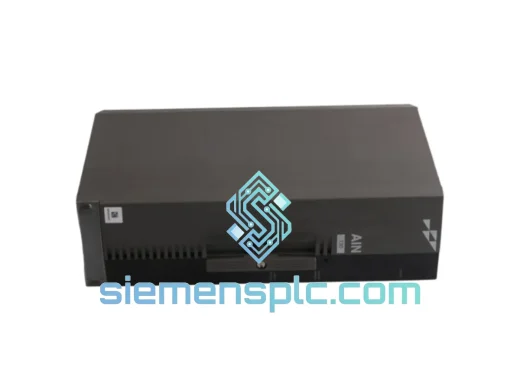
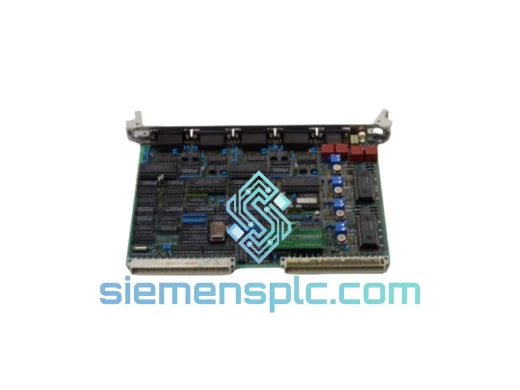
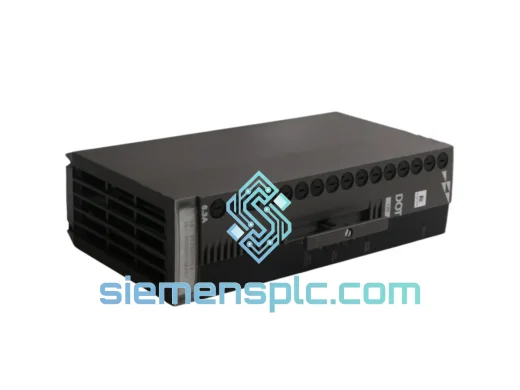
ABB P-HB-DOT-12010000 Safety Digital Output Module – AC500-S
AC500
Origin SE
Safety Digital Output Module
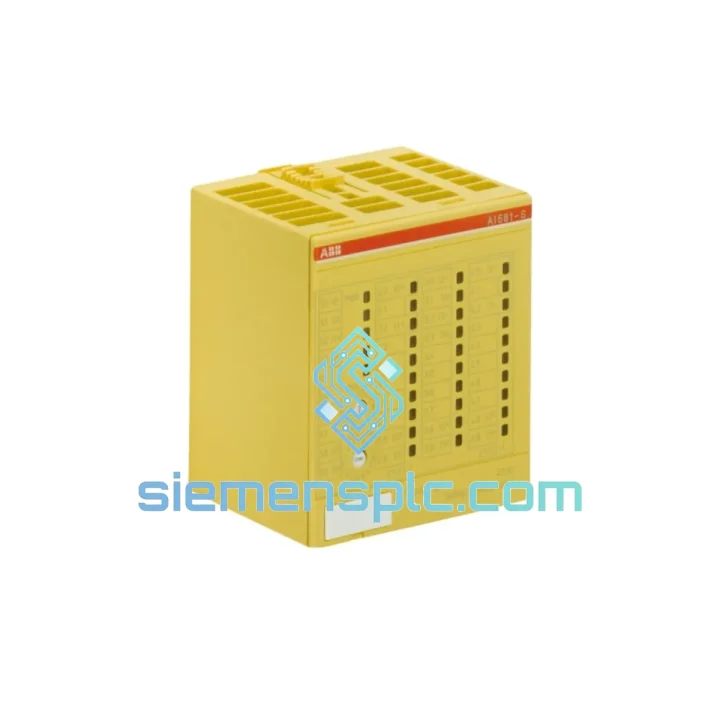
Request verified availability, condition, replacement risk review, packing options and courier lead time for AI581-S.
Click Request Quote and the part number is inserted into the inquiry form automatically.
Core fields for model confirmation and RFQ routing. Detailed product narrative remains below.
Within any Safety Instrumented System (SIS), the analog input layer occupies a structurally critical position: it is the first hardware element to receive a process variable from the field, and any undetected fault at this layer — whether a drifted ADC reference, a broken 4–20 mA loop, or a corrupted backplane transmission — propagates directly into the safety function’s decision logic. The ABB AI581-S, ordered under catalog reference 1SAP282000R0001, is a dedicated safety analog input module designed for deployment within the AC500-S Safety PLC platform. It carries IEC 61508 SIL3 certification, ISO 13849 PLe / Category 4 compliance, and IEC 62061 conformance — the full set of functional safety standards applicable to process industry, machinery, and power generation safety loops.
The module is not a general-purpose analog input card with a safety label applied post-design. Its internal architecture — from the ADC reference monitoring circuit through the differential input stage, galvanic isolation barrier, CRC-protected backplane bus, and hardware watchdog — was specified from the ground up to satisfy the diagnostic coverage (DC) and architectural constraints of IEC 61508-2 for SIL3 hardware subsystems. This distinction matters during SIL verification: system integrators can reference ABB’s published PFD (Probability of Failure on Demand) and PFH (Probability of Failure per Hour) data for the AI581-S directly in their SIL calculation worksheets, without commissioning an independent hardware assessment of the input acquisition layer.
The 1SAP282000R0001 catalog reference is the unambiguous procurement identifier for this module within ABB’s global supply chain. For projects governed by IEC 61511 Management of Functional Safety, this reference provides the component-level traceability required in the Safety Requirements Specification (SRS) and supports FAT, SAT, and proof test documentation throughout the safety lifecycle. Sectors where the AI581-S is routinely specified include upstream and downstream oil and gas (HIPPS, ESD, F&G), chemical and petrochemical processing, power generation (burner management, turbine protection), and heavy machinery with Category 4 guard monitoring requirements.
Real-time Stock & RFQ: [email protected] | WhatsApp: +86 18359268345
| Parameter | Specification |
|---|---|
| Part Number | AI581-S |
| Catalog Order Reference | 1SAP282000R0001 |
| Manufacturer | ABB Ltd. |
| Product Family | AC500-S Safety PLC Platform |
| Module Classification | Safety Analog Input |
| Safety Integrity Level | SIL3 — IEC 61508 / IEC 62061 |
| Performance Level | PLe / Category 4 — ISO 13849-1 |
| Applicable Standards | IEC 61508, IEC 62061, ISO 13849, IEC 61511 |
| Compatible Safety CPUs | AC500-S PM573-ETH, PM583-ETH, PM592-ETH |
| Backplane Communication | AC500-S internal safety bus (CRC-protected, deterministic cycle) |
| Analog Input Signal Types | 4–20 mA current loop; 0–10 V voltage (channel-configurable) |
| ADC Resolution | Refer to ABB AC500-S System Manual DS/PM573-ETH for channel resolution data |
| Diagnostic Coverage | High DC per IEC 61508-2 hardware architecture table |
| Galvanic Isolation | Field-to-backplane isolation; channel-to-channel isolation per ABB datasheet |
| Wiring Fault Detection | Open circuit (<3.6 mA), short circuit — hardware-level, per channel |
| Operating Temperature Range | −25 °C to +60 °C |
| Storage Temperature Range | −40 °C to +70 °C |
| Degree of Protection | IP20 per IEC 60529 |
| Mounting Method | DIN rail via AC500-S terminal unit (plug-in module) |
| Module Weight | 160 g |
| Country of Origin | Germany |
| Warranty Period | 12 months from dispatch date |
The AI581-S analog input architecture addresses three distinct failure domains that IEC 61508-2 requires to be covered at the hardware level for SIL3 subsystem classification: signal acquisition integrity, data transmission integrity, and module self-integrity.
Signal Acquisition Layer: Each analog input channel uses a differential acquisition topology. Differential input sensing rejects common-mode voltages induced by ground potential differences between the field device and the control cabinet — a practical concern in large industrial plants where cable runs of 200–500 m between field instruments and marshalling panels are standard. The common-mode rejection ratio (CMRR) of the differential stage attenuates interference that would corrupt a single-ended measurement. A hardware low-pass filter at the input stage removes high-frequency conducted noise above the process signal bandwidth, preventing aliasing artifacts in the ADC conversion that could produce false process variable readings without triggering a diagnostic alarm.
ADC Reference Monitoring: The analog-to-digital conversion stage incorporates internal reference voltage monitoring. The ADC reference voltage is continuously compared against a known hardware reference; if the measured deviation exceeds the tolerance band, the channel is flagged as faulted before the converted value is forwarded to the safety CPU. This is a hardware diagnostic that operates asynchronously from the CPU scan cycle — it cannot be disabled by application software and is not subject to software scan-cycle jitter. This mechanism directly addresses the IEC 61508-2 requirement for detection of systematic hardware faults in the signal conditioning path.
Galvanic Isolation Barrier: The field wiring side of the AI581-S is galvanically isolated from the backplane logic side. This isolation barrier serves two functions: it prevents ground loop currents — which arise when field devices and the PLC chassis are at different ground potentials — from superimposing a DC offset on the analog measurement, and it protects the backplane bus from field-side transient overvoltages caused by nearby switching equipment, lightning-induced surges on cable shields, or accidental contact with power conductors during maintenance. The isolation voltage rating defines the maximum transient the barrier can withstand without breakdown; refer to the ABB AI581-S datasheet for the rated isolation voltage applicable to the installation’s overvoltage category.
Backplane Bus CRC Protection: Data transfer from the AI581-S to the AC500-S safety CPU uses a CRC (Cyclic Redundancy Check) on every bus transaction. If the CRC computed at the receiving CPU does not match the transmitted CRC, the data frame is rejected — the CPU does not use the value and instead transitions the associated safety function to its defined safe state. This fail-on-error behavior is architecturally distinct from standard analog modules, which typically pass data to the CPU without transmission integrity checking. The CRC polynomial and frame structure are defined by ABB’s internal safety bus specification and are validated as part of the AC500-S platform’s IEC 61508 certification scope.
Hardware Watchdog and Module Self-Test: The AI581-S contains an internal watchdog timer that monitors the module’s own processing logic. If the module’s internal processor enters an undefined state — due to a single-event upset, power supply anomaly, or hardware component failure — the watchdog triggers a module reset and forces the module’s status to faulted before the CPU can act on any data from that module. The watchdog timeout period is fixed in hardware and is not configurable by application software, ensuring that the self-monitoring function cannot be inadvertently disabled during commissioning or maintenance.
EMC Design Considerations: Industrial environments where the AI581-S is deployed typically contain variable-frequency drives generating conducted emissions on the 150 kHz–30 MHz band, high-current contactors producing fast transients (IEC 61000-4-4 EFT/Burst), and electrostatic discharge events during maintenance activities. The module’s PCB layout, shielding strategy, and input filter design are validated against the EMC immunity requirements of IEC 61326-3-1 (EMC requirements for safety-related systems), ensuring that the module’s diagnostic functions remain operational under the electromagnetic stress levels present in its rated installation environment.
Each ABB AI581-S 1SAP282000R0001 unit shipped from our Xiamen, China operations center is sourced exclusively through verified distribution channels with documented supply chain traceability back to ABB’s manufacturing facility in Germany. Pre-shipment inspection covers physical housing integrity, connector pin geometry and plating condition, label legibility and content accuracy (part number, catalog reference, CE marking, serial number), and firmware version identification where externally visible.
Authenticity verification is performed against ABB’s genuine product identifiers: the 1SAP282000R0001 catalog reference on the module label must match the order documentation, and the CE declaration of conformity reference number is cross-checked against ABB’s published conformity database. Units that do not pass this verification are quarantined and not dispatched.
Packaging is engineered for international air freight: each module is sealed in an IEC 61340-5-1 compliant ESD-protective bag with desiccant, placed in a rigid foam-lined inner carton, and packed in a double-wall corrugated outer carton rated for ISTA 2A transit testing loads. For projects requiring IEC 61511 traceability documentation, we supply the original ABB declaration of conformity, the safety manual document reference, and full lot and serial number records as standard with the shipment.
Dispatch from Xiamen is available via DHL Express Worldwide, FedEx International Priority, and UPS Express for time-critical requirements, with air freight consolidation for volume orders. Representative transit times: Southeast Asia and East Asia 1–3 business days; Middle East and South Asia 3–5 business days; Europe 4–6 business days; North America 5–7 business days; South America and Africa 6–9 business days. All shipments include commercial invoice, detailed packing list, certificate of origin (China), and HS code documentation prepared for customs clearance in all major import markets.
Warranty coverage is 12 months from the date of dispatch, covering manufacturing defects confirmed by technical inspection. Warranty claims are processed with full RMA documentation; replacement units are dispatched within 5 business days of confirmed fault verification. Expedited replacement is available for projects with documented production impact.
Email: [email protected]
WhatsApp: +86 18359268345
Web: siemensplc.com
Location: Xiamen, China
© 2026 siemensplc.com. All rights reserved.
We check the full part number, brand, series and visible nameplate information before quotation.
Sales confirms stock path, condition option, quantity and realistic lead time for export dispatch.
DHL, FedEx, UPS or buyer courier arrangements can be reviewed with packing requirements.
Similar brand or category products for fast comparison and multi-item RFQ lists.