ABB
RFQ Ready
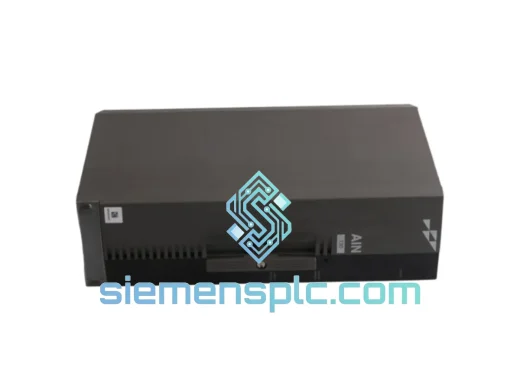
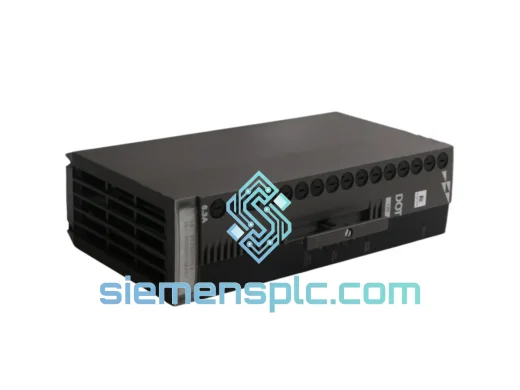
ABB P-HB-DOT-12010000 Safety Digital Output Module – AC500-S
AC500
Origin SE
Safety Digital Output Module
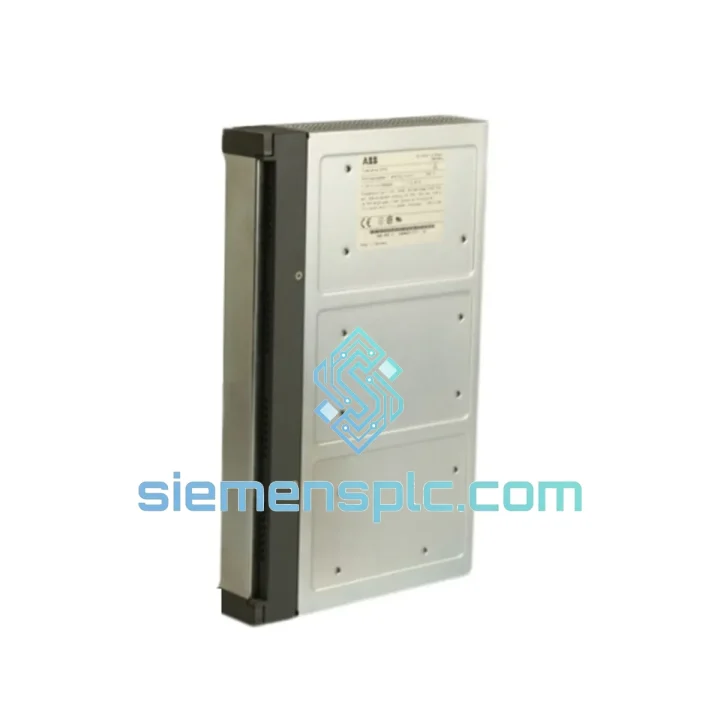
Request verified availability, condition, replacement risk review, packing options and courier lead time for DAO01.
Click Request Quote and the part number is inserted into the inquiry form automatically.
Core fields for model confirmation and RFQ routing. Detailed product narrative remains below.
In a closed-loop process control system, the analog output stage occupies a structurally critical position: it is the final digital-to-physical conversion point between the controller’s computed manipulated variable and the physical response of a field actuator. Any nonlinearity, thermal drift, or update-latency uncertainty introduced at this stage propagates directly into steady-state control error — a problem that cannot be corrected by PID gain adjustment alone. The ABB DAO01 is a dedicated 4-channel analog output expansion module for the AC500 mid-range PLC platform, designed to perform D/A conversion with the resolution, thermal stability, galvanic isolation, and deterministic update timing that continuous-process control loops require.
The module accepts calibrated 16-bit process values from the AC500 CPU via the internal parallel expansion bus and converts them into field-compatible analog drive signals — selectable per channel as 4–20 mA current loops or 0–10 V voltage outputs. These signal formats are the two dominant interface standards for proportional control valves, variable-frequency drive (VFD) speed references, electro-pneumatic positioners, motorized damper actuators, and analog-input transmitters used in setpoint cascade architectures. The DAO01 is rated for continuous operation across an ambient temperature range of –25 °C to +60 °C, covering the thermal envelope of both climate-controlled machine rooms and unheated outdoor enclosures in temperate industrial sites.
The AC500 platform is deployed across chemical processing, water and wastewater treatment, HVAC building automation, food and beverage production, pulp and paper, and distributed power generation. Its deterministic scan-cycle execution, broad fieldbus support (PROFIBUS, Modbus, CANopen, EtherCAT), and IEC 61131-3 programming compliance make it a preferred platform for applications where control loop timing and diagnostic transparency are engineering requirements rather than preferences. The DAO01 extends that determinism to the analog output layer, providing a conversion stage whose update latency, accuracy, and fault behavior are architecturally consistent with the CPU’s real-time guarantees.
📩 Real-time Stock & RFQ: [email protected] | WhatsApp: +86 18359268345
| Parameter | Specification |
|---|---|
| Part Number | DAO01 |
| Manufacturer | ABB |
| Platform / Series | AC500 |
| Module Function | 4-Channel Analog Output – D/A Conversion |
| Output Signal Modes | 4–20 mA (current loop) / 0–10 V (voltage), selectable per channel |
| D/A Resolution | 16-bit (65,536 discrete steps per channel) |
| Output Accuracy | ±0.05 % of full scale at 25 °C |
| Temperature Coefficient (Voltage Reference) | <25 ppm/°C |
| Channel Isolation | Galvanic – transformer-coupled DC/DC per channel |
| Isolation Voltage (Channel-to-Bus) | 500 V AC (1 min test) |
| Max Load – Current Mode | 750 Ω |
| Min Load – Voltage Mode | 1 kΩ |
| Bus Interface | AC500 internal parallel expansion bus |
| Update Rate | Synchronized to CPU task cycle (configurable) |
| Mounting | 35 mm DIN Rail per EN 60715 |
| Operating Temperature | –25 °C to +60 °C |
| Storage Temperature | –40 °C to +70 °C |
| Relative Humidity | 5–95 % RH, non-condensing |
| Protection Rating | IP20 (panel-mounted installation) |
| EMC Immunity | EN 61000-6-2 (Industrial Environment) |
| EMC Emission | EN 61000-6-4 |
| Surge Immunity | IEC 61000-4-5, Level 3 |
| Programming Standard | IEC 61131-3 |
| Configuration Tool | ABB Automation Builder IDE |
| Country of Origin | Germany |
| Warranty | 12 months from confirmed shipment date |
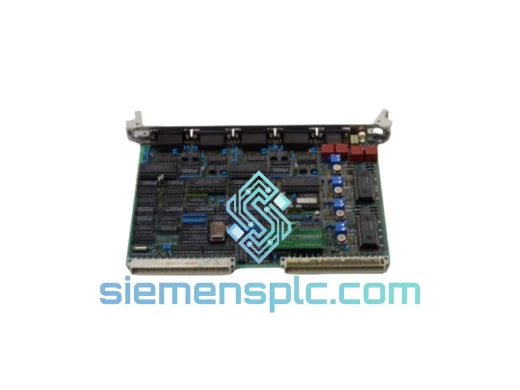
The DAO01’s internal architecture separates the output maintenance function from the CPU communication cycle through a dedicated output processor embedded on the module’s main PCB. This processor holds the last valid D/A conversion result on each channel independently of the expansion bus communication state. The engineering rationale is grounded in process safety: if the CPU enters a watchdog-triggered halt or the expansion bus experiences a communication gap exceeding the configured timeout, the output processor does not default channels to zero. A zero-output event on a 4–20 mA loop driving a proportional valve is interpreted by the actuator as a 0 % command — closing the valve abruptly and potentially inducing hydraulic hammer, pressure surge, or thermal runaway in exothermic reactors. The DAO01’s hold-last-value behavior, configurable per channel, prevents this class of fault from propagating to the field without requiring application-level watchdog logic.
Channel isolation is implemented at the galvanic level using transformer-coupled DC/DC converters — one per output channel — rather than shared optocoupler arrays. This topology provides two distinct engineering advantages over shared-barrier designs. First, it eliminates inter-channel ground-loop coupling: in installations where multiple field instruments share a common signal ground with the panel power supply, a shared isolation barrier allows a ground-potential difference on one channel to inject a common-mode offset into adjacent channels. Per-channel transformer isolation breaks this coupling path entirely. Second, the transformer topology provides a defined breakdown voltage barrier — rated at 500 V AC for one minute — that protects the CPU backplane from transient energy generated by inductive actuator loads, particularly relevant in panels where VFDs and solenoid valves generate switching transients in the range of several hundred volts.
The EMC hardening architecture on the DAO01 addresses both conducted and radiated interference paths. Common-mode chokes on the DC power supply input suppress conducted interference from the panel power bus, which in industrial environments can carry high-frequency noise from adjacent switching power supplies and motor drives. A shielded PCB layer stack — with a dedicated ground plane between the analog signal layer and the digital logic layer — contains high-frequency emissions from the D/A conversion clock and prevents them from coupling into the precision voltage reference circuit. TVS diodes on all field-side terminals are rated to absorb IEC 61000-4-5 Level 3 surge energy, providing protection against lightning-induced transients on long cable runs between the control panel and field instruments. In aggregate, these measures allow the module to maintain output accuracy within specification in environments with conducted RF interference levels consistent with industrial sites operating arc welding stations, large motor starters, or high-power radio equipment in close proximity to the control enclosure.
The precision voltage reference — the component whose stability most directly determines long-term output accuracy — is a bandgap reference with a temperature coefficient below 25 ppm/°C. At a 35 °C temperature rise from ambient (a realistic panel interior temperature increase during a full production shift), this coefficient produces a reference drift of less than 875 ppm — equivalent to less than 0.09 % of full scale on a 10 V output range. This drift budget is well within the module’s ±0.05 % accuracy specification at 25 °C, confirming that the module’s accuracy claim is not a best-case figure that degrades significantly under thermal load.
Every ABB DAO01 unit dispatched from our Xiamen, China operations center is sourced through verified procurement channels with documented supply-chain provenance. Pre-shipment inspection covers date-code and label verification against ABB’s published manufacturing records; connector and terminal block seating torque check; housing inspection for counterfeit indicators including font geometry, logo proportions, and screw-head finish; and a bench-level power-on test confirming expansion bus enumeration and analog output channel response across the full output range on both current and voltage modes.
Packaging conforms to anti-static handling standards: each module is sealed in an ESD-protective poly bag with humidity indicator card, cushioned with closed-cell polyethylene foam inserts contoured to the module geometry, and enclosed in a double-wall corrugated carton rated for international air freight drop and compression loads per ISTA 2A. ESD-sensitive and fragile labels are applied per IATA packing guidelines. Multi-unit orders are consolidated into a master shipping carton with internal void fill to prevent transit movement and individual module carton shifting.
Outbound logistics from Xiamen operate via DHL Express, FedEx International Priority, and UPS Worldwide Expedited. Typical transit times are 3–5 business days to European destinations, 3–5 business days to North America, and 2–4 business days to Southeast Asian markets. All shipments include a commercial invoice, packing list, and certificate of origin. Export classification and HS code documentation are prepared in compliance with Chinese customs export regulations and destination-country import requirements. A 12-month warranty against manufacturing defects is provided with every unit, covering component failure under normal operating conditions as defined in ABB’s AC500 product documentation.
📧 Email: [email protected]
💬 WhatsApp: +86 18359268345
🌐 Web: siemensplc.com
📍 Location: Xiamen, China
© 2026 siemensplc.com. All rights reserved.
We check the full part number, brand, series and visible nameplate information before quotation.
Sales confirms stock path, condition option, quantity and realistic lead time for export dispatch.
DHL, FedEx, UPS or buyer courier arrangements can be reviewed with packing requirements.
Similar brand or category products for fast comparison and multi-item RFQ lists.