ABB
RFQ Ready
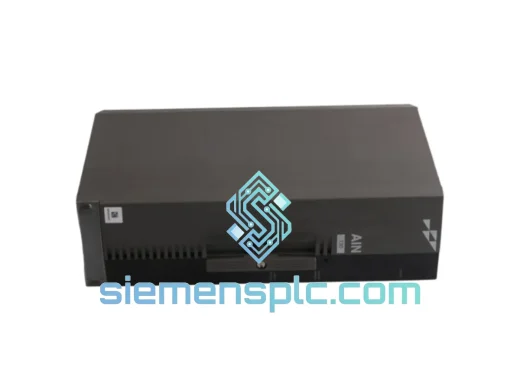
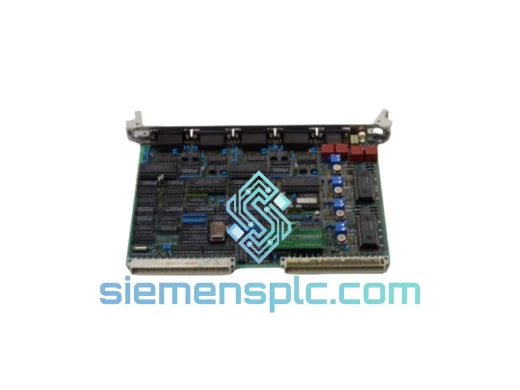
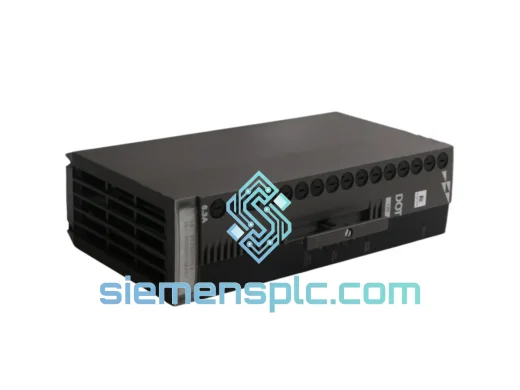
ABB P-HB-DOT-12010000 Safety Digital Output Module – AC500-S
AC500
Origin SE
Safety Digital Output Module
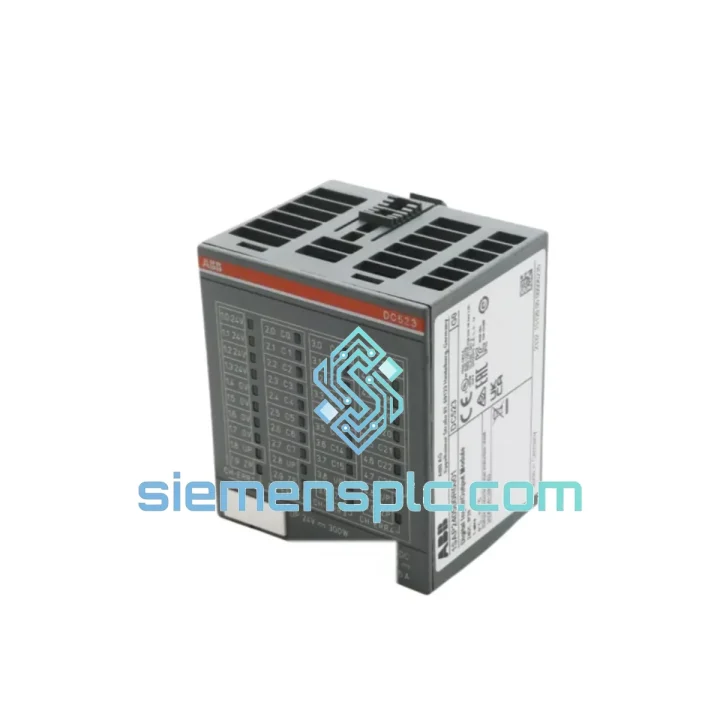
Request verified availability, condition, replacement risk review, packing options and courier lead time for DC523 D3 1SAP240500R0001.
Click Request Quote and the part number is inserted into the inquiry form automatically.
Core fields for model confirmation and RFQ routing. Detailed product narrative remains below.
In a distributed control loop, the digital I/O module is the boundary layer between the CPU’s deterministic scan cycle and the physical world of sensors, actuators, solenoids, and relay coils. The ABB DC523 D3 (order reference: 1SAP240500R0001) occupies that boundary with a 16-channel digital input bank and a 16-channel transistor output bank integrated into a single S500 form-factor housing. This architecture eliminates the need for a dedicated DI module and a separate DO module on the same terminal unit row, reducing backplane slot consumption by 50% for equivalent channel counts and cutting field wiring termination points proportionally.
Within the AC500 control hierarchy, the DC523 D3 communicates with the CPU over the S500 I/O bus — a synchronous, deterministic backplane protocol that guarantees fixed-latency data exchange independent of field-side load conditions. The CPU’s process image is updated every scan cycle with the full 16-bit input word from the DC523 D3, and the 16-bit output word is written back to the module’s output latch registers within the same cycle boundary. This tight coupling between CPU scan and I/O refresh is the foundation of deterministic machine control in high-speed packaging, press, and conveyor applications.
Real-time Stock & RFQ: [email protected] | WhatsApp: +86 18359268345
| Parameter | Specification |
|---|---|
| Part Number | DC523 D3 |
| Order Reference | 1SAP240500R0001 |
| Product Series | ABB AC500 / S500 I/O |
| Module Function | Digital Combination I/O (DI + DO) |
| Digital Inputs | 16 × 24 VDC, IEC 61131-2 Type 1 / Type 3 |
| Input Filter Time | Configurable: 0.1 ms – 32 ms per channel group |
| Digital Outputs | 16 × 24 VDC transistor (source output) |
| Output Current per Channel | 0.5 A continuous |
| Total Output Current | 4 A per output group (8 channels) |
| Supply Voltage (Us) | 24 VDC (–15% / +20%), SELV/PELV |
| Backplane Interface | AC500 S500 I/O bus (synchronous, fixed-latency) |
| Galvanic Isolation | Optocoupler isolation, field side vs. logic side |
| Isolation Voltage | 500 V AC (field to logic) |
| Short-Circuit Protection | Electronic, per output channel |
| Operating Temperature | –25 °C to +60 °C |
| Storage Temperature | –40 °C to +70 °C |
| Relative Humidity | 5% – 95%, non-condensing |
| Protection Class | IP20 (IEC 60529) |
| Mounting | 35 mm DIN rail via AC500 terminal unit (TU515 / TU516) |
| Dimensions (W × H × D) | Approx. 35 × 100 × 75 mm (module only) |
| Weight | Approx. 100 g |
| EMC Immunity | IEC 61000-4-2 (ESD), IEC 61000-4-4 (EFT), IEC 61000-4-5 (Surge) |
| Certifications | CE, UL, cUL, ATEX Zone 2 (II 3 G Ex nA IIC T4) |
| Vibration Resistance | IEC 60068-2-6: 1 g, 10–150 Hz |
| Shock Resistance | IEC 60068-2-27: 15 g, 11 ms |
| Warranty | 12 months against manufacturing defects |
The DC523 D3’s input section employs a two-stage signal conditioning chain. The first stage is a passive RC filter network at each input terminal, providing hardware-level debounce and suppression of high-frequency transients generated by inductive switching events on the field wiring. The filter time constant is software-configurable in discrete steps (0.1 ms, 1 ms, 4 ms, 8 ms, 16 ms, 32 ms), allowing the engineer to trade off input response speed against noise immunity on a per-channel-group basis — a critical parameter when mixing high-speed encoder proximity inputs with slow-switching float switches on the same module.
The second stage is the optocoupler isolation barrier. Each input channel drives an infrared LED through a current-limiting resistor; the phototransistor on the logic side converts the optical signal back to a digital level referenced to the module’s internal 3.3 V logic rail. This architecture provides a minimum 500 V AC isolation between the field wiring and the S500 backplane bus, breaking ground loops that would otherwise inject common-mode noise into the CPU’s analog reference. The optocoupler’s forward current threshold is set to comply with IEC 61131-2 Type 1 and Type 3 input characteristics, ensuring interoperability with the full range of 24 VDC proximity sensors, limit switches, and PNP/NPN output devices.
On the output side, each of the 16 channels is driven by a high-side MOSFET switch with integrated flyback diode and electronic short-circuit protection. The MOSFET’s on-state resistance (RDS(on)) is sufficiently low to maintain a voltage drop below 0.5 V at rated 0.5 A load current, preserving adequate drive voltage for 24 VDC solenoid valves and relay coils at the end of long field cable runs. The electronic short-circuit protection circuit monitors output current continuously; upon detecting an overcurrent condition, it latches the affected channel off and sets the corresponding diagnostic bit in the module’s status register, which the CPU reads within the next scan cycle. This per-channel fault isolation prevents a single shorted output from collapsing the 24 VDC supply rail and taking down adjacent channels.
The module’s EMC design follows a layered approach: the PCB ground plane is segmented to separate the high-current output switching domain from the low-level logic domain, with a single-point star ground connection at the backplane connector. Decoupling capacitors are placed at each MOSFET gate driver and at the optocoupler power supply pins, suppressing the fast-edge switching transients (dV/dt) that are the primary source of conducted EMI in transistor output modules. The result is a module that meets IEC 61000-4-4 Level 4 (4 kV) electrical fast transient immunity without external filtering — a specification that matters in switchgear panels where adjacent contactors generate repetitive burst transients on the 24 VDC bus.
Every ABB DC523 D3 1SAP240500R0001 unit dispatched from our Xiamen, China facility is sourced directly from ABB’s authorized distribution network. Each module carries ABB’s factory holographic label and full traceability data — batch code, manufacturing date, and firmware revision — verifiable against ABB’s official part number database. Before packaging, our technical team performs a visual inspection covering connector pin integrity, housing condition, and label authenticity against factory reference standards.
Modules are packed in anti-static ESD bags, cushioned with conductive foam inserts, and placed in double-wall corrugated export cartons rated for international air freight handling. For shipments to Europe, the Middle East, Southeast Asia, and the Americas, we work with DHL Express, FedEx International Priority, and UPS Worldwide Expedited — all with door-to-door tracking and full export documentation including commercial invoice, packing list, and certificate of origin. Standard transit times from Xiamen to major industrial hubs are 3–5 business days by air express. For large-volume orders, sea freight consolidation is available with 15–25 day transit to European and American ports.
All units are covered by a 12-month warranty against manufacturing defects from the date of shipment. Warranty claims are processed within 5 business days; confirmed defective units are replaced or credited at our discretion. We maintain buffer stock of common AC500 I/O modules to support emergency replacement orders with same-day dispatch for orders confirmed before 14:00 CST.
Email: [email protected]
WhatsApp: +86 18359268345
Web: siemensplc.com
Location: Xiamen, China
© 2026 siemensplc.com. All rights reserved.
We check the full part number, brand, series and visible nameplate information before quotation.
Sales confirms stock path, condition option, quantity and realistic lead time for export dispatch.
DHL, FedEx, UPS or buyer courier arrangements can be reviewed with packing requirements.
Similar brand or category products for fast comparison and multi-item RFQ lists.