ABB
RFQ Ready
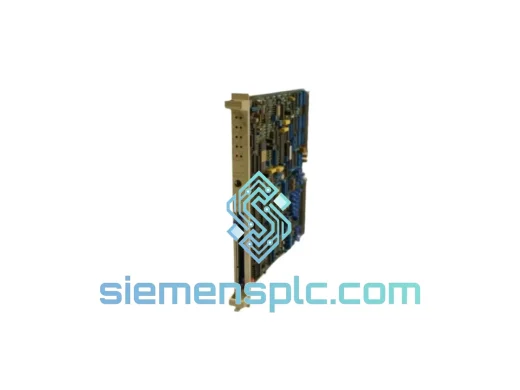
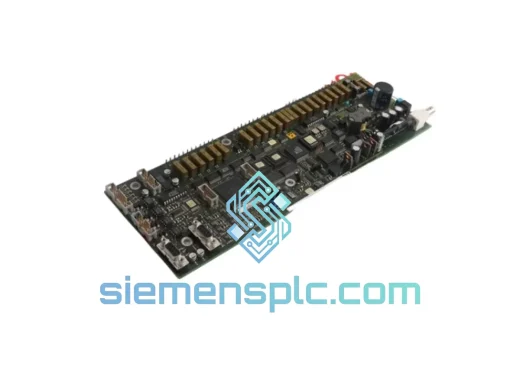
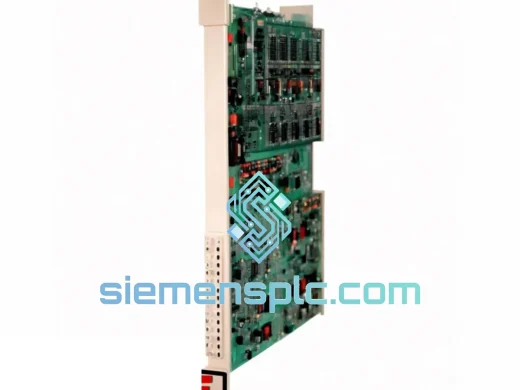
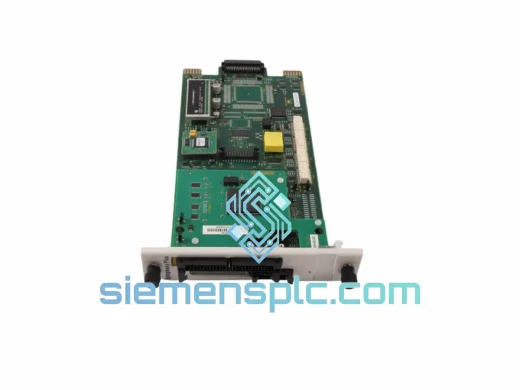
ABB SPICT13A Computer Interface Module – Advant Series
Advant
Origin SE
Computer Interface Module
Request verified availability, condition, replacement risk review, packing options and courier lead time for 57310001-FH/2.
Click Request Quote and the part number is inserted into the inquiry form automatically.
Core fields for model confirmation and RFQ routing. Detailed product narrative remains below.
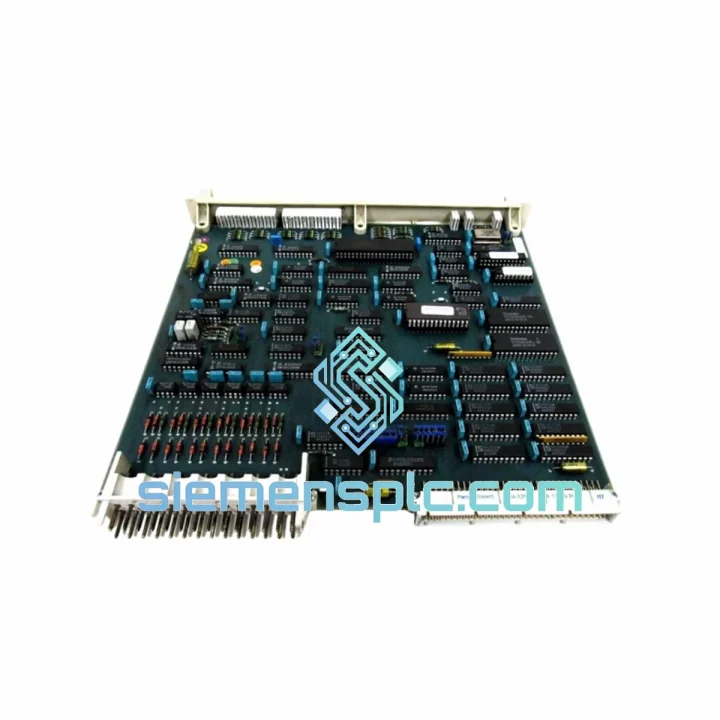
The ABB DSCS130, carrying part number 57310001-FH/2, is a supervisory-level communication and control board engineered for deployment within ABB’s Advant and Master series Distributed Control Systems. Its primary function is to manage inter-subsystem data exchange across the Advant Fieldbus (AF 100) and RCOM serial communication backbones, acting as the arbitration and protocol translation layer between the process I/O tier and the supervisory SCADA or operator station tier. In multi-controller DCS topologies, the DSCS130 handles token-passing bus arbitration, ensuring deterministic message delivery latency below 10 ms under nominal network load — a critical requirement for closed-loop process control in continuous manufacturing environments.
Unlike generic communication adapters, the DSCS130 integrates directly into the ABB AC 450 and AC 400 controller backplane via a dedicated high-speed parallel bus interface, eliminating the serialization overhead that external gateway modules introduce. This tight hardware coupling allows the board to access controller memory maps at the register level, enabling sub-scan-cycle data refresh rates for time-critical analog and digital process variables.
Real-time Stock & RFQ: [email protected] | WhatsApp: +86 18359268345
| Parameter | Specification |
|---|---|
| Manufacturer | ABB (ASEA Brown Boveri) |
| Part Number | DSCS130 / 57310001-FH/2 |
| Series | DSCS — DCS Supervisory Communication |
| Compatible Controllers | ABB AC 450, AC 400, Advant Controller series |
| Bus Interface | Advant Fieldbus AF 100 (token-ring, 1 Mbit/s) |
| Serial Communication | RCOM RS-422/RS-485, configurable baud rate up to 115.2 kbps |
| Backplane Connector | 96-pin DIN 41612 Type C, direct rack insertion |
| Supply Voltage | +5 VDC (backplane-supplied), ±15 VDC for analog signal conditioning |
| Power Consumption | ≤ 4.5 W typical at full bus load |
| Operating Temperature | 0 °C to +55 °C (IEC 68-2-1/2) |
| Storage Temperature | −40 °C to +70 °C |
| Relative Humidity | 5 % to 95 % non-condensing (IEC 68-2-3) |
| EMC Immunity | IEC 61000-4-2 (ESD), IEC 61000-4-4 (EFT/Burst), IEC 61000-4-5 (Surge) |
| Vibration Resistance | IEC 68-2-6: 10–150 Hz, 1 g |
| Shock Resistance | IEC 68-2-27: 15 g, 11 ms half-sine |
| PCB Dimensions | Eurocard 233.4 mm × 160 mm (6U) |
| Weight (bare board) | Approx. 320 g |
| Certifications | CE, UL 508, cUL, ATEX (Zone 2 with approved enclosure) |
| Warranty | 12 months from date of shipment |
The DSCS130 is built around a 16-bit microprocessor core clocked at 16 MHz, supported by 256 KB of battery-backed SRAM for non-volatile parameter storage and 512 KB of EPROM for firmware. The board’s AF 100 fieldbus transceiver employs a dedicated ASIC — ABB’s proprietary AMCC token-ring controller — which offloads bus arbitration entirely from the main CPU, preventing communication jitter from propagating into the control scan cycle. This hardware-level separation of communication and computation is the architectural reason the DSCS130 can sustain deterministic bus latency even when the host controller is executing computationally intensive function block sequences.
EMC hardening on the DSCS130 is implemented at three layers. First, the PCB uses a four-layer stackup with dedicated ground and power planes, reducing common-mode noise coupling between signal traces. Second, all external-facing I/O lines pass through LC π-filter networks with 1 kV transient suppression diodes, providing protection against IEC 61000-4-5 Level 3 surge events (2 kV line-to-earth). Third, the RS-422/RS-485 serial drivers are galvanically isolated via optocouplers rated at 2.5 kV RMS, preventing ground loop currents from corrupting serial data frames in installations where the DCS cabinet and remote I/O panels share different earth reference potentials — a common condition in large petrochemical plants.
The board also implements a hardware watchdog timer with a 200 ms timeout window. If the main CPU fails to service the watchdog within this interval — due to firmware hang or memory corruption — the watchdog asserts a hard reset and simultaneously drives a discrete fault output signal to the controller’s diagnostic bus, enabling the AC 450 to log a timestamped fault record and initiate a controlled handover to a redundant controller node if hot-standby redundancy is configured.
Every DSCS130 57310001-FH/2 unit dispatched from our Xiamen, China facility undergoes a structured pre-shipment verification protocol. Visual inspection confirms label authenticity, date code consistency, and the absence of rework indicators such as solder bridge repairs or component substitutions inconsistent with ABB’s manufacturing records. Functional verification applies +5 VDC and ±15 VDC to the board via a calibrated bench power supply and confirms that the AF 100 transceiver ASIC initializes correctly, the watchdog timer cycles at the specified 200 ms interval, and the RCOM serial port responds to diagnostic polling commands. Boards that pass all verification steps are packaged in IEC 61340-5-1 compliant anti-static bags, placed in foam-lined rigid cartons, and sealed with tamper-evident tape.
International shipments are dispatched via DHL Express, FedEx International Priority, or UPS Worldwide Express, with typical transit times of 3–5 business days to Europe and North America, and 2–4 business days to Southeast Asia. All shipments include a commercial invoice, packing list, and certificate of origin. For orders requiring ATEX documentation or third-party inspection certificates (SGS, BV), these can be arranged with 2–3 additional business days lead time. Bulk orders of five or more units qualify for sea freight consolidation with full export documentation support.
📧 Email: [email protected]
💬 WhatsApp: +86 18359268345
🌐 Web: siemensplc.com
📍 Location: Xiamen, China
© 2026 siemensplc.com. All rights reserved.
We check the full part number, brand, series and visible nameplate information before quotation.
Sales confirms stock path, condition option, quantity and realistic lead time for export dispatch.
DHL, FedEx, UPS or buyer courier arrangements can be reviewed with packing requirements.
Similar brand or category products for fast comparison and multi-item RFQ lists.