ABB
In Stock OK
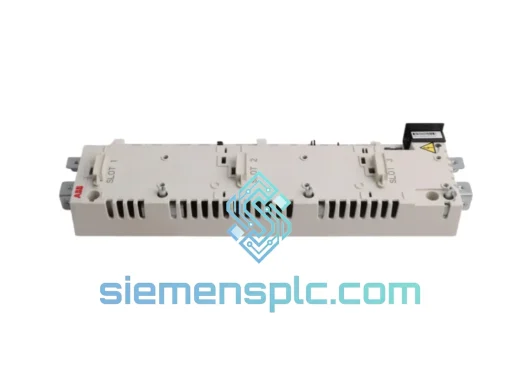
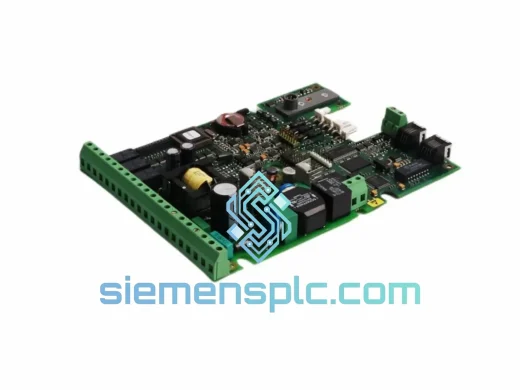
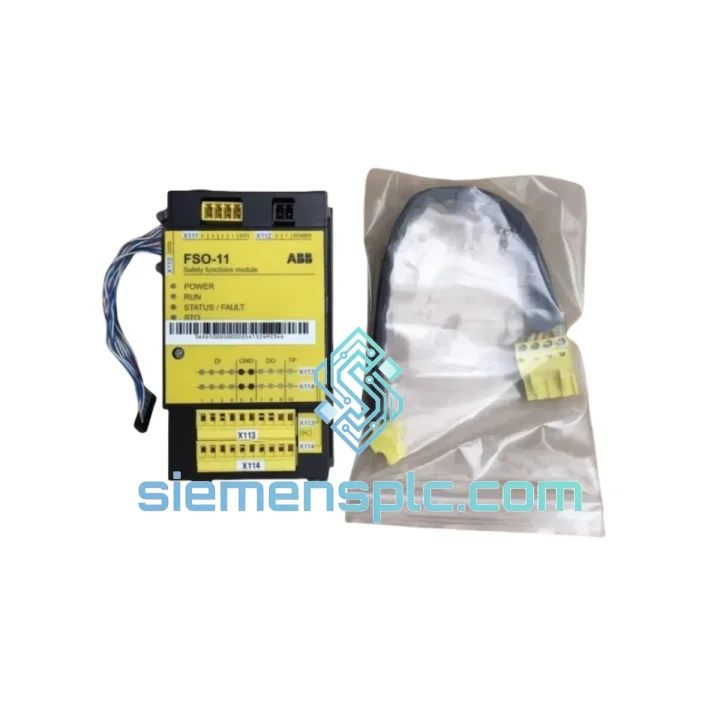
ABB FSO-11 Safety Interface Module – ACS880 ACS580
Request verified availability, condition, replacement risk review, packing options and courier lead time for FSO-11.
BrandABB
Part NumberFSO-11
ConditionAvailability Check
Lead TimeRFQ Confirmation
DocumentsDatasheet / photos by RFQ
ShippingExport packing available
Auto-filled RFQ
FSO-11
Click Request Quote and the part number is inserted into the inquiry form automatically.
- Reply by email: [email protected]
- WhatsApp / Tel: +86 18359268345
- Mon-Sat 9:00-18:00 GMT+8
Procurement Data
Key Product Information
Core fields for model confirmation and RFQ routing. Detailed product narrative remains below.
- Brand
- ABB
- Primary Part Number
- FSO-11
- Product Type
- Safety Interface Module
- Series / Family
- ACS880
- Manufacturer
- ABB Ltd.
- Country of Origin
- SE
- Catalog Category
- Motor Drives
- Operating Temp.
- −10 °C to +55 °C
- Warranty
- 12 months from date of shipment
Model confirmed for inquiry
FSO-11
Send quantity, destination and urgency. The RFQ form keeps this part number attached.
Request Quote
Product Overview
ABB FSO-11 Safety Interface Module – Deterministic Functional Safety Integrated into ACS880 and ACS580 Drive Architecture
The ABB FSO-11 is a hardware-based functional safety option module designed for direct installation into the ACS880 and ACS580 variable frequency drive families. It executes certified safety functions — Safe Torque Off (STO), Safe Stop 1 (SS1), Safely Limited Speed (SLS), Safe Speed Monitor (SSM), Safe Direction Indication (SDI), and Safe Brake Control (SBC) — within the drive’s own control unit, removing the dependency on external safety relay circuits and reducing overall machine safety wiring complexity.
Unlike software-only safety implementations, the FSO-11 operates on a dedicated safety processor with its own watchdog and self-test routines, physically isolated from the drive’s standard application firmware. This separation ensures that a fault in the drive’s main control logic cannot compromise the integrity of the safety channel — a fundamental requirement under IEC 62061 for SIL 3 architectures.
Real-time Stock & RFQ: [email protected] | WhatsApp: +86 18359268345
Technical Parameters
| Parameter | Specification |
|---|---|
| Model | FSO-11 |
| Manufacturer | ABB Ltd. |
| Compatible Drive Platforms | ACS880 (all frame sizes with BCU-x2 control unit), ACS580 (BCU-x2) |
| Safety Integrity Level | SIL 3 per IEC 62061 |
| Performance Level | PLe, Category 4 per ISO 13849-1 |
| Supported Safety Functions | STO, SS1, SLS, SSM, SDI, SBC, SAR |
| Safe Digital Inputs | 4 × 24 V DC, dual-channel, short-circuit monitored |
| Safe Digital Outputs | 2 × 24 V DC, solid-state, cross-fault detected |
| STO Response Time | ≤ 2 ms (hardware gate driver disable) |
| Fieldbus Safety Protocol | FSoE (Fail-Safe over EtherCAT) via FECAT-01 adapter |
| Supply Voltage | 24 V DC (sourced from drive BCU internal rail) |
| Operating Temperature | −10 °C to +55 °C |
| Storage Temperature | −40 °C to +70 °C |
| Enclosure Protection | IP20 |
| Mounting Interface | Dedicated option slot on BCU-x2 control unit, tool-free latch |
| Proof-Test Interval | 1 year (recommended); 20-year design lifetime |
| Certifications | TÜV Rheinland, CE (Machinery Directive 2006/42/EC), UL 508C |
| Module Weight | Approx. 0.8 kg |
| ABB Order Code | FSO-11 |
| Warranty | 12 months from date of shipment |
Hardware Logical Analysis
The FSO-11 implements a 1oo2D (one-out-of-two with diagnostics) safety architecture on its internal processor pair. Both channels independently evaluate the state of the safe digital inputs and must reach agreement before any safety function is permitted to transition. Discrepancies between channels trigger an immediate fault response — the STO output is de-energised within the 2 ms hardware response window regardless of the drive’s application software state.
Gate Driver Isolation: The STO function operates at the IGBT gate driver level, not at the firmware command layer. When STO is activated, the gate pulse signals to the inverter bridge are physically interrupted by a dedicated hardware circuit. This means no software execution path — including a runaway firmware loop or a corrupted application task — can re-enable the gate drivers while STO is asserted. This is the architectural basis for the Cat. 4 / PLe rating.
EMC Design: The FSO-11 safe I/O lines are routed through optocoupler isolation barriers rated at 500 V working voltage, with common-mode rejection exceeding 30 dB across the 150 kHz–30 MHz band. This is particularly relevant in ACS880 installations where the drive’s own PWM switching generates conducted and radiated emissions in the 2–20 kHz range. The isolation barrier prevents these emissions from coupling into the safety input signal path and causing spurious STO activations.
Dual-Channel Input Monitoring: Each of the four safe digital inputs is wired as a dual-channel pair. The FSO-11 continuously monitors the time discrepancy between the two channels of each pair. If the discrepancy exceeds a configurable window (default 200 ms, adjustable to 0 ms for Cat. 4 applications), the module logs a diagnostic fault and initiates the configured safe state. This mechanism detects single-point failures such as a stuck-at-high fault on one input channel.
FSoE Communication Watchdog: When operating in network safety mode via FSoE, the FSO-11 maintains an independent watchdog timer for the safety communication frame. If the FSoE frame is not received within the configured watchdog timeout (minimum 1 ms, application-dependent), the module autonomously transitions to the safe state without waiting for a command from the safety PLC. This ensures that a network cable fault or PLC scan overrun does not leave the drive in an unsafe operating condition.
Parameter Integrity: All safety parameters stored in the FSO-11 are protected by a CRC checksum calculated at commissioning time. At each power-up, the module recalculates the CRC and compares it against the stored value. A mismatch — caused by memory corruption, unauthorised parameter modification, or firmware update without re-validation — prevents the drive from entering normal operation and raises a safety fault code visible on the drive’s control panel and via fieldbus diagnostics.
System Integration Benefits
- Elimination of external safety relay hardware: STO, SS1, and SLS are executed inside the drive. A typical machine safety circuit requiring 3–4 external safety relays, associated wiring, and DIN rail space is replaced by the FSO-11 module and its parameterisation — reducing panel build time and component count.
- Deterministic STO response at 2 ms: The hardware gate driver disable path is independent of the drive’s 1 ms task cycle. The 2 ms STO response time is guaranteed regardless of the application program’s current execution state, meeting the timing requirements of Category 4 architectures where a single fault must not lead to loss of the safety function.
- Scalable safety function set without hardware changes: SLS speed windows, SDI direction monitoring, and SBC brake control are activated by parameter configuration in ABB Drive Composer. Adding or modifying a safety function does not require panel rewiring — only re-validation of the safety parameter set and update of the safety documentation.
- FSoE network integration reduces dedicated safety cabling: In multi-drive systems, FSoE over EtherCAT allows a single safety PLC to address multiple FSO-11 modules over a shared EtherCAT ring. This eliminates the point-to-point 24 V DC safety wiring between the PLC and each drive’s STO terminals, which in a 10-drive system can represent 40–60 individual conductors.
- Diagnostic transparency via standard fieldbus: The FSO-11 maps its internal diagnostic data — input channel states, safety function status, fault codes, and proof-test counters — to the drive’s PROFINET or EtherNet/IP process data object. SCADA and DCS systems can read this data without a separate safety network, improving maintenance visibility without additional hardware.
- Proof-test support with guided procedure: Drive Composer generates a step-by-step proof-test procedure specific to the configured safety functions. The procedure records test results with timestamps and operator ID, producing the documentation required by IEC 62061 for the annual proof-test record.
- Firmware-independent safety channel: The FSO-11’s safety processor runs its own firmware, version-controlled separately from the drive’s main firmware. A drive firmware update does not affect the safety parameter set or the FSO-11 firmware. This simplifies change management in validated production environments where drive firmware updates must be controlled.
- Reduced machine safety validation scope: Because the FSO-11 is TÜV Rheinland certified as a subsystem, its contribution to the overall machine safety function is covered by the ABB safety manual and TÜV certificate. The machine builder’s validation effort focuses on the application-level integration rather than re-certifying the drive safety subsystem from first principles.
Quality Assurance & Global Logistics
Every ABB FSO-11 unit supplied by siemensplc.com is sourced as genuine ABB factory-manufactured product. Units are not refurbished, relabelled, or sourced from unverified secondary markets. Each module is inspected against the following protocol before dispatch:
- Physical label verification against ABB factory serial number format and holographic authenticity markers
- Firmware version confirmation against ABB’s published release matrix for FSO-11
- Safety parameter memory integrity check (CRC verification at power-on)
- Visual inspection of the option slot connector pins and latch mechanism
- Anti-static bag packaging with desiccant and humidity indicator card
- Outer carton with shock-indicator label for freight damage detection
Shipments originate from our warehouse in Xiamen, China. Standard export transit times: DHL Express 3–5 business days to Europe and North America; FedEx International Priority 2–4 business days to Southeast Asia and the Middle East. All shipments include a commercial invoice, packing list, and certificate of origin. For orders requiring an ABB certificate of conformity or material test report, please specify at the time of enquiry. Export compliance documentation for dual-use goods is available on request.
Contact Information
Email: [email protected]
WhatsApp: +86 18359268345
Web: siemensplc.com
Location: Xiamen, China
© 2026 siemensplc.com. All rights reserved.
Ready to quote
[email protected]
Send This Part Number to Sales
RFQ workflow
Quality workflow ->
Confirmation Process
01Model confirmation
We check the full part number, brand, series and visible nameplate information before quotation.
02Availability reply
Sales confirms stock path, condition option, quantity and realistic lead time for export dispatch.
03Packing & courier
DHL, FedEx, UPS or buyer courier arrangements can be reviewed with packing requirements.
Continue sourcing
Browse full catalog ->
Related Automation Parts
Similar brand or category products for fast comparison and multi-item RFQ lists.