Siemens
RFQ Ready
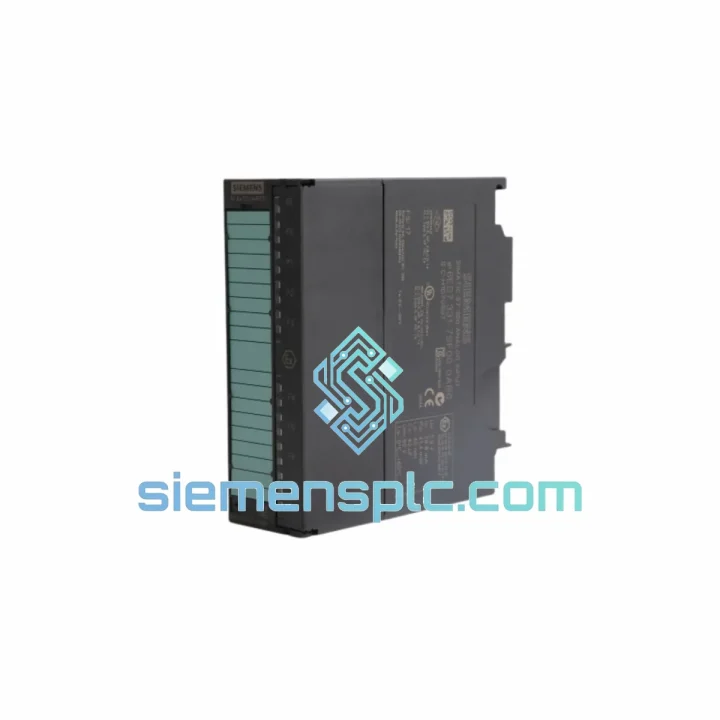
Siemens 6ES7321-1BL00-0AA0 Digital Input Module
SIMATIC
Origin DE
PLC Digital Input Module
Request verified availability, condition, replacement risk review, packing options and courier lead time for 6ES7331-7SF00-0AB0.
Click Request Quote and the part number is inserted into the inquiry form automatically.
Core fields for model confirmation and RFQ routing. Detailed product narrative remains below.
Your S7-300 rack just threw a red fault LED. The line is stopped. Maintenance is on the phone. You already know the culprit — the SM331 analog input module has gone dark, and without it, your temperature loops, pressure transmitters, and RTD sensors are blind. The CPU is healthy. The field wiring checks out. You need a 6ES7331-7SF00-0AB0, and you need it now.
We stock this module in Xiamen. It ships today via DHL Express. That is the only thing that matters right now.
⚡ URGENT REQUIREMENT? Contact: [email protected] | WhatsApp: +86 18359268345
| Parameter | Value |
|---|---|
| Order Number (MLFB) | 6ES7331-7SF00-0AB0 |
| Series | SIMATIC S7-300, SM 331 |
| Analog Input Channels | 8 (configurable per channel group) |
| Resolution | 15-bit + sign (high accuracy) |
| Input Signal Types | Voltage (±10V, ±5V, ±2.5V, 1–5V), Current (0–20mA, 4–20mA, ±20mA), RTD (Pt100, Ni100), TC (B/C/E/J/K/L/N/R/S/T/U), Resistance (0–600Ω) |
| Conversion Time | Min. 52 ms per channel (integration time dependent) |
| Supply Voltage | 24 V DC (backplane bus + external sensor supply) |
| Isolation | Galvanic — channels isolated from backplane bus |
| Dimensions (W×H×D) | 40 × 125 × 120 mm |
| Operating Temperature | 0 °C to +60 °C |
| Protection Class | IP 20 |
| Certifications | CE, UL, cULus, FM, ATEX Zone 2 |
| Front Connector Required | 40-pin (6ES7392-1AM00-0AA0 screw / 6ES7392-1BM01-0AA0 spring) |
| Stock Status | ✔ Ready to Ship — Xiamen Warehouse |
After ten years of field work, these are the failure patterns I see repeatedly with the SM331 7SF00 — and the traps that catch engineers during hot-swap replacement.
Common Fault Codes & What They Actually Mean
Replacement Procedure — What to Do Before You Power Up
Firmware Compatibility Note: The 6ES7331-7SF00-0AB0 has fixed firmware embedded in hardware. There is no field-upgradeable firmware. Any unit with the correct MLFB is compatible with all S7-300 CPUs from CPU 312 onward. No firmware matching required.
The SM331 7SF00 was not designed for a climate-controlled server room. It was built for the floor — cement dust, coolant mist, vibration from presses and compressors, and ambient temperatures that swing 40 degrees between morning startup and afternoon peak production.
The galvanic isolation between field inputs and the backplane bus is the module’s most critical protection feature. When a field cable picks up a ground loop from a poorly bonded motor frame, or when a lightning transient rides in on a thermocouple lead, the isolation barrier absorbs it. The CPU and the rest of the rack stay clean. This is why this module is specified in petrochemical and steel mill applications where ground potential differences between field instruments and control panels can reach tens of volts.
The module’s conformal-coated PCB handles humidity up to 95% non-condensing without corrosion-related drift. In coastal and tropical installations, this matters. Modules that have been in service for 10+ years in high-humidity environments typically fail at the front connector interface, not the PCB itself — another reason to inspect the connector during replacement.
Vibration tolerance is rated to IEC 60068-2-6: 10–58 Hz at 0.075 mm amplitude, 58–500 Hz at 1g. In practice, modules mounted on racks near large reciprocating compressors or punch presses have demonstrated service lives exceeding 15 years without vibration-related failure, provided the DIN rail mounting is secure and the rack is not directly bolted to the vibrating machine frame.
Thermal cycling is the silent killer of analog modules. The 7SF00’s internal reference components are specified for 0–60 °C continuous operation, but the real-world enemy is repeated thermal cycling — cold startup, hot running, cold shutdown. After 50,000+ cycles over a decade of three-shift operation, solder joint fatigue can cause intermittent channel faults that are impossible to reproduce during a maintenance window. If your module is showing intermittent faults on a machine with 10+ years of service, thermal fatigue is the likely cause. Replace proactively rather than chasing ghosts.
Our warehouse is in Xiamen, Fujian — one of China’s primary export hubs with direct access to DHL, FedEx, and UPS international gateways. This is not a drop-ship arrangement. The module is physically on our shelf.
Typical transit times from Xiamen:
Orders confirmed before 14:00 CST ship same day. We prepare the commercial invoice, packing list, and certificate of origin for customs clearance. HS Code 8537.10 applies to this module for most jurisdictions — we can adjust documentation to match your country’s import requirements. For orders requiring an end-user declaration or import license, contact us before ordering so we can prepare the paperwork in parallel with shipment.
Packaging: the module ships in anti-static foam inside a double-wall corrugated carton. For multi-unit orders, each module is individually wrapped and separated. We have shipped to active construction sites, offshore platforms, and remote mining operations — the packaging holds.
📧 Email: [email protected]
📱 WhatsApp: +86 18359268345
🌐 Web: siemensplc.com
© 2026 siemensplc.com. All rights reserved.
We check the full part number, brand, series and visible nameplate information before quotation.
Sales confirms stock path, condition option, quantity and realistic lead time for export dispatch.
DHL, FedEx, UPS or buyer courier arrangements can be reviewed with packing requirements.
Similar brand or category products for fast comparison and multi-item RFQ lists.