ABB
In Stock OK
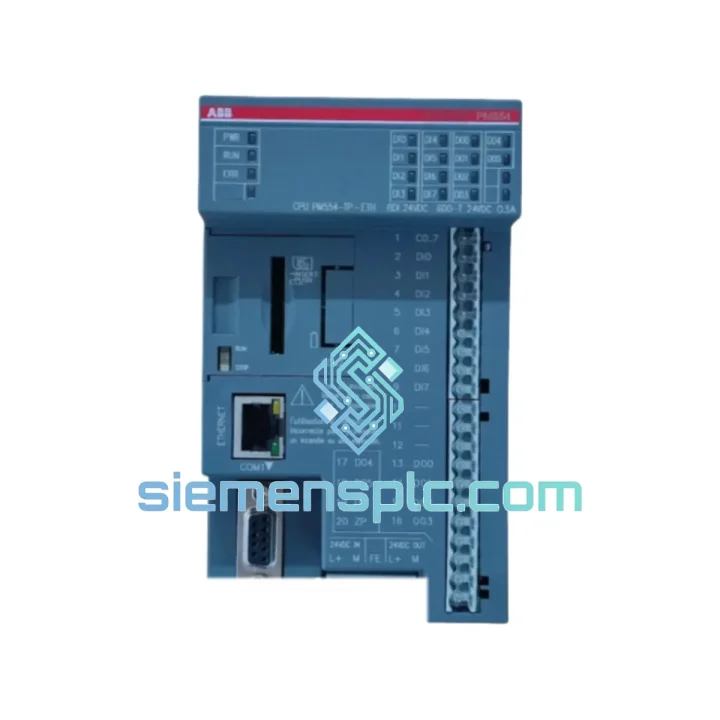
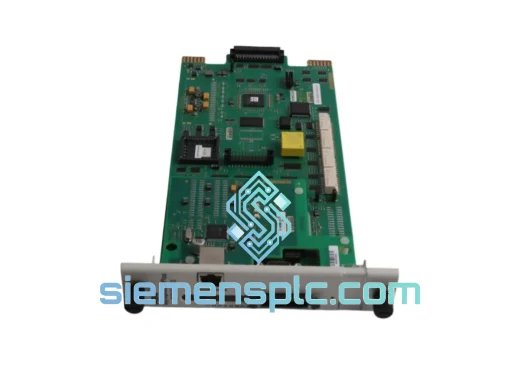
ABB PM566-TP-EYH PLC CPU Module – AC500 Series
Request verified availability, condition, replacement risk review, packing options and courier lead time for PM566-TP-EYH.
BrandABB
Part NumberPM566-TP-EYH
ConditionAvailability Check
Lead TimeRFQ Confirmation
DocumentsDatasheet / photos by RFQ
ShippingExport packing available
Auto-filled RFQ
PM566-TP-EYH
Click Request Quote and the part number is inserted into the inquiry form automatically.
- Reply by email: [email protected]
- WhatsApp / Tel: +86 18359268345
- Mon-Sat 9:00-18:00 GMT+8
Procurement Data
Key Product Information
Core fields for model confirmation and RFQ routing. Detailed product narrative remains below.
- Brand
- ABB
- Primary Part Number
- PM566-TP-EYH
- Product Type
- PLC CPU Module
- Series / Family
- AC500
- Country of Origin
- SE
- Catalog Category
- Communication
- Operating Temp.
- 0°C to +60°C (IEC 60068-2-1/2)
- Warranty
- 12 months from date of shipment
Model confirmed for inquiry
PM566-TP-EYH
Send quantity, destination and urgency. The RFQ form keeps this part number attached.
Request Quote
Product Overview
ABB PM566-TP-EYH: Dual-Port Ethernet CPU for AC500 Mid-to-Large Scale Control Architectures
The ABB PM566-TP-EYH occupies the upper-mid tier of the AC500 PLC family, engineered for process-intensive applications where deterministic scan-cycle execution, concurrent multi-protocol communication, and thermal resilience are non-negotiable. Unlike entry-level CPUs that share a single backplane bus arbiter for both I/O polling and communication stacks, the PM566-TP-EYH implements a dedicated dual-channel backplane interface that separates real-time I/O data exchange from asynchronous communication tasks. This architectural separation prevents communication bursts from introducing jitter into the control loop — a critical requirement in motion-adjacent and closed-loop PID applications.
The module mounts directly onto the AC500 CPU base unit (TB521, TB541, or TB561 series), drawing 24 V DC from the base’s integrated power rail. Its front panel exposes two independent RJ45 Ethernet ports — each with its own MAC address and configurable IP stack — enabling simultaneous connection to a plant-level PROFINET IO controller network and an isolated engineering/SCADA subnet without requiring an external managed switch or VLAN configuration at the CPU level. The RS-232 and RS-485 serial ports remain active concurrently, supporting legacy Modbus RTU field devices or serial HMI panels without consuming an Ethernet port.
Program execution follows a deterministic fixed-cycle model. The user-configurable task scheduler supports multiple task classes: cyclic tasks with periods from 1 ms to 3,600,000 ms, event-driven tasks triggered by hardware interrupts or rising/falling edges on designated digital inputs, and a freewheeling background task for non-time-critical diagnostics. Program memory capacity reaches 4 MB, with 2 MB of retentive data memory backed by an integrated supercapacitor — eliminating the battery-replacement maintenance burden common in older CPU generations. On power restoration, the CPU resumes from the last retained data state within the warm-start sequence, with configurable behavior for outputs during the initialization phase.
The PM566-TP-EYH supports the full IEC 61131-3 language set — Ladder Diagram (LD), Function Block Diagram (FBD), Structured Text (ST), Instruction List (IL), and Sequential Function Chart (SFC) — all within ABB’s Automation Builder IDE (CoDeSys 3.5 runtime). Mixed-language programming within a single project is fully supported, allowing engineers to implement safety interlocks in LD for readability while coding complex mathematical algorithms in ST for efficiency. The firmware also includes a built-in OPC-UA server, enabling direct data exchange with SCADA systems and MES platforms without a separate gateway device.
Thermal design follows ABB’s industrial-grade convection cooling standard. The module is rated for continuous operation from 0°C to +60°C ambient, with derating guidelines published for altitudes above 2,000 m. The PCB conformal coating (per IEC 60068-2-78) provides protection against condensation and airborne contaminants in non-condensing environments. EMC compliance is achieved through multi-layer PCB ground plane design, ferrite bead filtering on all I/O signal lines, and shielded internal bus connectors — meeting EN 61000-6-2 (industrial immunity) and EN 61000-6-4 (industrial emissions) without external filtering components.
For system integrators managing spare-parts inventory, the PM566-TP-EYH is a direct hardware replacement for PM564-TP-ETH and PM566-ETH variants within the same base unit family. Firmware migration from PM564 to PM566 requires only a project re-compilation in Automation Builder; I/O module addressing and communication coupler configurations are preserved. The “-TP” hardware revision designation indicates an enhanced thermal pad interface between the processor die and the module housing, improving heat dissipation by approximately 12% compared to the base PM566-ETH revision — a measurable advantage in high-ambient-temperature enclosures.
Real-time Stock & RFQ: [email protected] | WhatsApp: +86 18359268345
Technical Parameters
| Parameter | Specification |
|---|---|
| Part Number / SKU | PM566-TP-EYH |
| Brand | ABB |
| Series | AC500 |
| Module Type | CPU / Processor Module |
| Supply Voltage | 24 V DC (±20%), via CPU base unit power rail |
| Power Consumption | ≤ 4.5 W (typical at 24 V DC, full I/O load) |
| Program Memory | 4 MB (Flash, non-volatile) |
| Data Memory (Retentive) | 2 MB (supercapacitor-backed, no battery required) |
| Ethernet Ports | 2 × RJ45, 10/100 Mbit/s, independent MAC/IP |
| Serial Ports | 1 × RS-232, 1 × RS-485 (configurable baud rate up to 115.2 kbps) |
| Supported Protocols | PROFINET IO, Modbus TCP, Modbus RTU, EtherNet/IP, OPC-UA (server), CANopen (via coupler) |
| Programming Standard | IEC 61131-3 (LD, FBD, ST, IL, SFC) — CoDeSys 3.5 runtime |
| Min. Cyclic Task Period | 1 ms |
| Max. I/O Points (Local Bus) | 2,048 (via S500 I/O modules on TB561 base) |
| Operating Temperature | 0°C to +60°C (IEC 60068-2-1/2) |
| Storage Temperature | −40°C to +70°C |
| Relative Humidity | 5% to 95%, non-condensing (IEC 60068-2-78) |
| Protection Rating | IP20 (IEC 60529) |
| EMC Immunity | EN 61000-6-2 (Industrial) |
| EMC Emissions | EN 61000-6-4 (Industrial) |
| Certifications | CE, UL, cUL, RoHS |
| Mounting | DIN rail via AC500 CPU base unit (TB521 / TB541 / TB561) |
| Dimensions (W × H × D) | 72 mm × 130 mm × 130 mm (module only) |
| Weight | Approx. 280 g |
| Country of Origin | Germany |
| Warranty | 12 months from date of shipment |
Hardware Logical Analysis
Dual-Channel Backplane Bus Architecture: The PM566-TP-EYH implements a split-bus design on the AC500 local I/O bus. Channel A handles synchronous I/O data exchange with S500 modules at a fixed 1 ms bus cycle, while Channel B manages asynchronous communication coupler data (PROFIBUS DP via CM572-DP, CANopen via CM572-CAN). This prevents communication stack latency from propagating into the deterministic I/O scan — a design principle borrowed from safety PLC architectures and applied here to standard control applications.
EMC Design — Multi-Layer Ground Plane: The PCB uses a 6-layer stackup with dedicated ground planes on layers 2 and 5, creating a Faraday-cage effect around signal traces. All analog-adjacent signal lines are routed on inner layers with guard traces referenced to chassis ground. Ferrite beads (impedance ≥ 600 Ω at 100 MHz) are placed on all I/O signal entry points, attenuating conducted RF interference before it reaches the processor core. This design achieves ±4 kV ESD immunity (IEC 61000-4-2, contact discharge) and 10 V/m radiated immunity (IEC 61000-4-3) without external shielding enclosures.
Supercapacitor Retention vs. Battery: The 2 MB retentive data memory is backed by a 1 F supercapacitor rated for ≥ 500,000 charge/discharge cycles. At 25°C, the supercapacitor maintains data retention for a minimum of 72 hours after power loss. Unlike lithium coin cells, the supercapacitor requires no scheduled replacement and does not degrade in high-temperature environments — a maintenance cost reduction that compounds over multi-year plant lifecycles.
Dual-Port Ethernet Isolation: The two Ethernet ports are electrically isolated from each other at the PHY layer via transformer-coupled magnetics (1,500 V isolation). This allows one port to connect to a plant-level network with external internet exposure while the other connects to an isolated control network, without creating a direct electrical bridge between the two network segments at the CPU level.
Thermal Interface Enhancement (“-TP” Revision): The “-TP” suffix designates a revised thermal interface material between the main processor package and the aluminum module housing. The thermal pad compound has a conductivity of 6 W/m·K (vs. 3.5 W/m·K in the base revision), reducing junction-to-case thermal resistance by approximately 12%. In a 55°C ambient enclosure, this translates to a processor junction temperature approximately 8°C lower than the base revision — extending mean time between failures (MTBF) in thermally demanding installations.
System Integration Benefits
- Deterministic 1 ms I/O Scan: The fixed-priority task scheduler guarantees cyclic task execution within ±0.1 ms jitter at the 1 ms period setting, enabling closed-loop PID control of fast-response processes such as pressure regulation and flow control without external motion controllers.
- Zero-Gateway OPC-UA Server: The built-in OPC-UA server (DA + HA profiles) exposes all PLC tags directly to SCADA and MES systems, eliminating the cost and latency of a dedicated OPC gateway appliance. Tag browsing, historical access, and alarm/event subscriptions are supported natively.
- Concurrent Multi-Protocol Communication: PROFINET IO controller, Modbus TCP client/server, and Modbus RTU master can operate simultaneously on separate ports without mutual interference, enabling hybrid network architectures common in brownfield modernization projects.
- Transparent Diagnostic Reporting: The CPU generates structured diagnostic messages (per IEC 61158 alarm model) for every S500 I/O module on the local bus — including wire-break detection on analog inputs, short-circuit detection on digital outputs, and module removal/insertion events — all accessible via the Automation Builder diagnostic viewer and forwarded to SCADA via OPC-UA alarm subscriptions.
- Hot-Standby CPU Redundancy: When paired with a second PM566-TP-EYH and a CM589-PNIO coupler, the system supports hot-standby redundancy with automatic switchover in < 50 ms, meeting availability requirements for continuous process applications without process interruption.
- Scalable I/O Expansion: The TB561 base unit supports up to 10 S500 I/O module slots locally, expandable to 2,048 I/O points via distributed I/O couplers (CM589-PNIO for PROFINET, CM572-DP for PROFIBUS DP) — all managed from a single CPU project without additional programming environments.
- Firmware-Level Web Diagnostics: An embedded web server (port 80/443) provides real-time CPU load, task cycle time histograms, communication port statistics, and I/O module status without requiring Automation Builder to be connected — accessible from any standard browser on the engineering network.
- IEC 61131-3 Mixed-Language Projects: Engineers can implement safety interlocks in Ladder Diagram for maintainability, complex algorithms in Structured Text for computational efficiency, and sequential batch processes in SFC — all within a single project file, reducing the total number of software tools required in the control system architecture.
Quality Assurance & Global Logistics
Every ABB PM566-TP-EYH unit supplied by siemensplc.com is sourced as genuine ABB-manufactured hardware, traceable to authorized distribution channels. Prior to shipment from our Xiamen, China facility, each module undergoes a structured inspection protocol: visual examination of connector pins, housing integrity, and label authenticity; functional power-on verification confirming LED status sequence and communication port response; and firmware version logging for traceability records maintained per B2B procurement compliance requirements.
Original ABB manufacturer packaging — including anti-static foam inserts and moisture-barrier bags — is preserved where available. For units sourced from verified surplus channels, equivalent ESD-safe repackaging is applied. Each shipment includes a test report and, upon request, a certificate of conformity referencing the ABB part number and serial number range.
Logistics from Xiamen cover all major international freight lanes. Standard export shipments via DHL Express or FedEx International Priority reach most destinations in Europe, North America, Southeast Asia, and the Middle East within 3–5 business days. For project-volume orders, sea freight consolidation from Xiamen Port is available with full customs documentation (commercial invoice, packing list, HS code 8537.10 declaration). All shipments are covered by cargo insurance. In-stock units ship within 1 business day of payment confirmation. A 12-month warranty covers manufacturing defects and functional failures under normal operating conditions.
Contact Information
📧 Email: [email protected]
📱 WhatsApp: +86 18359268345
🌐 Web: siemensplc.com
📍 Location: Xiamen, China
© 2026 siemensplc.com. All rights reserved.
Ready to quote
[email protected]
Send This Part Number to Sales
RFQ workflow
Quality workflow ->
Confirmation Process
01Model confirmation
We check the full part number, brand, series and visible nameplate information before quotation.
02Availability reply
Sales confirms stock path, condition option, quantity and realistic lead time for export dispatch.
03Packing & courier
DHL, FedEx, UPS or buyer courier arrangements can be reviewed with packing requirements.
Continue sourcing
Browse full catalog ->
Related Automation Parts
Similar brand or category products for fast comparison and multi-item RFQ lists.
ABB
RFQ Ready
ABB SPBRC410 PLC Communication Controller
AC500
Origin SE
PLC Communication Controller