Schneider Electric
RFQ Ready
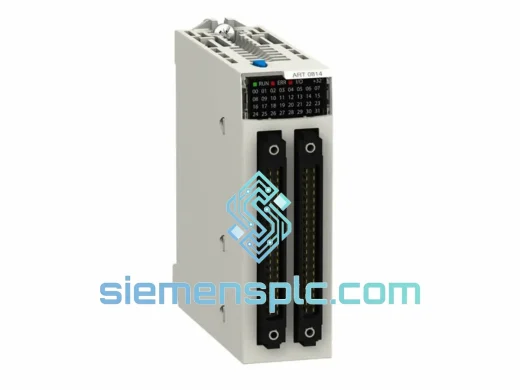
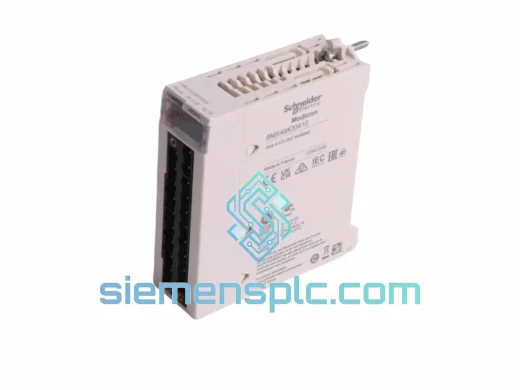
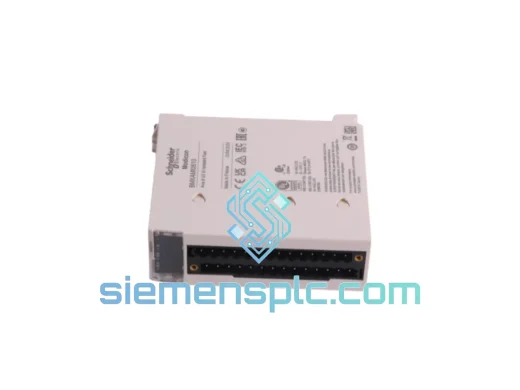
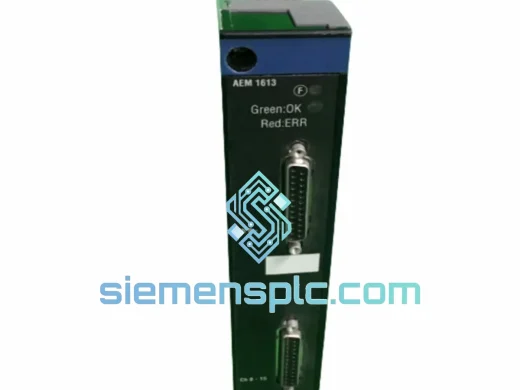
Schneider Electric TSXAEM1613 Analog Input Module
Origin FR
Analog Input Module
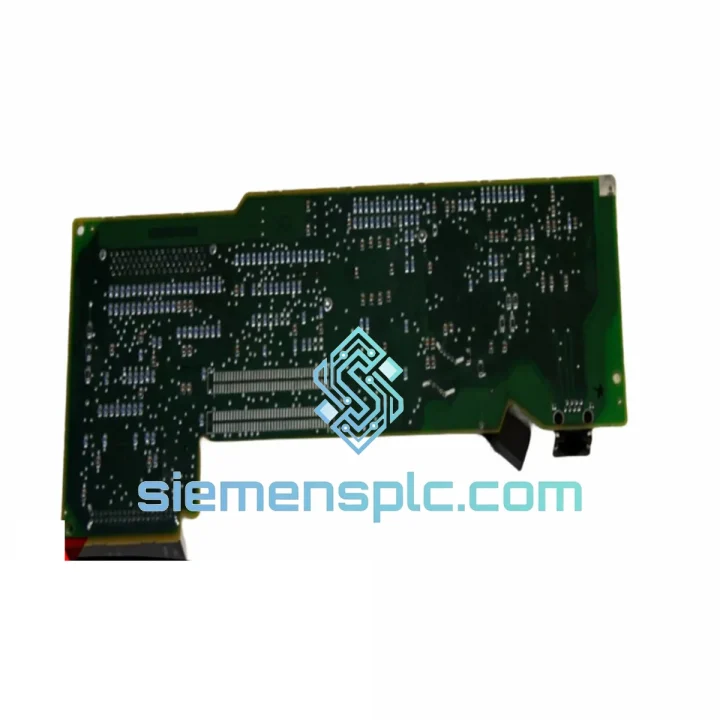
Request verified availability, condition, replacement risk review, packing options and courier lead time for 140NRP95400.
Click Request Quote and the part number is inserted into the inquiry form automatically.
Core fields for model confirmation and RFQ routing. Detailed product narrative remains below.
The Schneider Electric 140NRP95400 is a Remote I/O Drop Adapter module engineered for the Modicon Quantum automation platform. Its primary function is to terminate a Modbus Plus remote I/O network segment at a distributed rack location, enabling the Quantum CPU to address field-level I/O points located physically remote from the main processor chassis. In large-scale process plants — where field instruments, actuators, and motor control centers are distributed across hundreds of meters of plant floor — the 140NRP95400 provides the deterministic, low-latency communication link that keeps scan-cycle integrity intact regardless of physical distance.
Within the Quantum control hierarchy, the 140NRP95400 occupies the drop adapter role: it receives the Modbus Plus token from the network, decodes the I/O data frame, and writes output values directly to the local backplane I/O bus while simultaneously reading input states and returning them upstream to the CPU in the same token-passing cycle. This architecture guarantees that remote I/O scan times remain bounded and predictable — a non-negotiable requirement in continuous process control, where a missed scan can trigger spurious shutdowns or unsafe process deviations.
The module supports dual-port Modbus Plus connectivity, allowing the drop to participate in a redundant ring or daisy-chain topology. In ring configurations, a single cable fault does not isolate the drop — the network self-heals by routing traffic through the alternate port, maintaining I/O availability without CPU intervention. This passive redundancy mechanism requires no additional programming logic and operates transparently at the hardware level.
Electrically, the 140NRP95400 interfaces to the Quantum backplane through the standard I/O bus connector, drawing regulated DC power from the local power supply module. The backplane bus operates at a fixed clock rate, and the drop adapter synchronizes its local I/O scan to this clock, ensuring that all I/O modules in the remote rack are updated within a single backplane cycle. This synchronization eliminates the inter-module timing skew that can occur in loosely coupled distributed I/O architectures.
The module’s front panel provides LED status indicators for network activity, drop health, and power status, giving maintenance technicians immediate visual diagnostics without requiring a laptop or programming terminal. Fault states are also propagated upstream to the Quantum CPU’s diagnostic buffer, where they can be read by the application program or by a SCADA system via Modbus TCP, enabling centralized alarm management across the entire distributed I/O network.
From a mechanical standpoint, the 140NRP95400 conforms to the standard Quantum single-slot form factor, mounting directly into any Quantum backplane slot without tools. The module is rated for operation across the full industrial temperature range and carries CE, UL, and cUL certifications, making it suitable for deployment in both North American and European regulated installations. Its conformal-coated PCB assembly provides additional protection against humidity and airborne contaminants in harsh plant environments.
Real-time stock availability and competitive pricing are available on request. Contact our technical sales team for lead time confirmation and volume pricing.
📧 Real-time Stock & RFQ: [email protected] | WhatsApp: +86 18359268345
| Parameter | Specification |
|---|---|
| Part Number | 140NRP95400 |
| Brand | Schneider Electric (Modicon) |
| Series | Quantum Automation Platform |
| Module Function | Remote I/O Drop Adapter |
| Network Protocol | Modbus Plus (MB+) |
| Network Ports | 2 × Modbus Plus (dual-port, ring/daisy-chain) |
| Backplane Interface | Quantum standard I/O bus |
| Slot Occupancy | 1 slot |
| Power Source | Quantum backplane (no external supply required) |
| Operating Temperature | 0 °C to +60 °C |
| Storage Temperature | −40 °C to +85 °C |
| Relative Humidity | 5% to 95% non-condensing |
| Vibration Resistance | IEC 60068-2-6 compliant |
| Shock Resistance | IEC 60068-2-27 compliant |
| EMC Compliance | EN 61000-4 series (ESD, EFT, surge, conducted RF) |
| Certifications | CE, UL, cUL |
| RoHS | Compliant |
| PCB Protection | Conformal coating |
| Mounting | Quantum backplane slot-mount, tool-free |
| Weight | Approx. 360 g |
| Warranty | 12 months from date of shipment |
| Country of Origin | France |
The 140NRP95400 implements a token-passing arbitration scheme inherited from the Modbus Plus protocol specification. Each node on the MB+ segment holds the token for a fixed time window — typically 1 ms per node — before passing it to the next address in the logical ring. The drop adapter’s internal microcontroller monitors token circulation continuously; if the token is not received within the expected window (token timeout), the adapter asserts a network fault flag and simultaneously attempts to re-initialize its port state machine. This self-recovery mechanism limits the duration of a network disruption to a bounded number of token cycles rather than requiring CPU-level intervention.
EMC hardening on the 140NRP95400 is implemented at three levels. At the PCB level, the Modbus Plus transceiver circuitry is galvanically isolated from the backplane logic using transformer-coupled isolation, with a minimum isolation voltage of 500 V DC. This prevents ground-loop currents — common in large industrial installations where multiple earthing points exist at different potentials — from corrupting the differential MB+ signal. At the enclosure level, the module’s metal front panel provides a continuous Faraday shield around the transceiver section, attenuating radiated emissions and improving immunity to external RF fields. At the system level, the dual-port architecture allows the MB+ cable shield to be grounded at one end only, eliminating the shield current loops that are a primary source of common-mode noise injection in long cable runs.
The backplane bus interface uses a synchronous parallel protocol clocked by the local power supply module. The 140NRP95400’s bus interface logic includes a watchdog timer that monitors backplane clock continuity; if the clock is absent for more than 100 ms (indicating a power supply fault or backplane failure), the adapter forces all output channels to their configured safe state — typically de-energized — before asserting a fault output to the CPU. This fail-safe behavior is hardwired in the adapter’s gate array logic and cannot be overridden by application software, providing a hardware-enforced safety layer independent of the CPU program.
Every 140NRP95400 unit supplied by siemensplc.com is sourced through verified channels and subjected to a structured pre-shipment inspection protocol. Physical examination covers housing integrity, connector condition, label authenticity, and date-code consistency against Schneider Electric’s genuine product markings. Part numbers and serial numbers are cross-referenced against manufacturer documentation to confirm authenticity before any unit is released for shipment.
Functional pre-checks — including power-on LED verification and port continuity testing — are performed where test fixtures are available. All modules are packed in anti-static ESD bags with desiccant sachets, enclosed in foam-lined cartons rated for international air freight handling. Export documentation including commercial invoice, packing list, and certificate of origin is prepared in compliance with Chinese customs regulations and destination-country import requirements.
Shipments originate from our warehouse in Xiamen, China, with access to DHL Express, FedEx International Priority, and UPS Worldwide Expedited services. Standard air freight transit times are 3–7 business days to most destinations in Europe, North America, Southeast Asia, and the Middle East. For urgent plant-down situations, same-day dispatch is available on confirmed in-stock units when orders are placed before 14:00 CST. All shipments include a tracking number issued within 24 hours of dispatch, with full end-to-end visibility through the carrier’s online portal.
A 12-month warranty covers manufacturing defects from the date of shipment. Warranty claims are processed with a target response time of 2 business days, and replacement units are dispatched from stock where available to minimize customer downtime.
📧 Email: [email protected]
💬 WhatsApp: +86 18359268345
🌐 Web: siemensplc.com
📍 Location: Xiamen, China
© 2026 siemensplc.com. All rights reserved.
We check the full part number, brand, series and visible nameplate information before quotation.
Sales confirms stock path, condition option, quantity and realistic lead time for export dispatch.
DHL, FedEx, UPS or buyer courier arrangements can be reviewed with packing requirements.
Similar brand or category products for fast comparison and multi-item RFQ lists.