Allen-Bradley
RFQ Ready
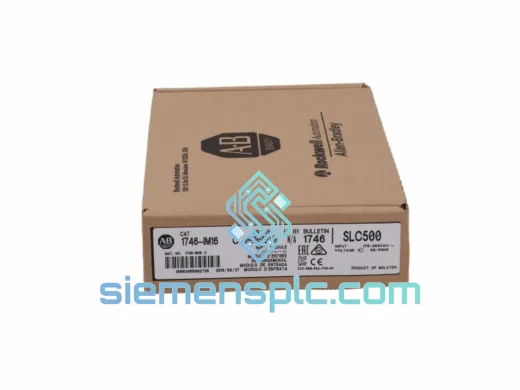
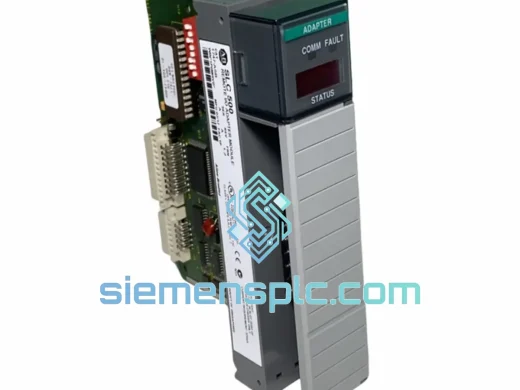
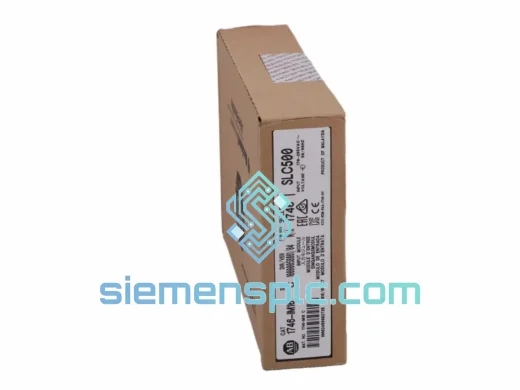
Allen-Bradley DIM16 Discrete Input Module
SLC 500
Origin US
Discrete Input Module
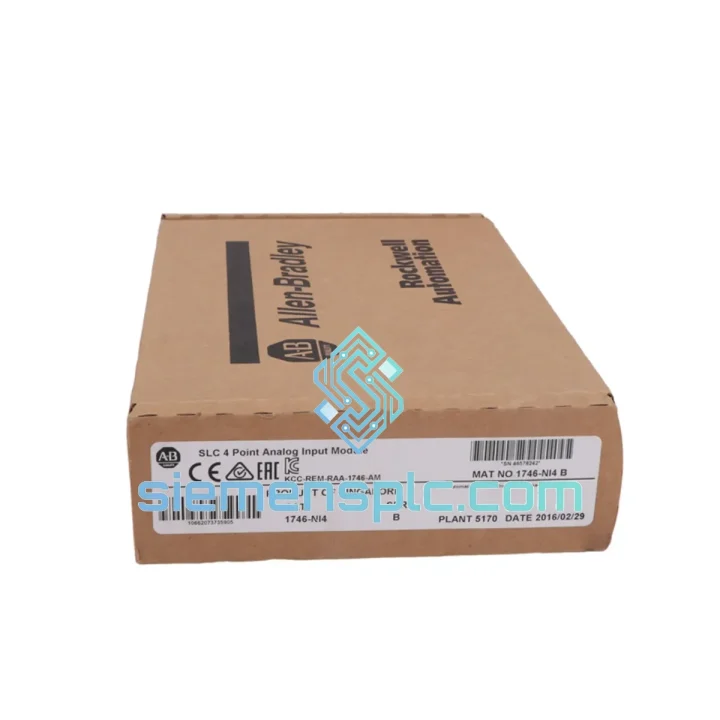
Request verified availability, condition, replacement risk review, packing options and courier lead time for 1746-NI4.
Click Request Quote and the part number is inserted into the inquiry form automatically.
Core fields for model confirmation and RFQ routing. Detailed product narrative remains below.
A tripped 1746-NI4 doesn’t announce itself politely. One moment your process is running; the next, four analog loops go blind simultaneously and your SLC 500 processor throws a major fault. Production stops. Operators stand around. Maintenance scrambles. The clock runs.
We stock the Allen-Bradley 1746-NI4 in Xiamen — not on a purchase order, not on a 10-week factory lead time. It’s on a shelf, tested, and ready to leave the building today. If you place your order before 15:00 CST, a DHL tracking number lands in your inbox before your next shift change. That’s the only promise that matters right now.
⚡ URGENT REQUIREMENT?
Email: [email protected] | WhatsApp: +86 18359268345
| Parameter | Specification | Status |
|---|---|---|
| Part Number | 1746-NI4 | ✅ Ready to Ship |
| Brand / Platform | Allen-Bradley / SLC 500 | 1746 backplane |
| Analog Input Channels | 4 independently configurable | — |
| Voltage Input Ranges | ±10 V DC, 0–5 V, 1–5 V | Jumper-selected per channel |
| Current Input Ranges | 0–20 mA, 4–20 mA | Jumper-selected per channel |
| Resolution | 12-bit (0–4095 counts) | — |
| Conversion Time | ~5 ms per channel / ~20 ms all 4 | — |
| Input Impedance | ≥10 MΩ (voltage) / 250 Ω (current) | — |
| Isolation | 1500 V AC optical (field-to-backplane) | — |
| Backplane Current Draw | 120 mA @ 5 V DC | Verify PSU budget |
| Operating Temperature | 0 °C to 60 °C | — |
| Compatible Chassis | 1746-A4 / A7 / A10 / A13 | Any I/O slot |
| Compatible Processors | SLC 5/01 through SLC 5/05 | All series revisions |
| Certifications | UL, CE, CSA | — |
| Country of Origin | United States | OEM manufactured |
| Dispatch Lead Time | ✅ Same-day dispatch — orders confirmed before 15:00 CST | |
Ten years of field calls teach you to read the symptoms fast. Here’s what a failing 1746-NI4 actually looks like — and how to swap it without creating a second problem.
Fault signatures that point directly at the 1746-NI4:
Replacement procedure — do it right the first time:
Firmware note: The 1746-NI4 carries no user-upgradeable firmware. If your SLC 5/01 processor is running a pre-Series B OS revision, cross-reference Rockwell Bulletin 1747-2.163 for compatibility confirmation. This affects a small fraction of installed systems but takes 10 minutes to verify — far less than the time lost chasing a phantom incompatibility on site.
The 1746-NI4 was engineered for industrial floors, not IT closets. Here is what it handles without degradation:
Mechanical vibration: Qualified to IEC 68-2-6 sinusoidal vibration profiles. The conformal-coated PCB resists micro-fracture propagation under sustained mechanical stress — relevant on compressor skids, stamping press panels, and any installation where the cabinet itself vibrates continuously. Uncoated third-party equivalents develop hairline cracks in solder joints within 12–18 months under these conditions. The OEM board does not.
Thermal cycling: The 0–60 °C operating range is the steady-state spec. The real differentiator is the temperature-compensated ADC reference circuit, which maintains calibration accuracy across repeated cold-start-to-full-load thermal cycles. Cheaper analog input alternatives drift measurably after six months in a hot panel. This module does not.
Humidity and chemical contamination: Conformal coating provides a barrier against condensation and airborne process contaminants — critical in food processing, chemical manufacturing, and coastal or offshore installations. We have received failed competitor modules from offshore platforms where bare PCB corrosion was visible without magnification. The 1746-NI4’s coating holds.
Electrical isolation: The 1500 V AC optical isolation between field terminals and the backplane bus is not a marketing figure — it is the barrier that prevents a ground fault on a 4–20 mA field loop from propagating into the SLC processor backplane. In environments with large VFDs, resistance welders, or high-current motor starters, this isolation is the difference between replacing a module and replacing a processor.
EMI/RFI immunity: The module meets IEC 61000-4 immunity standards. In high-EMI environments, use shielded twisted-pair cable for all analog field wiring, grounded at the panel end only. Noise complaints on analog input channels are almost always a field wiring issue, not a module limitation — but the module’s immunity headroom gives you margin to work with.
Our dispatch warehouse is in Xiamen, Fujian — direct access to DHL Express, FedEx International Priority, and UPS Worldwide Expedited hubs. Here is the exact sequence from your order to your dock:
Our team has hands-on automation experience. We understand what a production stoppage costs per hour and we respond accordingly — no scripts, no ticket queues.
📧 Email: [email protected]
💬 WhatsApp: +86 18359268345
🌐 Web: siemensplc.com
© 2026 siemensplc.com. All rights reserved.
We check the full part number, brand, series and visible nameplate information before quotation.
Sales confirms stock path, condition option, quantity and realistic lead time for export dispatch.
DHL, FedEx, UPS or buyer courier arrangements can be reviewed with packing requirements.
Similar brand or category products for fast comparison and multi-item RFQ lists.