Allen-Bradley
RFQ Ready
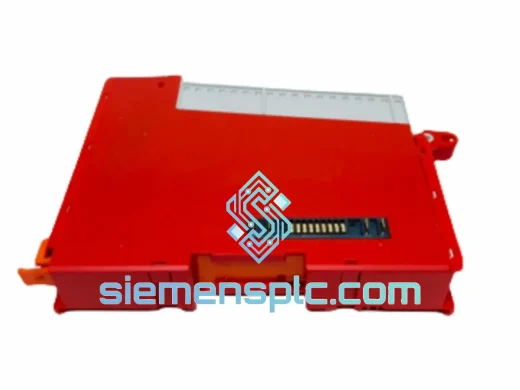
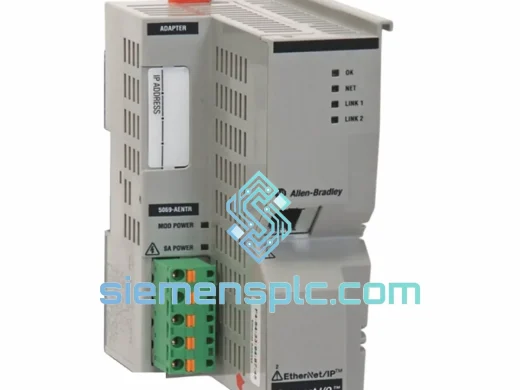
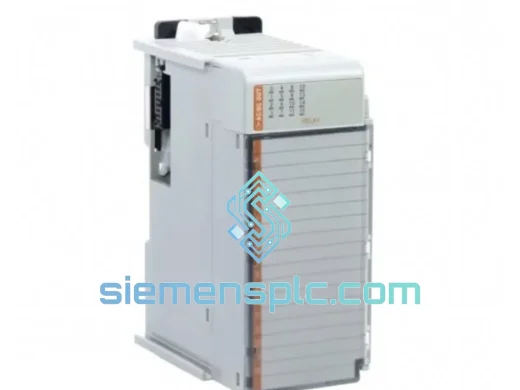
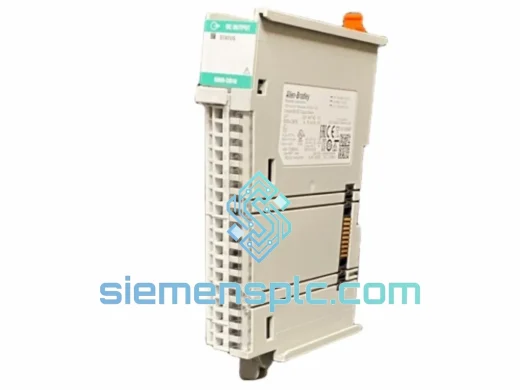
Allen-Bradley 5069-OW16 Relay Output Module
CompactLogix
Origin US
PLC Output Module
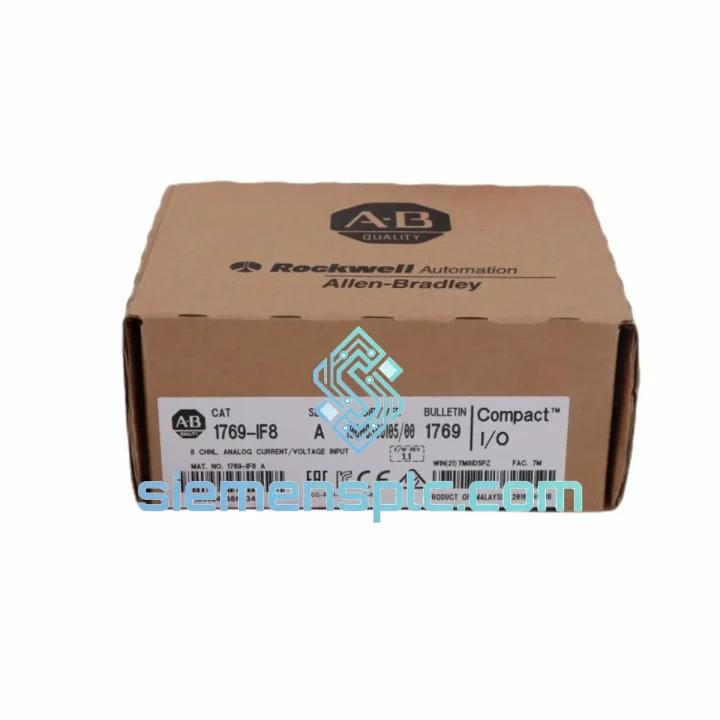
Request verified availability, condition, replacement risk review, packing options and courier lead time for 1769-IF8.
Click Request Quote and the part number is inserted into the inquiry form automatically.
Core fields for model confirmation and RFQ routing. Detailed product narrative remains below.
Every minute your CompactLogix system sits dark, you’re burning money. A failed 1769-IF8 analog input module doesn’t just kill one loop — it can cascade into process shutdowns, batch losses, and safety interlocks that take hours to reset. We stock the 1769-IF8 in Xiamen and ship globally via DHL/FedEx Express. Most orders clear customs and land on your dock within 3–5 business days. That’s the difference between a manageable incident and a full production crisis.
URGENT REQUIREMENT? Contact: [email protected] | WhatsApp: +86 18359268345
| Part Number | 1769-IF8 ✅ Ready to Ship |
| Manufacturer | Allen-Bradley / Rockwell Automation |
| Series | CompactLogix 1769 |
| Input Channels | 8 (single-ended, independently configurable) |
| Signal Types | Voltage: 0–10 V, ±10 V, 0–5 V, ±5 V | Current: 0–20 mA, 4–20 mA |
| Resolution | 16-bit (including sign bit) — ±0.1% full-scale accuracy |
| Input Impedance (V) | ≥ 1 MΩ |
| Input Impedance (I) | 250 Ω (shunt resistor internal) |
| Backplane Draw (5 VDC) | 75 mA |
| Backplane Draw (24 VDC) | 0 mA (no external 24 V required) |
| Operating Temperature | 0 °C to +60 °C |
| Storage Temperature | −40 °C to +85 °C |
| Relative Humidity | 5–95% non-condensing |
| Wiring Connector | Removable Terminal Block (RTB), 20-pin |
| Isolation | Non-isolated; channels share common ground |
| Open-Wire Detection | Yes — current mode only; flags under-range fault bit |
| Compatible Software | Studio 5000 Logix Designer v21+ / RSLogix 5000 |
| Dimensions (H × W × D) | 90 mm × 35 mm × 87 mm |
| Weight | ~400 g |
| Origin | United States |
| Stock Status | ✅ In Stock — Ships within 24 hours of payment confirmation |
Fifteen years of field calls on CompactLogix systems have taught me one thing: most 1769-IF8 failures are misdiagnosed. Before you pull the module, run through this checklist — you might save yourself a week of lead time.
Fault Code 16#0001 — Channel Fault / Under-Range: Nine times out of ten this is a broken 4–20 mA loop, not a dead module. Check your field wiring first. Measure loop current at the RTB with a clamp meter. If you’re reading 0 mA on a live transmitter, the fault is upstream. If the channel reads 0 mA with a known-good 20 mA source wired directly to the RTB, then the module input circuit is gone.
Fault Code 16#0002 — Over-Range: Voltage input exceeding ±10.5 V or current exceeding ~21 mA will latch this bit. Check for a shorted transmitter or a misconfigured signal conditioner outputting 24 V directly into a voltage channel. This fault is recoverable — fix the source, clear the fault in Studio 5000, and the channel resets without a module swap.
Module Not Recognized on Backplane: If the controller’s I/O tree shows the slot as empty or faulted immediately after seating the module, check the following in order: (1) Confirm the module is fully seated — the 1769 bus connector requires firm, even pressure; a partially engaged module will not enumerate. (2) Verify the slot number in your I/O configuration matches the physical position. (3) Check the controller’s I/O configuration for a revision mismatch — if your Studio 5000 project was built with firmware rev 3.x and the replacement module is rev 2.x, you’ll get a compatibility fault. Update the module revision in the I/O tree or source a matching firmware revision.
Replacement Procedure — Step by Step:
Configuration Notes After Replacement: The 1769-IF8 stores no configuration locally — all channel parameters (input type, range, filter frequency, alarm limits) live in the controller project file. As long as your Studio 5000 project is intact, the replacement module will inherit the correct configuration automatically on first scan. No DIP switches, no address jumpers, no firmware flashing required. The module is fully auto-configured from the backplane.
Filter Frequency Setting: Default is 60 Hz notch filter. If your plant runs on 50 Hz power (common in Asia, Europe, and most of the Middle East), change the filter to 50 Hz in the module’s Channel Configuration tab. Running a 60 Hz filter on a 50 Hz supply will degrade noise rejection and introduce measurement error on sensitive loops.
The 1769-IF8 was designed for the floor, not the lab. Rockwell Automation built this module to survive the kind of environment that kills consumer-grade electronics in weeks.
The conformal-coated PCB resists moisture ingress in high-humidity environments — think coastal chemical plants, tropical food processing facilities, and outdoor-rated enclosures where condensation is a daily reality. The module’s operating humidity ceiling of 95% non-condensing is not a marketing number; it reflects real-world testing under IEC 60068-2-78 damp heat conditions.
Vibration resistance is validated to IEC 60068-2-6 (sinusoidal) and IEC 60068-2-64 (random), covering the frequency ranges generated by compressors, pumps, and heavy presses mounted in the same structural bay as the control panel. The 1769 bus connector’s positive-locking mechanism prevents the module from walking out of its slot under sustained vibration — a failure mode that plagues cheaper I/O platforms.
Thermal performance is equally robust. The 0–60 °C operating range covers the vast majority of industrial enclosure environments, and the module’s low backplane current draw (75 mA at 5 V) means it contributes minimal heat to the rack — a critical factor in high-density CompactLogix builds where thermal budget is tight. For installations in high-ambient environments, ensure the enclosure’s thermal management (fans, heat exchangers, or air conditioners) is sized to keep the rack below 60 °C at the hottest point of the day.
EMC performance meets CE and UL 508 requirements, with conducted and radiated emissions tested to CISPR 11 Class A limits. In practice, this means the module operates cleanly in the presence of VFD switching noise, arc welders, and high-current motor starters — the exact conditions found in automotive stamping plants and heavy process facilities where analog signal integrity is hardest to maintain.
Our warehouse is located in Xiamen, Fujian Province — one of China’s primary export hubs with direct access to DHL, FedEx, and UPS international express networks. This is not a drop-ship operation. Stock is physically on our shelves, inspected, and ready to pack the moment your payment clears.
Standard Express Timeline (DHL/FedEx International Priority):
Every shipment includes a commercial invoice, packing list, and HS code declaration (HS 8537.10) pre-filled for customs clearance. For destinations with import duty sensitivities, we can provide a detailed technical description letter to support your customs broker. DDP (Delivered Duty Paid) arrangements are available for qualified accounts — contact us before ordering if you need this.
Tracking numbers are issued within 4 hours of dispatch and sent directly to your order email. For urgent shipments, we can arrange same-day pickup by DHL before the 16:00 CST cutoff — contact us by 14:00 CST to confirm availability.
All modules are packed in anti-static bags, foam-lined boxes, and double-boxed for international transit. We’ve shipped to 60+ countries without a single transit damage claim. That’s not luck — it’s process.
Email: [email protected]
WhatsApp: +86 18359268345
Web: siemensplc.com
© 2026 siemensplc.com. All rights reserved.
We check the full part number, brand, series and visible nameplate information before quotation.
Sales confirms stock path, condition option, quantity and realistic lead time for export dispatch.
DHL, FedEx, UPS or buyer courier arrangements can be reviewed with packing requirements.
Similar brand or category products for fast comparison and multi-item RFQ lists.