
Allen-Bradley
In Stock OK
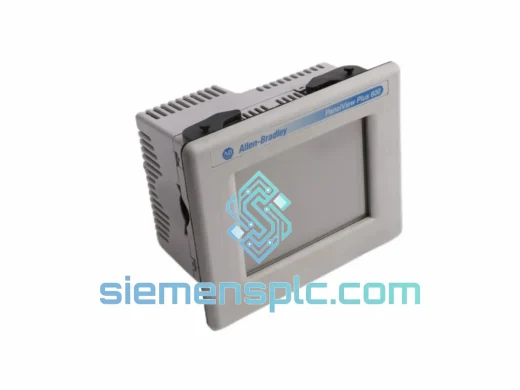
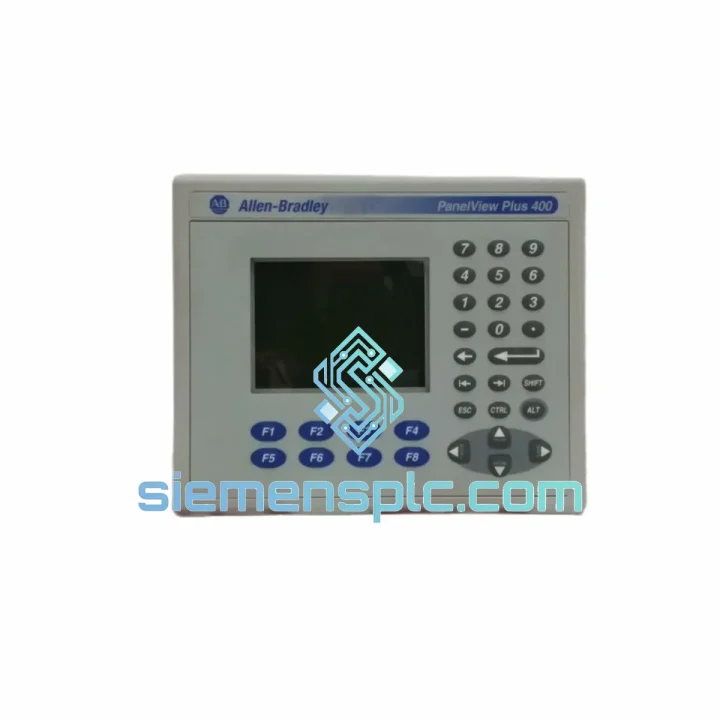
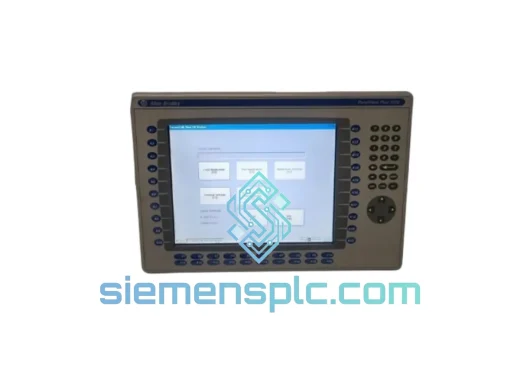
Allen-Bradley 2711P-K4M20A HMI Terminal – PanelView Plus 400
Request verified availability, condition, replacement risk review, packing options and courier lead time for 2711P-K4M20A.
BrandAllen-Bradley
Part Number2711P-K4M20A
ConditionAvailability Check
Lead TimeRFQ Confirmation
DocumentsDatasheet / photos by RFQ
ShippingExport packing available
Auto-filled RFQ
2711P-K4M20A
Click Request Quote and the part number is inserted into the inquiry form automatically.
- Reply by email: [email protected]
- WhatsApp / Tel: +86 18359268345
- Mon-Sat 9:00-18:00 GMT+8
Procurement Data
Key Product Information
Core fields for model confirmation and RFQ routing. Detailed product narrative remains below.
- Brand
- Allen-Bradley
- Primary Part Number
- 2711P-K4M20A
- Product Type
- HMI Terminal
- Series / Family
- PanelView
- Manufacturer
- Rockwell Automation / Allen-Bradley
- Country of Origin
- US
- Catalog Category
- HMI Panels
- Operating Temp.
- 0°C to 55°C (32°F to 131°F)
Model confirmed for inquiry
2711P-K4M20A
Send quantity, destination and urgency. The RFQ form keeps this part number attached.
Request Quote
Product Overview
Allen-Bradley 2711P-K4M20A: Keypad HMI Terminal for Deterministic Operator Control in Harsh Industrial Environments
The Allen-Bradley 2711P-K4M20A is a 4-inch monochrome keypad-based Human-Machine Interface terminal within Rockwell Automation’s PanelView Plus 400 product family. It operates on 24V DC and communicates natively over DH-485 and RS-232 physical layers, making it a direct-connect solution for SLC 500, MicroLogix 1100, and MicroLogix 1400 controller families without requiring an intermediate communication bridge or gateway device. The terminal runs FactoryTalk View Machine Edition (ME) firmware, which executes application logic locally on the device’s embedded processor — application memory capacity is 10 MB, sufficient for several hundred display screens with tag-linked data objects.
Unlike touchscreen-based panels, the 2711P-K4M20A’s physical keypad architecture provides a tactile, glove-compatible input method that maintains operator accuracy in environments subject to vibration, airborne particulate, or where operators routinely wear PPE. The front face carries a NEMA 4/4X, 12, and 13 enclosure rating when panel-mounted, meaning the terminal withstands directed water jets, oil immersion splash, and dust ingress without additional sealing hardware. Operating temperature range spans 0°C to 55°C ambient, with storage tolerance from −40°C to 85°C — parameters that accommodate both cold-chain logistics facilities and high-ambient foundry or cement plant environments.
The grayscale LCD display delivers sufficient contrast for status indication, numeric readouts, and alarm messaging in typical industrial lighting conditions. While the display does not support color differentiation for alarm priority visualization, the keypad function keys can be mapped to direct alarm acknowledgment routines within FactoryTalk View ME, preserving operator response speed. The terminal’s compact 4-inch form factor reduces panel cutout requirements, enabling installation on smaller enclosure doors or in space-constrained retrofit applications where a larger touchscreen panel would require structural panel modifications.
From a system architecture perspective, the 2711P-K4M20A connects to the controller backplane communication network via DH-485 — a token-passing, multi-drop serial network operating at up to 19.2 kbps across a maximum of 32 nodes on a single segment. This deterministic token-passing protocol ensures that the HMI’s data polling does not introduce variable latency into the controller’s scan cycle, a critical characteristic in applications where PLC scan time budgets are tightly managed. RS-232 connectivity provides an alternative point-to-point channel for direct controller connection or for integration with barcode readers, printers, and serial data acquisition devices.
The 2711P-K4M20A is deployed across a broad range of process and discrete manufacturing sectors: food and beverage conveyor control, water and wastewater pump station local control, automotive assembly fixture panels, packaging machinery operator stations, HVAC chiller plant interfaces, and oil and gas wellhead local displays. Its end-of-life status with Rockwell Automation has not diminished its installed base — hundreds of thousands of units remain in active service globally, and the demand for verified replacement stock remains consistent across MRO (Maintenance, Repair, and Operations) procurement channels.
Real-time Stock & RFQ: [email protected] | WhatsApp: +86 18359268345
Technical Parameters
| Parameter | Specification |
|---|---|
| Part Number | 2711P-K4M20A |
| Product Family | PanelView Plus 400 |
| Manufacturer | Rockwell Automation / Allen-Bradley |
| Display Size | 4 inch (diagonal) |
| Display Type | Grayscale (Monochrome) LCD |
| Input Method | Keypad (function keys + numeric) |
| Supply Voltage | 24V DC (±15%) |
| Power Consumption | Approx. 12W typical |
| Application Memory | 10 MB |
| Communication Ports | DH-485 (RJ45), RS-232 (DB-9) |
| Network Protocol | DH-485 token-passing, up to 19.2 kbps, max 32 nodes |
| Operating Temperature | 0°C to 55°C (32°F to 131°F) |
| Storage Temperature | −40°C to 85°C |
| Relative Humidity | 5% to 95% non-condensing |
| Enclosure Rating (front face) | NEMA 4, 4X, 12, 13 / IP65 |
| Shock Rating | 30g, 11ms half-sine per IEC 60068-2-27 |
| Vibration Rating | 5–2000 Hz, 2g per IEC 60068-2-6 |
| Software Platform | FactoryTalk View ME (v5.0+) |
| Unit Weight | Approx. 700 g |
| Certifications | UL, CE, CSA |
| Warranty (supplied by siemensplc.com) | 12 months from shipment date |
Hardware Logical Analysis
The 2711P-K4M20A’s hardware architecture reflects design priorities established for industrial-grade embedded terminals: deterministic communication, EMC robustness, and mechanical durability under continuous duty cycles.
DH-485 Physical Layer Implementation: The terminal’s DH-485 interface uses an RS-485 differential transceiver pair, which provides inherent common-mode noise rejection — a critical property in panel environments where variable-frequency drives (VFDs), contactors, and high-current switching loads generate conducted and radiated electromagnetic interference. The differential signaling maintains signal integrity across cable runs up to 1,219 m (4,000 ft) at reduced baud rates, allowing the HMI to be located at a distance from the controller without signal repeaters in most plant layouts.
Keypad Debounce and Scan Logic: The keypad matrix is scanned by the terminal’s embedded microcontroller at a fixed polling interval. Hardware debounce filtering — implemented via RC networks on each key input line — eliminates false triggering from mechanical contact bounce, which is particularly relevant in high-vibration installations such as compressor skids or press machine panels. This hardware-level filtering reduces the processing overhead that would otherwise be required for software debounce routines.
EMC Design: The terminal’s metal housing provides a Faraday enclosure effect, attenuating radiated emissions from the internal switching power supply and display driver circuitry. The 24V DC input incorporates transient voltage suppression (TVS) diodes and common-mode chokes to clamp voltage spikes originating from inductive load switching on the same DC bus — a common failure mode for electronics sharing a panel power rail with solenoid valves or relay coils.
Display Driver Architecture: The grayscale LCD is driven by a dedicated display controller IC, offloading pixel refresh operations from the main application processor. This separation ensures that display update cycles do not compete with communication polling tasks for processor time, maintaining consistent DH-485 token response times regardless of display refresh activity.
Non-Volatile Memory: Application data and configuration parameters are stored in non-volatile flash memory, ensuring that the terminal retains its application and tag database through power cycles without requiring a battery-backed RAM module — eliminating a common maintenance point found in older HMI architectures.
System Integration Benefits
- Zero-gateway DH-485 connectivity: Direct connection to SLC 500 and MicroLogix controllers eliminates the cost and latency of an Ethernet-to-DH-485 gateway device, reducing BOM cost and network complexity in legacy system retrofits.
- Deterministic token-passing protocol: DH-485’s token-passing mechanism guarantees bounded worst-case latency for HMI data requests, supporting applications where operator display update rates must be predictable — such as batch process step sequencing or alarm response timing.
- FactoryTalk View ME alarm management: The terminal supports FactoryTalk Alarms and Events integration, enabling alarm logging with timestamp, operator acknowledgment records, and alarm history retrieval — providing diagnostic transparency without a separate SCADA server.
- Keypad function key mapping: Up to 10 configurable function keys can be mapped to navigation, setpoint entry, or direct output control commands, allowing operators to execute common control actions without navigating multi-level screen hierarchies — reducing operator error rates in time-critical situations.
- Panel space efficiency: The 4-inch form factor requires a smaller panel cutout than 6-inch or 10-inch alternatives, enabling installation in existing enclosures during MRO replacements without panel door modification or enclosure upsizing.
- Wide temperature tolerance: The 0°C to 55°C operating range covers the majority of industrial indoor environments without requiring panel air conditioning, reducing auxiliary equipment costs in temperature-controlled enclosure designs.
- NEMA 4X front-face rating: Stainless steel-compatible NEMA 4X rating supports installation in food processing and pharmaceutical environments subject to caustic washdown procedures, without requiring a separate protective cover or secondary enclosure.
- Extensive installed base compatibility: The 2711P-K4M20A shares the FactoryTalk View ME development environment with the broader PanelView Plus family, meaning existing application files developed for other PanelView Plus terminals can be adapted for the 2711P-K4M20A with minimal rework — reducing engineering time for multi-site standardization projects.
Quality Assurance & Global Logistics
Every Allen-Bradley 2711P-K4M20A unit supplied by siemensplc.com is sourced through verified industrial automation supply channels with documented provenance. Each unit undergoes a structured pre-shipment inspection protocol: visual examination of housing integrity, label authenticity verification against Rockwell Automation’s published label specifications, connector pin inspection, and where feasible, power-on functional verification of display operation and communication port response.
Units are packaged in anti-static polyethylene bags, placed in foam-lined corrugated cartons rated for international air freight handling. Shipments originate from our warehouse in Xiamen, China — a major export hub with direct access to DHL Express, FedEx International Priority, and UPS Worldwide Expedited services. Typical transit times to Southeast Asia are 3–5 business days; to Europe and the Middle East, 5–7 business days; to North and South America, 7–10 business days. Export documentation including commercial invoice, packing list, and certificate of origin is prepared for all international shipments. A 12-month warranty from the shipment date covers functional defects under normal operating conditions.
Contact Information
Email: [email protected]
WhatsApp: +86 18359268345
Web: siemensplc.com
Location: Xiamen, China
© 2026 siemensplc.com. All rights reserved.
Ready to quote
[email protected]
Send This Part Number to Sales
RFQ workflow
Quality workflow ->
Confirmation Process
01Model confirmation
We check the full part number, brand, series and visible nameplate information before quotation.
02Availability reply
Sales confirms stock path, condition option, quantity and realistic lead time for export dispatch.
03Packing & courier
DHL, FedEx, UPS or buyer courier arrangements can be reviewed with packing requirements.
Continue sourcing
Browse full catalog ->
Related Automation Parts
Similar brand or category products for fast comparison and multi-item RFQ lists.
Allen-Bradley
RFQ Ready
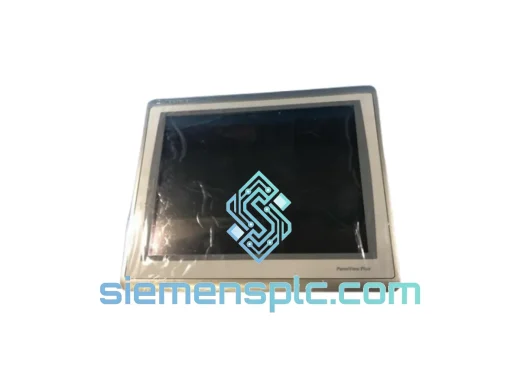
Allen-Bradley 2711P-T15C22D9P HMI Terminal
PanelView
Origin US
HMI Graphic Terminal
Allen-Bradley
RFQ Ready
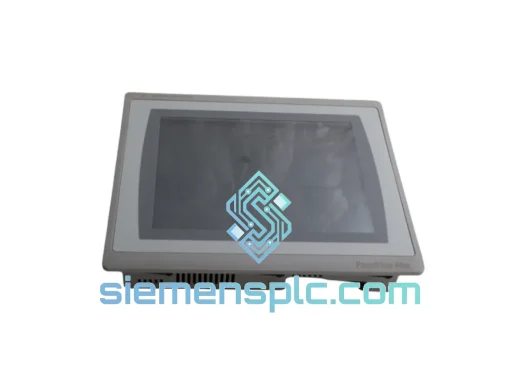
Allen-Bradley 2711P-T10C21D8S HMI Operator Terminal
PanelView
Origin US
HMI Operator Terminal
Allen-Bradley
RFQ Ready
Allen-Bradley 2711P-RN15S ControlNet Communication Module
PanelView
Origin US
PLC Communication Module