
Allen-Bradley
In Stock OK
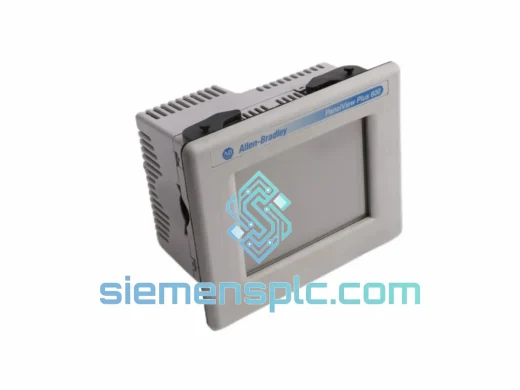
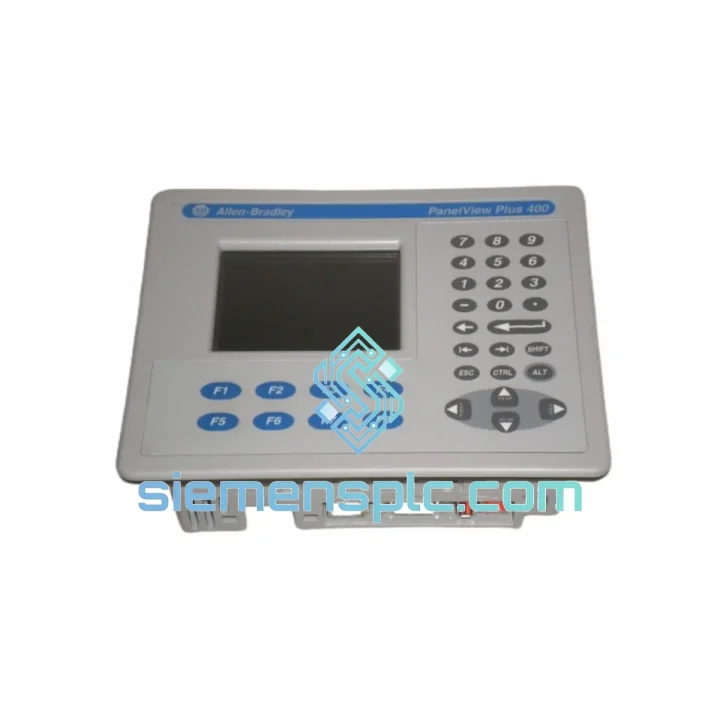
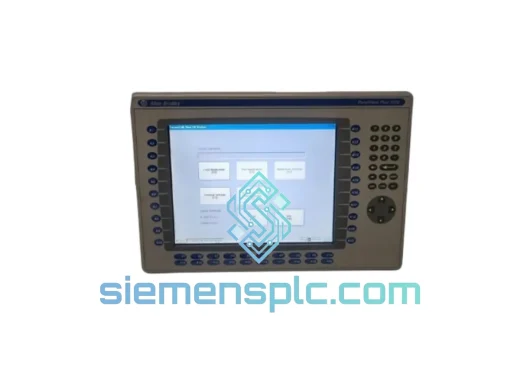
Allen-Bradley 2711P-K4M20D HMI Terminal – PanelView Plus 400
Request verified availability, condition, replacement risk review, packing options and courier lead time for 2711P-K4M20D.
BrandAllen-Bradley
Part Number2711P-K4M20D
ConditionAvailability Check
Lead TimeRFQ Confirmation
DocumentsDatasheet / photos by RFQ
ShippingExport packing available
Auto-filled RFQ
2711P-K4M20D
Click Request Quote and the part number is inserted into the inquiry form automatically.
- Reply by email: [email protected]
- WhatsApp / Tel: +86 18359268345
- Mon-Sat 9:00-18:00 GMT+8
Procurement Data
Key Product Information
Core fields for model confirmation and RFQ routing. Detailed product narrative remains below.
- Brand
- Allen-Bradley
- Primary Part Number
- 2711P-K4M20D
- Product Type
- HMI Terminal
- Series / Family
- PanelView
- Country of Origin
- US
- Catalog Category
- HMI Panels
- Operating Temp.
- 0 °C to +55 °C
- Warranty
- 12 months from date of shipment
Model confirmed for inquiry
2711P-K4M20D
Send quantity, destination and urgency. The RFQ form keeps this part number attached.
Request Quote
Product Overview
Allen-Bradley 2711P-K4M20D PanelView Plus 400 Monochrome Keypad HMI Terminal — Operator Interface Architecture in Discrete Control Loops
The 2711P-K4M20D is a 4-inch monochrome keypad-based operator terminal within Rockwell Automation’s PanelView Plus 400 platform. In a discrete or process control loop, this terminal occupies the human-machine interface layer between the supervisory logic executed on a ControlLogix or CompactLogix PLC and the field operator. Its role is deterministic: it renders tag-bound runtime data from the controller’s data table, accepts operator input through a membrane keypad matrix, and returns setpoint or command values to the controller via a polled communication link — all without introducing latency that would compromise loop integrity. Unlike touchscreen variants, the keypad architecture eliminates resistive or capacitive digitizer layers, reducing firmware overhead and improving mean time between failure (MTBF) in environments where gloved operation or panel vibration would degrade touch accuracy.
The terminal runs on the PanelView Plus runtime environment, which supports FactoryTalk View ME (Machine Edition) application files. Display logic, alarm management, and tag binding are configured offline in FactoryTalk View Studio and downloaded to the terminal’s non-volatile flash memory. At runtime, the terminal operates autonomously from the engineering workstation — a critical characteristic for standalone machine panels where network connectivity to a development PC cannot be guaranteed.
Real-time Stock & RFQ: [email protected] | WhatsApp: +86 18359268345
Technical Parameters
| Parameter | Specification |
|---|---|
| Catalog Number | 2711P-K4M20D |
| Display Type | 4-inch STN Monochrome LCD |
| Display Resolution | 320 × 240 pixels (QVGA) |
| Input Method | Membrane Keypad (function keys + navigation keys) |
| Processor | Renesas SH-4 RISC, 200 MHz |
| RAM | 64 MB SDRAM |
| Flash Storage | 32 MB non-volatile flash |
| Supply Voltage | 24V DC (±10%), Class 2 |
| Power Consumption | ≤ 18 W typical |
| Communication Ports | RS-232 (DH-485), USB Type-A (programming/data transfer) |
| Supported Protocols | DH-485, DF1, DeviceNet (via adapter), EtherNet/IP (via 2711P-RN6) |
| Operating Temperature | 0 °C to +55 °C |
| Storage Temperature | −40 °C to +85 °C |
| Relative Humidity | 5% to 95% non-condensing |
| Enclosure Rating | NEMA 4/4X/12/13 (front face); IP65 equivalent |
| Certifications | UL Listed, CE Marked, cUL, C-Tick |
| Panel Cutout | 192 mm × 138 mm |
| Weight | Approx. 0.9 kg |
| Warranty | 12 months from date of shipment |
Hardware Logical Analysis
The 2711P-K4M20D is built on a single-board architecture where the display controller, communication ASIC, and application processor share a unified memory bus. The SH-4 RISC core executes the FactoryTalk View ME runtime in a real-time operating environment, with task scheduling prioritized to ensure that communication polling cycles are not preempted by display refresh operations. This separation of interrupt priority between the communication stack and the graphics rendering pipeline is a deliberate design choice that prevents display update latency from affecting tag read/write timing.
EMC Design: The terminal’s PCB layout employs a four-layer stackup with dedicated ground planes between signal layers. The RS-232 transceiver IC is protected by transient voltage suppression (TVS) diodes rated at ±15 kV ESD per IEC 61000-4-2. The DC power input incorporates a common-mode choke and bulk capacitance to attenuate conducted emissions from switching power supplies commonly found in MCC panels. The enclosure is die-cast aluminum with conductive gasket sealing at the panel cutout interface, providing a continuous Faraday shield that meets EN 61000-4-3 radiated immunity at 10 V/m across 80 MHz–1 GHz.
Keypad Matrix Architecture: The membrane keypad uses a 6×8 scan matrix driven by a dedicated microcontroller that debounces key events in hardware before passing them to the application processor via an internal SPI bus. This hardware debounce eliminates false key registration caused by panel vibration — a failure mode that affects software-only debounce implementations in high-vibration environments such as compressor skids or stamping press panels. Key travel force is specified at 2.5 N ±0.5 N, compatible with gloved operation up to EN 420 Category 2.
Non-Volatile Memory Management: Application files are stored in NOR flash with wear-leveling firmware. The flash controller implements a write-verify cycle after each programming operation, and a watchdog timer ensures that a power interruption during a flash write does not corrupt the application image — the terminal will revert to the last verified image on next power-up rather than entering an undefined state.
System Integration Benefits
- Deterministic Tag Polling: The DH-485 communication stack implements a token-passing protocol with a configurable maximum node count of 32, ensuring that each node receives bus access within a bounded time window. For a two-node network (PLC + HMI), the worst-case polling latency is under 10 ms at 19.2 kbps, sufficient for operator-facing process variable display without perceptible lag.
- FactoryTalk View ME Compatibility: Application files developed in FactoryTalk View Studio v5.0 through v10.0 are forward-compatible with the 2711P-K4M20D runtime, protecting engineering investment across multi-generation machine builds. Tag database imports from RSLogix 5000 / Studio 5000 eliminate manual tag re-entry and reduce configuration error risk.
- Alarm Management with Audit Trail: The terminal supports up to 500 alarm messages with configurable severity levels, acknowledgment requirements, and time-stamped alarm history stored in battery-backed SRAM. Alarm logs can be exported to USB for offline analysis, supporting IEC 62682 alarm management compliance documentation.
- Multi-Language Display Support: Up to eight language sets can be stored in the application file and switched at runtime via a tag-driven language selector, enabling a single terminal to serve multilingual operator populations without application re-download.
- Scalable Network Topology: The optional 2711P-RN6 EtherNet/IP communication module mounts directly to the terminal’s expansion slot, enabling migration from DH-485 to EtherNet/IP without panel cutout modification. This preserves the mechanical installation while upgrading the communication architecture to support remote diagnostics via FactoryTalk Diagnostics.
- Integrated Diagnostics Transparency: The terminal exposes controller fault codes, I/O module status, and communication health indicators on dedicated diagnostic screens configurable in FactoryTalk View Studio. Operators can view PLC major/minor fault bitmaps without requiring a laptop or programming software at the panel.
- Reduced Panel Wiring Complexity: A single RS-232 cable between the terminal and the PLC’s DH-485 port replaces the discrete pushbutton, selector switch, and pilot light wiring that the HMI functionally consolidates. For a typical 20-point operator interface, this reduces panel wiring labor by an estimated 4–6 hours and eliminates the associated terminal block count.
- UPS-Compatible Power Input: The 24V DC input accepts supply voltages from 21.6V to 26.4V, compatible with standard 24V UPS battery backup systems. During a power interruption, the terminal continues operating from UPS power, maintaining operator visibility of process status during the transition to backup power — a requirement in many SIL 1 and SIL 2 functional safety applications.
Quality Assurance & Global Logistics
Every 2711P-K4M20D unit supplied by siemensplc.com is sourced through verified Allen-Bradley / Rockwell Automation authorized distribution channels. Each unit undergoes a four-stage incoming inspection protocol: (1) visual inspection of enclosure, label, and catalog number against Rockwell Automation’s current product identification standards; (2) power-on functional test verifying display initialization, keypad scan, and communication port response; (3) firmware version verification against the published FactoryTalk View ME runtime release matrix; and (4) packaging integrity check prior to outbound shipment.
Our logistics operation is based in Xiamen, China — a major port city with direct air freight connections to Hong Kong, Singapore, Dubai, Frankfurt, Los Angeles, and Chicago. Standard export packaging uses anti-static foam inserts within double-wall corrugated cartons, with desiccant packs included for ocean freight shipments. Typical dispatch time from order confirmation is 1–3 business days for in-stock units. Air freight transit times: Southeast Asia 2–4 days; Europe 5–7 days; North America 5–8 days. All shipments include a commercial invoice, packing list, and certificate of origin. DDP (Delivered Duty Paid) terms are available for select destinations upon request.
Contact Information
Email: [email protected]
WhatsApp: +86 18359268345
Web: siemensplc.com
Location: Xiamen, China
© 2026 siemensplc.com. All rights reserved.
Ready to quote
[email protected]
Send This Part Number to Sales
RFQ workflow
Quality workflow ->
Confirmation Process
01Model confirmation
We check the full part number, brand, series and visible nameplate information before quotation.
02Availability reply
Sales confirms stock path, condition option, quantity and realistic lead time for export dispatch.
03Packing & courier
DHL, FedEx, UPS or buyer courier arrangements can be reviewed with packing requirements.
Continue sourcing
Browse full catalog ->
Related Automation Parts
Similar brand or category products for fast comparison and multi-item RFQ lists.
Allen-Bradley
RFQ Ready
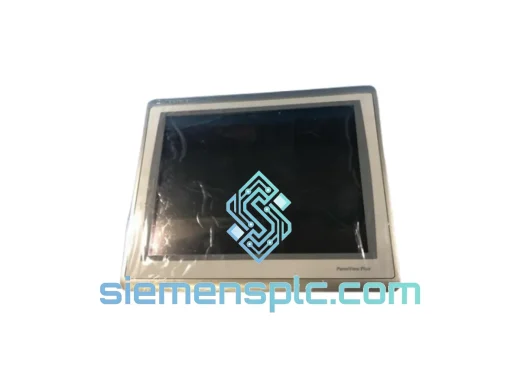
Allen-Bradley 2711P-T15C22D9P HMI Terminal
PanelView
Origin US
HMI Graphic Terminal
Allen-Bradley
RFQ Ready
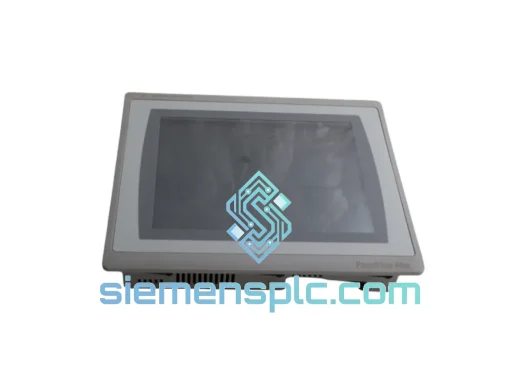
Allen-Bradley 2711P-T10C21D8S HMI Operator Terminal
PanelView
Origin US
HMI Operator Terminal
Allen-Bradley
RFQ Ready
Allen-Bradley 2711P-RN15S ControlNet Communication Module
PanelView
Origin US
PLC Communication Module