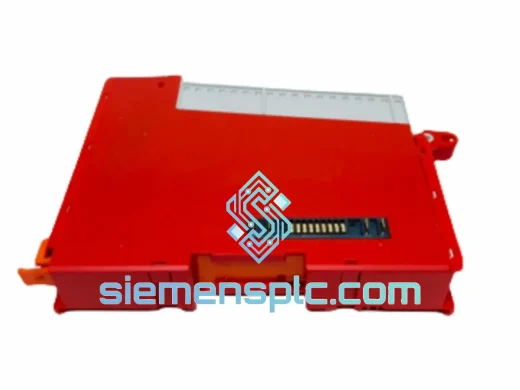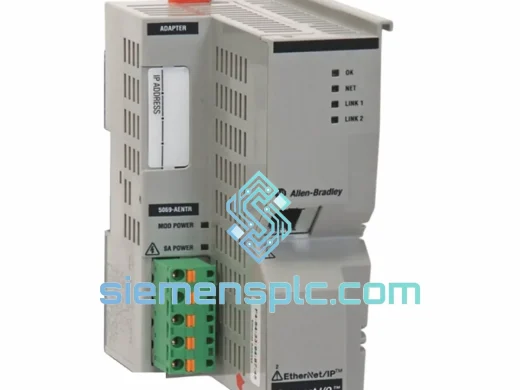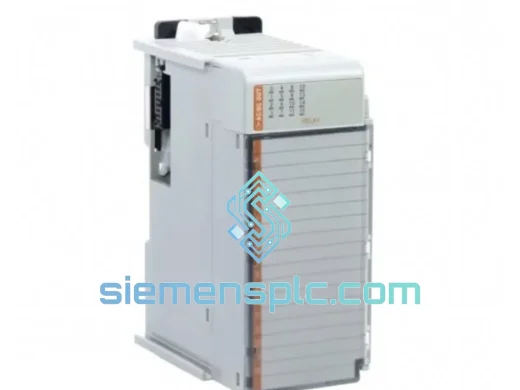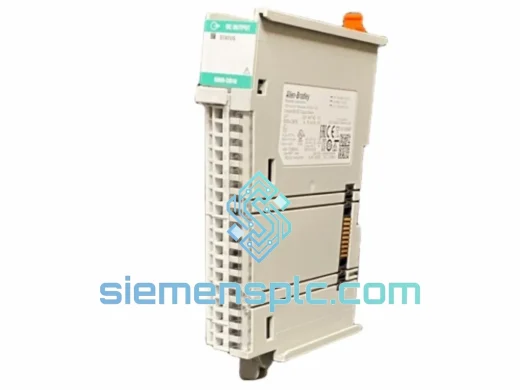
Allen-Bradley
RFQ Ready
Allen-Bradley 5069-OW16 Relay Output Module
CompactLogix
Origin US
PLC Output Module
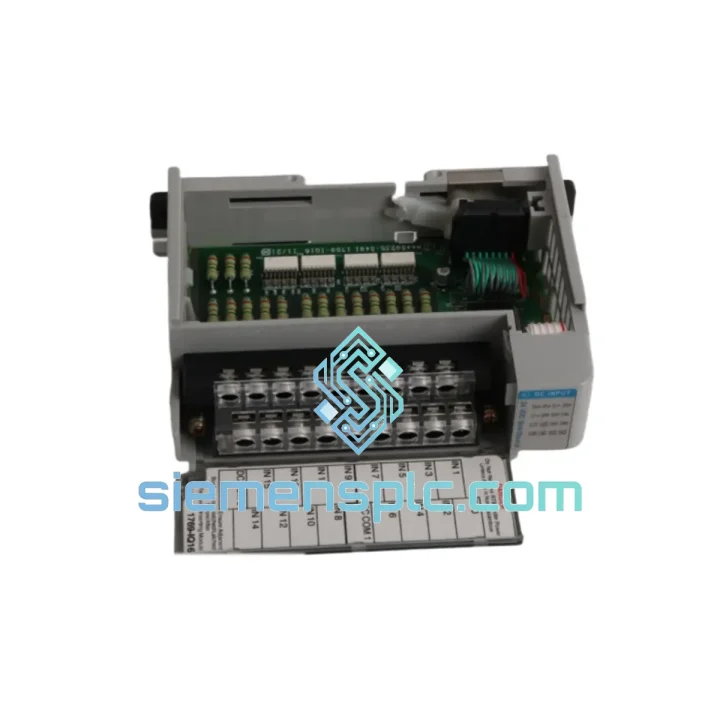
Request verified availability, condition, replacement risk review, packing options and courier lead time for 1769-IQ16F.
Click Request Quote and the part number is inserted into the inquiry form automatically.
Core fields for model confirmation and RFQ routing. Detailed product narrative remains below.
The Allen-Bradley 1769-IQ16F is a 16-channel, 24 VDC sourcing/sinking digital input module engineered specifically for the CompactLogix 1769 Compact I/O platform. Its defining characteristic is a configurable hardware input filter that can be reduced to approximately 0.1 ms per channel — a specification that separates it from the standard 1769-IQ16 (minimum filter: 1 ms) and makes it the correct selection wherever signal capture latency directly affects process accuracy. The module occupies a single 1769 expansion slot, draws 100 mA from the 5 VDC backplane rail, and presents zero load on the 24 VDC user power bus, keeping power budget calculations straightforward in dense rack configurations.
In a CompactLogix control architecture, the 1769-IQ16F sits between the field sensor layer and the controller’s scan cycle. Its hardware filter stage conditions raw field signals before they are latched into the input image table, eliminating the need for software debounce routines that consume ladder scan time and introduce variable latency. For motion-adjacent applications — servo homing sequences, encoder marker pulse detection, or cam-synchronized I/O — this hardware-level determinism is not optional; it is a fundamental design requirement. The module’s 16 points are organized into two 8-point commons, allowing mixed sensor polarities within a single module without external relay isolation.
Photoelectric sensors, inductive proximity switches, and magnetic reed contacts all generate signals with finite rise times and, in the case of mechanical contacts, bounce intervals ranging from 0.5 ms to 20 ms. The 1769-IQ16F’s filter architecture addresses both conditions: the fast filter mode captures genuine short-duration pulses from solid-state sensors without false triggering, while the standard filter settings suppress contact bounce on electromechanical inputs. Filter time is configured per-module in Studio 5000 Logix Designer, stored in the controller project file, and automatically downloaded to the module on connection — no DIP switches, no manual field adjustment.
The module communicates exclusively over the 1769 backplane serial bus. There is no dedicated fieldbus port, no IP address to configure, and no additional network infrastructure required. The controller’s I/O tree in Studio 5000 presents each of the 16 input bits as individual Boolean tags, directly addressable in ladder, function block, or structured text routines. Module-level diagnostics — including communication fault status and input state at the time of fault — are exposed through the module’s configuration and status registers, accessible without interrupting the control program.
Mechanically, the 1769-IQ16F uses the standard 1769 side-bus connector system. Installation requires no tools beyond a flat-blade screwdriver for the terminal block screws. The module can be inserted or removed from a powered rack only when the controller is in Program mode and the associated I/O connection is inhibited — a procedure that protects both the module and the process. Terminal blocks are removable, allowing pre-wired field cables to be transferred to a replacement module without re-termination.
Operating temperature range is 0 °C to 60 °C with 5–95% relative humidity (non-condensing), consistent with standard industrial panel environments. The module carries UL 508 listing, CE marking under the Low Voltage and EMC Directives, and RoHS compliance. It is not rated for hazardous (classified) locations and must be installed in an appropriate NEMA/IP-rated enclosure per the installation instructions in publication 1769-UM006.
Real-time Stock & RFQ: [email protected] | WhatsApp: +86 18359268345
| Parameter | Specification |
|---|---|
| Catalog Number | 1769-IQ16F |
| Platform | CompactLogix 1769 Compact I/O |
| Manufacturer | Allen-Bradley / Rockwell Automation |
| Number of Input Points | 16 |
| Input Voltage Range | 10–30 VDC (nominal 24 VDC) |
| Input Type | Sourcing (PNP) or Sinking (NPN), field-wired |
| Input Filter Time — Fast Mode | ≈ 0.1 ms (hardware-configurable) |
| Input Filter Time — Standard Mode | 1 ms – 32 ms (selectable) |
| Points per Common | 8 (2 commons total) |
| Backplane Current Draw (5 VDC) | 100 mA |
| Backplane Current Draw (24 VDC) | 0 mA |
| ON-State Voltage Threshold | ≥ 10 VDC |
| OFF-State Voltage Threshold | ≤ 5 VDC |
| ON-State Current (per point) | 2–15 mA typical |
| Operating Temperature | 0 °C to 60 °C (32 °F to 140 °F) |
| Storage Temperature | −40 °C to 85 °C |
| Relative Humidity | 5–95% non-condensing |
| Module Weight | Approx. 0.5 kg |
| Enclosure Requirement | Open type — requires external enclosure |
| Agency Certifications | UL 508, CE (LVD + EMC), C-Tick, RoHS |
| Programming Software | Studio 5000 Logix Designer v21+ |
| Warranty | 12 months from date of shipment |
Input Filter Architecture: The 1769-IQ16F implements a dedicated RC-based hardware filter stage ahead of the optical isolation barrier on each channel. In fast filter mode, the RC time constant is reduced to yield a cutoff frequency sufficient to pass pulses as short as 0.1 ms while attenuating noise spikes below the ON-state threshold. This is a fixed-hardware function — it operates independently of the controller’s scan cycle and is not subject to scan jitter. The practical consequence is that a 0.2 ms pulse from a high-speed proximity sensor will be reliably captured regardless of where in the scan cycle it occurs, provided the pulse duration exceeds the configured filter time.
Optical Isolation: Each input channel passes through a dedicated optocoupler that provides galvanic isolation between the 24 VDC field wiring and the 5 VDC backplane logic. The isolation barrier suppresses common-mode noise, ground loop currents, and transient overvoltages originating in the field wiring harness. In environments with variable-frequency drives, servo amplifiers, or induction heating equipment operating in proximity to the control panel, this isolation is the primary defense against conducted EMI entering the controller’s logic domain.
Backplane Communication Protocol: The 1769 backplane uses a proprietary serial bus operating at a fixed clock rate. The 1769-IQ16F’s backplane interface ASIC latches all 16 input states simultaneously at the start of each backplane scan cycle, then serializes the data for transfer to the controller’s input image table. This simultaneous latch — rather than sequential polling — ensures that the relative timing relationship between channels is preserved, which is critical for applications that use multiple input transitions to calculate velocity or direction.
EMC Design: The module’s PCB layout routes high-frequency backplane signals on inner layers with ground plane shielding on outer layers, reducing radiated emissions from the backplane interface. The terminal block connector uses a cage-clamp design that maintains consistent contact force over the module’s service life, preventing the intermittent connections that are a common source of spurious input transitions in high-vibration environments.
Two-Common Architecture: Splitting 16 points across two independent 8-point commons allows the installer to connect sensors with different reference potentials to the same module without cross-connecting their power supplies. This is particularly useful in retrofit applications where existing field wiring uses mixed sensor types from different machine generations.
Every Allen-Bradley 1769-IQ16F unit dispatched from our Xiamen, China facility is sourced through verified industrial supply channels and subjected to a structured incoming inspection protocol. Physical inspection covers label authenticity, catalog number and series code verification, connector integrity, and packaging condition. Units with evidence of repackaging, label tampering, or non-standard firmware revisions are quarantined and not offered for sale.
Storage conditions in our Xiamen warehouse maintain temperature between 15 °C and 25 °C with humidity control, consistent with Rockwell Automation’s recommended storage environment for electronic modules. ESD-protective packaging is used throughout the storage and pick-pack process.
Export documentation — including commercial invoice, packing list, and certificate of origin — is prepared to the importing country’s requirements. HS code classification for the 1769-IQ16F falls under Chapter 85 (Electrical Machinery and Equipment), and our logistics team has experience with customs clearance procedures for industrial automation components in North America, Europe, Southeast Asia, and the Middle East.
Standard international shipment is via DHL Express or FedEx International Priority, with transit times of 3–5 business days to most destinations. Expedited same-day dispatch is available for orders confirmed before 14:00 CST. Tracking numbers are provided within 2 hours of shipment. For project-volume orders requiring consolidated freight or specific Incoterms (FOB Xiamen, CIF destination), contact our logistics team directly.
A 12-month warranty against manufacturing defects covers all units. Warranty claims are processed upon receipt of the returned module, with replacement or credit issued within 5 business days. Warranty does not cover damage resulting from incorrect installation, overvoltage conditions beyond the module’s rated input range, or physical impact.
Email: [email protected]
WhatsApp: +86 18359268345
Web: siemensplc.com
Location: Xiamen, China
© 2026 siemensplc.com. All rights reserved.
We check the full part number, brand, series and visible nameplate information before quotation.
Sales confirms stock path, condition option, quantity and realistic lead time for export dispatch.
DHL, FedEx, UPS or buyer courier arrangements can be reviewed with packing requirements.
Similar brand or category products for fast comparison and multi-item RFQ lists.