Allen-Bradley
RFQ Ready
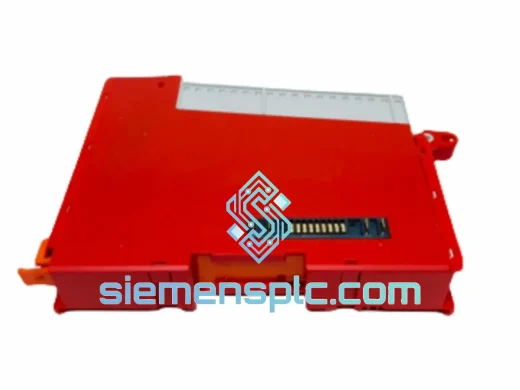
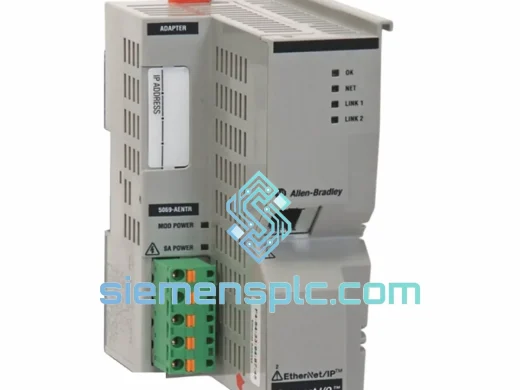
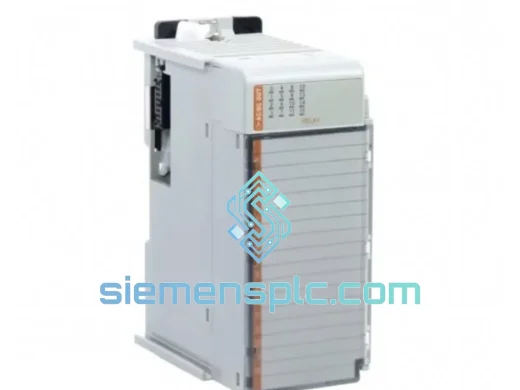
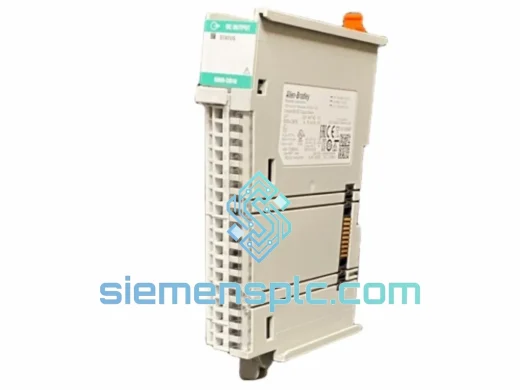
Allen-Bradley 5069-OW16 Relay Output Module
CompactLogix
Origin US
PLC Output Module
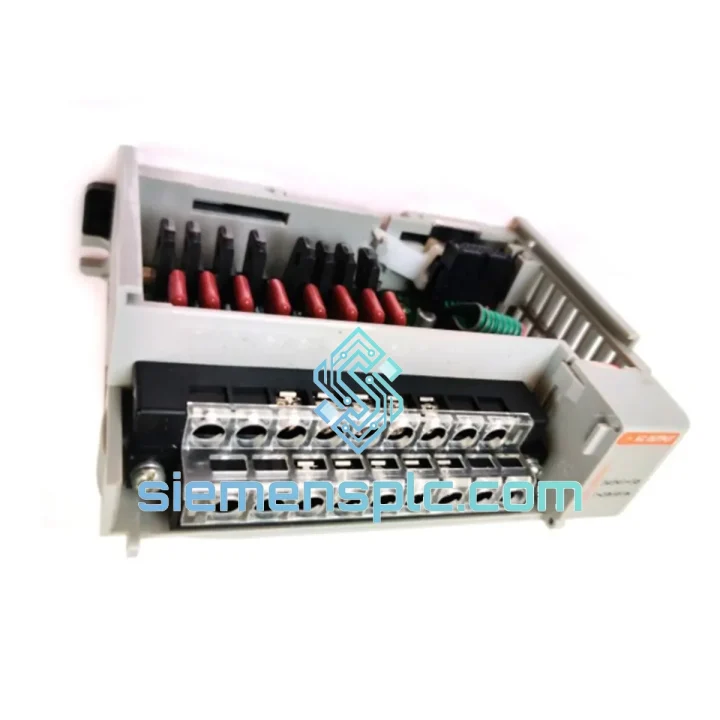
Request verified availability, condition, replacement risk review, packing options and courier lead time for 1769-OA8.
Click Request Quote and the part number is inserted into the inquiry form automatically.
Core fields for model confirmation and RFQ routing. Detailed product narrative remains below.
In a CompactLogix-based discrete control architecture, the output module is the terminal boundary between the controller’s execution cycle and the physical plant. The 1769-OA8 occupies this boundary as an 8-point, 120/240VAC solid-state (triac) output module, engineered to translate the controller’s logic state into reliable field-side switching without the mechanical degradation that limits relay-based alternatives. Its role in the control loop is not passive — the module’s switching characteristics, isolation architecture, and current handling directly determine the quality of the control signal delivered to solenoid valves, motor starter coils, pilot lights, and contactor coils across a wide range of industrial voltages.
The 1769-OA8 integrates into the 1769 backplane as a single-slot module, drawing 100mA at 5V DC from the backplane bus. Its two isolated output groups — each comprising four points sharing a common — allow simultaneous operation of 120VAC and 240VAC field devices from a single module without cross-contamination between voltage domains. This dual-group architecture reduces panel wiring complexity and eliminates the need for separate modules when mixed-voltage field devices are present in the same control cabinet.
Real-time Stock & RFQ: [email protected] | WhatsApp: +86 18359268345
| Parameter | Specification |
|---|---|
| Catalog Number | 1769-OA8 |
| Series | CompactLogix 1769 |
| Output Type | Solid-state (triac), AC switching |
| Number of Output Points | 8 |
| Output Voltage Range | 74–265V AC, 47–63 Hz |
| Continuous Output Current | 0.5A per point |
| Short-Duration Output Current | 1.0A per point (≤1 second) |
| Surge Current Rating | 6A for 16.7ms (one half-cycle at 60Hz) |
| Off-State Leakage Current | ≤10mA at 265V AC |
| Minimum Load Current | 10mA per point |
| Output Grouping | 2 groups of 4 points; commons isolated between groups |
| Backplane Current Draw | 100mA at 5V DC |
| Maximum Power Dissipation | 2.5W |
| Module Width | 1 slot (1769 bus) |
| Terminal Block | Removable terminal block (RTB), cage clamp |
| Wire Size | 14–22 AWG solid or stranded |
| Operating Temperature | 0–60°C (32–140°F) |
| Storage Temperature | -40–85°C (-40–185°F) |
| Relative Humidity | 5–95% non-condensing |
| Vibration Resistance | 2g @ 10–500Hz per IEC 68-2-6 |
| Shock Rating | 30g operational per IEC 68-2-27 |
| Certifications | UL 508, CE (EN 61131-2), CSA, RoHS |
| Warranty | 12 months from date of shipment |
The 1769-OA8 employs triac-based switching with zero-crossing detection circuitry. When the controller asserts an output point, the gate trigger is held until the AC waveform crosses zero volts, at which point the triac fires. This zero-crossing architecture eliminates the high-frequency transients generated by random-phase switching — transients that, in relay-based systems, propagate back through the backplane and into the controller’s analog input channels as common-mode noise. In installations where analog and discrete I/O share the same 1769 bus, this characteristic is not cosmetic; it directly protects measurement accuracy on adjacent analog modules.
The electrical isolation between the field side and the backplane is implemented through optical coupling. Each output channel’s control signal passes through an optocoupler before reaching the triac gate driver, establishing a galvanic barrier rated to withstand the transient voltages present in industrial AC distribution systems. This isolation architecture also means that a field-side fault — a shorted load, a wiring error, or a voltage spike from an inductive load — cannot propagate backward into the 5V DC backplane logic, protecting the controller and adjacent modules from collateral damage.
The dual-group common architecture deserves specific attention. The two groups of four points each have independent commons, which are electrically isolated from each other. This allows the module to simultaneously drive 120VAC solenoids on Group 1 and 240VAC motor starter coils on Group 2 without requiring separate modules or additional isolation hardware. The isolation between groups is maintained at the module level, not at the panel wiring level, which simplifies the panel design and reduces the risk of wiring errors during commissioning.
The removable terminal block (RTB) is a hardware design decision with direct maintenance implications. Field wiring terminates to the RTB, which latches onto the module body. During module replacement, the RTB is unlatched and retained in place while the module is swapped — field wiring remains connected throughout. This eliminates the rewiring step that, in relay-based panels with fixed terminal blocks, accounts for the majority of maintenance time and is the primary source of post-maintenance wiring errors.
EMC performance is further supported by the module’s internal layout. The triac gate drive circuitry is physically separated from the backplane interface circuitry, and the PCB ground planes are partitioned to prevent high-frequency switching currents from coupling into the low-level logic signals. The result is a module that meets EN 61131-2 EMC requirements without requiring additional external filtering in most industrial installations.
Every 1769-OA8 unit supplied through siemensplc.com is sourced from verified supply channels and subjected to a structured pre-shipment inspection process. Physical inspection covers label authenticity, catalog number and series letter verification, connector condition, and RTB locking mechanism integrity — all cross-referenced against Rockwell Automation reference documentation. Where bench test equipment is available, modules are functionally verified on a live 1769 bus: backplane communication is confirmed, each output point is individually actuated and verified against a calibrated load, and LED status indicators are validated against expected states.
Units are packed in anti-static bags with foam cushioning and shipped from our warehouse in Xiamen, China. Xiamen’s port infrastructure supports direct air freight connections to major logistics hubs in Europe, North America, Southeast Asia, and the Middle East, with typical transit times of 3–7 business days for air freight shipments. Export documentation — including commercial invoices, packing lists, and certificates of origin — is prepared for all international shipments. For customers in regions with specific import requirements, we coordinate customs documentation to minimize clearance delays.
All units are covered by a 12-month warranty from the date of shipment. Warranty claims are processed with direct engineer-to-engineer communication — no automated ticket systems. Inspection reports, certificates of conformance, and supplier traceability documentation are available upon request to support incoming inspection and quality management system requirements.
Email: [email protected]
WhatsApp: +86 18359268345
Web: siemensplc.com
Location: Xiamen, China
© 2026 siemensplc.com. All rights reserved.
We check the full part number, brand, series and visible nameplate information before quotation.
Sales confirms stock path, condition option, quantity and realistic lead time for export dispatch.
DHL, FedEx, UPS or buyer courier arrangements can be reviewed with packing requirements.
Similar brand or category products for fast comparison and multi-item RFQ lists.